
Jump to Recipe
There’s something about the way Italian cooking fills a home. The slow, steady transformation of simple ingredients into something deeply comforting. It’s not about rushing, but about letting flavors develop and meld together over time.
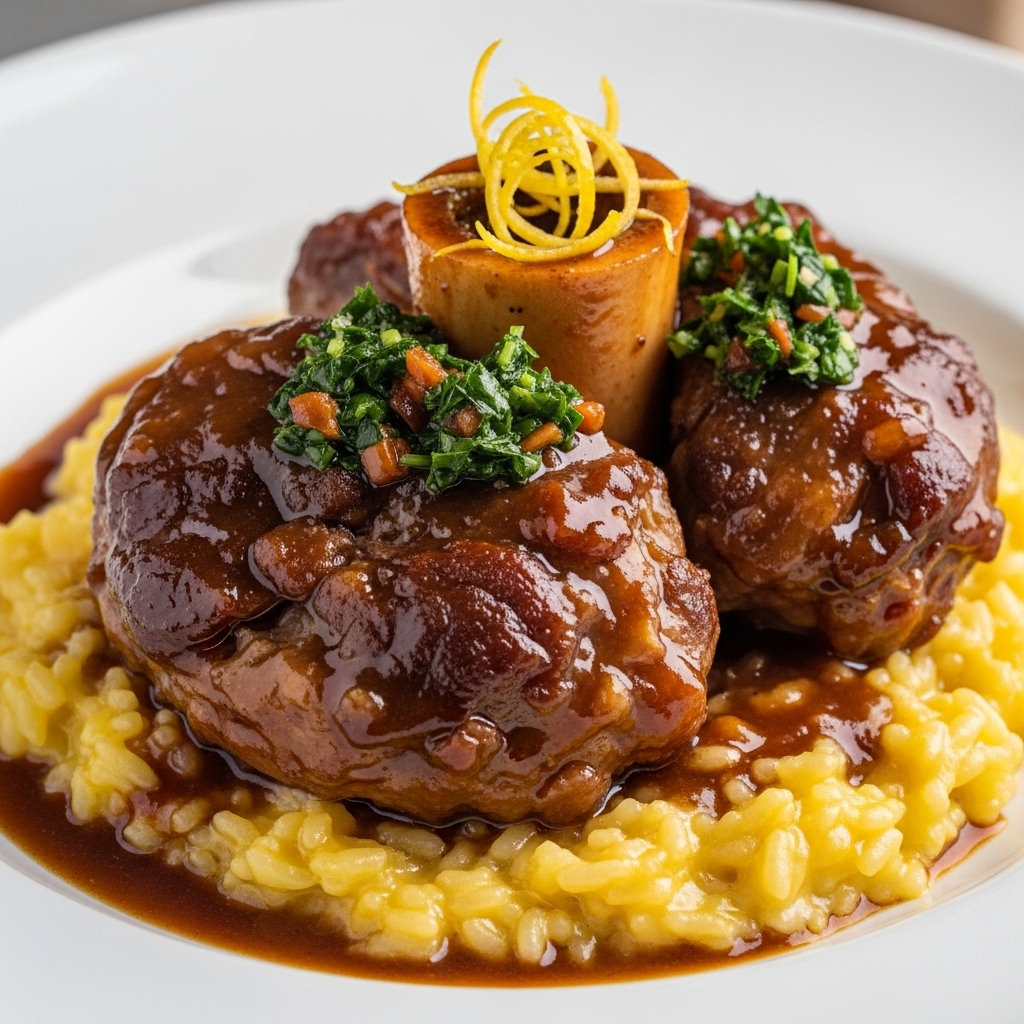
This particular preparation comes from Milan, where they understand the beauty of patience in the kitchen. The name osso buco translates to “bone with a hole,” referring to the marrow-filled veal shanks that form the heart of this dish.
What makes this preparation special is how the marrow melts into the braising liquid during the slow cooking process. It creates a rich, velvety sauce that clings to the tender meat. The final touch of gremolata—a simple mix of parsley, garlic, and lemon zest—cuts through the richness beautifully.
Traditionally, this is served over a creamy saffron risotto. The combination creates a perfect balance of textures and flavors. While it takes time, the result is worth every minute.
Key Takeaways
- This classic Milanese dish features slow-braised veal shanks with marrow bones
- The name “osso buco” means “bone with a hole” in Italian
- Slow cooking allows the marrow to melt into the braising liquid
- Gremolata (parsley, garlic, lemon) adds a bright finishing touch
- Traditionally served with saffron risotto for a complete meal
- Perfect for special occasions when you have time to cook slowly
- Beef shanks can substitute for veal if needed
Crafting the Perfect Base: Searing and Preparing Veal Shanks
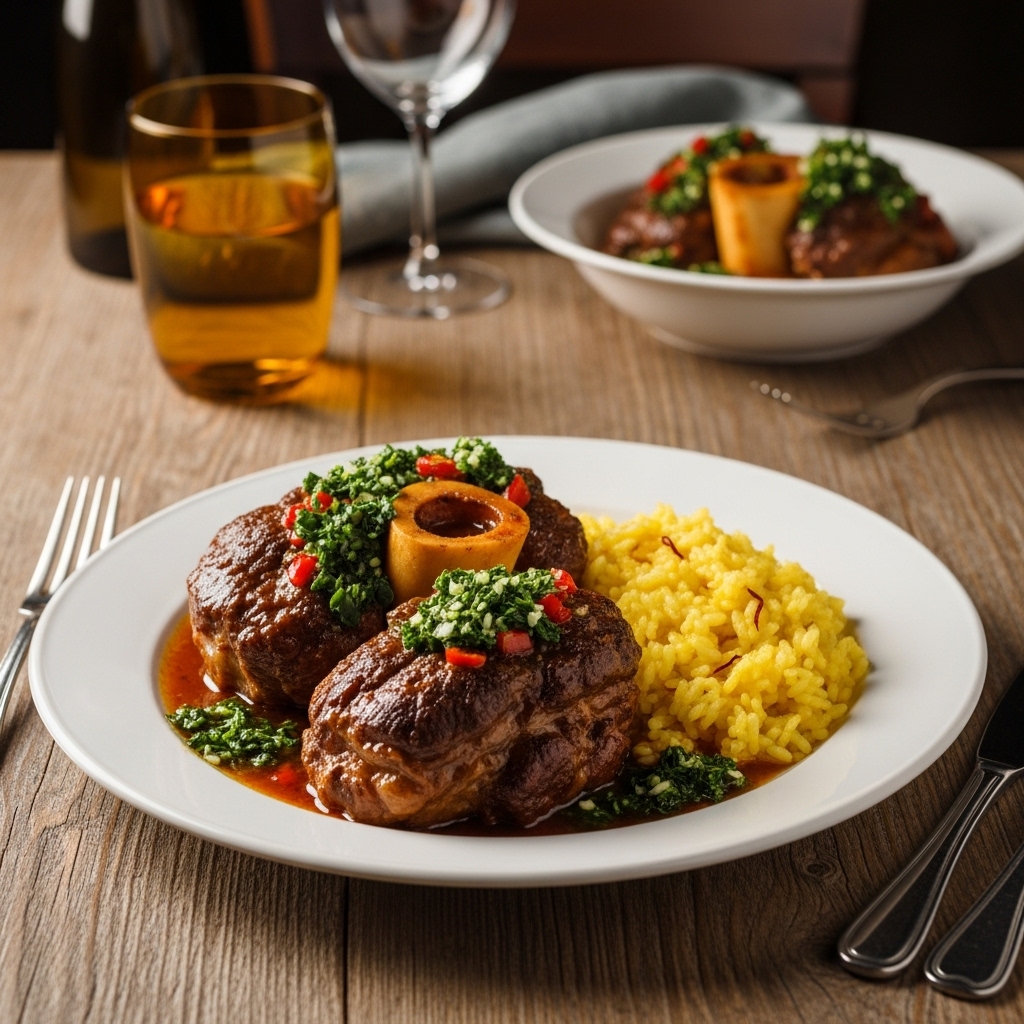
Before the slow simmering that makes osso buco so tender, there’s a crucial step that sets the stage. Proper preparation of the veal shanks ensures clean browning and prevents unwanted flavors from developing during cooking.
Seasoning and Dredging for Maximum Flavor
Start by soaking the veal shanks in a large bowl of cold water for 20-30 minutes. This removes impurities and excess blood, helping the meat brown cleanly. Pat each shank completely dry with paper towels.
I prefer seasoning the flour generously with salt and pepper rather than the meat directly. This creates an even, well-seasoned coating that clings to every surface. Dredge each piece thoroughly, shaking off excess flour.
Achieving a Deep, Golden-Brown Crust
Heat olive oil in your Dutch oven over medium-high heat. Starting with a warm pan prevents the meat from retracting too quickly, which can cause cupping around the marrow bone.
Once the oil is warm, add the veal shanks with enough space between them. Sear for 5-7 minutes per side without moving them. You want that deep caramelization that builds the foundation for your entire sauce.
This proper searing technique is essential because it creates complex flavors through the Maillard reaction. The crust adds depth that slow braising alone cannot achieve. After searing, remove the meat and set it aside with any accumulated juices.
If you’re exploring variations, you might find our beef osso buco recipe offers helpful insights into alternative approaches while maintaining traditional techniques.
Building a Rich Braising Liquid and Aromatic Soffritto
With the veal shanks set aside, our attention turns to creating the flavorful liquid that will transform them. This stage builds the aromatic foundation that makes the final sauce so memorable.
Selecting the Fresh Vegetables and Herbs
Start with a classic soffritto of diced onions, carrots, and celery. Use roughly equal amounts for balanced sweetness. Heat olive oil in the same pot used for searing.
Sauté the vegetables over medium heat for about 4 minutes. They should soften without browning. Add minced garlic last to prevent burning.
Stir in tomato paste and cook for 2 minutes until it darkens slightly. This deepens the flavor and helps thicken your final sauce.
Balancing Dry White Wine and Stock for Depth
Now deglaze with dry white wine. I prefer Pinot Grigio or Sauvignon Blanc. Pour in about 1/4 cup at a time, scraping the browned bits from the bottom.
Let each addition of wine reduce before adding more. This concentrates the flavor without making the liquid too acidic.
Add your stock next—beef stock provides robust flavor. Include bay leaves and fresh herbs. The liquid should nearly cover the shanks when returned to the pot.
Season well at this stage. A properly seasoned braising liquid ensures deeply flavored meat and sauce after hours of slow cooking.
Mastering the ossobuco milanese holiday recipe with Timeless Techniques
Transforming tough veal shanks into tender perfection requires careful timing and temperature control. The oven’s steady heat performs the final alchemy on our carefully prepared ingredients.
This stage separates rushed results from truly exceptional ones. Proper technique ensures the meat becomes fork-tender while the marrow transforms into a delicacy.
Choosing Your Wine and Stock for Ultimate Flavor
Selecting the right wine and stock creates the foundation for your braising liquid. Dry white wines like Pinot Grigio work beautifully without overwhelming acidity.
For stock, beef provides robust flavor that complements the veal. Chicken stock offers a lighter alternative if preferred.
| Oven Temperature | Cooking Time | Liquid Level | Final Step |
|---|---|---|---|
| 325°F | 2½ hours | ¾ submerged | Uncover last 30 minutes |
| 350°F | 2 hours | ¾ submerged | Uncover last 30 minutes |
| 300°F | 3 hours | Fully covered | Uncover last 45 minutes |
Check the meat every 30 minutes during cooking. The osso buco is ready when the meat separates easily from the bone but still holds its shape.
During the final minutes, remove the lid to reduce the liquid into a rich sauce. The marrow becomes soft and luxurious, ready to enjoy.
Pairing Traditions: Serving Suggestions for a True Italian Feast
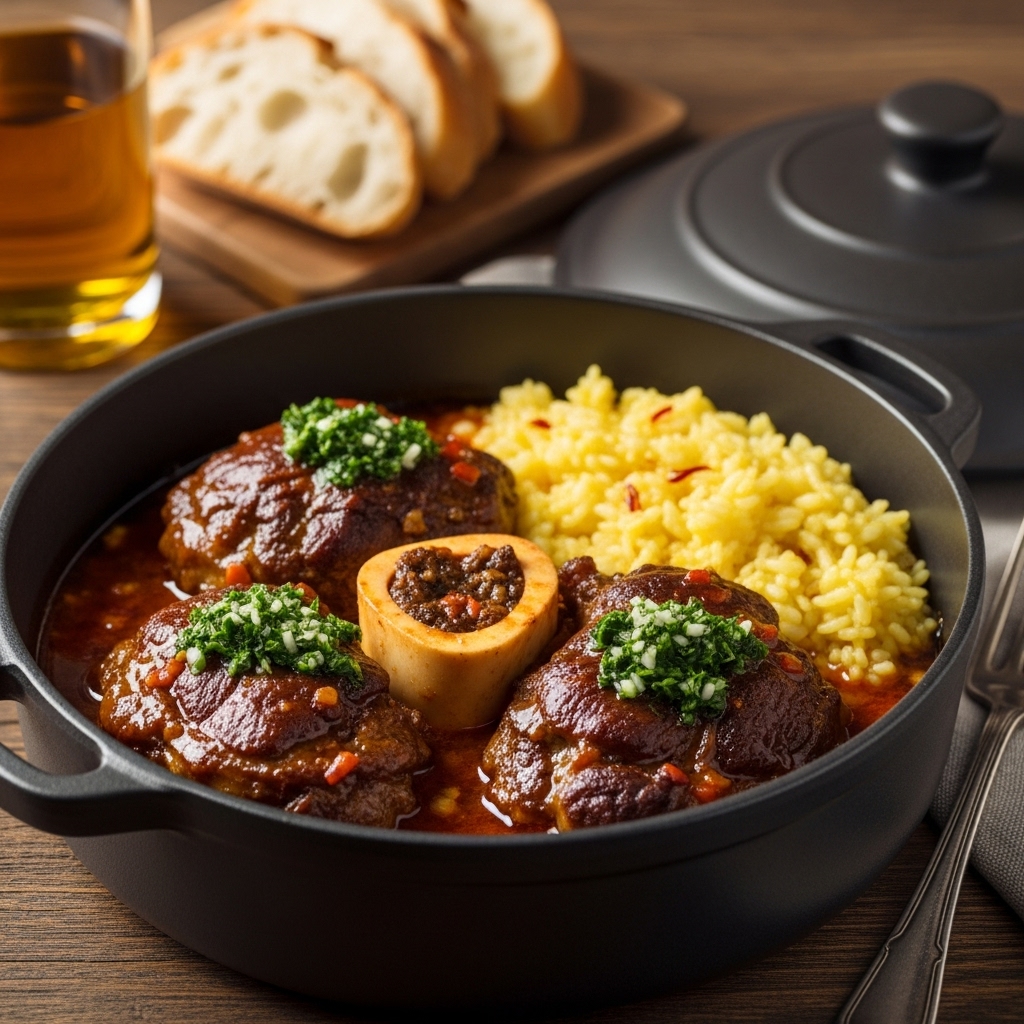
Choosing how to serve your braised veal shanks can transform a good meal into an authentic Italian experience. The accompaniments should complement rather than compete with the rich flavors.
Complement with Risotto Milanese, Polenta, or Crusty Bread
The classic pairing for osso buco is risotto Milanese, a saffron-infused rice dish from the same region. Its creamy texture and subtle floral notes balance the rich veal perfectly.
For simpler preparations, consider these alternatives:
- Creamy polenta that soaks up the savory sauce
- Fresh pappardelle pasta for a comforting combination
- Thick slices of crusty bread to enjoy every drop of sauce
Elevating the Dish with a Zesty Gremolata Garnish
The gremolata garnish is essential for cutting through the richness. This bright mixture of chopped fresh parsley, lemon zest, and garlic adds vibrant contrast.
I prepare it just before serving by finely mincing the ingredients together. Sprinkle it generously over the top of each veal shank to release fresh aromas at the table.
This final touch brings balance to the entire dish, making each bite more complex and satisfying.
Insider Tips and Variations for a Personal Touch
One of the secrets to enjoying osso buco more often is mastering the make-ahead strategies. These practical approaches let you savor this comforting dish without spending hours in the kitchen on busy days.
Make-Ahead Strategies and Storage Advice
I always recommend making a double batch when preparing this dish. The extra effort is minimal, but the reward is substantial. You’ll have ready-made meals for future weeks.
Store leftovers properly to maintain quality. Keep the veal shanks submerged in their braising liquid in airtight containers. They’ll stay fresh in the refrigerator for up to four days.
For longer storage, freeze portions with their sauce for two to three months. Thaw completely in the refrigerator before reheating gently on the stove.
Don’t discard leftover braising liquid. Strain it and freeze for future use. It makes incredible homemade stock for other dishes.
If fresh herbs aren’t available, dried parsley or thyme work well. Use three tablespoons of dried parsley or one and a half tablespoons of thyme.
Always prepare your gremolata fresh right before serving. The lemon zest and garlic lose their vibrant flavor if made too early.
Wrapping Up Your Italian Holiday Feast
The true reward for your patience comes when you gather around the table. That first bite of tender veal shank, enriched by marrow from the bone, confirms why this dish deserves its celebrated status. The hours in your oven transform simple ingredients into something extraordinary.
Each element serves its purpose perfectly. The seasoned flour creates a golden crust, while the soffritto of onions, carrots, and celery builds sweetness. Dry white wine and rich stock reduce into a glossy sauce that clings to the meat.
Fresh gremolata provides the essential bright finish. Its combination of chopped fresh parsley, lemon zest, and raw garlic cuts through the richness beautifully. Serve this masterpiece over creamy risotto Milanese for the most authentic experience.
This osso buco recipe rewards you with deep, comforting flavors that only slow cooking can achieve. Once you master these techniques, you’ll return to this dish whenever you want something truly special for your table.
Osso Buco alla Milanese
Ingredients
Method
- Soak veal shanks in cold water for 20-30 minutes to remove impurities. Pat dry with paper towels. Season flour with salt and pepper and dredge each veal shank, shaking off excess flour.
- Heat olive oil in a Dutch oven over medium-high heat. Add veal shanks and sear on all sides until deep golden brown, 5-7 minutes per side. Remove the veal and set it aside.
- In the same pot, sauté chopped onions, carrots, and celery for about 4 minutes until soft. Add garlic and cook for 1 more minute. Stir in tomato paste and cook for 2 minutes to deepen the flavor.
- Pour in dry white wine, scraping up any browned bits from the bottom of the pot. Add beef stock, bay leaves, and fresh thyme (if using). Season with salt and pepper.
- Return veal shanks to the pot, ensuring they’re nearly covered with the braising liquid. Cover with a lid, and cook in a preheated oven at 325°F for about 2½ hours, or until the meat is fork-tender.
- In a small bowl, finely mince parsley, lemon zest, and garlic. This will be used to garnish the dish.
- After cooking, remove the lid and let the sauce reduce for 30 minutes. The marrow should be soft, and the sauce thickened.
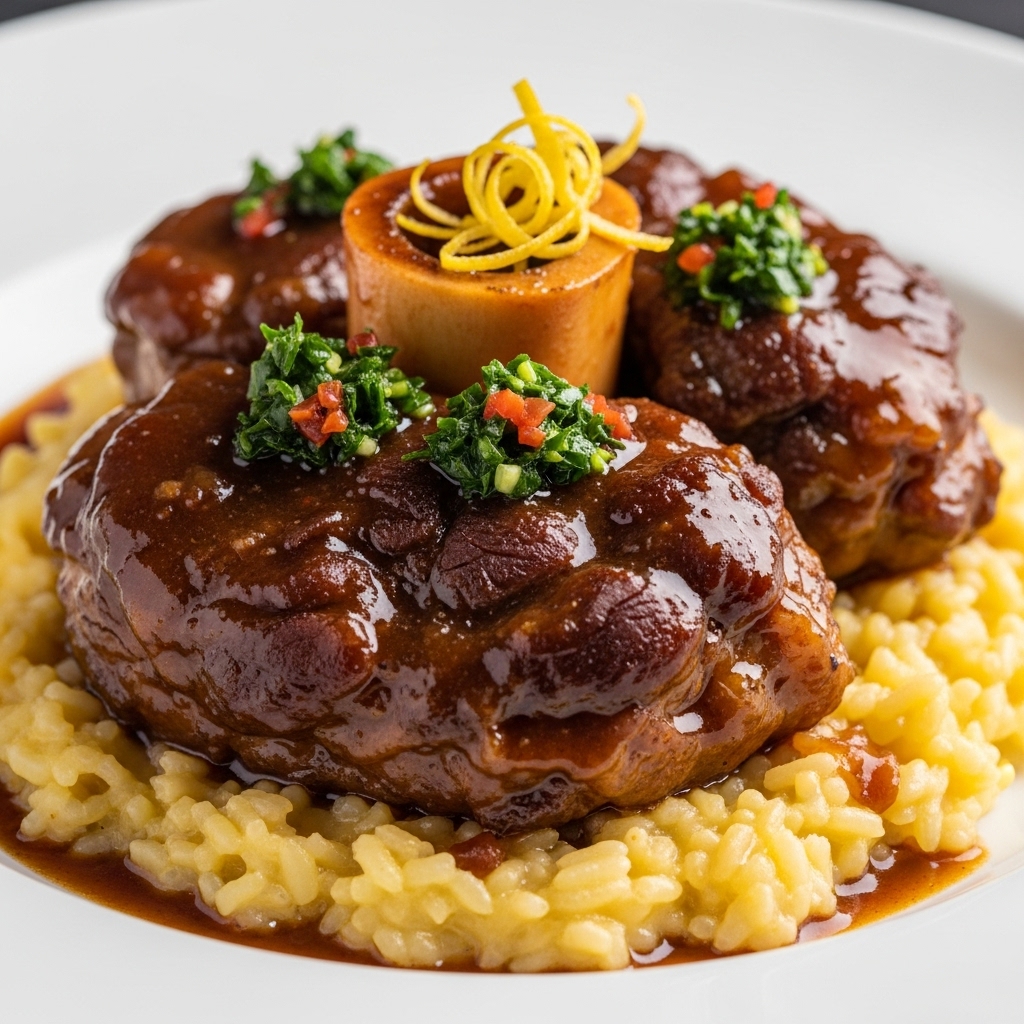
- Serve the osso buco over creamy saffron risotto, polenta, or crusty bread. Top with the fresh gremolata.
Notes
- Wine Options: If you don’t have dry white wine, dry vermouth can be used as a substitute, but avoid sweet wines.
- Slow Cooker Option: After searing the veal shanks, transfer everything to a slow cooker and cook on low for 6-8 hours instead of using the oven.
- Leftovers: Store leftover osso buco with the braising liquid in an airtight container for up to 4 days in the fridge. It can be frozen for up to 2-3 months.
- Make-Ahead Tip: Prepare a double batch of the sauce for future meals. The flavors only improve with time!