
Jump to Recipe
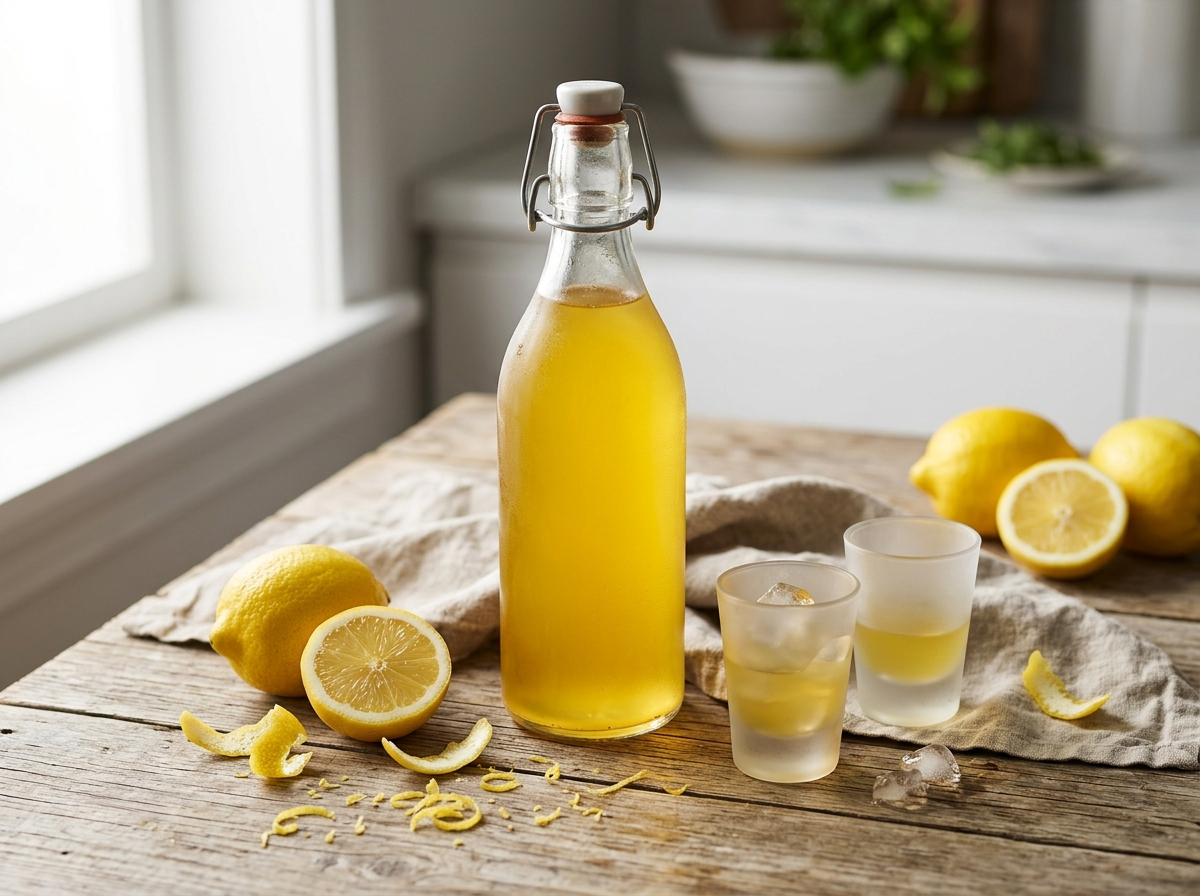
Limoncello fatto in casa is Italy’s classic homemade lemon liqueur, made by steeping lemon zest in high-proof alcohol for about 10 days, then blending it with a cooled sugar syrup. The result is a golden, lemon-forward digestivo you serve ice cold after dinner.
I first made this with lemons off a friend’s tree near the Amalfi coast, and the smell of fresh zest hitting the alcohol is unmistakable. Skip the pith when peeling. Even a thin white layer left on the zest turns the whole batch bitter, and there’s no fixing it once it’s steeped.
This recipe uses 95% grain alcohol, the traditional choice in southern Italy, though high-proof vodka works if that’s what you can find. Ten days of steeping is the minimum. Longer, up to three weeks, pulls more oil and color from the peel.
Once you strain and mix in the syrup, bottle it and stash it in the freezer. Cold is how limoncello is meant to be poured, thick and slow, straight into small chilled glasses.
Why You’ll Love This Recipe
- Just four ingredients, no special equipment beyond a jar
- Costs a fraction of what a bottled version runs
- Stays syrupy and cold straight from the freezer
- Makes a lasting gift poured into recycled bottles
Ingredient Notes
- Lemons: Use organic, unwaxed lemons since the peel is the flavor source. Thick-skinned varieties like Sorrento or Amalfi lemons work well, but any unwaxed lemon works if scrubbed clean.
- 95% grain alcohol: This is the traditional base in southern Italy and extracts the most lemon oil in 10 days. A 100 proof or higher vodka is a decent substitute, though the final liqueur will taste slightly milder.
- Granulated sugar: Plain white sugar keeps the syrup clear. Honey or brown sugar will cloud the color and shift the clean lemon flavor.
- Water: Filtered water is a small upgrade if your tap water has a strong mineral taste, but tap water works fine otherwise.
Homemade Limoncello: Bright, Silky Italian Liqueur
Ingredients
Method
- Wash and dry the lemons well, scrubbing the skin to remove any wax or residue.
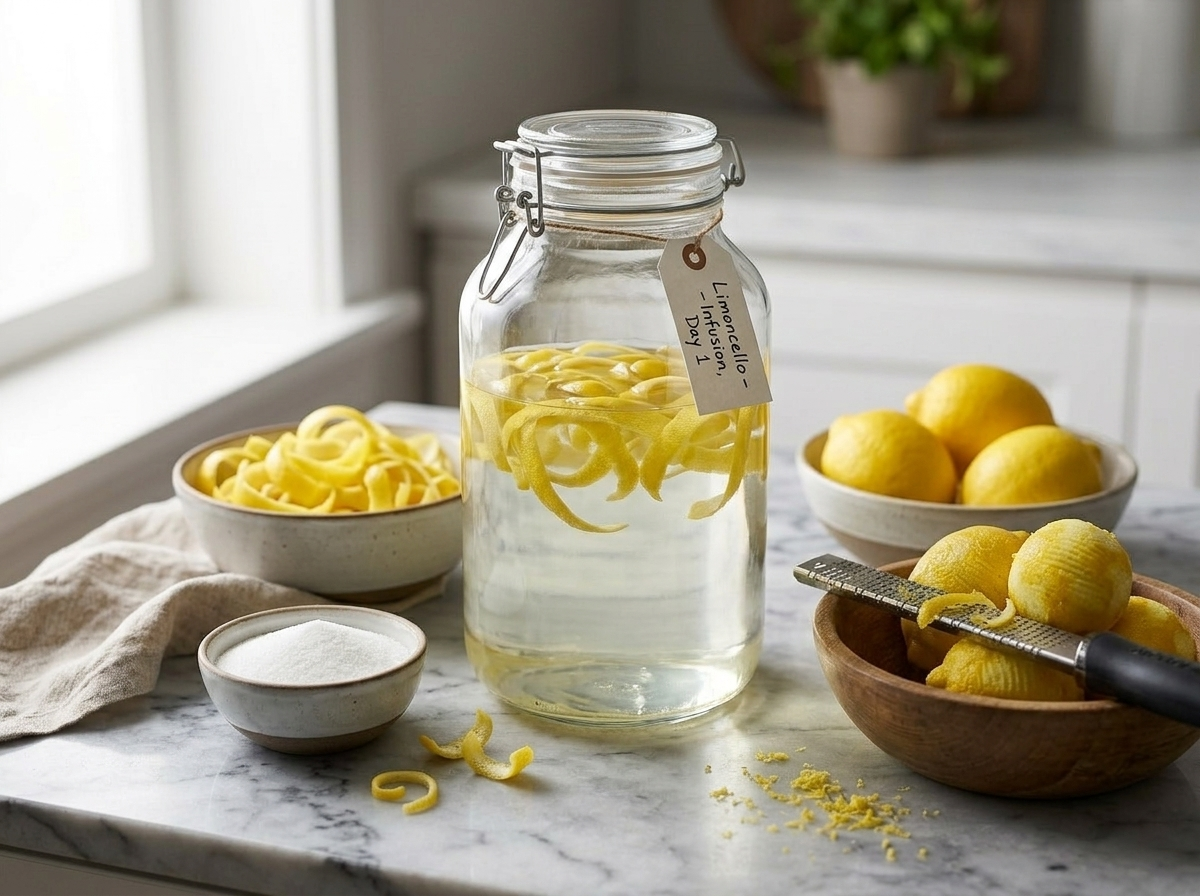
- Peel the zest in strips with a vegetable peeler, avoiding the bitter white pith underneath.
- Place the zest strips in a large glass jar, pour the alcohol over, and seal tightly.
- Store the jar in a cool, dark spot for 10 days, shaking it once daily, until the peel turns pale and the alcohol is deep yellow.
- Combine water and sugar in a saucepan over medium heat, stirring until the sugar fully dissolves, about 5 minutes.
- Remove from heat and cool the syrup completely to room temperature, about 1 hour.
- Strain the infused alcohol through a fine-mesh strainer or cheesecloth into a bowl, discarding the zest.
- Stir the cooled syrup into the strained alcohol until fully combined.
- Funnel into clean glass bottles, seal, and freeze for at least 24 hours before serving.
Notes
- Use organic, unwaxed lemons since the peel is the entire flavor source.
- Ten days is the minimum steep, three weeks gives deeper color and oil.
- Cool the syrup fully before combining or the alcohol will flash off.
- Strain twice through cheesecloth for a clearer, less cloudy finish.
Tips for Success
- Peel only the yellow zest, angling the peeler away from the white pith to avoid bitterness.
- Shake the steeping jar once a day so the alcohol pulls oil evenly from every strip of peel.
- Cool the sugar syrup fully before mixing it in, hot syrup can cook off some of the lemon aroma.
- Use a funnel and clean glass bottles for storage, sterilized bottles keep the liqueur clear longer.
- Store the finished bottle in the freezer, the sugar content keeps it from freezing solid.
Variations
- Swap half the lemons for organic oranges to make a two-tone limoncello with a softer, rounder finish.
- Reduce sugar to 600g for a drier, more bracing liqueur closer to what you’d find in Sorrento bars.
- Add a split vanilla bean to the jar during steeping for a warmer, dessert-like version.
Storage and Reheating
Limoncello fatto in casa keeps for up to a year stored in a sealed glass bottle in the freezer or a cool, dark cupboard.
The sugar and alcohol content mean it won’t spoil the way food does, though the bright lemon flavor is best within the first 6 months. After that it stays safe to drink but the top notes fade a bit.
No reheating here. Pull it straight from the freezer to the glass, it pours syrupy and cold without ever fully freezing solid.
Serving Suggestions
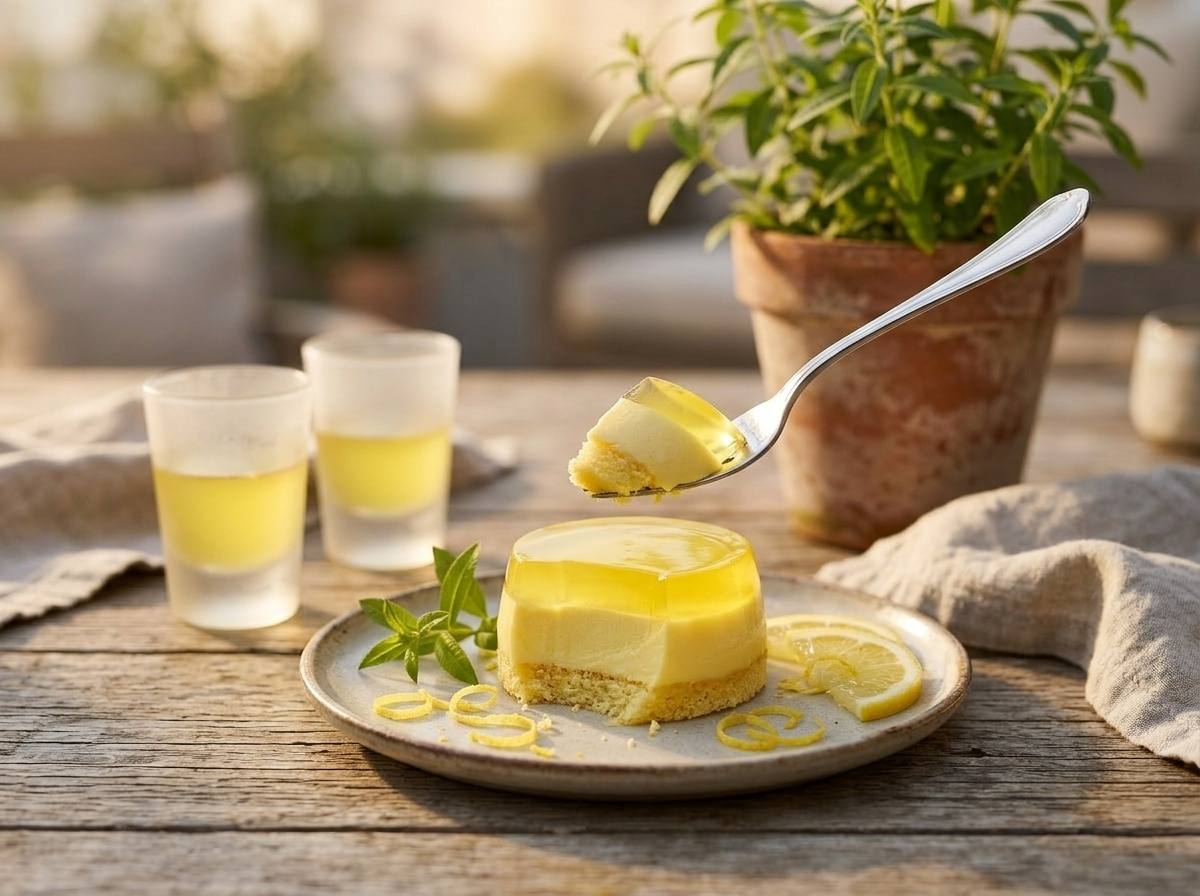
Limoncello fatto in casa is a digestivo, served in small chilled glasses at the end of a meal, poured straight from the freezer.
It pairs well with plain butter cookies, biscotti, or a scoop of vanilla gelato for a quick affogato-style dessert.
For a summer twist, top a splash over sparkling water with a lemon wheel, or use it to finish a Torta della Nonna glaze.
FAQ
Why did my limoncello turn out bitter?
Bitterness almost always comes from white pith left on the lemon zest during peeling. Even a small strip steeped for 10 days releases enough bitter oil to affect the whole batch. Peel thin, yellow-only strips with a vegetable peeler and check each piece before it goes into the jar.
Can I use vodka instead of 95% grain alcohol?
Yes, a high-proof vodka of 100 proof or higher works, though the final limoncello will taste slightly milder and less concentrated than the traditional version. Grain alcohol pulls more lemon oil from the zest during the same 10-day steep. Either way, strain the zest out fully before bottling.
How long does homemade limoncello fatto in casa last once bottled?
It keeps for up to a year in a sealed glass bottle stored in the freezer or a dark cupboard, since the sugar and alcohol content keep it shelf-stable. The lemon flavor is brightest in the first 6 months, after that it’s still safe to drink but tastes slightly flatter.
What goes well with limoncello fatto in casa after dinner?
Plain butter cookies, biscotti, or a scoop of vanilla gelato all work well alongside a chilled glass. It’s also good poured over sparkling water for a lighter drink, or drizzled over a lemon tart just before serving.
Is homemade limoncello gluten free?
Yes, limoncello made with 95% grain alcohol is generally considered gluten free, since distillation removes the gluten protein even when the alcohol is wheat-based. If you want extra certainty, use a grape-based or sugarcane-based neutral spirit instead.
What’s the difference between limoncello and other Italian citrus liqueurs like arancello?
Limoncello uses only lemon zest, which gives it a sharper, more acidic edge, while arancello is made the same way with orange peel and comes out sweeter and less tart. Both follow the same method of steeping zest in alcohol, then blending with sugar syrup.