
Jump to Recipe
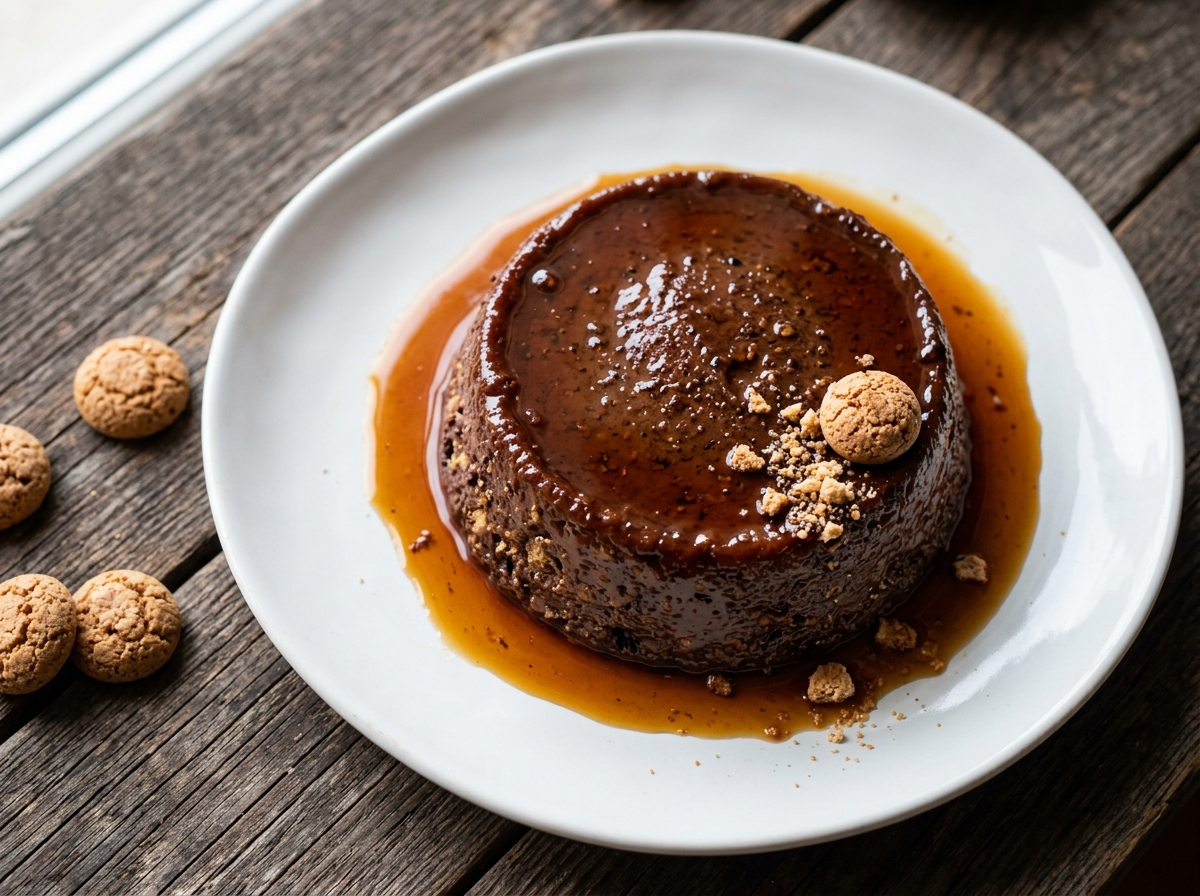
Bonet piemontese is a baked chocolate custard from Piedmont, thickened with crushed amaretti cookies instead of flour and finished with a layer of homemade caramel that turns into sauce once the custard is unmolded.
It looks like a fancy flan but the method is closer to a crustless cheesecake. You caramelize sugar right in the mold, pour in a cocoa-amaretti custard, then bake everything in a water bath until the edges are set and the center still has a slight wobble.
The first time I made this I let the water bath run dry halfway through baking, and the custard came out riddled with tiny air holes instead of smooth. Keep an eye on that water level and it won’t happen to you.
This is a make-ahead dessert by design. It needs a full chill in the fridge before unmolding, so it’s the kind of thing you bake the night before a dinner party and forget about until dessert time.
Why You’ll Love This Recipe
- No flour needed, amaretti cookies do the thickening work
- Made a full day ahead, one less thing on party day
- Caramel forms its own sauce once you flip the mold
- Six ingredients, no fancy equipment beyond a roasting pan
Ingredient Notes
- Amaretti cookies: Use the crisp, hard Italian kind (not soft macarons). Crush them fine so the custard stays smooth rather than gritty.
- Cocoa powder: Dutch-process cocoa gives a rounder, less acidic flavor here. Natural cocoa works too but tastes slightly sharper.
- Dark rum: Traditional bonet often uses rum or Fernet-Branca. Coffee liqueur or strong brewed espresso are common swaps if you skip alcohol.
- Whole milk: Whole milk keeps the custard rich. Low-fat milk works but the set will be slightly looser and less creamy.
- Eggs: Room temperature eggs blend into the custard more evenly than cold eggs straight from the fridge.
Bonet Piemontese: Chocolate Amaretti Custard
Ingredients
Method
- Heat sugar and water in a small saucepan over medium heat, swirling the pan (not stirring) until it turns deep amber, about 6-8 minutes.
- Pour the caramel immediately into a 20cm (8-inch) round mold, tilting to coat the bottom and slightly up the sides. Set aside to harden.
- Heat oven to 150C/300F. Crush amaretti cookies into fine crumbs using a food processor or a rolling pin and sealed bag.
- In a large bowl, whisk eggs and sugar together until pale, about 2 minutes.
- Whisk in cocoa powder, crushed amaretti and rum until smooth and no dry lumps remain.
- Warm the milk in a saucepan until steaming but not boiling, then whisk it slowly into the egg mixture.
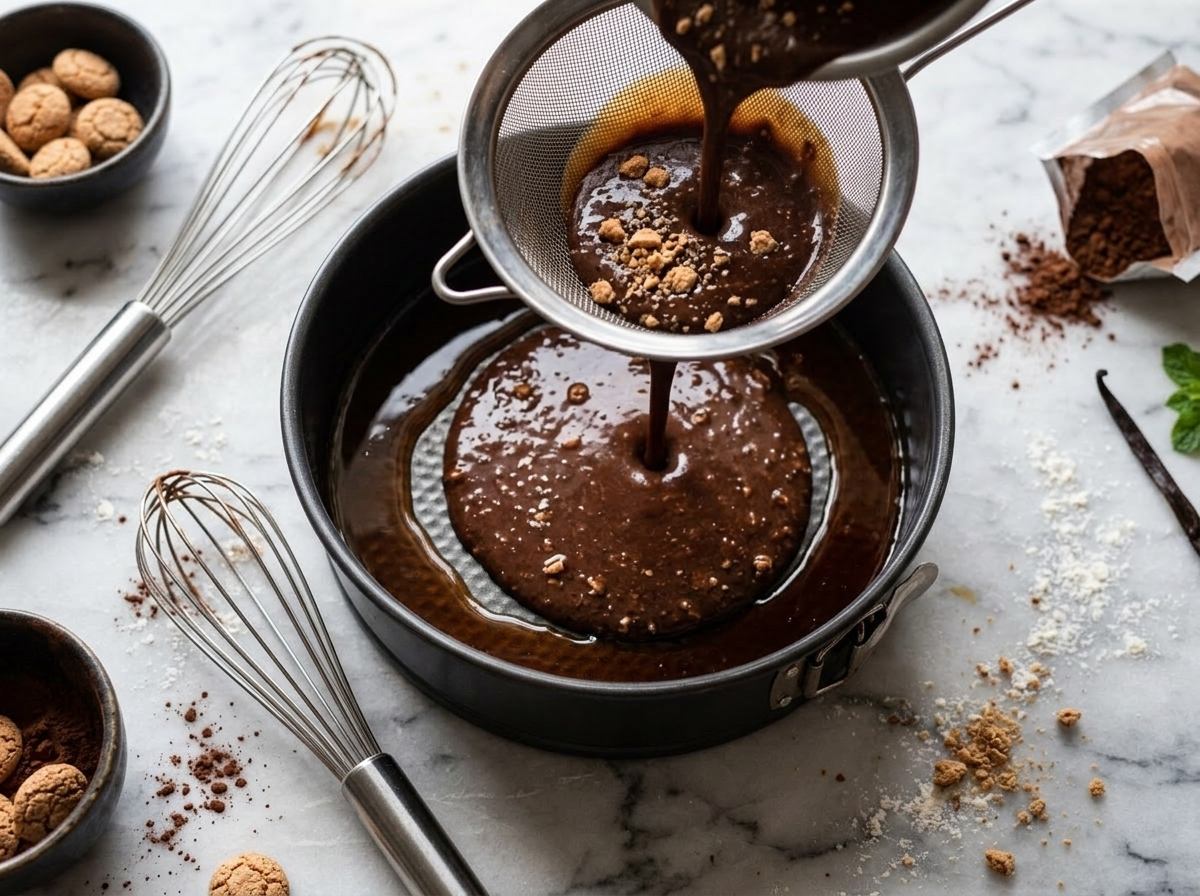
- Strain the custard through a fine-mesh sieve into the caramel-lined mold to remove any lumps.
- Set the mold in a roasting pan and pour boiling water into the pan until it reaches halfway up the sides of the mold.
- Bake for 50-55 minutes, until the edges are set and the center still jiggles slightly, like a baked cheesecake. Internal temp should read 176F/80C.
- Remove from the water bath, cool to room temperature, then refrigerate for at least 4 hours, ideally overnight.
- Run a thin knife around the edge, set a rimmed plate on top and invert quickly to unmold, letting the caramel run down as sauce.
Notes
- Use a light-colored pan for the caramel so you can see the color change clearly.
- Do not stir the caramel while it cooks, swirl the pan gently instead.
- Check the water bath level once during baking and top up with hot water if low.
- Let the mold cool to room temperature before refrigerating to avoid condensation pooling on top.
Tips for Success
- Swirl the caramel pan instead of stirring it, stirring can cause sugar crystals to seize.
- Strain the custard through a fine-mesh sieve to catch amaretti lumps and egg strands before baking.
- Keep the water bath topped up to the halfway mark on the mold, a dry water bath causes a holey, rubbery texture.
- Chill the bonet at least 4 hours, ideally overnight, or it will crack and slump when unmolded.
- Run a thin knife around the edge before flipping, and invert onto a plate with a rim to catch the caramel.
Variations
- Swap rum for strong brewed espresso and add a pinch of cinnamon for a mocha-spice version.
- Use gluten-free amaretti (check the label) and confirm your cocoa is processed in a gluten-free facility.
- Bake in 6 small ramekins instead of one large mold for individual portions, reducing bake time to about 30 minutes.
Storage and Reheating
Bonet piemontese keeps well chilled and covered in the fridge for up to 4 days. Store it unmolded in its serving dish, with the caramel sauce pooled around it, covered tightly with plastic wrap.
This dessert is served cold, so there’s no reheating step. Take it out of the fridge about 10 minutes before serving so the caramel loosens slightly and the custard isn’t ice cold.
Freezing isn’t recommended. The egg-based custard turns grainy and weeps liquid once thawed.
Serving Suggestions
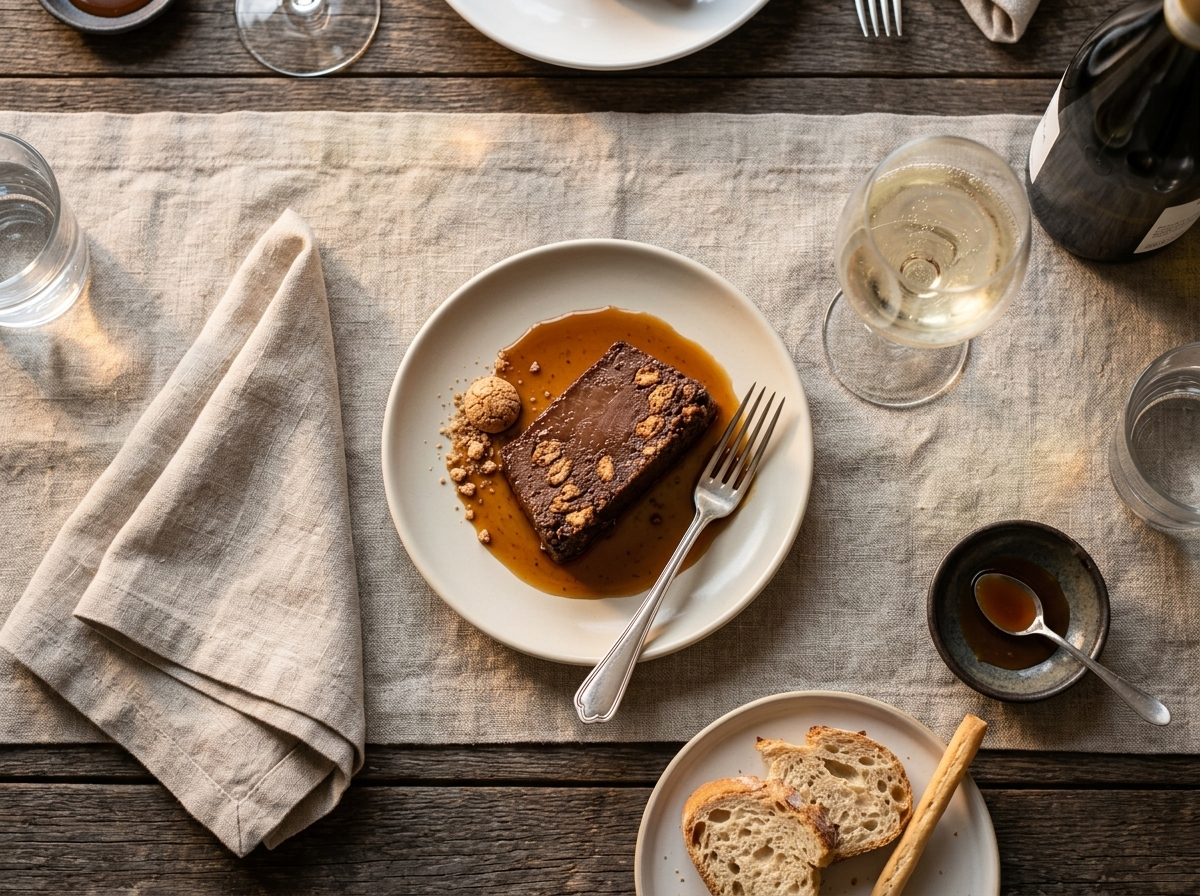
Serve bonet piemontese in thin wedges straight from the fridge, spooning the caramel that pools around the base back over each slice. A small glass of moscato d’Asti or a shot of espresso on the side rounds out the meal without competing with the chocolate.
It’s a natural finish after a Piedmontese meal of braised meat or a simple risotto, since the dessert is dense and only needs a small portion. A few toasted hazelnuts scattered on top add crunch if you want a bit of texture against the smooth custard.
FAQ
Why did my bonet piemontese turn out rubbery or full of holes?
This usually means the oven ran too hot or the water bath dried out during baking. Bake at 150C/300F and keep water level at the mold’s halfway mark the whole time. Pull it out once the edges are set and the center still jiggles slightly, at an internal temp of 176F/80C.
Can I use amaretto liqueur instead of rum in bonet piemontese?
Yes, amaretto works well since it echoes the almond flavor already in the amaretti cookies. Use the same 30ml amount. Coffee liqueur or strong espresso are other common swaps if you want a less sweet, more bitter edge.
Can I make bonet piemontese a day ahead and how long does it keep?
Yes, it actually needs to be made ahead since it must chill at least 4 hours, and overnight is even better for a firmer set. Once unmolded and covered, it keeps in the fridge for up to 4 days without losing texture.
What goes well with bonet piemontese after dinner?
A small glass of moscato d’Asti or an espresso pairs well, since both cut through the dense chocolate custard. Toasted hazelnuts scattered on top add crunch. Keep the rest of the meal light, since bonet is rich enough on its own.
Is bonet piemontese gluten free since it uses amaretti cookies instead of flour?
It can be, but check your amaretti label first. Traditional amaretti are made from almond flour, sugar and egg whites with no wheat, but some commercial brands add a small amount of wheat flour as filler, so read the ingredients if gluten is a concern.
What’s the difference between bonet and a classic crème caramel?
Bonet is chocolate-based and thickened partly with ground amaretti cookies, giving it a denser, slightly grainy texture and a bittersweet cocoa flavor. Crème caramel is a plain vanilla custard with a smoother, silkier set and no cookie crumb at all.