
Jump to Recipe
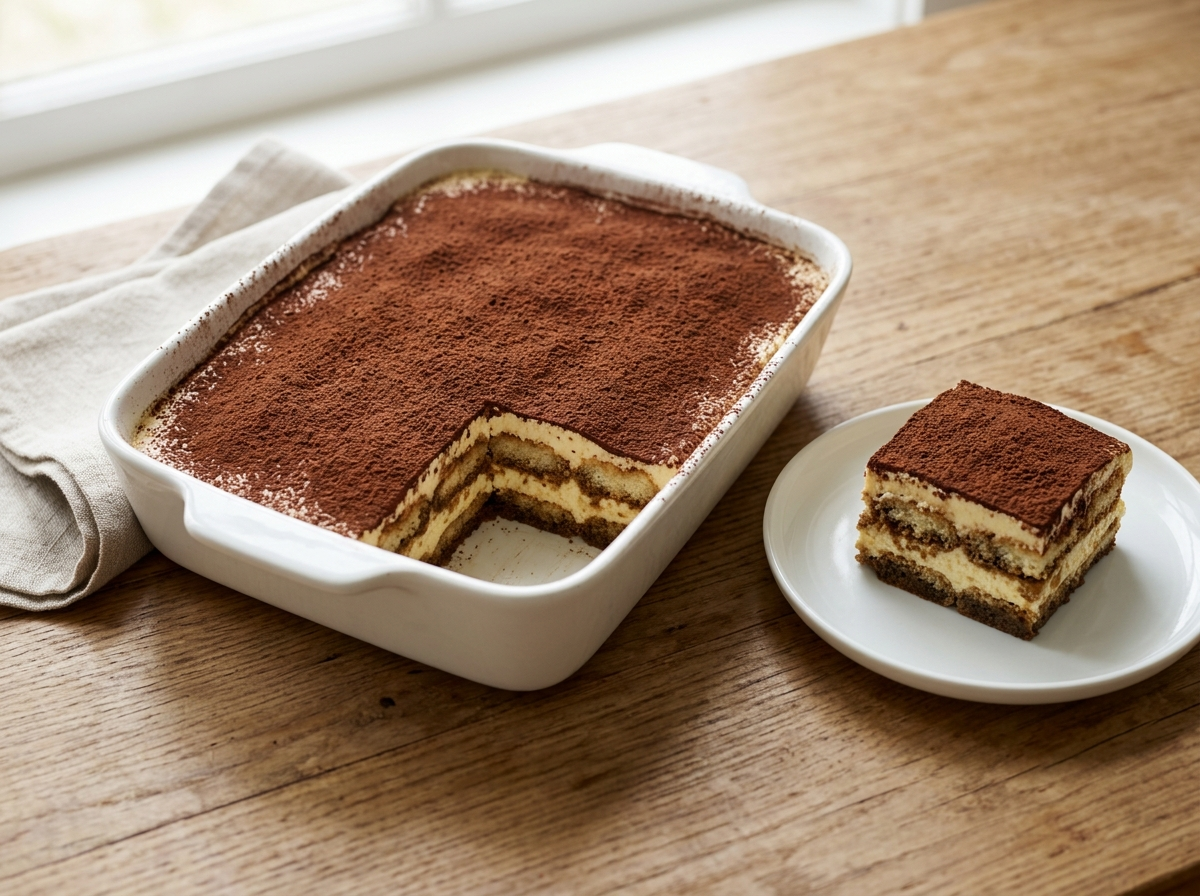
Tiramisù classico is Italy’s no-bake coffee dessert: espresso-soaked savoiardi layered under a pasteurized egg and mascarpone cream, finished with a heavy dusting of unsweetened cocoa.
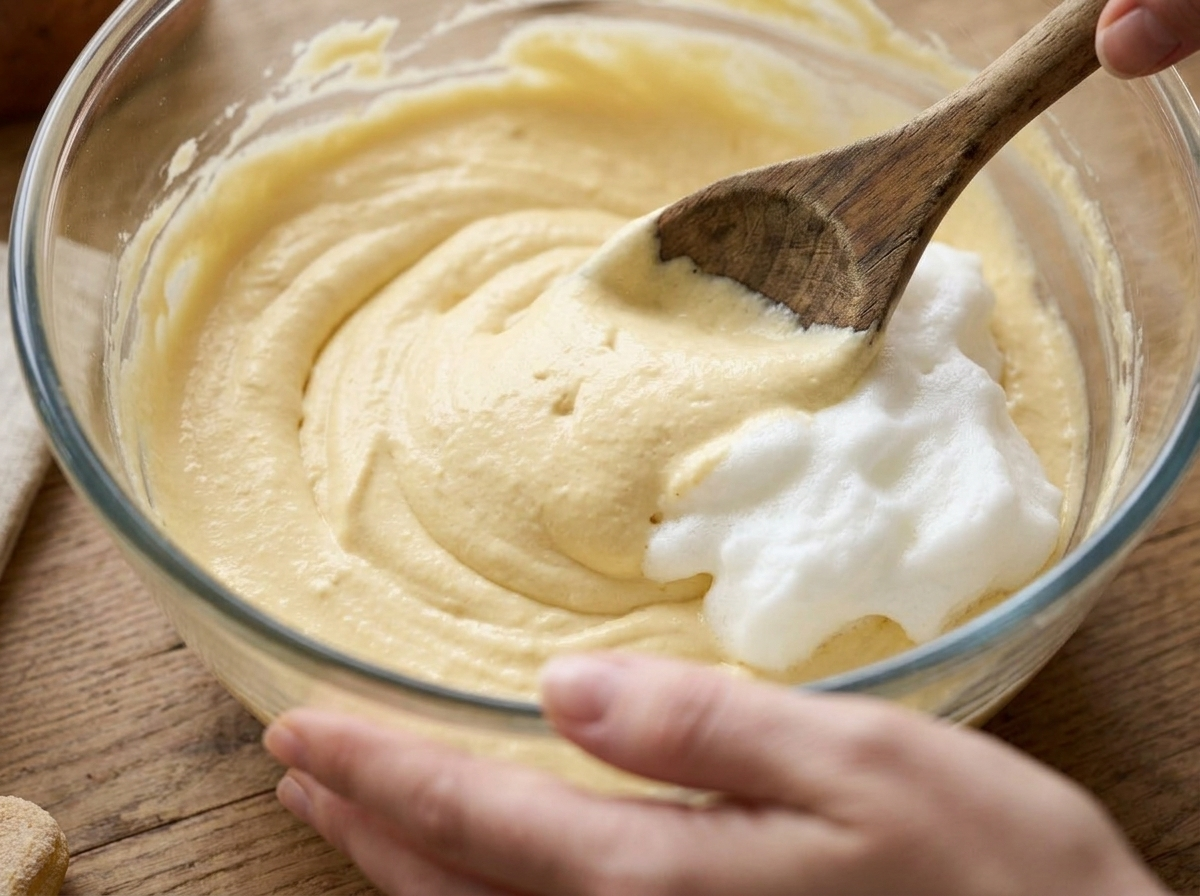
The cream is what separates a good tiramisù from a loose, weepy one. Whip the egg whites to stiff, glossy peaks and fold them in gently. Deflate them and the whole dessert turns soupy instead of holding a clean slice.
I cook the egg yolks with sugar over a bain-marie until they hit 160 F / 71 C. This pasteurizes the eggs, which matters since the classic version is served uncooked.
Six hours in the fridge is the minimum. Overnight is better, the ladyfingers soften fully and the layers cut clean instead of sliding apart.
Why You’ll Love This Recipe
- No oven needed, just a stovetop and a fridge
- Pasteurized egg method keeps it food-safety-conscious
- Better the next day, made for entertaining ahead
- Only 6 ingredients beyond coffee and cocoa
Ingredient Notes
- Egg yolks: Use fresh, good-quality eggs since they’re barely cooked. The bain-marie step pasteurizes them, cutting the salmonella risk that plain raw yolks carry.
- Egg whites: Whipped to stiff peaks, they lighten the cream. If raw whites worry you, swap in pasteurized liquid egg whites, same volume.
- Mascarpone: Let it sit at cool room temperature before mixing, cold-from-the-fridge mascarpone lumps. Don’t sub cream cheese, the texture and tang are different.
- Savoiardi ladyfingers: Dry, crisp ladyfingers absorb coffee without falling apart. Soft sponge fingers dip faster, so cut the soak time in half.
- Espresso: Brew it strong and let it cool fully before dipping, warm coffee melts the cream on contact. Moka pot coffee works as well as a machine.
- Marsala or dark rum: Optional, but it adds depth to the coffee soak. Skip it for a kid-friendly or alcohol-free version, the flavor still holds up.
- Cocoa powder: Use unsweetened, natural cocoa, not drinking chocolate. Dust it right before serving so it stays dark and doesn’t go gummy.
Tiramisù Classico: Silky Coffee Mascarpone Dessert
Ingredients
Method
- Brew the espresso and let it cool to room temperature. Stir in the marsala or rum, if using, and pour into a shallow dish.
- Whisk the egg yolks with half the sugar (50 g) in a heatproof bowl until pale.
- Set the bowl over a pan of gently simmering water, not touching it. Whisk constantly for 3 to 4 minutes until thick and the mixture reaches 160 F / 71 C.
- Remove from the heat and keep whisking off the heat for about 2 minutes until cooled slightly.
- Beat the mascarpone into the cooled yolk mixture until smooth with no lumps.
- In a clean, dry bowl, whisk the egg whites with a pinch of salt to soft peaks. Add the remaining sugar (50 g) and whip to stiff, glossy peaks.
- Fold the egg whites into the mascarpone mixture in three additions, working gently until no white streaks remain.
- Dip each ladyfinger in the cooled coffee for 1 second per side, don't soak, and arrange in a single layer in a 9x13 inch dish.
- Spread half the mascarpone cream evenly over the ladyfingers.
- Repeat with a second layer of dipped ladyfingers, then top with the remaining cream and smooth the surface.
- Cover and chill for at least 6 hours, ideally 12 to 24 hours, until fully set and sliceable.
- Dust generously with cocoa powder through a fine-mesh sieve just before serving.
Notes
- Bring mascarpone to cool room temperature before mixing to avoid lumps.
- Pasteurize yolks to 160 F / 71 C for food safety.
- Dip ladyfingers fast, one second per side, not a full soak.
- Chill a minimum of 6 hours, overnight gives cleaner slices.
Tips for Success
- Cook the egg yolks over a bain-marie to 160 F / 71 C to pasteurize them before folding into the mascarpone.
- Dip each ladyfinger for one second per side only, longer soaking turns the sponge to mush.
- Fold egg whites in three additions with a spatula, stop as soon as no white streaks remain.
- Chill the assembled tiramisù at least 6 hours, or overnight for cleaner slices and firmer layers.
- Dust cocoa through a fine-mesh sieve right before serving, not the night before, so it stays dry.
Variations
- Swap the plain coffee soak for espresso mixed with a splash of Frangelico for a hazelnut note.
- Use pasteurized liquid egg product instead of raw yolks and whites for extra food-safety peace of mind.
- Layer crushed amaretti cookies between the cream for crunch and a bitter-almond edge.
Storage and Reheating
Tiramisù classico keeps covered in the fridge for 3 to 4 days. The flavor actually improves on day two, once the coffee has soaked further into the ladyfingers.
You can freeze it without the cocoa dusting for up to 1 month, the same make-ahead trick that works well for homemade panettone fatto in casa. Wrap the dish tightly, thaw overnight in the fridge, and dust with fresh cocoa right before serving.
This is a cold dessert, so there’s no reheating step. Serve it straight from the fridge, it’s meant to stay chilled and firm, not warmed.
Serving Suggestions
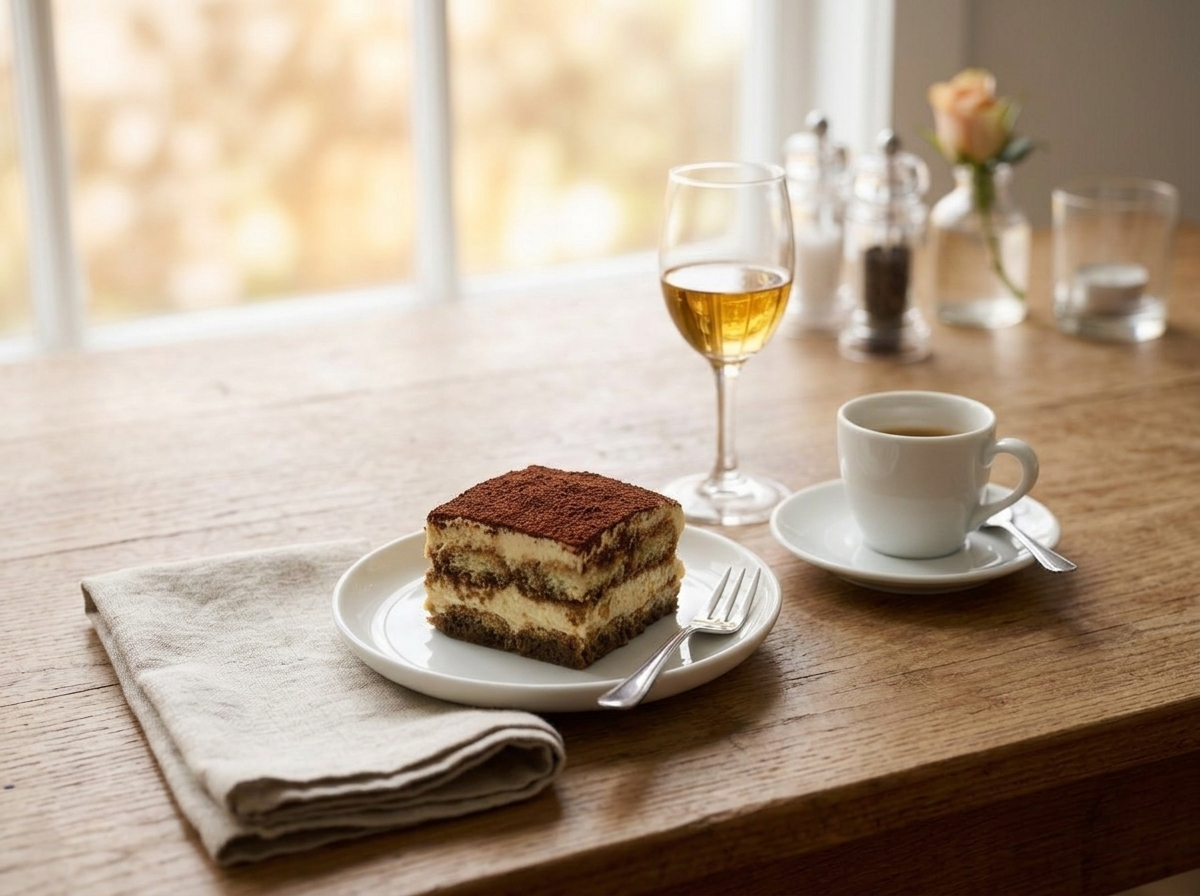
Cut tiramisù classico into squares and serve it cold, straight from the fridge, alongside a small cup of espresso or moka coffee, the same way you’d pair a slice of Ferrara chocolate cake.
A small glass of vin santo or amaretto after dinner echoes the coffee and marsala notes in the cream.
For a dinner party, spoon the layers into individual glasses or small jars instead of a baking dish. It plates cleaner and each guest gets their own portion.
FAQ
Why is my tiramisù classico runny instead of holding its layers?
It’s usually the egg whites, either overwhipped and grainy or deflated during folding. Mascarpone that’s still cold and lumpy, or ladyfingers soaked too long, also loosen the structure. Whip whites to stiff, glossy peaks, fold gently in three additions, and chill at least 6 hours before cutting.
Can I use whipped cream instead of raw egg whites in tiramisù classico?
Yes, this is a common swap and gives a softer, mousse-like texture instead of the classic airy one. Whip 200 ml heavy cream to soft peaks and fold it in where the egg whites would go. It also sidesteps raw egg entirely, which some cooks prefer.
How long does tiramisù classico last in the fridge?
It keeps well for 3 to 4 days, covered tightly in the fridge. The flavor deepens by day two as the coffee soaks further into the savoiardi. Past day four, the cream starts to weep and the texture turns watery, so eat it within that window.
What goes well with tiramisù classico after dinner?
A small espresso or moka coffee is the natural match, since the dessert is already coffee-forward. A glass of vin santo or amaretto also works well, echoing the marsala in the cream. Keep sides simple, this dessert doesn’t need much company on the plate.
Is tiramisù classico gluten free?
No, traditional savoiardi ladyfingers are made with wheat flour, so the classic version contains gluten. You can rebuild it with gluten-free ladyfingers or a gluten-free sponge cake cut into strips, the coffee soak and mascarpone cream stay exactly the same.
What’s the difference between tiramisù classico and tiramisu made with cooked zabaglione?
Tiramisù classico usually folds raw whipped egg whites into the mascarpone for lightness, while a zabaglione-style version whisks whole eggs with sugar over heat into a custard base before folding in the mascarpone. The zabaglione method gives a denser, more custardy cream, closer in richness to the filling in a silky lemon custard tart, and is often preferred for food safety.