Jump to Recipe
The italian christmas cake pandoro recipe wakes the kitchen with warm vanilla and butter, a golden loaf that smells like home and winter light.
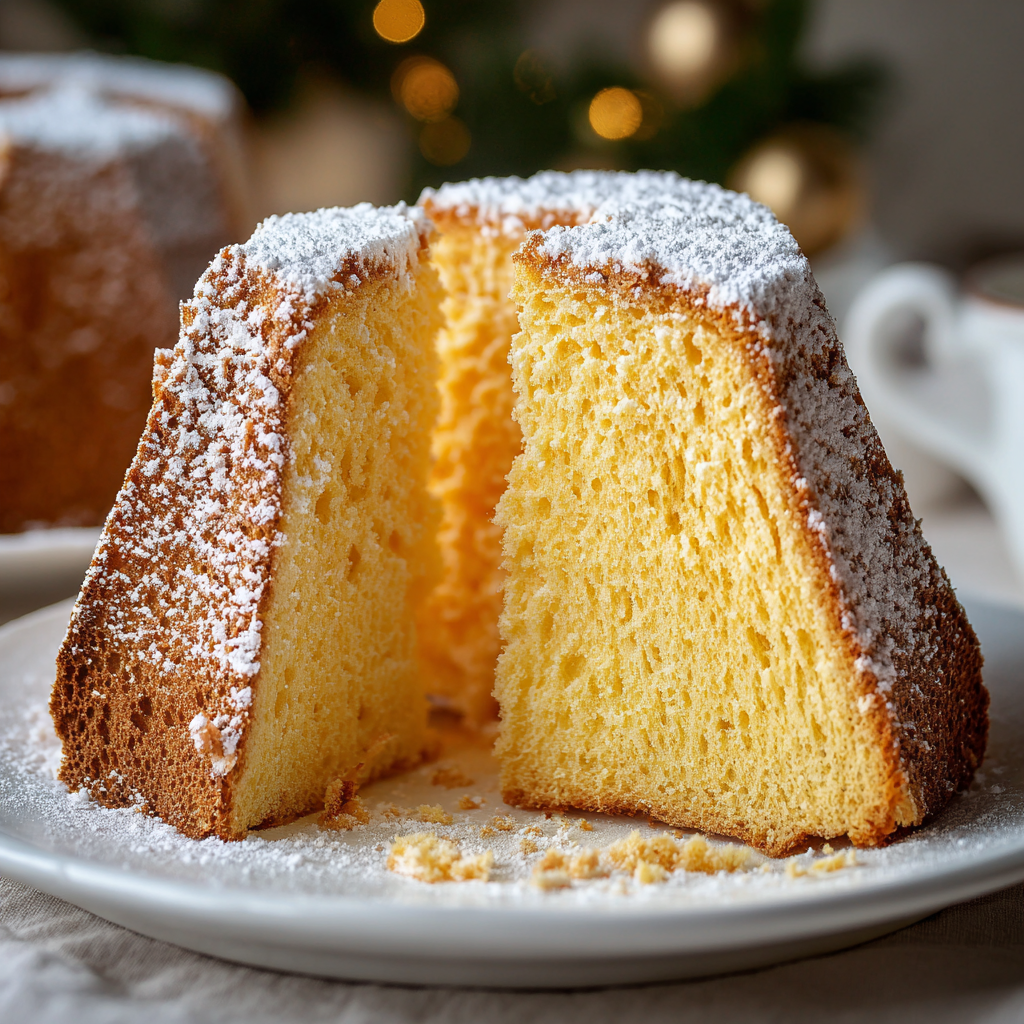
I still remember the first time I sliced into that tall, star-shaped bread: the crumb was tender, custard-yellow, and soft enough to fold over a spoon. This loaf comes from Verona and rises slowly, rewarded by time and a gentle biga that builds structure and deeper flavor.
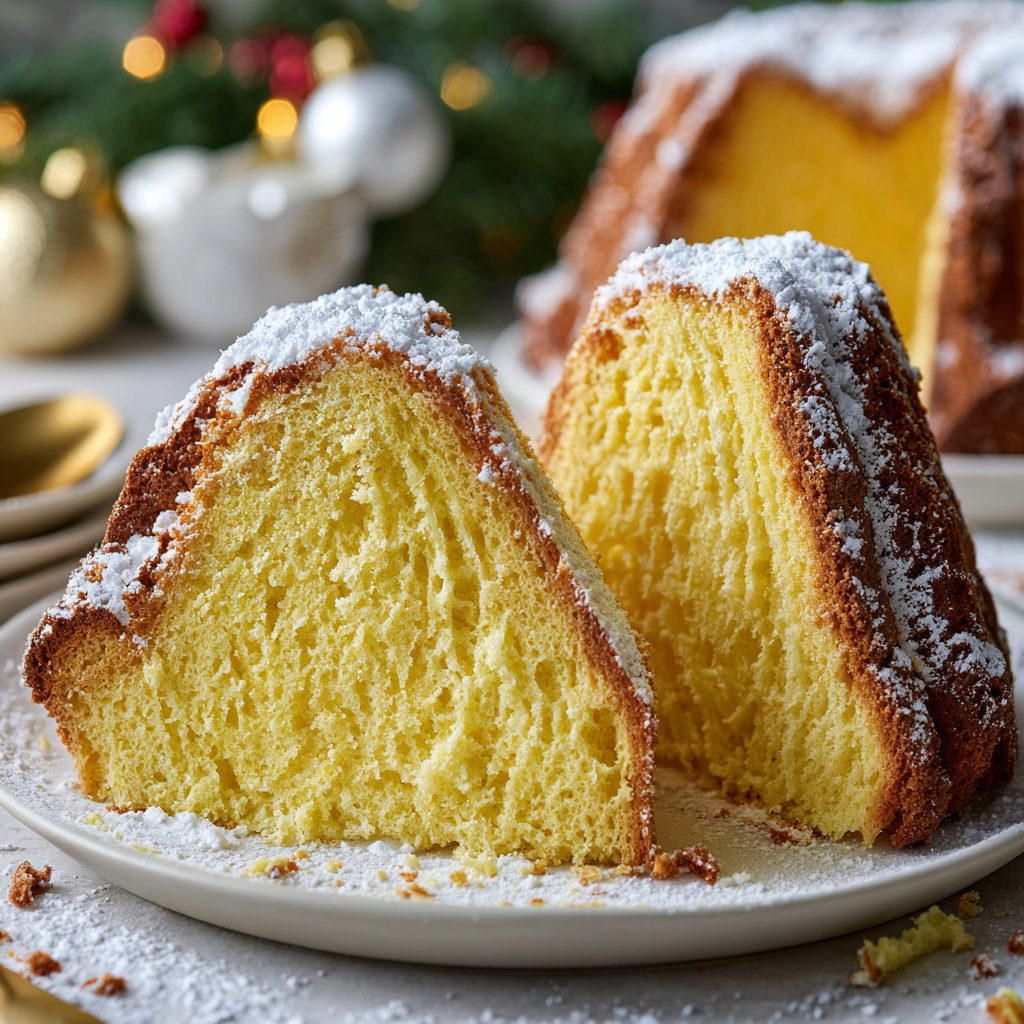
Unlike panettone, you’ll find no candied fruit here — just rich eggs, butter, and careful handling that yield a delicate, almost cloud-like bite. A dusting of fine sugar turns the top into a snowy crown and makes this a simple, elegant centerpiece for the season.
Follow my notes on proofing temperatures, dough feel, and precise weights, and you’ll bake a loaf that tastes like a family tradition, every single year.
Key Takeaways
- Pandoro is a vanilla-forward, bread-like sweet loaf with a soft, yellow crumb.
- A pre-ferment (biga) improves flavor, texture, and shelf life.
- This version skips candied fruit and leans on eggs and butter for richness.
- Gentle mixing and patient proofing give the best rise and silkiness.
- A light shower of fine sugar creates the classic snowy finish.
- Precise weights and reading dough cues help home bakers succeed.
The golden holiday bread from Verona that feels like home
In Verona, a golden loaf with a star-shaped crown signals the start of cozy gatherings and slow baking. Its name means “golden bread,” a nod to the yolk-rich color that gives each slice a warm, buttery hue.
This loaf traces back to Nadalin and was refined by Domenico Melegatti in the late 1800s. Families now serve it at both Christmas Eve and New Year’s, dusted like snowy peaks and set proudly beside the tree.
At the table I aim for a feathery, tender texture with fine strands that pull apart softly. It feels like a simple dessert and reads elegant enough for guests. Compared to panettone, expect no candied fruit—just balanced sweetness, vanilla, and a touch of citrus to lift the richness.
- The eight-point star shape creates dramatic slices that stack into a tiny christmas tree for fun serving.
- Slow, patient mixing and proofing reward you with aroma, structure, and a loaf that says togetherness.
- Choose when to bake so it’s freshest for your celebration—Christmas morning or New Year’s brunch both work well.
What you’ll need: ingredients, tools, and the right mold
Good results start before the mixer runs. Gather your ingredients, bowls, and tools so each stage flows: a simple pre-dough, a building first dough, and a rich second dough.
Ingredients by stage
Biga: water, flour, and yeast mixed to a smooth pre-dough; let it double (about 1–2 hours). First dough: add more flour, sugar, and egg; knead until cohesive and rest 2½–3 hours. Second dough: add flour, sugar, honey, yolks/eggs, citrus zest, vanilla, and salt, then incorporate softened butter slowly until the dough is glossy and pulls from the bowl.
Tools that make a difference
A kitchen scale and a sturdy stand mixer with a dough hook save time and improve consistency. Use two medium bowls: one for each rise and one for buttering the mold and holding shaped dough.
| Choice | Why it matters | Tip |
|---|---|---|
| Flour (12–13% protein) | Holds butter without collapse | Weigh, don’t cup |
| Yeast (active dry) | Reliable rise and flavor | Hydrate in warm water first |
| Mold (9-cup / ~2 L) | Allows even rise and star shape | Butter and dust flour into ridges |
Practical temperature and timing
Keep your kitchen near 68–72 F (20–22 C) for steady proofing. Rich doughs will take longer, so allow extra minutes and trust feel—smooth surface and elasticity—over the clock. Cover bowls lightly with plastic wrap to prevent a skin and check internal doneness later near 195–197 F. Finish with a light dusting of icing sugar after cooling.
From biga to buttery dough: mastering the method step by step
Begin with a lively starter—this gentle pre-ferment builds flavor and gives the dough real backbone. Sprinkle yeast over lukewarm water, stir in flour, and knead just until smooth. Let it double; about 1–2 hours will bring a sweet, wheaty scent and strength to the loaf.
Make the biga
Use a clean bowl and keep the temperature steady. A modest ferment improves keeping and structure, so don’t rush the time.
Build the first dough
Add the biga to flour, sugar, and half the beaten egg. Knead at low speed in your mixer until combined, then add the rest of the egg. Slow, steady kneading for up to 30 minutes develops gluten without overheating.
Enrich the second dough
Whisk honey, zest, and vanilla into the mix, then add eggs one at a time. When the dough pulls from the bowl, add softened butter a bit at a time until glossy and elastic.
Folding techniques
- Rest if the dough smears; a short pause helps gluten relax.
- Transfer to a lightly buttered surface and fold 4–5 times with gentle letter folds.
- Shape, place in the mold, and cover with plastic wrap for the final rest.
| Stage | Cue | Timing |
|---|---|---|
| Biga | Double, sweet smell | 1–2 hours |
| First dough | Smooth, cohesive | Minutes to 30 minutes knead |
| Second dough | Shiny, clears bowl | Minutes (but watch feel) |
Shape, proof, and bake like a pro
The final stages—molding, proofing, and baking—turn a soft dough into a graceful, golden loaf. Follow clear visual cues and exact temps so your loaf rises tall and releases cleanly.
Prepare the star mold
Generously butter the mold, pushing into every ridge until it glows. Dust lightly with flour and shake out the excess; this two-step prep prevents sticking and keeps the ridges crisp.
Final proof and oven steps
Place the dough seam side up, cover, and proof at 68–72 F until nearly tripled and about 1/2–1 inch above the rim. Expect about 4–5 hours depending on kitchen warmth.
Preheat the oven fully. Bake at 325 F for 30 minutes, then lower to 300 F for another 30 minutes. For larger size molds, bake around 300 F for 35–45 minutes. If the top browns too fast, tent loosely with foil.
Finish, rest, and serve
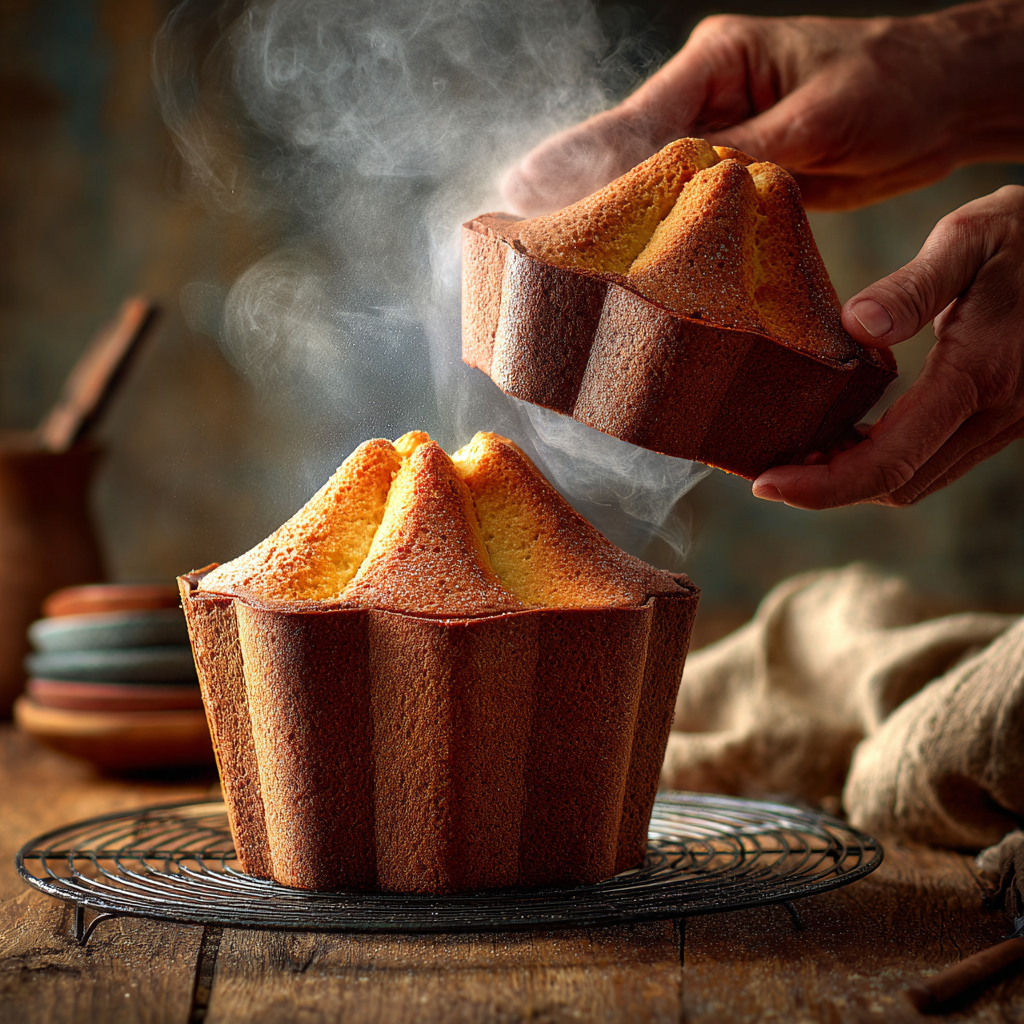
Check the internal temperature with an instant-read—aim for 195–197 F. Rest the loaf 15–30 minutes in the mold to stabilize the crumb, then unmold to a rack.
Cool until barely warm and dust with powdered sugar for that classic snowy look before slicing and serving.
| Step | Visual cue | Timing |
|---|---|---|
| Prep mold | Glossy butter, thin flour film | Minutes |
| Final proof | Nearly tripled, above rim | 4–5 hours |
| Bake | Even golden top, tent if needed | 30–45 minutes |
| Rest | Holds shape in mold | 15–30 minutes |
Italian Christmas Cake Pandoro Recipe: serving, slicing, and festive finishes
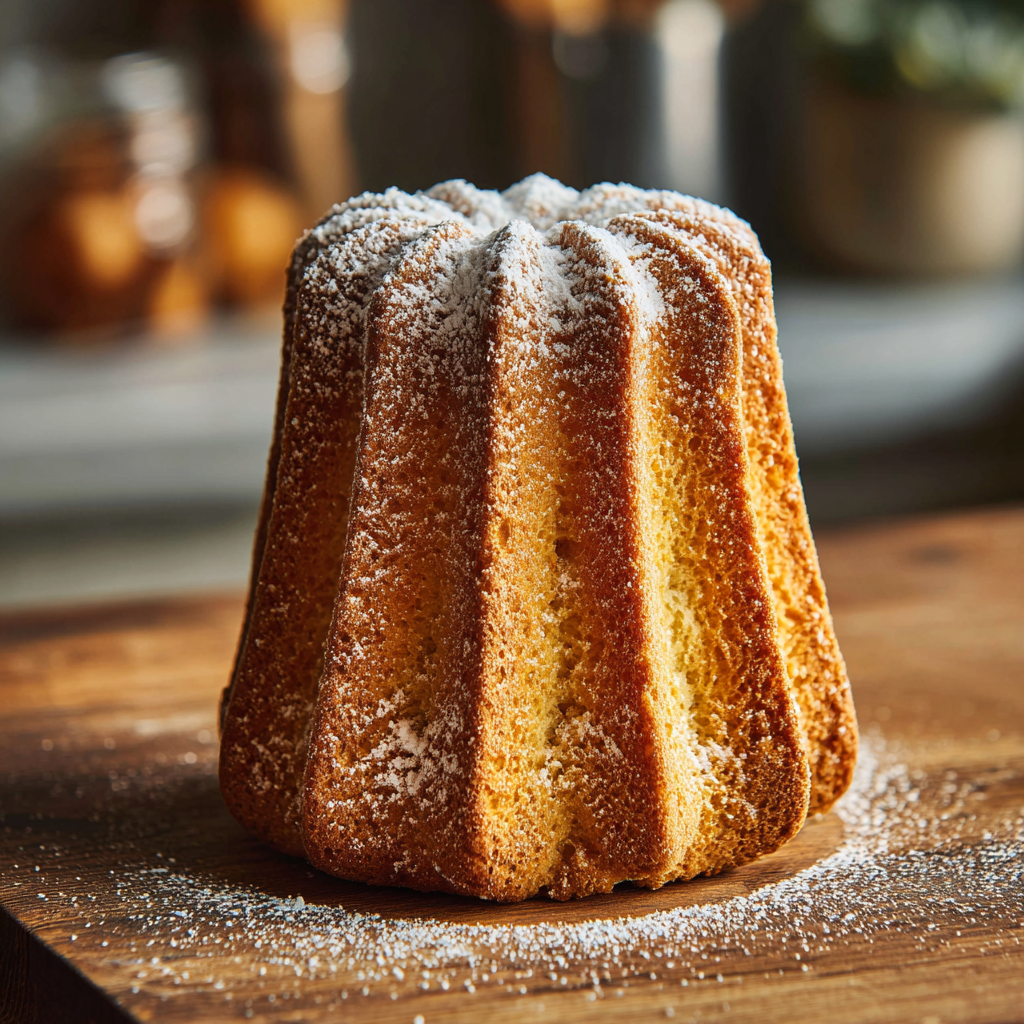
A gentle snowfall of confectioners’ sugar brings out the loaf’s ridges and invites everyone to the table. I tap powdered sugar through a fine sieve so it settles evenly into the star points. A light dusting of icing sugar creates that classic snowy top without hiding the shape.
Christmas tree effect
For a playful christmas tree display, I cut thick horizontal slices, rotate each layer slightly, and spread a thin layer of cream or custard between them. This builds height and makes each slice a small gift.
Pairings that shine
Mascarpone sweetened with a touch of citrus is my go-to. Zabaglione or vanilla custard lifts the loaf into an elegant dessert, while a silky chocolate drizzle adds richness without drowning the butter notes.
Breakfast to dessert
Toast slices gently for morning, or make French toast for a festive brunch. Leftovers become parfaits or trifles layered with cream, fruit, and crumbs for a second celebration.
- Serve on a simple white plate to let the star shape shine.
- Sift powdered sugar or icing sugar just before serving for best effect.
| Serving Style | Texture | Best Pairing | When to Serve |
|---|---|---|---|
| Sliced, dusted | Light, airy | Powdered sugar, mascarpone | After cooling, dessert |
| Stacked tree layers | Moist between layers | Custard, zabaglione | Centerpiece for brunch |
| Toasted slices | Golden, crisp edge | Jam, mascarpone | Breakfast or brunch |
| Plated with chocolate | Rich, indulgent | Light ganache, fresh fruit | Special dessert plates |
Troubleshooting and pro tips for predictable results
When the dough resists, I rely on feel, a short rest, and tiny adjustments to get back on track. These checks save time and keep the loaf soft and tender.
Sticky dough and slow rises
If the dough feels too sticky, pause mixing for 5–10 minutes. Resting lets gluten relax so the surface firms without extra flour.
When you must add flour, do it in teaspoon amounts. A dry dough makes a dense crumb, and it’s harder to fix than to prevent.
Preventing dryness during bake
Keep your kitchen near 68–72 F for steady rises. Bake to an internal temperature of 195–197 F to set crumb while holding moisture.
If the top browns too fast, tent with foil in the oven so the center reaches temp without overcooking the crust.
- Check yeast freshness; hydrate in lukewarm liquid to avoid stalled fermentation.
- Rest shaped dough in a buttered mold, cover with plastic wrap, and place in a warm spot for final proof (several hours if cool).
- If a corner sticks, loosen gently with a thin spatula after a short rest.
| Issue | Likely cause | Quick fix | Why it works |
|---|---|---|---|
| Sticky dough | Gluten not relaxed or under-kneaded | Pause mixer 5–10 minutes; knead again | Resting lets strands align and absorb moisture |
| Slow rise | Low temperature or weak yeast | Move bowl to 68–72 F; check yeast age | Warmer ferment speeds activity without harming flavor |
| Top browning | Oven too hot or long bake time | Tent with foil until center hits 195–197 F | Shields crust while center finishes gently |
| Stuck edge | Insufficient butter or flour in mold | Loosen with thin spatula; butter and flour next time | Proper release preserves shape and soft crumb |
Bake it, share it, and keep it fresh through the season
A snug layer of plastic wrap keeps the loaf soft and ready to share. Once cool, I wrap the pandoro tightly, then slip it into an airtight bag to protect the delicate crumb.
At room temperature in a dry place it will keep well for several days — typically 4–7 depending on richness and how snug you wrap. I avoid freezing; it can blunt the ultra-soft texture that makes this bread special.
For gifting, pre‑slice a few elegant slices and include a small jar of chocolate or mascarpone with serving notes. If you need minutes on the day, bake a day ahead and dust with sugar just before serving for a fresh top.
Serve wedges from a 9-cup size loaf at the table, or stack horizontal slices into a small tree centerpiece. These simple steps make sharing easy all season and help every bite feel like company.
Italian Pandoro (Traditional Christmas Star Cake)
Ingredients
Method
- Mix the lukewarm water, flour, and yeast in a bowl.
- Knead briefly until smooth.
- Cover and let it double at room temperature (1–2 hours).
- It should smell lightly sweet and feel airy.
- Add the biga to a mixer bowl.
- Add flour, sugar, and half the beaten egg.
- Mix on low until combined.
- Add the remaining egg and continue mixing.
- Knead on low speed for 15–30 minutes until smooth and elastic.
- Cover and rest until puffy (about 2½–3 hours).
- Add the second dough flour, sugar, honey, zest, vanilla, eggs, and yolks to the first dough.
- Mix on low until the dough pulls from the sides.
- Add the softened butter a little at a time, letting each piece absorb before adding more.
- Mix until glossy, stretchy, and smooth.
- Let the dough rest 10 minutes if it feels too sticky. Fold gently a few times.
- Generously butter a 9-cup (≈2 L) star-shaped pandoro mold.
- Dust with flour and tap out the extra.
- Form the dough into a smooth ball and place it seam-side up in the mold.
- Cover lightly with plastic wrap.
- Proof at 68–72°F (20–22°C) until the dough nearly triples and rises ½–1 inch above the rim (about 4–5 hours).
- Preheat oven to 325°F (165°C).
- Bake for 30 minutes.
- Lower to 300°F (150°C) and bake another 30 minutes.
- Tent with foil if the top browns too fast.
- Internal temperature should reach 195–197°F (90–92°C).
- Let the pandoro rest in the mold for 15–30 minutes.
- Unmold onto a rack and cool until just warm.
- Dust generously with powdered sugar for the classic snowy look.
Notes
- Pandoro dough is naturally sticky—avoid adding too much flour. Resting the dough for 5–10 minutes helps it tighten up.
- A kitchen scale makes a big difference with enriched doughs.
- Proofing temperature matters more than the clock. Warm but not hot rooms get the best rise.
- For a pretty “Christmas tree” effect, slice the loaf horizontally and twist the layers, adding a light cream or mascarpone between slices.