
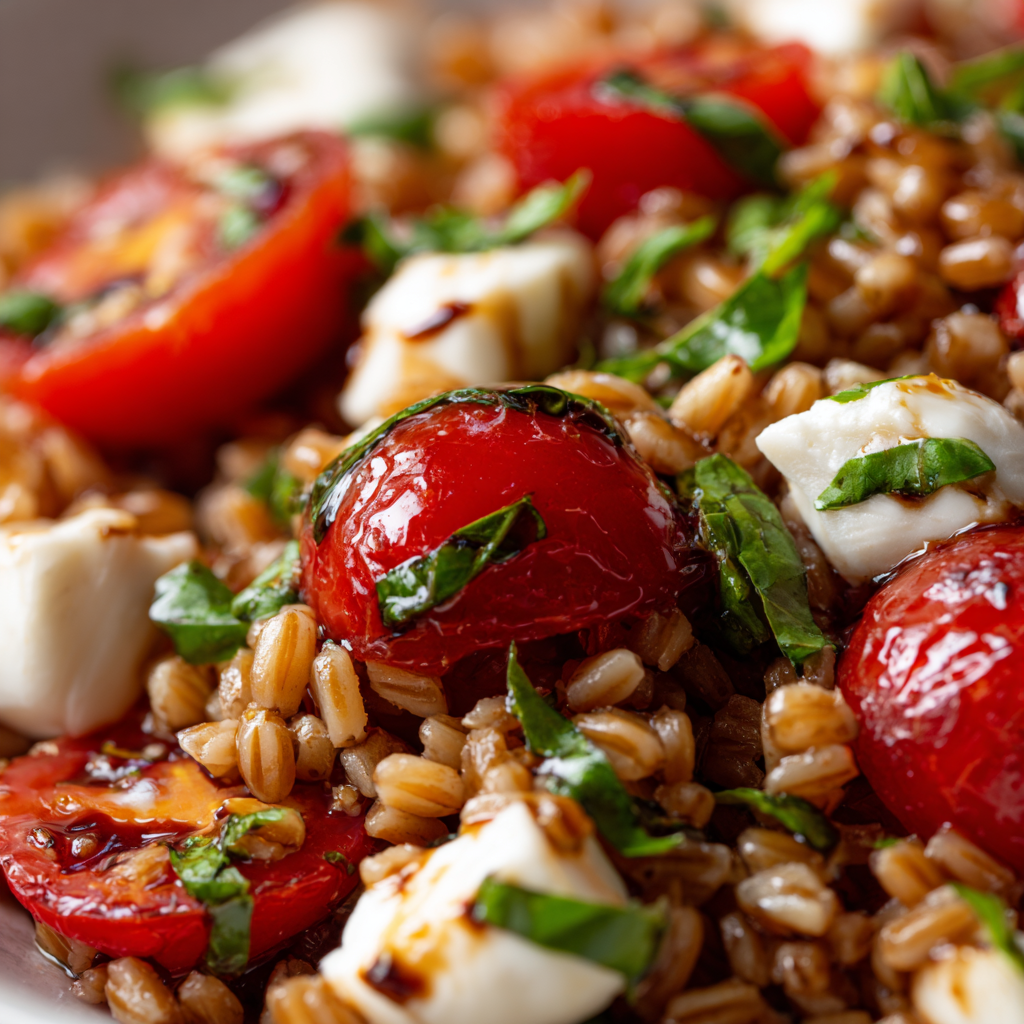
Jump to Recipe
Ripe tomatoes, creamy mozzarella, and fresh basil create magic together. These ingredients transport us to long Italian afternoons. We remember a small café overlooking Lake Como during our honeymoon.
A simple plate of these ingredients with wine felt perfect. That moment stayed with us forever.
That memory inspired this Italian grain salad. We added nutty, chewy farro to those classic flavors. Now the dish feels more filling and satisfying.
This Mediterranean farro recipe shines at BBQs and picnics. It also works great for weeknight dinners. The grains add heartiness while vegetables keep things light.
This caprese farro salad recipe captures authentic Italian summer dining. It’s simple and fresh. Every bite connects you to real culinary traditions.
Key Takeaways
- Combines classic caprese ingredients with nutty farro for a hearty yet refreshing dish
- Perfect for summer gatherings, BBQs, picnics, and outdoor dining occasions
- Works as a complete meal or versatile side dish paired with crusty bread
- Features fresh cherry tomatoes, mozzarella, basil, and balsamic dressing
- Inspired by authentic Italian dining experiences and culinary traditions
- Balances substantial texture with light, bright Mediterranean flavors
What Makes This Mediterranean Farro Salad Perfect for Summer
This easy farro caprese captures everything we love about warm-weather cooking. Fresh, seasonal ingredients come together during these warm months in magical ways. This healthy caprese grain bowl takes full advantage of summer abundance.
The star ingredient reaches peak perfection from June through September. Those gorgeous, sun-ripened cherry tomatoes burst with sweetness you cannot replicate any other time. We check our tomato plants almost daily, waiting for that perfect moment.
Summer is the season for eating outdoors. BBQs, picnics, Fourth of July celebrations, and outdoor gatherings all call for fresh, easy salads. The dish tastes best when tomatoes are in season.
This dish solves one of summer’s biggest entertaining challenges. You need food that travels well and tastes delicious at room temperature. This Mediterranean farro recipe checks all those boxes beautifully.
The farro maintains its wonderful chewy texture even after sitting for hours. The tomatoes release their juices to mingle with the balsamic dressing. The fresh basil perfumes everything with that unmistakable aroma of Italian summer.
We love making this for potlucks and picnics because it actually improves as it sits. All those flavors marry together in the most delicious way. The salad keeps well up to five days refrigerated.
It’s substantial enough to serve as a main course for vegetarian guests. Yet it’s light enough that it won’t weigh anyone down on a hot day. The protein and fiber from farro keep everyone satisfied.
This dish disappears quickly at gatherings. Guests always ask for the recipe, and we’re always happy to share it. Spreading the joy of authentic Italian flavors is what we’re all about.
Caprese Farro Salad Recipe Ingredients You’ll Need
This balsamic farro caprese shines through its simplicity. Every single ingredient matters here. Quality becomes everything with just a handful of components.
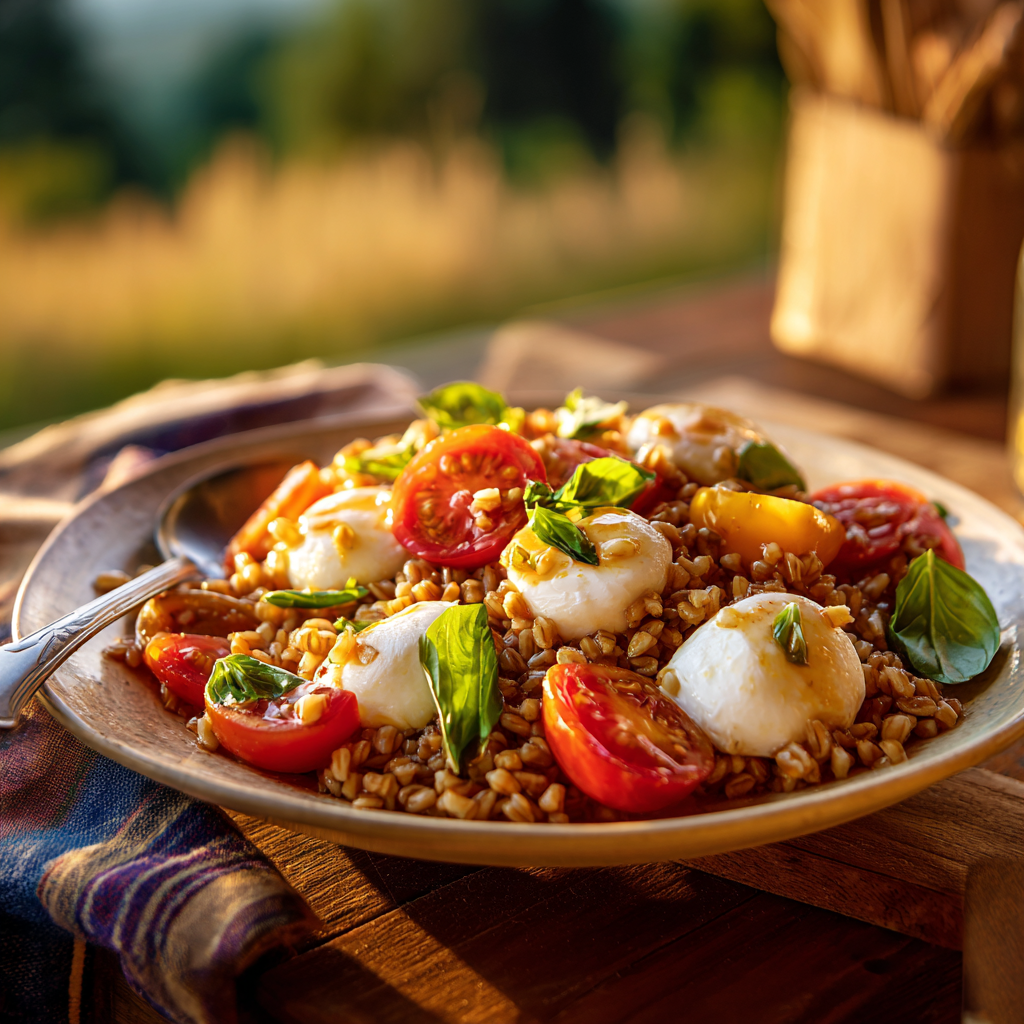
We’ll walk through exactly what you need. You’ll learn why each ingredient is important. We’ll help you choose the best options at your market.
This isn’t just a shopping list. You’ll understand your ingredients completely. This knowledge helps you create the most delicious tomato mozzarella farro possible.
The Main Components
Start with one cup of dry, uncooked farro. This yields roughly three cups of cooked grain. That’s perfect for four to six generous servings.
We prefer whole grain farro best. It keeps all that wonderful fiber and nutrition intact. Plus it has this satisfying, slightly chewy texture.
You’ll cook your farro in three cups of liquid. Water works perfectly fine and keeps the dish lighter. We often use chicken broth instead for subtle flavor.
You’ll want one cup of cherry or grape tomatoes, halved. Their sweet juices can mingle with everything else. Use the ripest, most flavorful tomatoes you can find.
The mozzarella situation is wonderfully flexible. It honestly comes down to personal preference. Here are your options:
- Traditional fresh mozzarella cut into bite-sized pieces (about 8 ounces)
- Shredded mozzarella (one cup) that distributes throughout the salad beautifully
- Mozzarella balls called ciliegene (about 6 ounces), which are adorable and perfectly portioned
- Burrata (our indulgent choice) with its creamy center that coats everything when torn into pieces
You’ll need about half a cup of fresh basil leaves. You’ll cut them into thin ribbons using chiffonade technique. Fresh basil brings bright, peppery, slightly sweet flavor.
Some versions of this tomato mozzarella farro include optional additions. Half a cup of slivered almonds adds wonderful crunch. A quarter cup of thinly sliced red onion brings sharp, savory notes.
For the Balsamic Dressing
The dressing for this balsamic farro caprese stays wonderfully simple. Quality ingredients need minimal embellishment here. You have two perfectly acceptable paths.
The quickest route uses three tablespoons of good-quality store-bought balsamic vinaigrette. There’s absolutely no shame in taking this shortcut. We do it ourselves when life gets busy.
The more traditional approach is making your own dressing. You’ll combine these simple ingredients right in the bowl:
- Balsamic vinegar (anywhere from 1.5 tablespoons to 1/4 cup, depending on your taste)
- Extra virgin olive oil (3 to 4 tablespoons)
- Salt (a generous pinch)
- Freshly ground black pepper (to taste)
The ratio can vary based on your preferences. Some of us like a more assertive dressing. Others prefer something gentler with less vinegar.
Start with less vinegar and add more to taste. You can always add more later. The balsamic provides that characteristic sweet-tart flavor with hints of complexity.
A generous pinch of salt is essential. It brightens everything and helps the tomatoes release their juices. Freshly cracked black pepper adds gentle heat and aromatic quality.
Choosing Quality Ingredients
Understanding your ingredients helps you make better choices at the market. This creates a more delicious dish overall. We want to share what we’ve learned over years.
Not all farro is created equal. You’ll typically encounter three types at the store. Knowing the differences helps you choose wisely:
| Farro Type | Cooking Time | Characteristics | Best For |
|---|---|---|---|
| Whole Grain (Integrale) | 25-30 minutes | Retains entire outer husk, most fiber and nutrients, nuttiest flavor | When you have time and want maximum nutrition |
| Semi-Pearled (Semi-Perlato) | 20 minutes | Some bran removed, good nutrition and flavor balance | Best compromise of taste and convenience |
| Pearled (Perlato) | 15 minutes | Bran completely removed, cooks quickly, milder flavor | Quick weeknight meals |
We usually reach for whole grain farro when we have time. We love that deep, nutty flavor and satisfying texture. But we keep Trader Joe’s ten-minute farro in our pantry for busy days.
Farro unfortunately won’t work if you’re avoiding gluten. This ancient grain comes from wheat. You can absolutely substitute other whole grains like quinoa, buckwheat, amaranth, or millet.
Please wait for summer tomatoes if you possibly can. The difference between winter and summer tomatoes is huge. We’re talking about tomatoes that smell like tomatoes.
Look for fruits that feel heavy for their size. They should have vibrant color. They should give off that characteristic tomato fragrance when you smell the stem end.
For mozzarella, seek out fresh mozzarella rather than the aged kind. Fresh mozzarella should be soft, milky, and mild. It’s typically stored in water or whey to keep it moist.
If you can find burrata at your market, try it. That creamy center takes this salad to another level entirely. When you tear it open, that soft, rich filling spills out beautifully.
The basil must be fresh. Look for vibrant green leaves without dark spots or wilting. Give the bunch a gentle sniff for that unmistakable basil aroma.
You don’t need expensive aged traditional balsamic from Modena. But do avoid the very cheapest options. A mid-range balsamic vinegar di Modena gives you characteristic sweet-tart complexity.
The olive oil should be extra virgin. We encourage you to taste it on its own. It should be fruity, slightly peppery, and pleasant enough to drink straight.
How to Prepare Your Easy Farro Caprese
Now we get to the fun part – bringing these wonderful flavors together. Preparing grain salad like this caprese version is quite simple. I’ll walk you through each step with plenty of detail.
The beauty of this recipe lies in its straightforward approach. The process flows naturally from one step to the next. Let me share the techniques that work best in our kitchen.
Cooking the Farro to Perfection
Getting your farro just right is the foundation of this salad. The good news is that the farro cooking method is straightforward. We cook it more like pasta than rice.
Start by bringing three cups of liquid to a rolling boil. I use either water or chicken broth depending on what’s available. Broth adds savory depth, while water keeps things lighter.
Once your liquid reaches a full boil, add one cup of rinsed farro. Add a generous pinch of salt too. That salt seasons the grain from the inside as it cooks.
Give everything a good stir, then reduce the heat to medium-low. You want to maintain a steady, gentle simmer. Look for that pleasant bubbling motion where the surface moves but not aggressively.
| Farro Type | Cooking Time | Liquid Ratio | Texture Result |
|---|---|---|---|
| Whole Grain Farro | 25-30 minutes | 1 cup farro : 3 cups liquid | Chewy, nutty, firm bite |
| Pearled/Semi-Pearled | 15-20 minutes | 1 cup farro : 3 cups liquid | Tender, slightly softer |
| Trader Joe’s 10-Minute | 10 minutes | 1 cup farro : 3 cups liquid | Quick-cooking, tender |
| All Types (Draining) | Varies by type | Use fine-mesh strainer | Remove excess moisture |
For whole grain farro, set your timer for twenty-five minutes. Then start checking for doneness. The grains should feel tender but still have that pleasant chew.
If you bite into a grain and feel a hard center, it needs more time. Keep cooking farro and checking every few minutes. For pearled varieties, start testing around the fifteen-minute mark.
Once your farro reaches that ideal consistency, pour everything through a fine-mesh strainer. Give it a good shake to remove as much water as possible. You don’t want a soggy salad.
Here’s the part many people overlook: let the farro cool completely. If you add cheese and fresh basil to hot grains, problems happen. The cheese melts into a mess and the basil wilts.
I usually spread the drained farro on a large plate or baking sheet. This helps it cool faster. It takes about fifteen to twenty minutes at room temperature.
Preparing the Fresh Ingredients
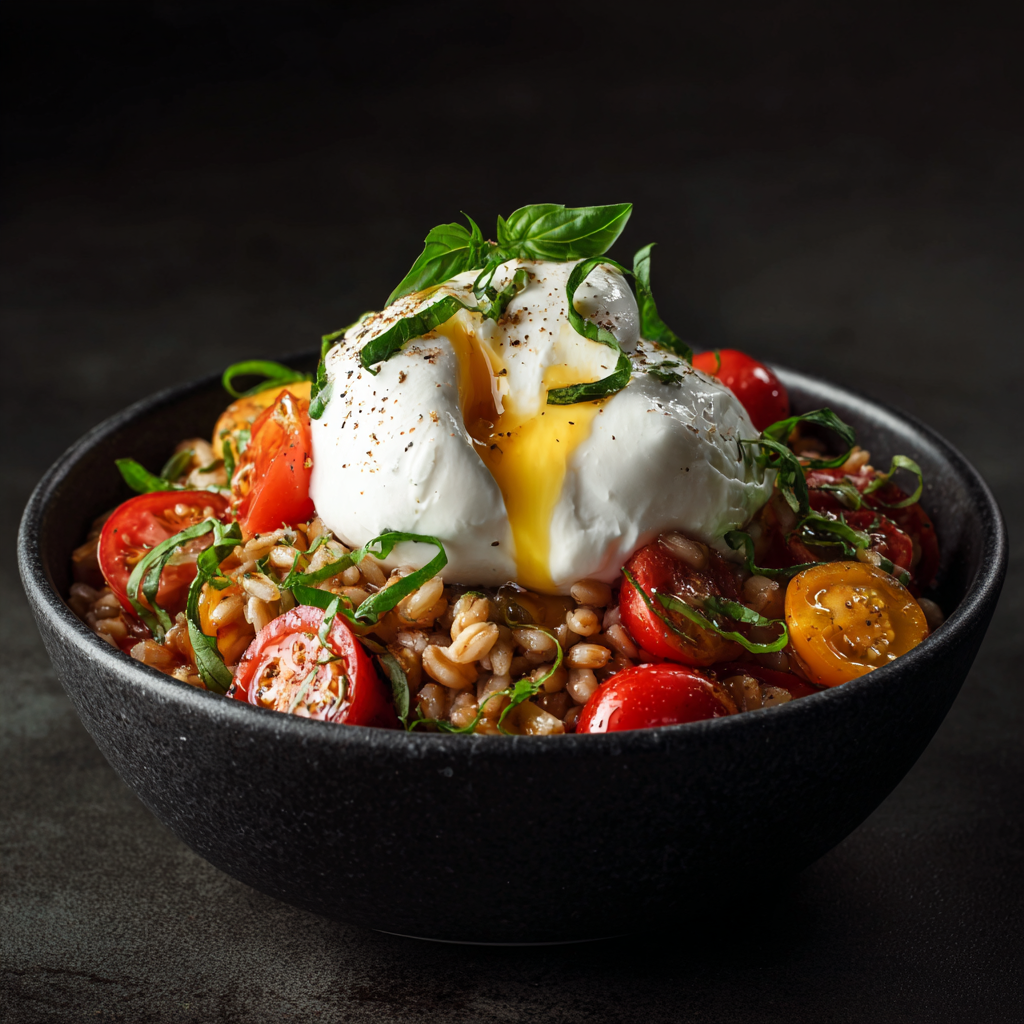
While your farro cools, we’ll get all the fresh components ready. This is where preparing grain salad becomes truly enjoyable. Working with these beautiful, vibrant ingredients is a pleasure.
Start with those gorgeous cherry tomatoes. Slice each one in half through the equator. This cut exposes the most surface area.
I like using a very sharp paring knife for this task. Work on a cutting board with a slight lip. Don’t discard that liquid – scrape it right into your salad bowl.
Next comes the basil, and the technique here matters. We’re going to cut it into thin ribbons using chiffonade. It sounds fancy but is actually quite simple.
Stack several basil leaves on top of each other. Roll them together lengthwise into a tight cigar shape. Using a sharp knife, slice across the roll to create thin ribbons.
The key is using a sharp blade with a smooth slicing motion. This prevents bruising the delicate leaves. You’ll end up with lovely green ribbons that distribute beautifully.
For the mozzarella, your approach depends on what type you chose. Pre-shredded mozzarella is already done – just measure out your cup. If you have mozzarella balls, you can leave them whole or cut them.
Fresh mozzarella from a ball should be cut into bite-sized pieces. Try to cut it with a sharp knife rather than tearing it. Work over your salad bowl so you don’t lose any liquid.
If you’re using burrata, don’t cut it yet. You’ll tear it into pieces with your hands right before serving. This is part of the pleasure of working with this luxurious cheese.
For the optional red onion, slice it as thinly as you possibly can. A mandoline works beautifully if you have one. The onion adds a sharp note that I love.
The slivered almonds need no preparation unless you want to toast them. Toast them lightly in a dry skillet for a few minutes. This enhances their flavor wonderfully.
Mixing the Balsamic Dressing and Combining Everything
This is the beautiful moment where everything comes together. The caprese salad assembly is where your efforts transform into something special. I have two slightly different approaches, both yielding delicious results.
The first method involves dressing the farro before adding other ingredients. Place your cooled farro in a large serving bowl. Make sure it’s truly large enough because you need room to toss.
Drizzle your balsamic vinegar and olive oil directly over the farro. Use a large spoon or spatula to toss everything together. Make sure every grain gets coated with that glossy dressing.
This approach seasons the farro thoroughly and helps the grains absorb flavor. Next, add your halved tomatoes and gently stir them in. Let those juices combine with the dressing.
Finally, add your cheese. If you’re using burrata, this is when you tear it into rough pieces. Let that creamy center spill out into the salad. Scatter the basil ribbons over the top and give everything one final toss.
The second method is even simpler and works beautifully when you’re in a rush. Just combine your cooled farro, tomatoes, cheese, and basil in that large bowl. Drizzle the oil and vinegar over everything.
Add a good pinch of salt and several grinds of black pepper. Toss it all together until everything is well combined and glistening. This method is more rustic and gives you beautiful pockets of concentrated flavor.
Either way, taste your salad at this point and adjust the seasoning. Does it need more salt? More vinegar for brightness? Trust your palate and make it exactly how you like it.
This salad can be served immediately while the farro is still slightly warm. This is lovely because the cheese gets a bit melty and soft. But it’s equally delicious at room temperature or even cold.
In fact, I often think the flavors improve after an hour or two. This gives everything time to mingle and develop. If you’re making this ahead for a gathering, prepare everything up to adding the basil.
Refrigerate it in an airtight container, then add the fresh basil right before serving. This salad keeps beautifully in the refrigerator for up to five days. This makes it perfect for meal prep.
Just portion it into containers for easy lunches throughout the week. You’ll love having this ready to grab for a quick meal. It tastes like you put in way more effort than you actually did.
Making This Summer Farro Salad Work for You
We love how this caprese farro salad adapts to different occasions and preferences. Serve it as a light main course with crusty sourdough bread. The combination feels satisfying without being heavy, perfect for warm summer evenings.
This recipe shines at outdoor gatherings. It travels beautifully to picnics and BBQs without wilting like lettuce-based salads. The flavors actually deepen as it sits, making it ideal for grain salad meal prep.
Store it in your refrigerator for up to five days. Portion it into containers for ready-made lunches throughout the week.
For farro salad variations, try different grains based on your needs. Quinoa works wonderfully for a gluten-free option. Barley or spelt offer similar hearty textures.
Buckwheat brings an earthy flavor that complements the fresh mozzarella beautifully.
Consider your audience with caprese salad serving ideas. Add grilled chicken or shrimp for extra protein. Toss in arugula for peppery bite, or include Kalamata olives for Mediterranean depth.
Skip the almonds or red onion if those aren’t your preference.
The beauty of customizing farro recipes lies in trusting your instincts. Use the ripest seasonal tomatoes you can find. Let the salad rest for thirty minutes before serving to allow flavors to meld.
This becomes the kind of dish you’ll make again and again. Change it slightly each time while honoring those essential Italian flavors we hold dear.
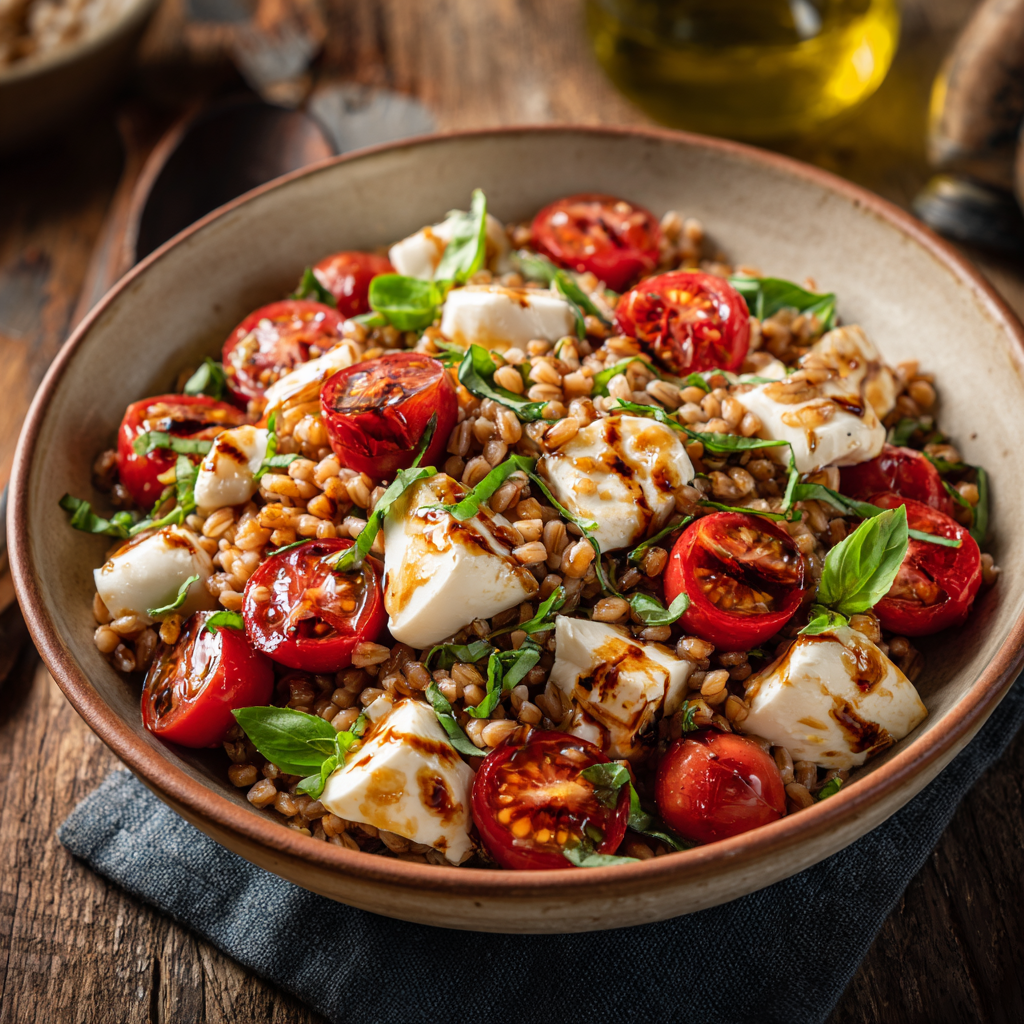
Caprese Farro Salad
Ingredients
Method
- Bring 3 cups of water or broth to a boil.
- Rinse the farro and add it to the pot with a generous pinch of salt.
- Reduce heat to a gentle simmer.
- Whole grain farro: 25–30 minutes
- Semi-pearled: 20 minutes
- Pearled: 15 minutes
- TJ’s 10-minute farro: ~10 minutes
- Cook until tender but still pleasantly chewy.
- Drain well using a fine-mesh strainer.
- Spread the farro on a plate or baking sheet and let it cool completely.
- Slice the cherry tomatoes in half and save their juices.
- Cut the mozzarella into bite-size pieces (or leave ciliegine whole).
- If using burrata, leave it whole for now.
- Stack basil leaves, roll them into a “cigar,” and slice into thin ribbons.
- If using red onion, slice it very thin.
- If using almonds, toast lightly in a dry skillet for 2–3 minutes.
- Option 1: Use 3 tbsp store-bought balsamic vinaigrette.
- Option 2: Stir balsamic vinegar, olive oil, salt, and pepper together. Start with less vinegar and adjust to taste.
- Method A (best flavor):
- Add cooled farro to a large bowl.
- Pour the dressing over the farro and toss well.
- Add tomatoes and gently stir.
- Add mozzarella and basil.
- If using burrata, tear it into chunks now so the creamy center mixes through the salad.
- Add optional almonds and onions.
- Toss again and taste. Adjust salt, pepper, or balsamic as needed.
- Method B (quick method):
- Add all ingredients to a big bowl, drizzle dressing over everything, season, and toss.
- Serve slightly warm, room temperature, or cold. Tastes even better after resting for 1–2 hours.
Notes
- This salad truly shines with ripe summer tomatoes. Winter tomatoes won’t give the same flavor.
- Let the salad rest 30–60 minutes so the tomatoes release their juices into the dressing.
- Add basil only once the farro is cool so it stays green and fresh.
- Keeps up to 5 days in the fridge, making it great for meal prep.
- Gluten-free? Swap farro with quinoa or buckwheat.
- For extra protein, add grilled chicken, shrimp, or salmon.