
Jump to Recipe
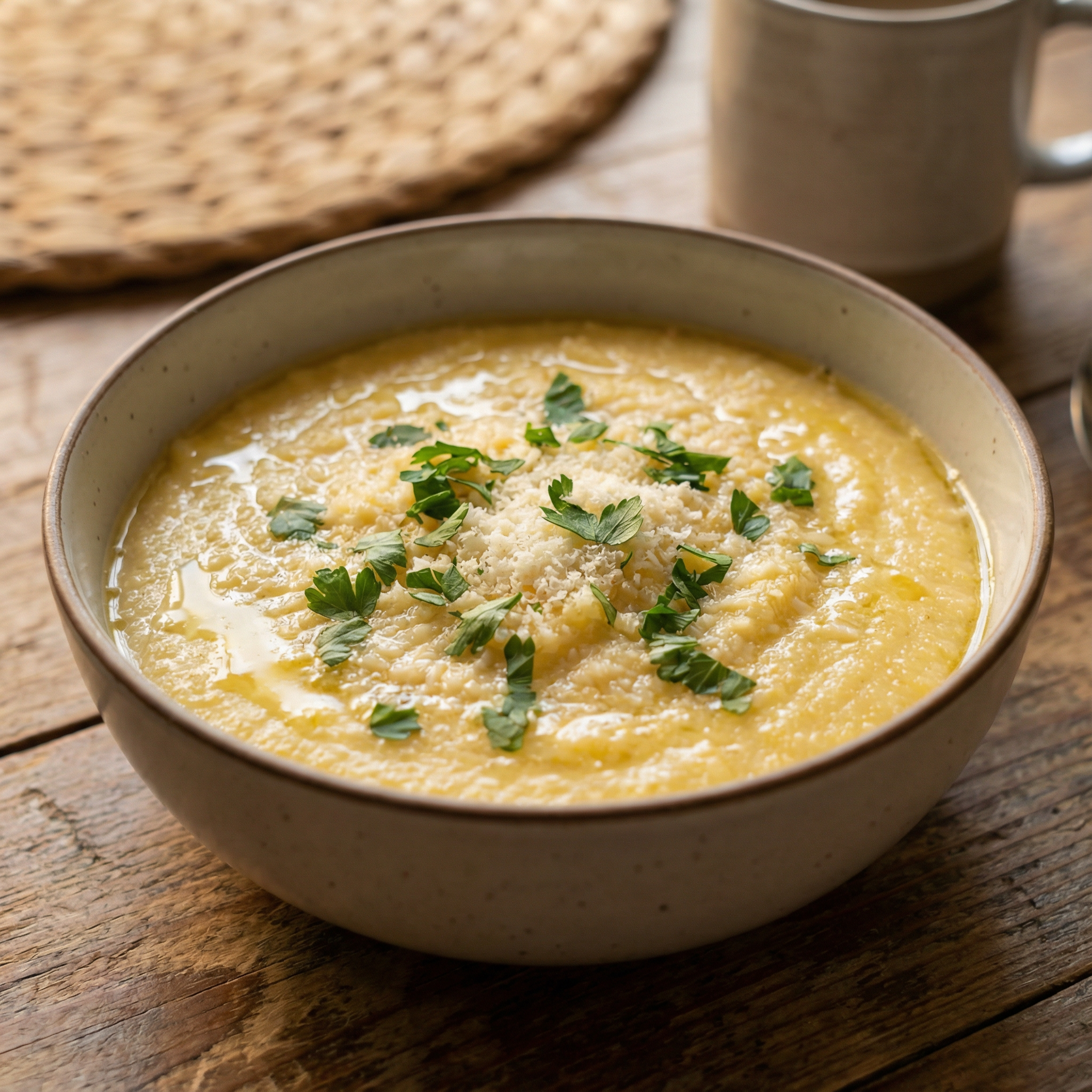
I learn this one at my nonna’s stove, where the kitchen smelled of warm corn and slow-simmered stock, and hands taught me patience. I stir, taste, and steady the heat until the grain loosens into a spoonable comfort that pairs well with slow-braised meats or bright roasted vegetables.
Here I share clear, practical tips—choose a heavy pot, use medium to coarse cornmeal, and respect gentle heat so you get the right texture. I explain why water, stock, or milk change the final flavor, how a knob of butter and a handful of Parmigiano Reggiano finish the dish, and simple storage tricks for keeping it luscious for days.
For a deeper, family-rooted method and variations, see this short guide: my family’s take on the classic.
Key Takeaways
- Use medium–coarse cornmeal and a sturdy pot for best results.
- Choose water, stock, or milk to control texture and flavor.
- Finish with butter and Parmigiano for a glossy, balanced bowl.
- Keep covered up to 1 hour before serving; store up to 3 days.
- Stir gently over medium-high heat to avoid scorching.
Why this creamy polenta with cheese delivers every time
I count on rhythm: slow pouring, steady whisking, and moderate heat to coax out the best texture. Continuous whisking as you add the cornmeal prevents lumps. Start on medium-low heat so each grain hydrates evenly.
Quality Parmigiano and unsalted butter matter. The cheese brings savory depth and a clean salt boost. Butter adds sheen and helps fat carry flavor without hiding the corn’s natural sweetness.
- I season in layers and taste near the end; this keeps salt in check because the cheese is salty too.
- Respect time—rushing leaves grit; patience yields tender, spoonable results for any side or main.
- Pick a ratio to suit the finish: 4:1 for classic, 5:1 for silkier bowls, 3:1 for a sliceable outcome.
| Ratio (grain:liquid) | Result | Best use |
|---|---|---|
| 5:1 | Very smooth, almost velvety | Plated as a silky side dish |
| 4:1 | Classic spoonable texture | Pairs with braises and roasted veg |
| 3:1 | Thicker, holds shape when set | Sliced and pan-fried slices for starters |
Gather your ingredients the Italian way
I start by laying out every ingredient on the counter; seeing them together makes the process calm and clear. This helps me choose the right cornmeal and liquids before the pot heats.
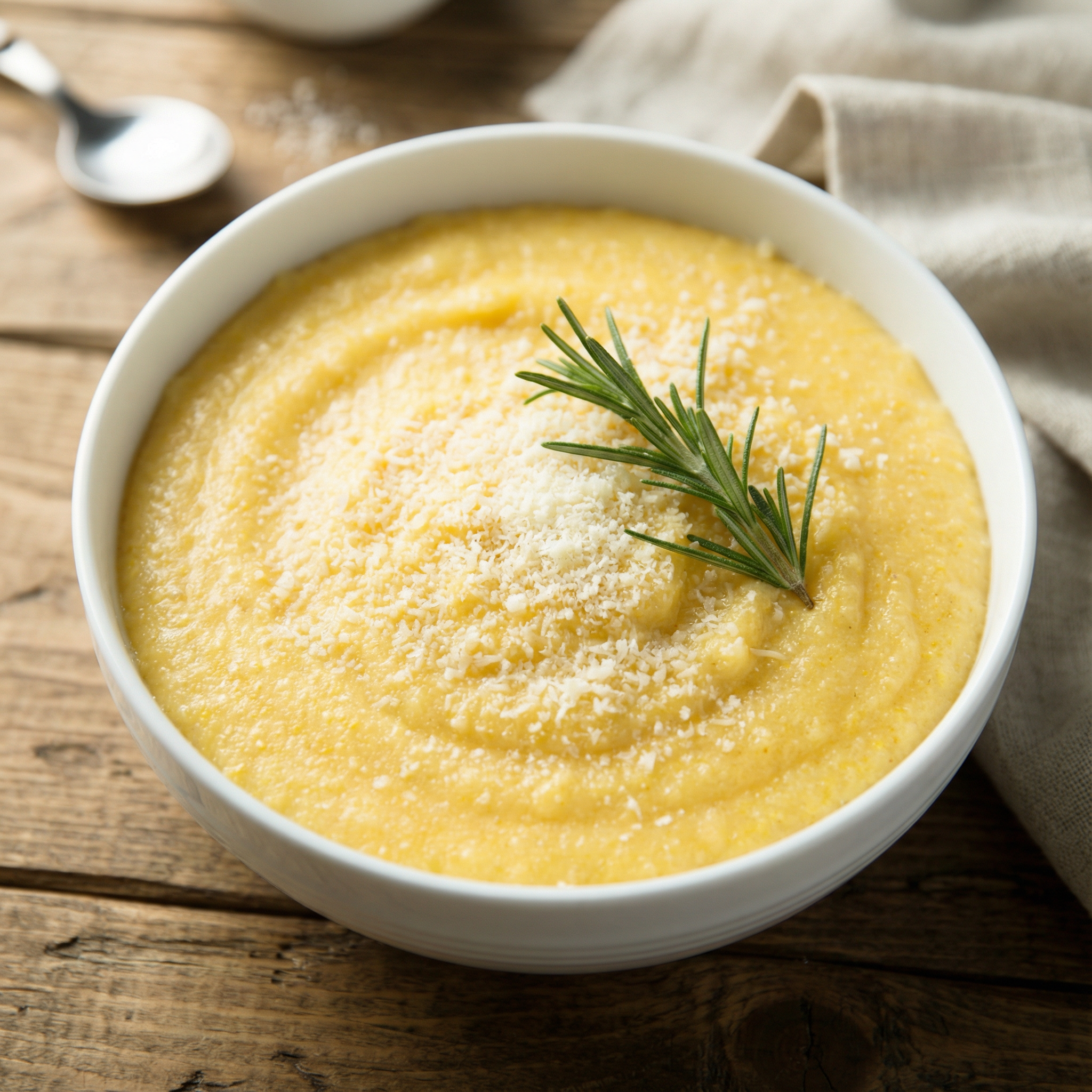
Cornmeal that works
I reach for medium to coarse ground cornmeal, ideally stone-ground. If the bag reads yellow cornmeal or even labeled “polenta,” that’s a good sign. Skip fine or instant types—they turn pasty and lose texture.
Liquids that shape texture
Water keeps the corn flavor shining. Chicken stock adds savory depth, and milk brings silkiness. I often blend water and stock to balance flavor and mouthfeel.
Fats and parmigiano
I use unsalted butter so I control salt late in cooking. Freshly grated Parmigiano melts cleanly; Pecorino, fontina, or a touch of brie are fine swaps. A little fat helps richness without masking the grain.
Aromatics and extras
A small onion and garlic, sweated in a swirl of olive oil, create a sweet base. Fresh herbs—parsley or rosemary—brighten the bowl at the end. Keep salt, a good oil, and enough cups of liquid nearby to adjust texture as you cook.
| Ingredient | Why it matters | Best use |
|---|---|---|
| Medium–coarse cornmeal | Deep corn flavor, holds texture | Spoonable bowls, melting cheese |
| Water / Chicken stock / Milk | Water highlights corn; stock adds savor; milk smooths | Blend for balanced body and taste |
| Unsalted butter & Parmigiano | Control salt; add umami and sheen | Finish for glossy, flavorful results |
Ratios, timing, and texture made simple
I begin by deciding how I want the final bowl to behave on the plate, then pick a ratio that supports that goal. That one choice drives cook time, the liquid mix, and how I read doneness at the end cooking phase.
Choose a ratio
I pick 4:1 for a classic, spoonable finish. For an ultra-smooth, plush result I use 5:1, often adding a touch of milk. If I want to slice and pan-fry later, 3:1 gives a firmer cut.
Expect these cook times
For medium ground cornmeal cook 25–35 minutes at a low simmer, covered. Stone-ground needs more care—plan for 45–50 minutes so the grains fully hydrate and lose any grit.
How to read doneness
Doneness is clear: the mixture thickens, pulls away from the sides of the pot, and individual grains taste tender with no raw center. Taste before you add butter and cheese, then season with salt sparingly.
- I often start with 1 cup cornmeal to 4 cups liquid to feed 4–6 people as a base under saucy mains.
- Keep a heavy-bottomed pot to prevent scorching as the grain absorbs liquid and the texture tightens.
- If it thickens too quickly, add small splashes of warm water or stock near the end to reach the texture you want.
| Ratio | Result | Best use |
|---|---|---|
| 5:1 | Very smooth, plush | Silky sides; add some milk |
| 4:1 | Classic spoonable | Braised meats, roasted veg |
| 3:1 | Firm, sliceable | Chill, slice, pan-fry |
Two reliable methods for lump-free polenta
I like to offer two simple paths so you can pick the one that suits your rhythm in the kitchen. Both aim for a smooth body, no lumps, and a toasty corn flavor that shines through.
Boil-then-whisk method
Bring water or stock to a rolling boil over medium-high heat. Slowly rain the cornmeal in a thin stream while you whisk fast. This disperses starch and prevents clumps from forming.
Once the mixture thickens, switch to a wooden spoon to scrape the bottom. Drop the heat to low and keep stirring often so the base does not scorch. A teaspoon of oil at the start calms bubbles and adds a subtle sheen.
Cold-start ease
Whisk the ground cornmeal into cold liquid off the heat until smooth. Then place the pot over low heat and bring it to a gentle simmer. This method is forgiving and reduces the chance of sudden lumps.
Stir every 5–10 minutes as the grains swell. When the polenta reaches the texture you want, maintain low heat and finish as desired.
Pick the right pot
Use a heavy-bottomed saucepan or a Dutch oven. Thick bases hold steady heat and protect the mixture during long cooking minutes.
| Method | Start temp | Key move | Best use |
|---|---|---|---|
| Boil-then-whisk | Medium-high to boil | Stream in cornmeal while whisking | Quick start; classic texture |
| Cold-start | Cold to low simmer | Whisk cornmeal into cold liquid, then warm | Forgiving; lump-resistant |
| Common practice | Low heat once thick | Switch to wooden spoon; stir regularly | Protects from scorching |
Step-by-step: from toastiness to cheesy finish
I warm a splash of olive oil in a heavy pot and let it shimmer over medium-high heat. Then I sweat diced onion and minced garlic until they turn golden and sweet, about 3–7 minutes.
I pour in my chosen liquid and bring it to a steady boil. With one hand on the whisk, I slowly rain in yellow cornmeal so each addition disperses before the next.
Once the cornmeal is in, I turn heat down to medium-low and keep stirring as the mix thickens. For medium ground, I cook about 15–20 minutes; coarser grind needs longer. I stir to avoid sticking and to coax tenderness from each grain.
If the texture tightens too soon, I loosen it with about 1/2 cup warm liquid and continue gently. When the mixture pulls from the sides of the pot, I remove it from heat and stir in unsalted butter, Parmesan or Parmigiano, salt, and pepper.
I look for a glossy sheen that tells me the emulsion is right. A final sprinkle of cheese and chopped parsley adds color and brightness. This yields a silky base ready for saucy ragù or roasted vegetables.
Quick cues and timings
- Olive oil hot: begin sweating aromatics (3–7 minutes).
- Liquid to boil: stream in ground cornmeal while whisking.
- Turn heat low: cook 15–20 minutes for medium grind; longer for coarser meal.
| Step | Action | Timing / Cue |
|---|---|---|
| Sweat aromatics | Olive oil, onion, garlic in pot | 3–7 minutes; golden and sweet |
| Add cornmeal | Bring liquid to boil, stream in yellow cornmeal while whisking | Immediate whisking to prevent lumps |
| Simmer & stir | Turn heat to medium-low, keep stirring | 15–20 minutes (medium grind); spoon test |
| Finish | Stir in butter, Parmesan/Parmigiano, salt, pepper | Add 1/2 cup warm liquid if too tight; glossy sheen |
Pro tips for restaurant-level results
A few small habits at the stove will lift this dish from good to great. These moves save time and give you consistent results every service.
Keep heat low to avoid scorching and spattering
Once the mix thickens I turn heat down and keep it gentle. Low heat prevents burning and lets the grains soften evenly.
Stir with intention: whisk early, wooden spoon later
Whisk while you add the grain to disperse starch and stop lumps. After the initial incorporation, switch to a wooden spoon to scrape the bottom and preserve a smooth texture.
Adjust with warm liquid at the end
If the pot tightens up a few minutes before serving, add warm water or stock in small splashes. Stir, taste, and repeat until the texture relaxes back to where you want it.
- I taste for seasoning after the cheese goes in, since that changes what the dish needs.
- When I turn heat off, I let the pot rest a couple minutes; carryover finishes the cooking gently.
- A dab of butter and a light brush of olive on top add gloss and aroma without weighing the bowl down.
- Plan your minutes at the stove so you stir regularly but don’t hover—steady attention is enough.
| Action | Why it matters | Timing / Cue |
|---|---|---|
| Lower the flame | Prevents scorching and spatter | Once mixture thickens |
| Switch tools | Whisk early, wooden spoon later for smooth finish | First 5–10 minutes then switch |
| Loosen with warm liquid | Restores silkiness before serving | Small splashes, stir, test |
creamy polenta with cheese italian recipe: variations you’ll love
Small swaps and a few smart add-ins can turn this humble base into a showstopper for any season. I keep changes simple so the grain still sings, then layer in bold or subtle flavors depending on the menu.
Cheese swaps
I reach for Pecorino Romano when I want a saltier, sheep’s milk snap. Fontina melts beautifully for a gooey center. A touch of brie brings lush, silky notes that make each spoonful indulgent.
Flavor boosters
Caramelized mushrooms or roasted root vegetables add earthy sweetness and depth. Fresh herbs—parsley, rosemary, or chives—brighten the bowl at the end. A shower of parmesan on top ties flavors together and adds savory lift.
Texture targets
For extra silk, whisk a small pat of butter into the hot mixture just before serving. A splash of warm milk smooths edges and makes a velvety side perfect for spooning. If you plan baked polenta or pan-fried cakes later, use a firmer ratio so the dish sets well.
- I finish with a light drizzle of olive to add perfume and sheen without weighing the bowl down.
- Think in balance: a little fat and butter cheese for depth, vegetables and herbs for lift.
- Use exact measures when you want consistency—a cup of liquid adjustments at the end can rescue tight texture.
| Choice | Effect | When to use |
|---|---|---|
| Pecorino Romano | Salty, tangy snap | Bold sauces, roasted meats |
| Fontina | Great melt, creamy pull | Saucy mains, gratins |
| Brie | Lush, buttery finish | Rich, elegant plates |
How it compares: polenta, grits, and cornmeal choices
Choosing the right cornmeal at the market saves you time and guarantees the texture you want on the plate. I’ll walk you through the key differences so you pick the best grain for this dish.
Polenta vs. grits: flint or dent yellow corn vs. white hominy
Traditional polenta comes from flint or dent yellow field corn. That gives a nutty, firm bite when cooked slowly.
Grits are usually made from white hominy, treated with alkali. The flavor and mouthfeel differ, even if the cooking looks similar.
Why to avoid fine or instant cornmeal for this method
I choose medium or coarse cornmeal for structure; stone-ground versions give deeper corn character. Fine or instant ground cornmeal breaks down too fast and turns gluey.
Labels can confuse. If it reads “yellow cornmeal polenta,” you’re on the right track. Use water to highlight corn flavor, or pick stock or milk to round edges.
- Polenta: hearty, nubbly, slow-cooked reward.
- Grits: softer, different flavor due to nixtamalization.
- Stone-ground: most flavor; fine/instant: avoid for slow methods.
| Product | Corn type | Recommended grind | Cooking note |
|---|---|---|---|
| Polenta | Flint / dent yellow | Medium–coarse or stone-ground | Slow cook for nubbly texture |
| Grits | White hominy (nixtamalized) | Coarse to medium | Softer finish; different flavor |
| Instant / Fine | Various | Fine | Cooks fast; risk of pastey result |
| Yellow cornmeal polenta | Yellow field corn | Medium–coarse | Best for this slow-cooked dish |
What to serve with creamy polenta
Pairing is simple: think texture and sauce. I like a soft bed that soaks up juices from slow braises, yet still plays gentle contrast with crisp vegetables or seared fish.
Rich mains
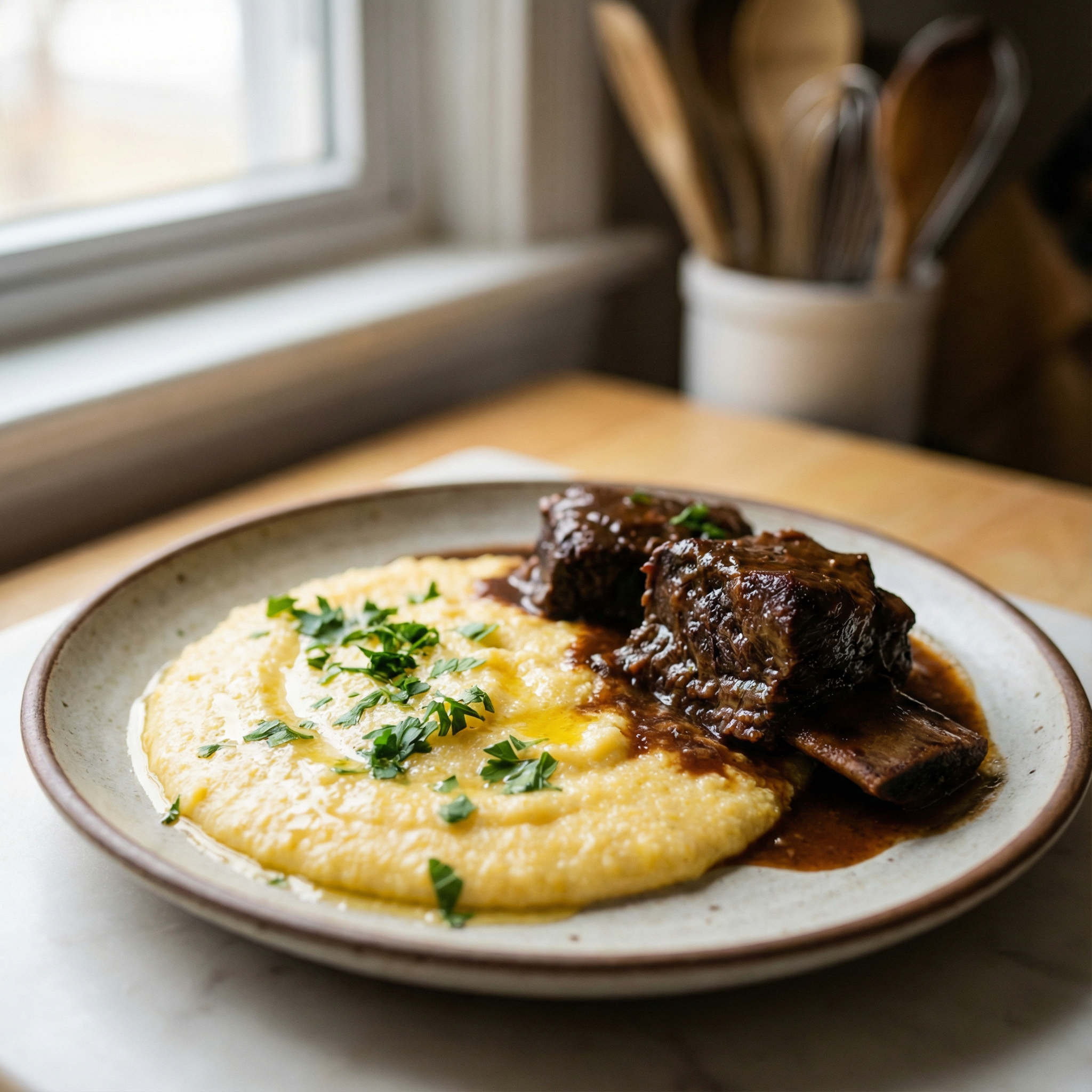
I love spooning polenta under braised short ribs—the juices soak in and make each bite deeply comforting. Osso buco is another match; the marrow and gremolata balance the dish beautifully.
Tomato-based ragùs and mushroom sauces cling to the surface, giving each forkful a full, layered taste. When I make the ground corn with chicken stock, the base stands up to meaty sauces without losing sweetness.
Lighter pairings
For lighter nights, pan-seared salmon and roasted vegetables play perfectly. Roasted asparagus, zucchini, or caramelized root veg add a crisp counterpoint to the soft base.
Finish tableside with a sprinkle of Parmesan to tie flavors together. Leftover polenta also shines: set, slice, and top with a warm ragù or sautéed veg for an easy second-act meal.
- Plan textures: creamy base, tender protein, and a crisp or caramelized veg for contrast.
- Use stock in the cooking to lift savory sauces; add Parmesan at the table.
- Leftover polenta makes quick pan-fried cakes—an effortless, crowd-pleasing side.
| Pairing | Why it works | Serving note |
|---|---|---|
| Braised short ribs | Rich juices soak in for comfort | Spoon polenta under the ribs |
| Osso buco | Marrow and sauce add silk and depth | Garnish with gremolata |
| Pan-seared salmon & roasted veg | Bright, crisp contrast to soft base | Finish with lemon and a sprinkle of parmesan |
Make-ahead, storage, and reheating without losing creaminess
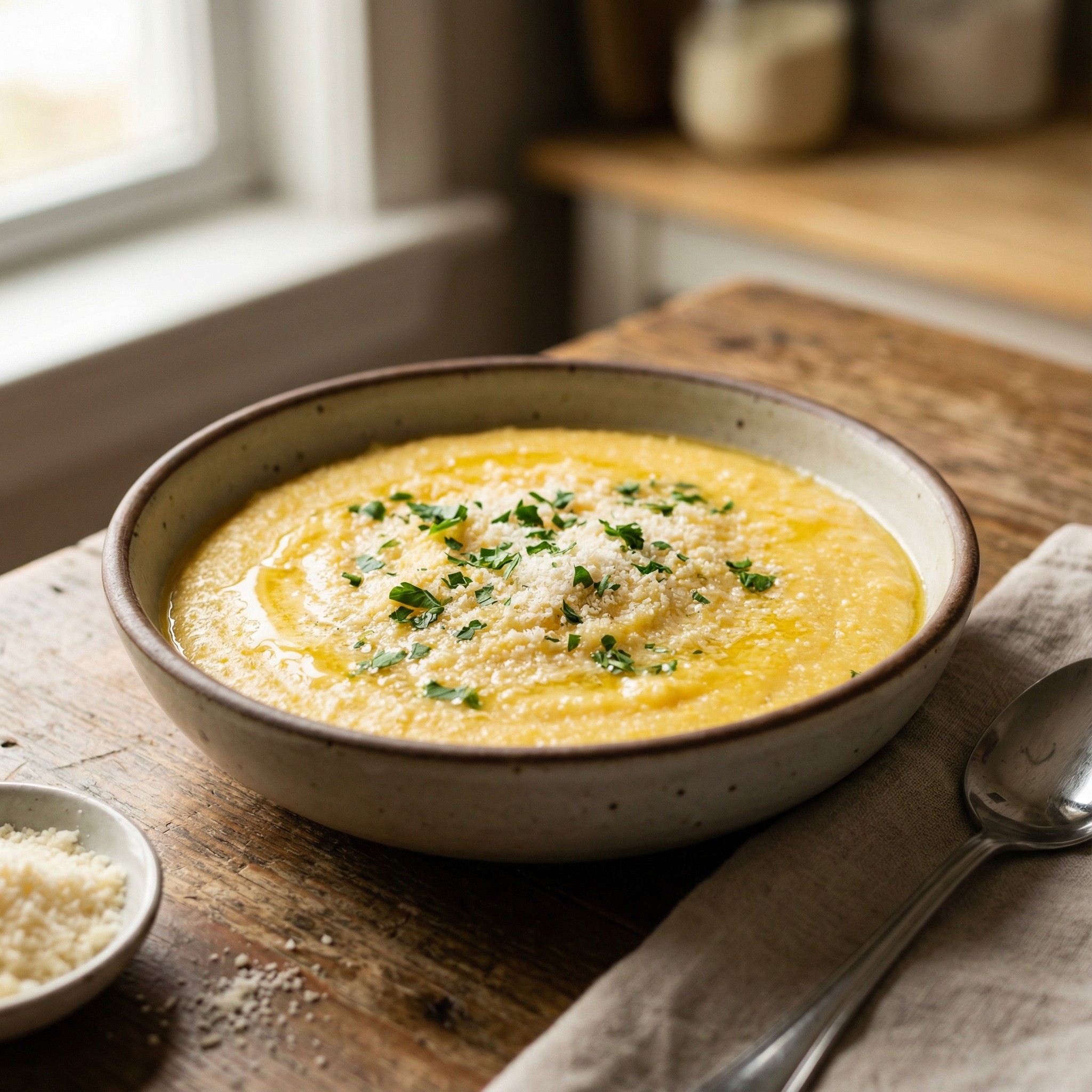
Keep a covered pot nearby and a calm kitchen when you plan to hold this dish up to an hour. I finish it, cover tightly, and leave it off the heat so the texture rests until service.
For refrigeration, transfer to an airtight container and chill for up to 3 days. This prevents the base from absorbing odors or forming a dry skin.
Gentle reheating that restores shine
Scrape the chilled portion into a pot and warm over low heat. Stir in about 1/2 cup warm chicken stock or water per batch so the mix loosens and turns glossy again.
If it still feels dense, add more warm liquid in small splashes and stir patiently. Slow reheating for a few minutes protects the texture; avoid high heat.
Leftover magic: set, slice, and pan-fry
When I plan cakes, I cook a firmer batch and spread it in a flat pan. Chill until fully set, then cut into squares.
I pan-fry slices in a thin film of oil until both sides are golden and crisp. The center stays tender and pairs well with a spoon of sauce or a fried egg.
- I watch the minutes and keep heat low; quick, high heat breaks the emulsion.
- For baked polenta, press firm, top with sauce and a light sprinkle, then bake until bubbling.
- Taste at the end cooking of reheating and adjust salt—flavors often need a small lift after refrigeration.
| Use | Storage | Reheat / Finish |
|---|---|---|
| Hold before serving | Covered in pot, up to 1 hour | Keep covered; splash warm water if needed |
| Fridge storage | Airtight container, up to 3 days | Warm in pot over low heat, add 1/2 cup stock or water |
| Pan-fried cakes | Chill in flat pan until firm | Pan-fry in a little oil until crisp; serve hot |
| Baked finish | Set firm in dish, refrigerate if needed | Top with sauce and bake until bubbling; serve warm |
A warm finish: bring Italian comfort to your table tonight
A few steady moves at the stove turn simple grain into a bowl that feels like home. This recipe is forgiving: pick boil‑then‑whisk or the relaxed cold‑start and you’ll arrive at silky, spoonable polenta every time.
I finish mine with a knob of butter and a snowfall of Parmigiano or Parmesan for depth. Serve it hot as a comforting side beneath a ragù, or let it set, slice, and pan‑fry or bake polenta for a crisp second act.
This dish is honest food—plain ingredients, clear technique, and big comfort. Keep the ratio notes close, trust your taste, and cook it tonight. Buon appetito!
Creamy Polenta with Cheese
Ingredients
Method
Notes
- Consistency: You can adjust the texture by varying the liquid-to-cornmeal ratio. For a silky, smooth result, use a 5:1 liquid-to-cornmeal ratio. For a firmer, sliceable polenta, use a 3:1 ratio.
- Storage: Polenta can be stored in an airtight container in the fridge for up to 3 days. To reheat, add a little warm stock or water.
- Flavor Variations: Feel free to experiment with different cheeses (Pecorino Romano, Fontina, Brie) and add-ins like caramelized mushrooms or roasted vegetables to customize the dish.