
Jump to Recipe
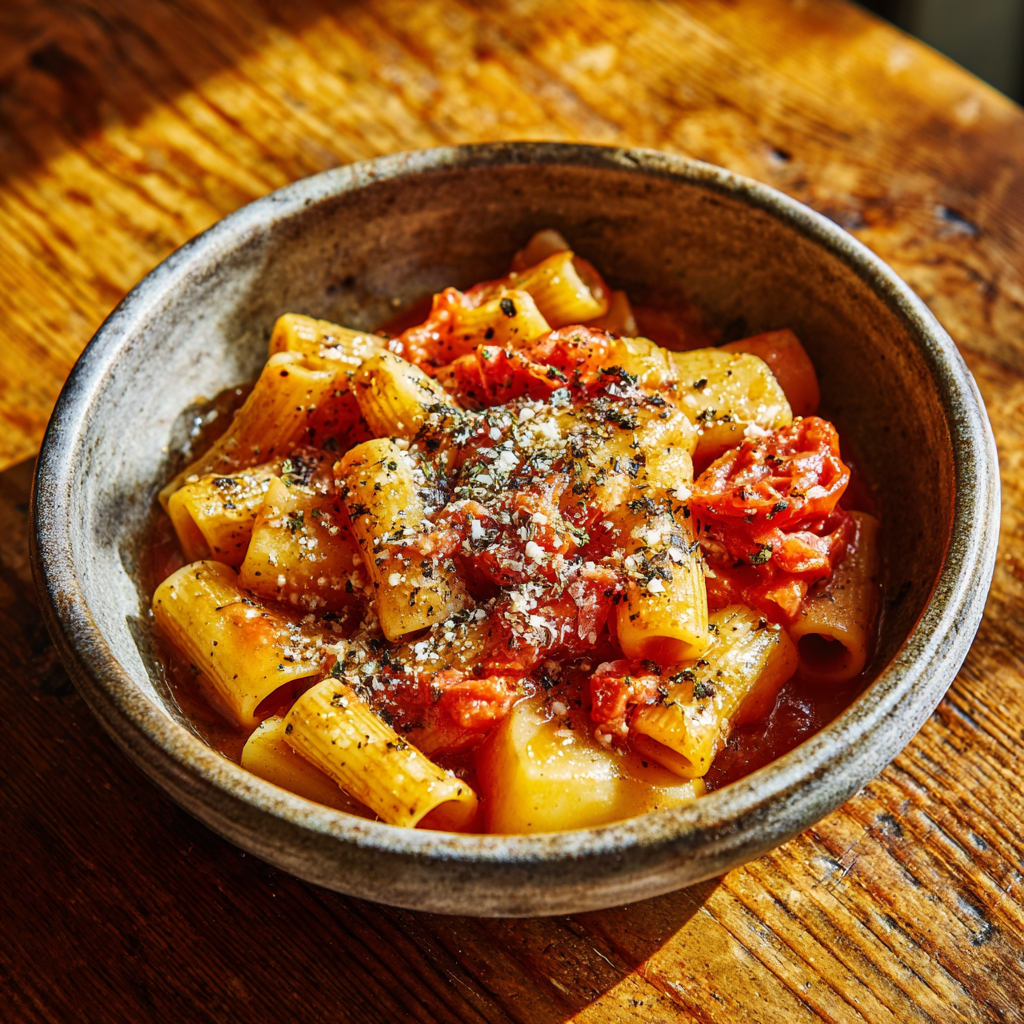
I grew up calling this the weeknight hug of Naples, and the pasta e patate napoli recipe still smells like home when the soffritto hits the pan.
Onions, celery, and carrot sizzle in olive oil until sweet, a Parmigiano rind adds brothy depth, and potatoes simmer until tender so the starches bind the sauce without any cream.
I cook the pasta in the same pot so everything becomes silkier and spoonable; a spoonful can feel like a warm memory with bright tomato and a finish of smoked cheese for creaminess.
Practical tips live here too: use mixed short shapes, choose passata or paste to adjust body, and know that leftovers revive gently with a splash of water or become a gratin the next day.
Key Takeaways
- One-pot cooking keeps starches for a naturally clingy sauce.
- Start with a proper soffritto and a cheese rind for deep savory flavor.
- Finish off-heat with smoked cheese and a drizzle of extra virgin olive oil.
- Use mixed short shapes and cook to an “azzeccata” texture where pasta and potatoes move together.
- Store in fridge up to two days; avoid freezing and revive gently when reheating.
The Neapolitan comfort classic you’ll actually cook on a weeknight
This is the kind of home food that arrives at the table fast but tastes like it simmered all day. I make it when I want something honest, warming, and fuss-free.
Why cooks love this cucina povera
Families in Naples build the meal from a simple soffritto, add diced potatoes, then simmer before dropping in pasta to the same pot. A small rind of Parmigiano deepens the savory base.
Many cooks enrich the pan with lard or pancetta for extra fat and aroma. A spoonful of tomato paste or passata adds color and gentle acidity without stealing the show.
What to expect: a silky, spoonable pasta-potato bowl
Think of a spoonable soup that sits between broth and a clingy, glossy sauce. Tender pieces of potato stay visible, not mashed to a puree.
- Short shapes cling and catch sauce.
- A touch of oil or rendered pork helps emulsify the starches.
- Finish with smoked cheese for melty richness.
| Texture | Liquid ratio | Cook time | Finish tip |
|---|---|---|---|
| Brothy | Higher liquid, looser | 20–25 minutes | Ladle, extra olive oil |
| Azzeccata (sticky) | Moderate liquid, stir often | 18–22 minutes | Finish off-heat with cheese |
| Thick | Low liquid, mash some pieces | 20–24 minutes | Gratin or fry for crisp top |
Ingredients that make it sing (and smart pantry swaps)
The right pantry choices turn simple ingredients into a bowl that feels like home. I keep the list short and exact so the pot behaves every time.
The flavorful base
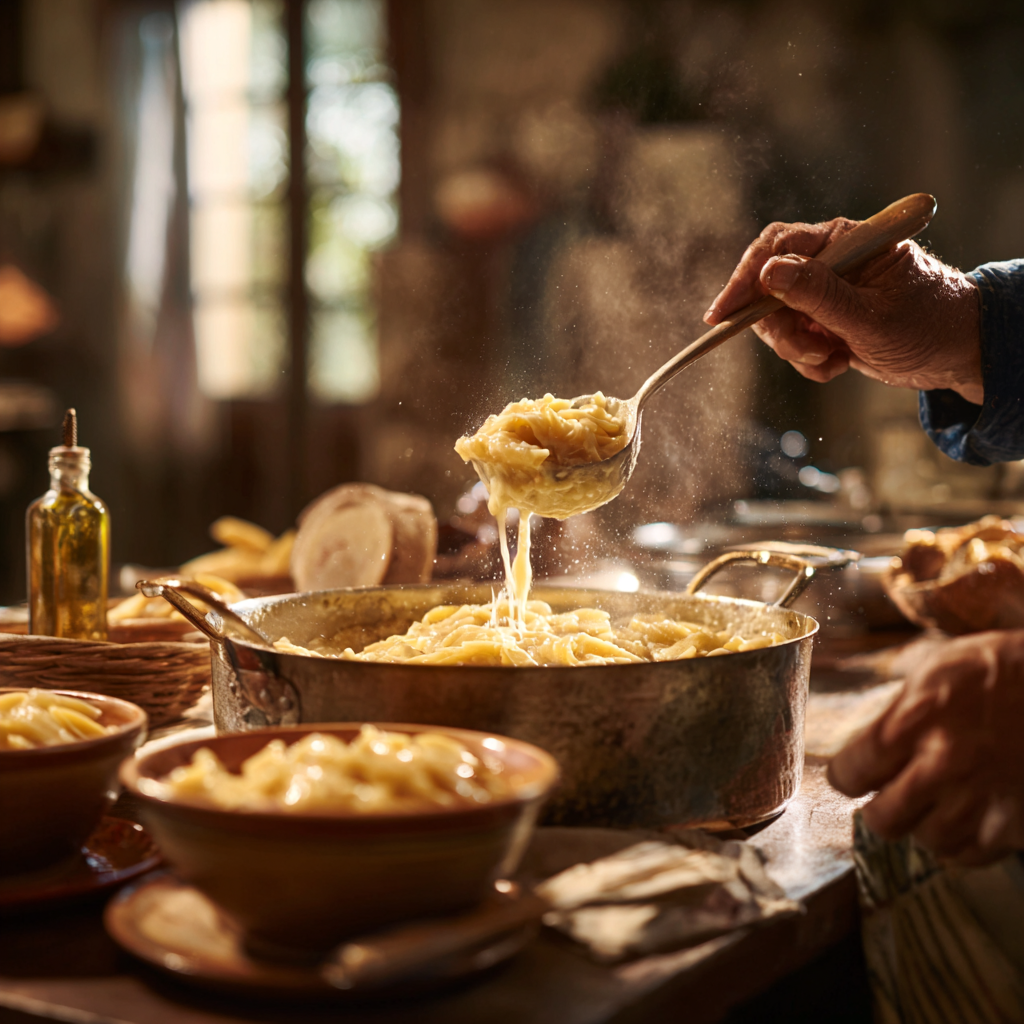
Start with a classic soffritto: 1 onion, 1 celery stalk, and 1 carrot, finely diced. Bloom 2 tablespoons tomato passata or 2 tablespoons tomato paste with the aromatics so the tomato opens and ties the flavors together.
Potatoes and shapes
Use 500 g waxy potatoes cut into even cubes. Waxy potatoes hold their shape and release starch slowly. Add about 300 g short shapes—ideally pasta mista—so different forms catch sauce and create a silky texture.
Fats, umami, and cheese
Render 60 g lard with 3 tablespoons extra virgin olive oil, or swap in pancetta or prosciutto ends for a smoky lift. Toss in a Parmigiano rind and a sprig of rosemary. Finish with 100 g smoked provola or scamorza and season gently with salt and black pepper.
- Use broth instead of water for deeper body.
- Low on supplies? Olive oil and tomato paste carry the pot well.
- Try a pinch of saffron for subtle variations.
pasta e patate napoli recipe: the one-pot method for creamy, “azzeccata” results
One-pot timing and a gentle hand at the stove shape the creamy azzeccata you want. I walk you through each cue so the texture is glossy and spoonable without extra cream.
Build the soffritto and toast tomato paste
Warm 3 tablespoons oil and render pancetta or prosciutto for 6–8 minutes until lightly crisp. Add 1 diced onion and a celery stalk and cook about 4 minutes until soft.
Push the aromatics aside, spoon in 2 tablespoons tomato paste and toast 1–2 minutes. Toasting unlocks sweetness and deepens flavor before you add liquid.
Add potatoes, rind, and measured water, then simmer
Drop in 500 g potatoes cut ½–1 inch, a sprig of rosemary, and a Parmigiano rind. Pour roughly 7 cups broth or about 1 liter water to cover and simmer partially covered.
Keep a steady simmer for 15–30 minutes. Test by piercing a cube; when tender, the potatoes are ready. Remove the rind if it’s not fully softened.
Starch science: add pasta and cook in the same pot
When potatoes give to a spoon, add pasta directly to the pot and cook to al dente. I stir frequently so the starches release and bind the sauce.
Adjust texture and finish
If the mix tightens, add small splashes of water from a cup to loosen it. For silkier body, mash a few potato cubes against the pot side.
Turn heat off and fold in diced smoked provola so it melts gently. Taste and season with salt and black pepper; serve warm and spoonable.
- Render fat, then soften aromatics: foundation of flavor.
- Toast paste briefly for depth, then deglaze with measured liquid.
- Add pasta late and stir often to coax creaminess.
Dial it to your taste: brothy, thick, or “sticky” with these variations
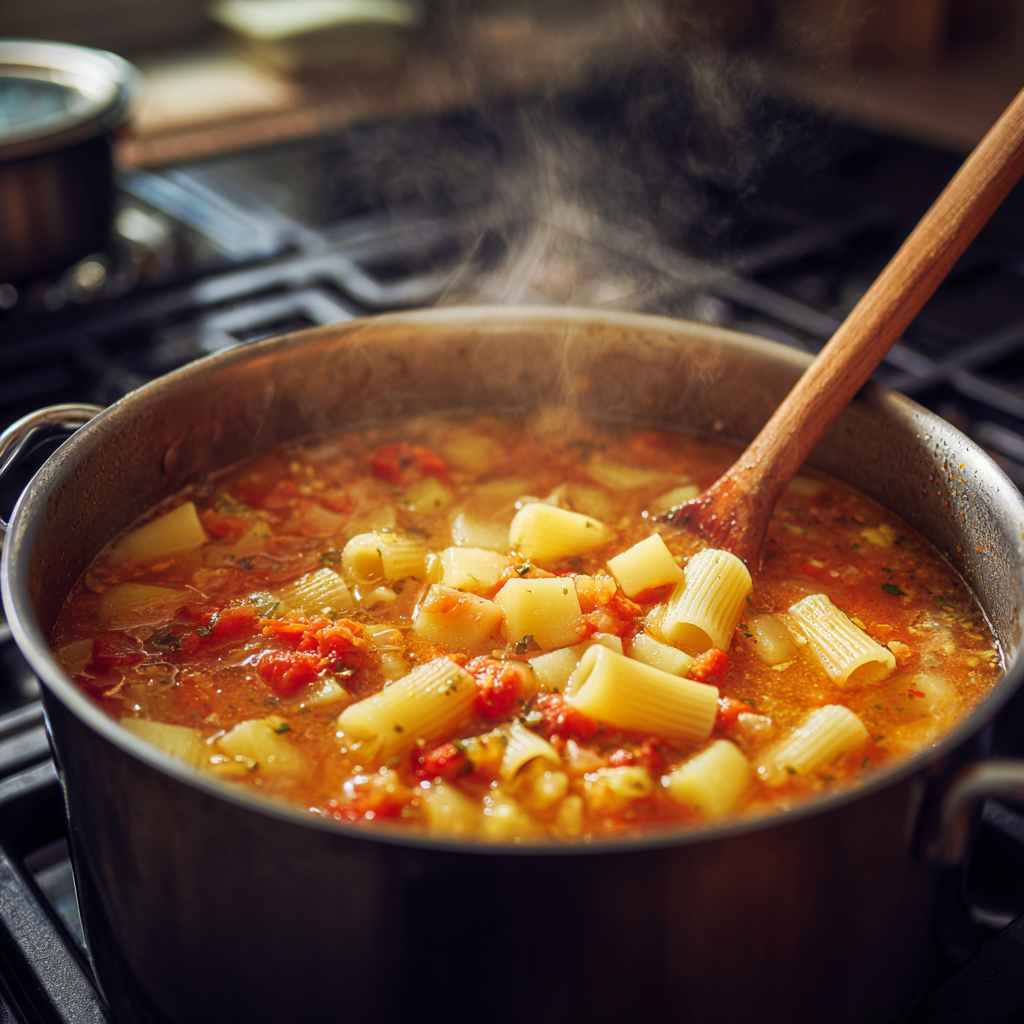
Small changes in liquid, heat, and time let you shape the final bowl—light and brothy or rich and clingy. Below are practical options I use at home to control texture and deepen flavor.
Pasta shapes that work
Choose small-to-medium shapes so the sauce grabs every piece. I favor pasta mista, ditalini, small shells, farfalline, and orecchiette for contrast with potatoes.
Flavor boosts and swaps
Bloom saffron in warm broth for perfume. Swap lard for guanciale or pancetta, or skip cured pork and go extra virgin olive oil-only for a lighter finish.
Traditional ranges and texture control
- For a brothier soup: add more liquid or hold back on pasta. Finish with a drizzle of olive oil to keep the surface glossy.
- To make it thicker: simmer longer, stir often, and mash a few potatoes so the dish moves slowly off the spoon.
- For true azzeccata: reduce slightly over gentle heat while stirring so starch emulsifies and the sauce clings to every piece.
- Tomato choices: passata for smooth body, paste for intensity, or chopped cherry tomatoes for bright, fresh hits.
| Texture | Liquid | Key move |
|---|---|---|
| Brothy | High | Less pasta, more ladling |
| Thick | Moderate | Longer simmer, mash some potatoes |
| Azzeccata | Lower | Stir to emulsify starch |
Serving, storage, and leftovers that taste even better the next day
When the pot cools, the flavors knit together—so reheated bowls can feel richer than the first serving. I ladle into warm bowls and finish each portion with grated Pecorino and a thin thread of extra virgin olive oil for aroma and sheen.
How I serve
A final shower of grated cheese and a light drizzle of olive oil make the dish glow. I taste and add a pinch of salt and a twist of pepper before bringing it to the table.
Keep, reheat, and repurpose
Store in an airtight container in the refrigerator up to two days. Don’t freeze—potatoes and pasta turn grainy and the sauce can separate.
- If it tightens, warm the contents in the pot over low heat and add a cup of warm water in small amounts to loosen the texture.
- Reheat gently in short microwave bursts or set a bowl over simmering water (bain-marie), stirring every minute so cheese and starch re-emulsify in a few minutes.
- For a second meal, spread leftovers in a small dish, top with Parmigiano and a drizzle of olive oil, and bake at 400°F for about 15 minutes until crisp and bubbling.
- Or beat eggs into cooled leftovers and pan-fry a frittata until set, finishing briefly under the broiler for color.
Conclusion
A few careful moves at the stove turn humble ingredients into something memorable. Keep this one-pot approach: stir often so starches bind, watch time and heat, and finish off the heat with diced smoked provola or scamorza for melty cheese goodness.
Choose extra virgin olive oil or render pancetta for a richer touch. Adjust with small splashes of water to steer the bowl toward soup, thick, or the silky azzeccata texture you want.
Store the leftovers up to two days and reheat gently with a splash of warm water. Trust your senses—listen to the pot, taste for salt and pepper, and let a final drizzle of good olive oil and a snowfall of grated cheese make this simple food feel special.
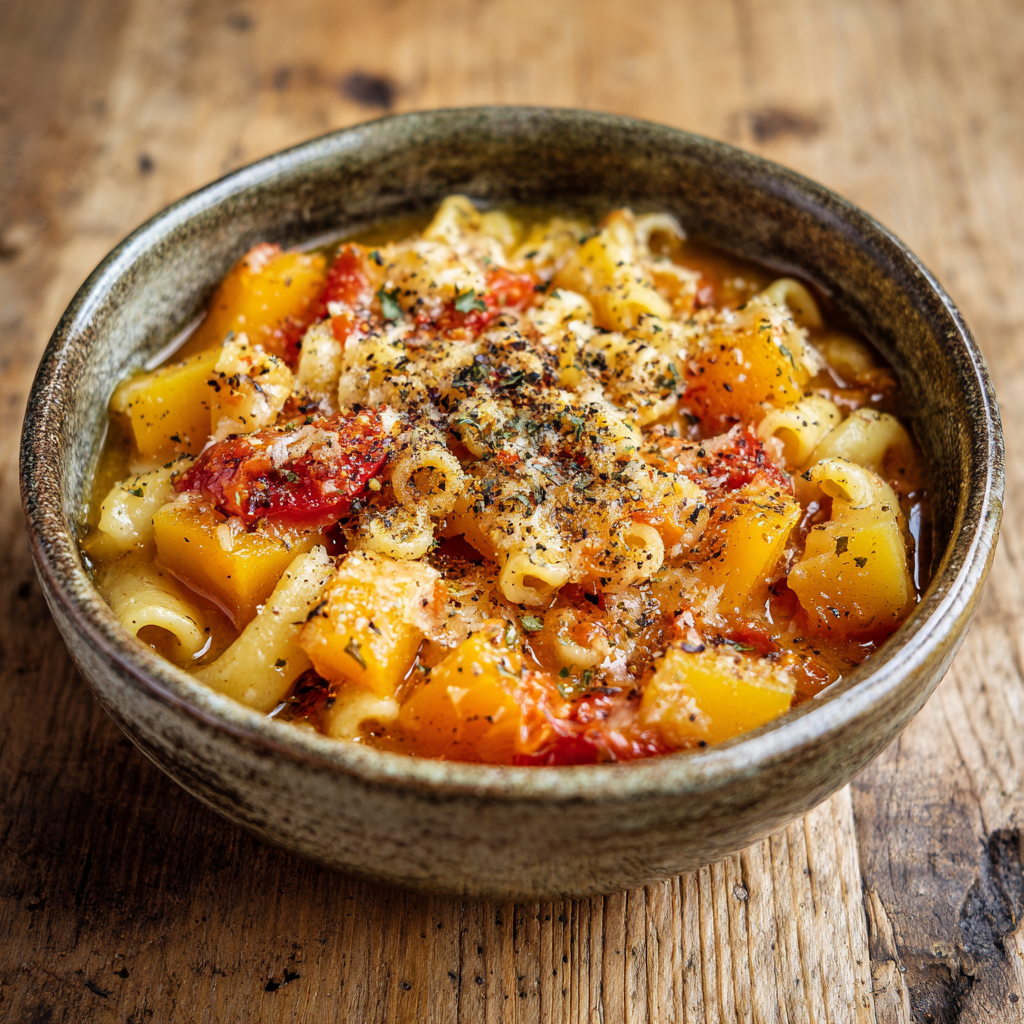
Pasta e Patate alla Napoletana (Neapolitan Pasta and Potatoes)
Ingredients
Method
- Warm olive oil in a large pot. Add lard or pancetta and cook 6–8 minutes until lightly crisp. Add onion, celery, and carrot. Cook 4–5 minutes until soft and fragrant.
- Push the vegetables to one side. Add tomato paste and toast 1–2 minutes until darker and aromatic. This deepens the flavor.
- Stir in diced potatoes, rosemary, and the Parmigiano rind. Pour in broth or water to just cover the potatoes. Simmer gently for 15–20 minutes, partly covered, until potatoes are tender when pierced with a fork.
- When the potatoes are soft, add dry pasta directly to the same pot. Stir often as it cooks. The starch released from the pasta will naturally thicken the sauce.
- If the mix becomes too thick, splash in warm water or broth a little at a time. For a silkier finish, mash a few potato cubes against the pot wall.
- Turn off the heat. Stir in diced smoked provola so it melts gently. Taste and adjust with salt and pepper.
- Spoon into warm bowls. Top with grated cheese, a drizzle of olive oil, and a crack of black pepper.
Notes
- Texture control: Stir often while pasta cooks. For a stickier “azzeccata” texture, simmer gently until the sauce clings to the pasta. For soupier bowls, add more broth.
- No cream needed: The starch from the potatoes and pasta makes the sauce naturally silky.
- Cheese tip: Always add smoked provola or scamorza off the heat so it melts smoothly, not stringy.
- Leftovers: Keep up to 2 days in the fridge. Reheat with a splash of warm water to revive the creaminess. Avoid freezing.
- Bonus idea: Turn leftovers into a crispy gratin or a potato-pasta frittata the next day.