
Jump to Recipe
I grew up arranging snacks on my grandmother’s table, tucking rosemary sprigs like little green needles between cherry tomatoes and bocconcini. The ritual is part showmanship, part comfort; a tree or wreath of bite-size bites makes the room feel instantaneously hospitable.
I’ll share the practical bits I rely on: which cheeses hold up, how long marinated peppers stay bright, and simple tricks—like a cheese star and a light olive oil sheen—that turn a collection of ingredients into a thoughtful centerpiece. Assembly takes about an hour for the three builds I trust, and most elements keep 2–3 days if stored airtight.
Key Takeaways
- Choose firm and soft cheeses for balance; reserve fresh mozzarella for last-minute assembly.
- A 3D tree on a wrapped cone or a wreath with bamboo skewers gives big visual impact with little stress.
- Tuck rosemary sprigs for aroma and texture; finish with sea salt flakes and a thin olive oil sheen.
- Plan make-ahead steps: roast peppers and dry tomatoes earlier, assemble day-of when possible.
- Keep perishable items under 4 hours out; store leftovers 2–3 days in airtight containers.
What makes this holiday antipasto spread work for busy hosts
A well-styled spread speaks louder than last-minute cooking, and it frees you to enjoy your guests. I choose items that arrive ready-to-eat so styling replaces stove time.
Most make-ahead steps take little time. Marinated artichokes or olives can be prepped a day ahead. Wreath skewers assemble up to 24 hours in advance, covered and chilled.
Plan the centerpiece next: a 3D tree needs about an hour to build, then it sits camera-ready. The antipasto can safely be on the table for up to 4 hours, so you have clear serving windows.
- Cube cheeses and wash produce the day before to save minutes on the event day.
- Opened fresh mozzarella lasts ~24 hours; deli meats and pickles keep up to 4 days covered.
- This approach keeps the appetizer flexible, scalable, and forgiving of pantry swaps.
| Component | Make-ahead | Day-of minutes | Storage |
|---|---|---|---|
| Wreath skewers | 24 hours | 2–5 minutes | Refrigerate covered |
| 3D tree | Base prep same day | 60 minutes | Hold at cool room temp up to 4 hours |
| Fresh cheeses | Cut day before | 5–10 minutes | Mozzarella ~24 hours; others 2–3 days |
I keep one small platter for refills and a relaxed smile—those little touches let me circulate and enjoy the company.
Ingredient lineup and easy swaps for a gorgeous platter
I like to plan a mix of salty, sweet, creamy, and crunchy before I leave the store. That framework makes shopping simple and keeps every bite balanced.
Italian essentials
Start with a mix of Castelvetrano and Kalamata olives for buttery and briny contrast. Add marinated artichoke hearts, roasted red peppers, and a jar of pepperoncini for tang and snap.
Cheese choices
Bocconcini mozzarella gives a soft, milky lift. Pair it with cubes of gouda or cheddar for firmer texture. A small herbed goat or an herb-infused cheese adds depth.
Cured meats and fresh color
Layer prosciutto with salami, soppressata, or pepperoni for savory variety. Scatter cherry tomatoes and mini bell peppers, then tuck in basil and rosemary for aroma.
- If tomatoes are poor quality, use semi-dried tomatoes for concentrated flavor.
- No deli counter? Visit the olive bar for marinated mushrooms, peppadews, or mixed olives as ready-made swaps.
- For meat-free guests, offer extra marinated vegetables and bold cheeses on a separate plate.
| Item | Swap | Why |
|---|---|---|
| Castelvetrano olives | Kalamata | Buttery vs. briny contrast |
| Bocconcini mozzarella | Herbed goat | Soft vs. tangy texture |
| Fresh tomatoes | Semi-dried | Seasonal color and concentrated sweetness |
Tools and prep that save time on the day
I set up my workspace so every tool is at hand; that small habit saves me frantic minutes when guests arrive. I work on a large cutting board or round serving plate so I can arrange freely and move finished clusters to a clean plate nearby.
Boards, platters, and skewers that make assembly effortless
Use 4.7–6 inch bamboo skewers for wreaths — they hold nuts, cheese, and vegetable pieces without splitting. Toothpicks are perfect for smaller bites or anchoring a cheese star on a cone.
Pro tip: styrofoam cone, draining, and fridge steps
Wrap a styrofoam cone in plastic wrap to keep the tree food-safe and make cleanup fast. Pre-drain marinated vegetables and cheeses in a sieve so excess oil doesn’t pool on the surface.
- I group ingredients in small bowls within arm’s reach to shave precious time during assembly.
- Keep paper towels and a small trash bowl at the station to clear stems and toothpicks instantly.
- Cover finished wreaths tightly and refrigerate up to 24 hours; do a final herb tuck and a light oil drizzle just before serving.
| Tool | Use | Why it saves time | Storage tip |
|---|---|---|---|
| Large cutting board / round plate | Primary workspace | Gives room to arrange and transfer clusters quickly | Wash and dry between builds |
| 4.7–6 in bamboo skewers | Wreath and bite assembly | Right length for balance; fewer broken pieces | Store dry in a drawer |
| Plastic-wrapped styrofoam cone | 3D tree base | Food-safe, reusable base that speeds anchoring | Discard wrap after use |
| Sieve and small bowls | Drain and stage ingredients | Prevents oily pooling and keeps look crisp | Label bowls; refrigerate as labeled |
One last tip: if you want a savory slider to pair with the spread, try this easy meatball slider link for a complementary bite here. Little setup habits make all the difference in saved time and calm service.
christmas antipasto platter ideas recipe: three festive builds
I love building small, edible sculptures—each bite a promise of flavor and welcome. Below are three approachable formats that suit any host, from quick day-of assembly to a showstopping centerpiece.
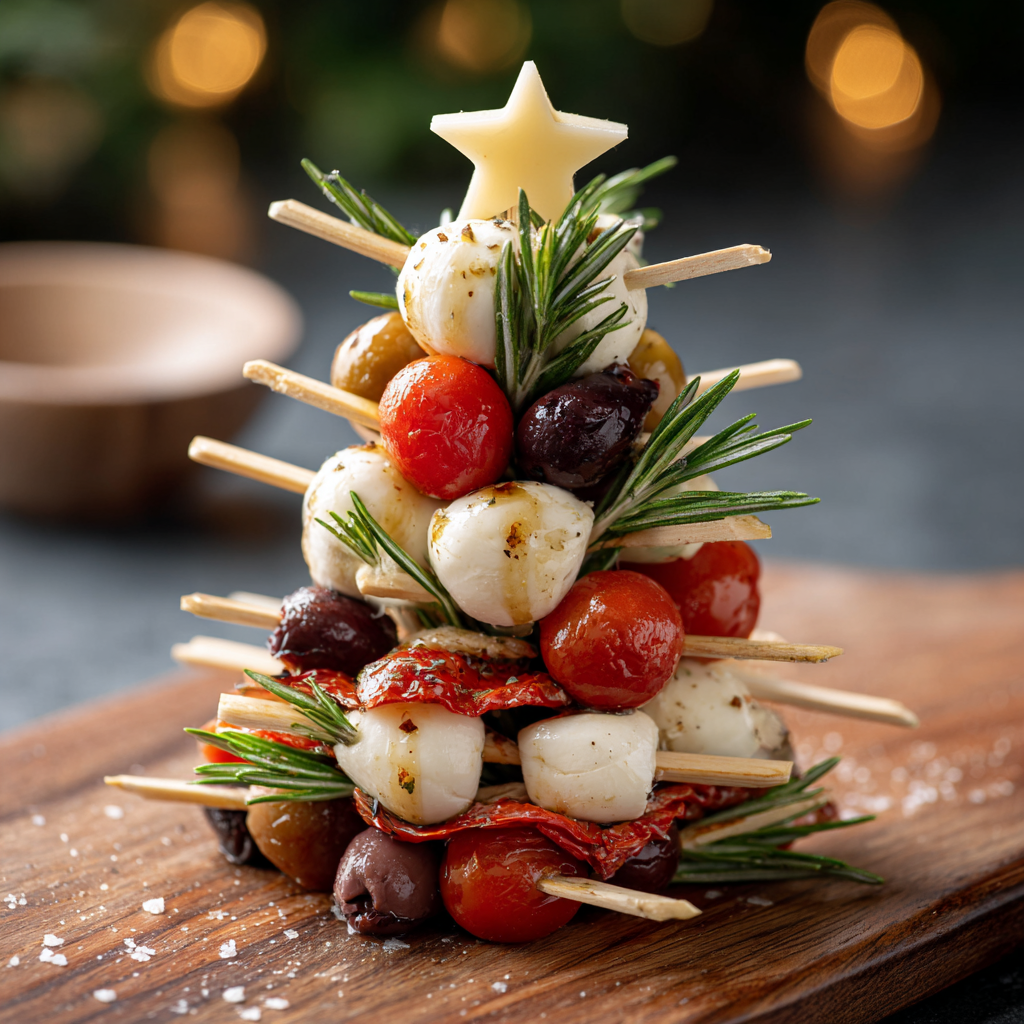
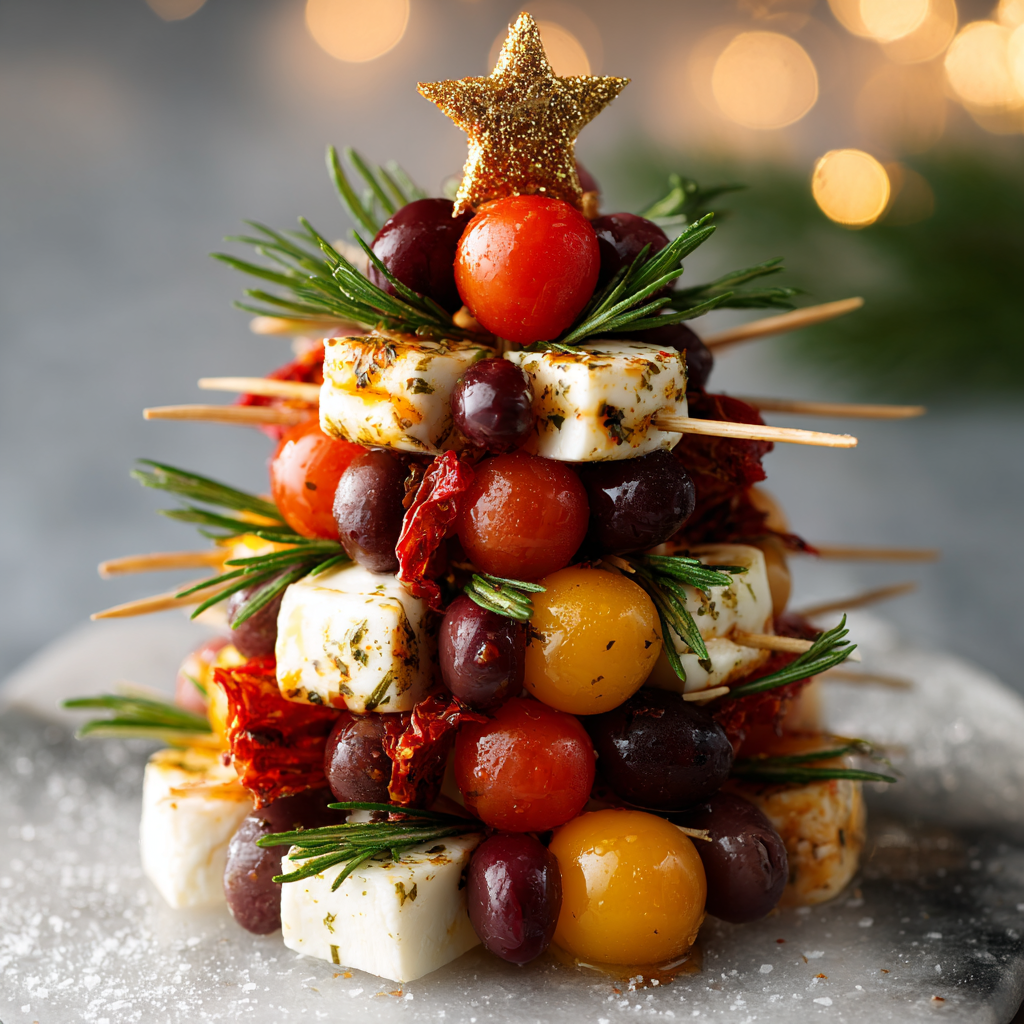
3D tree with rosemary “needles” and a cheese star
Wrap a styrofoam cone in plastic and drive toothpicks in rows. Alternate cherry tomatoes, mozzarella, olives, roasted red peppers, and sun-dried tomatoes so every side looks abundant.
Tuck fresh rosemary between bites for the look and scent of pine, top the cone with a cheese or bell pepper star, brush with olive oil, and finish with sea salt flakes. Plan about one hour to build.
Wreath skewers arranged on a round platter
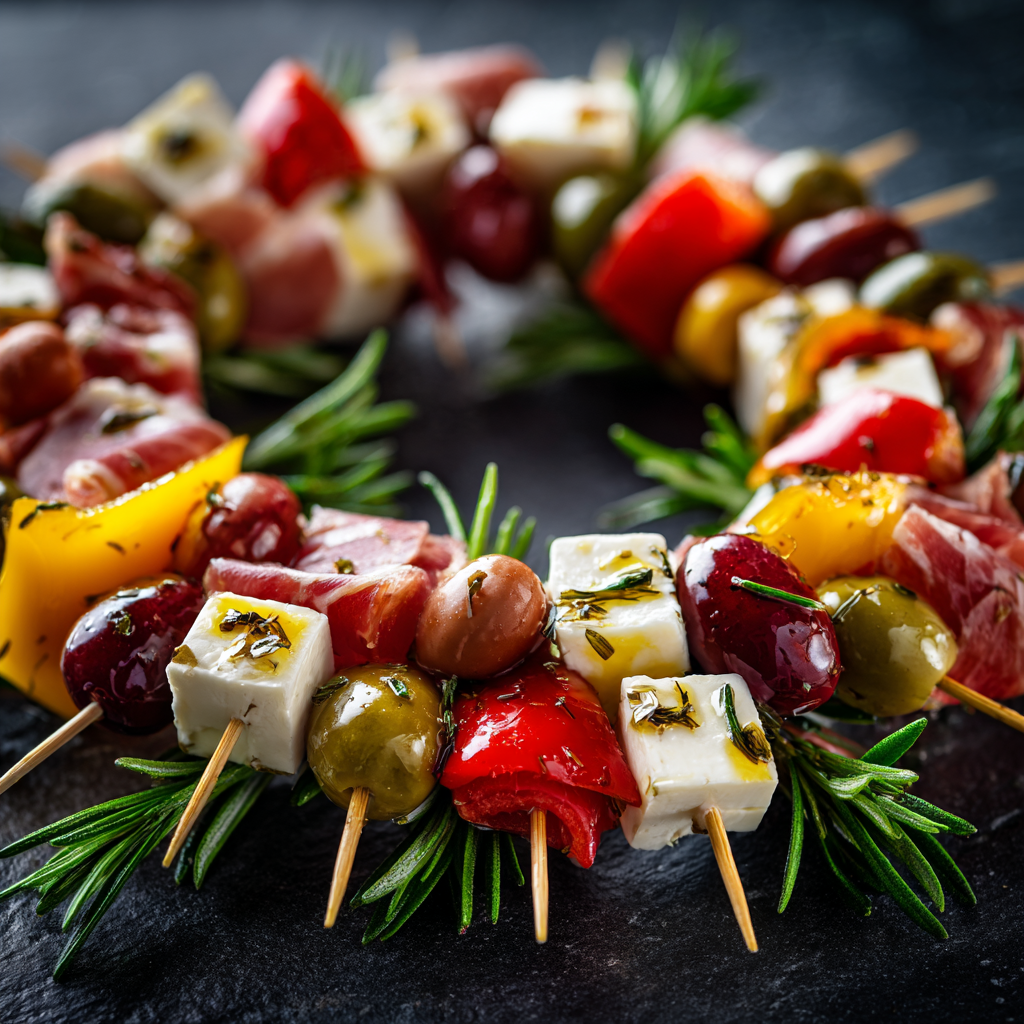
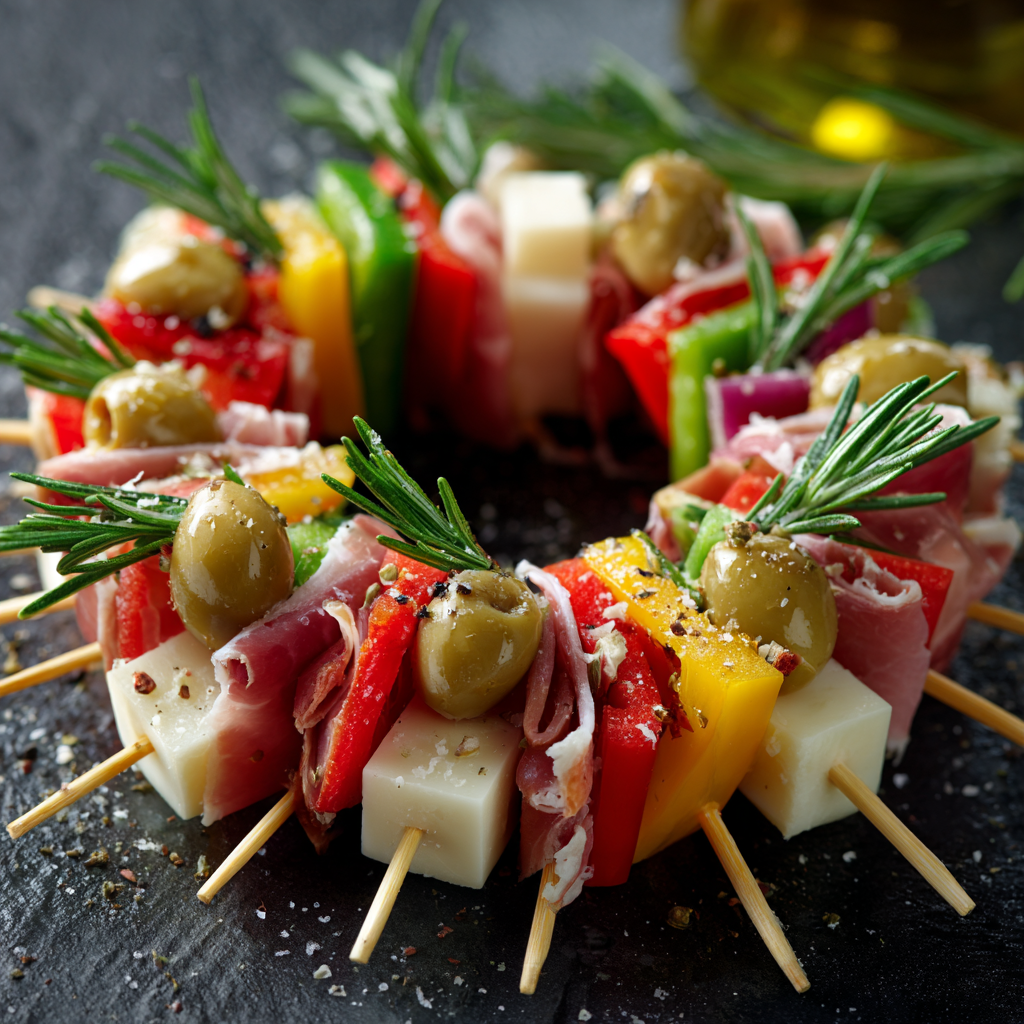
Thread ingredients on 4.7–6 in skewers in a repeating rhythm—olive, cheese, pepper, meat—and lay them in a ring on a round platter. Tuck rosemary sprigs as you go.
Cover and chill up to 24 hours; just before guests arrive, drizzle with extra-virgin olive oil for shine.
Classic flat platter with balanced zones and textures
Create distinct zones: cured meats like prosciutto, a cheese section, olives, and marinated vegetables. Add crackers or slices of bread on the side so guests can build bites.
Echo colors—reds from tomatoes and peppers, greens from herbs and olives—so the whole composition feels intentional.
- For scale, double ingredients for larger crowds or keep it small for intimate gatherings.
- Choose the build that fits your tools, timeline, and the mood you want to set.
| Build | Key components | Time / Storage |
|---|---|---|
| 3D tree | Tomatoes, mozzarella, olives, roasted peppers, rosemary, cheese star | ~60 min; hold up to 4 hours |
| Wreath skewers | Skewers, mixed bites, rosemary | 2–30 min to assemble; chill 24 hours |
| Flat display | Prosciutto, cheeses, olives, marinated vegetables, bread | 15–30 min; store covered 1–3 days |
Step-by-step: assemble, season, and shine
Start with a clear plan: assemble from the center outward so each bite looks intentional and inviting. This saves time and keeps your eye on balance while you work.
Skewer strategy
I use skewers to create rhythm and color. Alternate round, cube, and petal shapes—think tomatoes, mozzarella, cheese cubes, and pepper pieces. Repeat a simple color pattern every few bites so the eye moves across the board.
Layering for a seamless look
For the tree, offset each new row so pieces sit in the gaps below. Press gently to hold shape without crushing soft items. For a wreath, make a first ring around the rim, then add a second ring slightly inward and weave in rosemary to hide gaps.
Finishing touches
Just before serving, brush a light oil sheen for gloss and cohesion. Sprinkle a tiny pinch of salt to lift flavors. Add fresh herbs last—rosemary for structure and basil for bright scent.
Minutes to table: prep vs. last-minute
Wash, drain, and cut earlier in the day. Save threading and final herb tucks for the last stretch so the mozzarella stays fresh. Build where you’ll serve to avoid shifting your work.
| Stage | Action | Minutes | Final touch |
|---|---|---|---|
| Prep | Wash, drain, cut | 20 | Chill covered |
| Assemble | Thread skewers / place rows | 30–60 | Adjust gaps |
| Finish | Brush oil, sprinkle salt, add herbs | 5 | Photo check & serve on platter |
Variations for every guest and dietary need
I like to design the board in friendly neighborhoods—one for veggies, one for cheeses, one for meats—so no one feels left out. This keeps flow tidy and makes swaps obvious.
Vegetarian options
For a vegetarian antipasti section, skip cold cuts and load the board with marinated vegetables, tangy pickles, and extra cheeses. I add toasted nuts for crunch and small bowls of roasted peppers for color.
Vegan-friendly swaps
Vegan guests get bold flavors: marinated canned mushrooms, smoky roasted peppers, and dairy-free cheese. Stuff mini peppers with a whipped plant spread so they feel indulgent.
Kid-pleasing bites
Keep one zone mild. Offer mild olives, mini mozzarella balls, and sweet mini peppers. Group spicy or bitter items away from the kid table.
Protein-forward and lower-carb
When someone wants more protein, I create a cured meats corner with extra salami, prosciutto, and soppressata and label tongs for easy serving. For low-carb guests, skip bread and use endive leaves or romaine boats as scoops.
- Label nuts and allergy items clearly.
- Halal or pork-free guests enjoy generous cheese and marinated vegetable clusters.
| Variation | Best for | Quick swap |
|---|---|---|
| Vegetarian | Mixed diets | Extra cheeses, vegetables |
| Vegan | No dairy | Marinated mushrooms, vegan cheese |
| Protein-forward | Meat lovers | Extra cured meats, tongs |
With clear zones and thoughtful swaps, the antipasto stays true to tradition while welcoming every guest to the table.
Make-ahead, storage, and food safety
Before guests arrive, I map a simple storage plan so nothing we love loses texture or flavor. Clear steps make hosting calm and keep food safe.
Refrigerator timing: what holds well and what to finish day-of
I prep washing, draining, and cutting a day ahead, then store components in the refrigerator in separate airtight containers to preserve texture. The wreath can be assembled up to 24 hours ahead; cover tightly and add a final drizzle minutes before serving.
The tree is best built the same day for structure. Fresh mozzarella that’s been opened and not submerged should be eaten within about 24 hours. Deli meats and pickled vegetables last 3–4 days covered in the fridge.
How long to leave items out and when to chill
Keep the spread out for no more than 4 hours. After that time, refresh or return perishable items to cool storage to stay in the safe zone.
Leftovers plan: removing from the cone, airtight containers, next-day use
- For the tree, remove items from the cone before storing; transfer to airtight containers so herbs don’t wilt against foam.
- Do not freeze components—cheeses and vegetables change texture and become mealy.
- Quick next-day idea: toss olives, roasted peppers, and artichokes with greens; add cheese separately so it doesn’t weep. Be mindful that high fat oils can congeal in the cold—bring leftovers to room temperature a few minutes and stir gently before serving.
| Item | Fridge life | Action |
|---|---|---|
| Wreath pieces | Up to 24 hours assembled | Cover tightly; finish with oil before serving |
| Opened fresh mozzarella | ~24 hours | Keep chilled; use day-of when possible |
| Deli meats & pickles | 3–4 days | Store covered; repurpose into sandwiches |
| Tree leftovers | 2–3 days | Remove from cone; transfer to airtight containers |
When in doubt, check appearance and smell. Food safety is non-negotiable, and a little planning saves waste and keeps guests happy.
How to serve: pairings, plating, and holiday table ideas
When I set the table, I think about how guests will move and reach for bites—the flow guides every choice I make. Position the antipasto platter slightly off-center so people can approach from multiple sides. That small move makes grazing informal and social.
Breads, crackers, and crostini to round out the spread
Line up warm crostini, rustic crackers, and slender breadsticks in stacks near the main display. Offer a ricotta crostini as a warm side; its creaminess complements salty cheeses and olives.
Keep an extra small plate for oil and cracked pepper so guests can dress bread as they like. Label one or two items, like “spicy pepperoncini” or “aged gouda,” to help curious eaters.
Drinks and small bites that play well with antipasti
Bright, bitter drinks cut through richness. I often serve an Aperol Spritz or a Blood Orange Ginger Spritz for balance.
Place a warm side such as baked feta dip near the display, plus rosemary-spiced nuts or marinated mushrooms for contrast. Keep plates and napkins within reach and a tiny discard bowl for pits.
- Set the main display off-center and surround it with crostini and crackers for easy grazing.
- Offer a small bowl of oil and pepper as a thoughtful side for bread.
- Serve light, citrusy cocktails to refresh the palate between bites.
- Label key items and keep portions modest if this opens a full meal.
| Item | Why it works | Serve with |
|---|---|---|
| Ricotta crostini | Warm, creamy contrast | Crusty bread, cracked pepper |
| Aperol Spritz | Cleanses the palate | Light bites, salty cheeses |
| Rosemary nuts | Echo herb notes | Next to the main display |
| Baked feta dip | Temperature contrast | Flatbreads or crostini |
The most charming way to plate is the one that feels natural in your home. I weave fresh rosemary down the center of the table, tuck in tea lights, and let guests find the fun in sharing small, well-matched bites. These touches elevate the experience without adding fuss, and they set a warm tone for the rest of the meal.
Bring it all together for a show-stopping holiday appetizer guests remember
A confident spread starts with a simple pantry and a clear way to arrange it. Trust the trio of cheeses, tomatoes, and marinated vegetables. Let cured meats punctuate the board with savory depth.
Choose the tree, the wreath, or the classic flat arrangement to suit your space. Finish with fresh herbs, a glisten of olive oil, and a pinch of sea salt to add polish with almost no effort.
When you step back and see your antipasto assembled—colorful, abundant, and inviting—you’ve set the tone for the meal. Guests notice calm and generosity. Use this as your go-to antipasto platter and the ritual will feel effortless year after year.
Holiday Antipasto Platter
Ingredients
Method
- Set up a large cutting board or round platter as your main surface.
- Arrange all ingredients in small bowls or on trays, within easy reach for quick assembly.
- Cube the gouda or cheddar cheese.
- Drain and pat dry the marinated artichokes, olives, and peppers to avoid excess oil pooling on the platter.
- Wash the cherry tomatoes, mini bell peppers, and fresh herbs.
- If using fresh mozzarella, cut it just before assembly.
- Option 1: 3D Tree:
- Wrap a styrofoam cone in plastic wrap to ensure it’s food-safe.
- Skewer a variety of ingredients (mozzarella, olives, tomatoes, marinated peppers, and sun-dried tomatoes) onto toothpicks and arrange them on the cone, alternating colors and textures for visual interest.
- Tuck fresh rosemary between bites to mimic pine needles.
- Finish the top with a cheese or bell pepper star.
- Brush the tree with a thin sheen of olive oil and sprinkle with sea salt flakes.
- Option 2: Wreath Skewers:
- Skewer items like olives, cheese, bell peppers, and cured meats onto 4.7–6 inch bamboo skewers.
- Arrange the skewers in a circle to form a wreath shape on the platter.
- Tuck rosemary sprigs as you go.
- Chill the wreath in the fridge for up to 24 hours. Drizzle olive oil on top just before serving.
- Option 3: Classic Flat Platter:
- Create distinct zones for cured meats, cheeses, olives, and marinated vegetables.
- Add crackers or sliced bread on the side to complete the spread.
- Arrange items so that the colors pop and are balanced.
- Drizzle olive oil over the entire platter for a glossy finish.
- Sprinkle sea salt flakes for extra flavor.
- Tuck in fresh basil or more rosemary just before serving.
- Make sure to place the platter off-center to allow guests to graze easily from all sides.
Notes
- The wreath and 3D tree can be assembled up to 24 hours in advance, but the fresh mozzarella should be added right before serving to maintain its freshness.
- For vegetarian or vegan guests, swap out the meats for extra marinated vegetables or dairy-free cheeses.
- Keep the platter refrigerated until 30 minutes before serving for the best flavor and texture.