Jump to Recipe
Autumn brings magic to the kitchen. Wooden spoons stir memories as rich as Italian landscapes. Simple ingredients transform into a symphony of warmth and comfort.
True cooking captures more than recipes. It holds the essence of a moment, a season, a tradition. My family has always understood this truth.
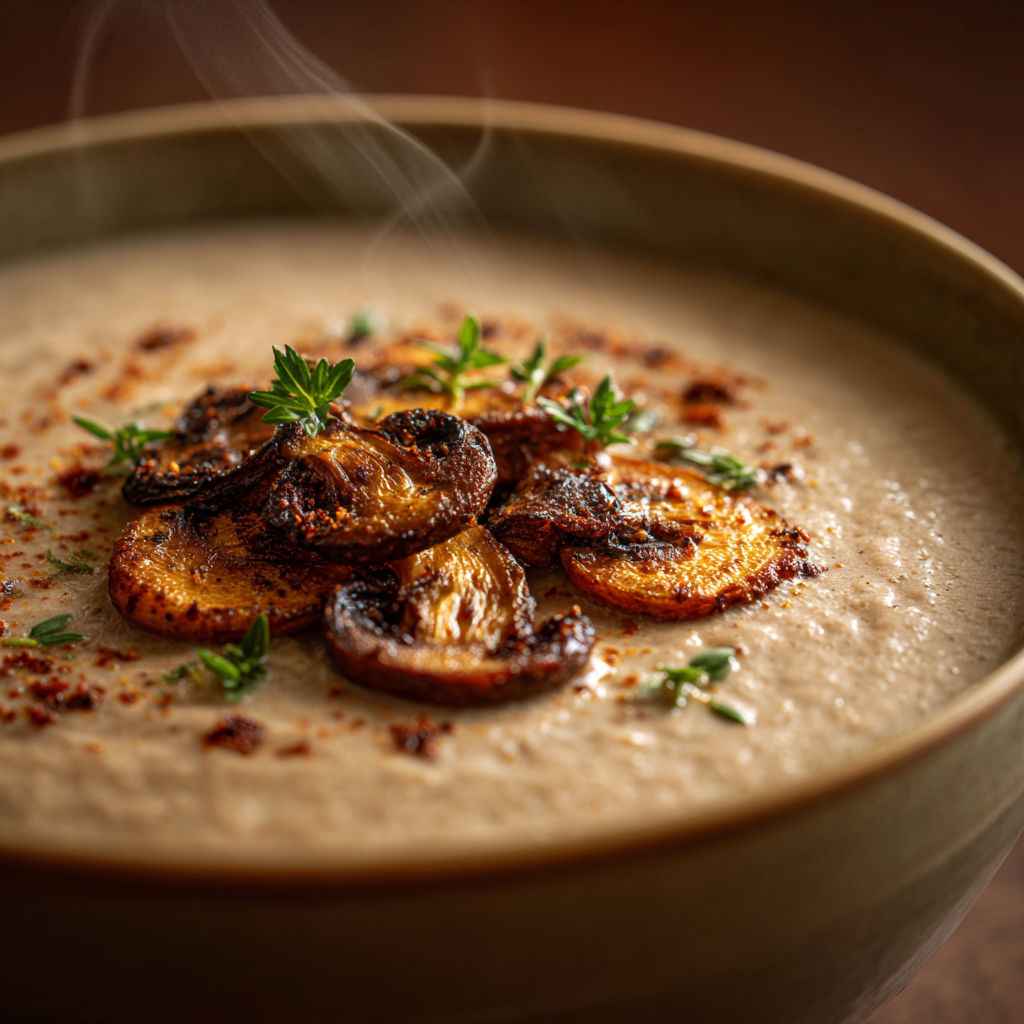
Our seasonal Italian chestnut dish carries the soul of central Italian hillsides. Chestnuts have nourished families there for generations. This chestnut soup italian recipe connects us to earth, history, and rural life.
Key Takeaways
- Authentic Italian chestnut soup represents more than just a recipe—it’s a cultural experience
- Chestnuts play a central role in traditional autumn cuisine in central Italy
- The soup embodies the warmth and comfort of seasonal cooking
- Preparation connects modern cooks to generations of culinary tradition
- Each bowl tells a story of landscape, harvest, and family heritage
Chestnut Soup Italian Recipe: A Rustic Tuscan and Umbrian Classic
Authentic Italian chestnut soup tells a story of survival and tradition. Our traditional zuppa di castagne carries whispers of generations past. They transformed humble ingredients into nourishing meals that warmed body and soul.
The Origins of Zuppa di Castagne in Italian Cuisine
In the rugged Apennine highlands, chestnuts were more than food—they were a lifeline. Dubbed “the bread of the poor,” these forest treasures sustained mountain communities. Families gathered fallen chestnuts during harsh winters for essential recipes.
They carefully roasted chestnuts over open fires. Then they ground them into flour for winter meals.
- Regions like Garfagnana in Tuscany and Valnerina in Umbria celebrated chestnut harvests
- Chestnuts provided critical nutrition when wheat crops failed
- Mountain villages developed ingenious ways to preserve and cook chestnuts
Why Chestnuts and Mushrooms Create the Perfect Fall Pairing
Italian winter soup recipes featuring chestnuts and mushrooms represent a magical forest symphony. Porcini mushrooms bring deep, earthy umami that complements chestnuts perfectly. This Tuscan chestnut bisque captures the essence of autumn’s woodland flavors.
Each spoonful tells a story of resilience. It connects modern kitchens to central Italy’s mountain communities.
Essential Ingredients for Authentic Italian Chestnut Soup
Creating a creamy Italian chestnut soup requires carefully selected ingredients. These capture the essence of traditional Italian cooking. High-quality, fresh components bring out rich, warming flavors in this hearty dish.
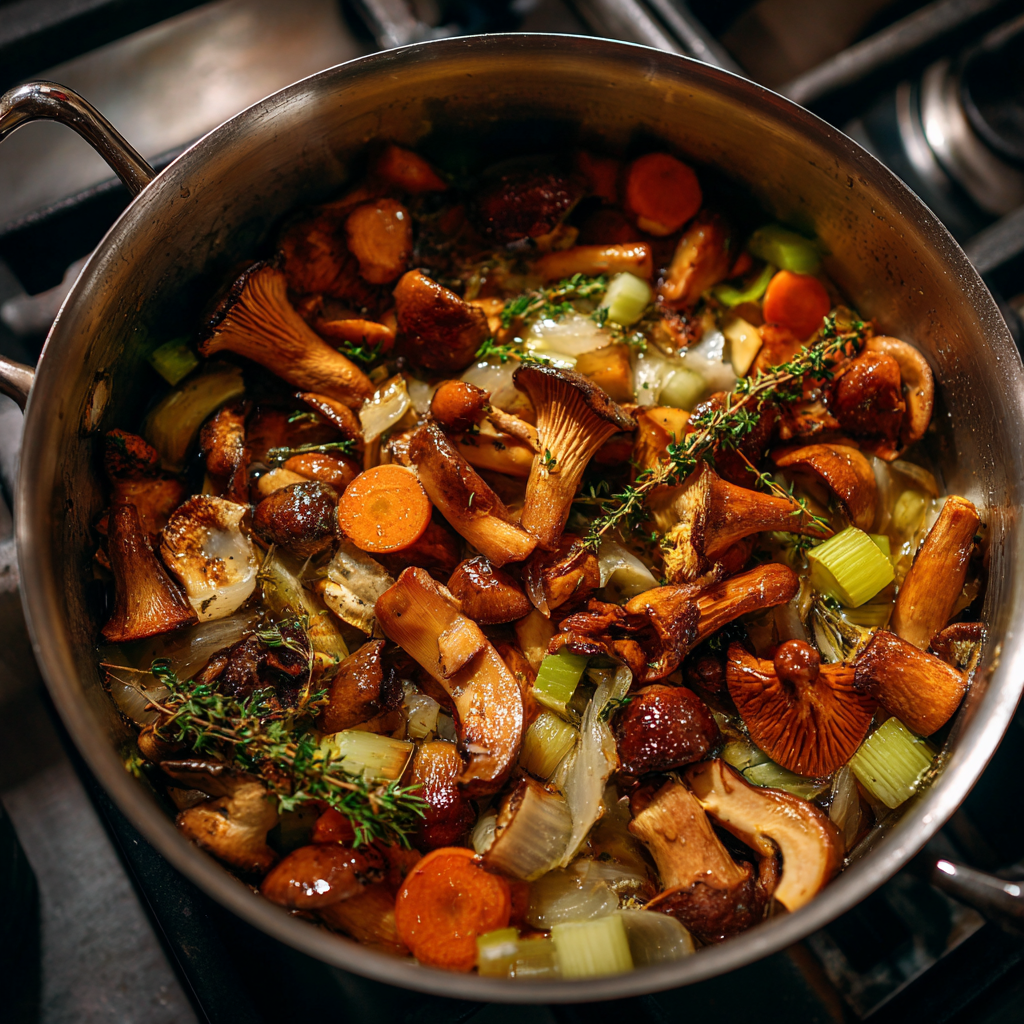
For the perfect roasted chestnut soup recipe, you’ll need these essential ingredients:
- Fresh chestnuts (1 pound) or pre-cooked packaged chestnuts
- Porcini or mixed mushrooms (1 pound)
- Classic soffritto base (onion, carrot, celery)
- Garlic cloves (2-3)
- Extra virgin olive oil (4 tablespoons)
- Chicken or vegetable broth (4-5 cups)
- Salt and freshly ground black pepper
Optional ingredients can elevate your soup’s depth and complexity:
- Pancetta for smoky richness
- Fresh herbs like rosemary or sage
- A touch of tomato purée
- Chili flakes for subtle heat
You have two wonderful options for selecting chestnuts. Fresh chestnuts require roasting and peeling—a delightful traditional method. Vacuum-sealed pre-cooked chestnuts offer convenience without compromising flavor.
Mushrooms play a crucial role in developing the soup’s earthy undertones. Porcini mushrooms are the gold standard for authentic Italian flavor. A mix of cremini and dried porcini can create an equally magnificent taste.
Step-by-Step Guide to Making Creamy Chestnut Soup at Home
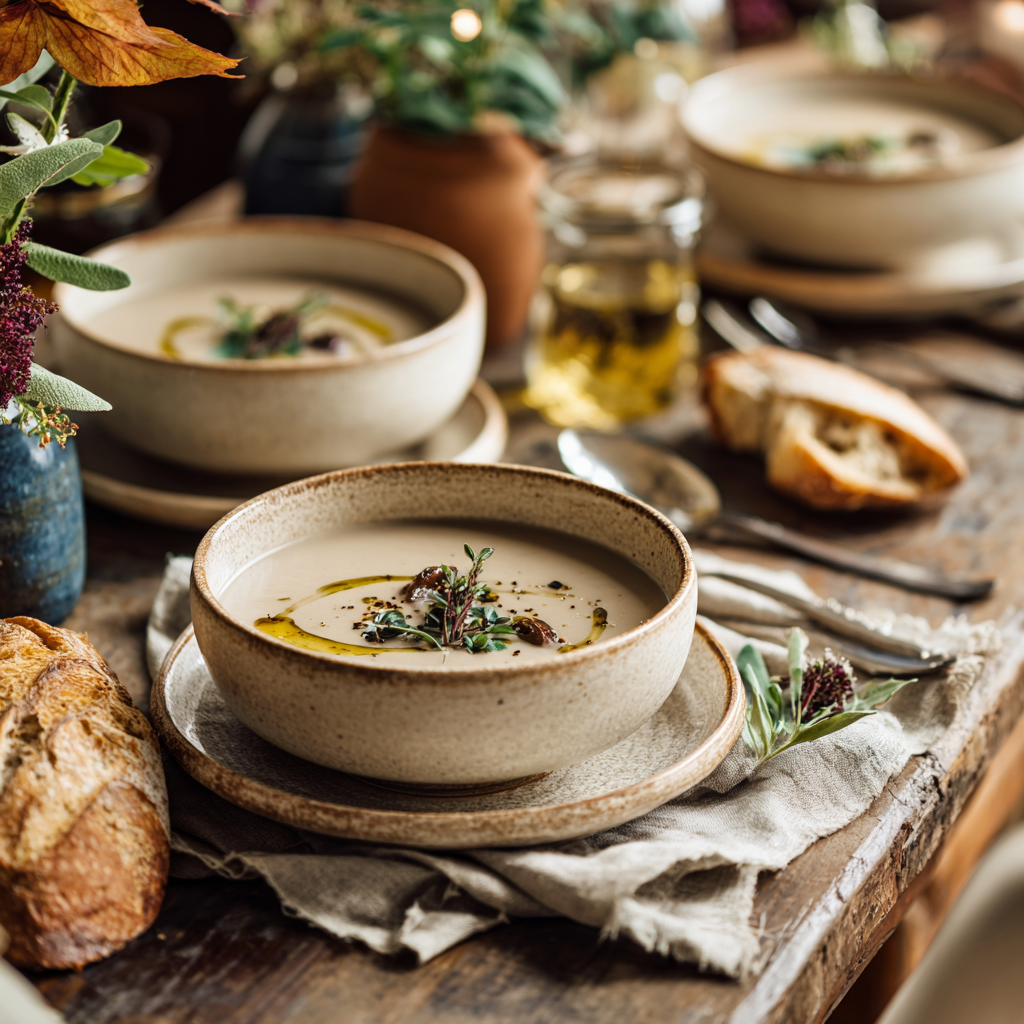
Creating a delicious homemade chestnut purée soup starts with selecting the right ingredients. Fresh chestnuts require a bit of preparation. I’ll walk you through each step to ensure a rich, velvety soup.
Begin by preparing your chestnuts. If using fresh ones, carefully score an X on the flat side with a sharp knife. Then boil for about 30 minutes.
The shells will split open, making peeling easier. For a quicker option, pre-cooked chestnuts work wonderfully in this homemade chestnut purée soup. Heat olive oil in a large saucepan and start with the classic soffritto.
The soffritto is a flavor base of finely chopped celery, onion, and carrot. This creates the foundation for your soup’s rich taste.
The magic happens when you add wild mushrooms to your soup. Sauté them until they’re beautifully caramelized, releasing their deep, earthy flavors. Garlic goes in next, cooking for just a couple of minutes to prevent burning.
Pour in your broth and chestnuts, letting everything simmer until the chestnuts become tender. The key is patience. Allow the flavors to meld together slowly.
Let the soup cool slightly for safety before blending. Use an immersion blender or carefully transfer to a standard blender. Work in batches if needed.
The goal is a smooth, creamy texture that speaks to traditional Italian cooking. Pro tip: serve the soup warm rather than piping hot. This helps you truly appreciate its nuanced flavors.
A drizzle of extra virgin olive oil can elevate this elegant dish. A sprinkle of fresh herbs or a dollop of crème fraîche adds something truly special.
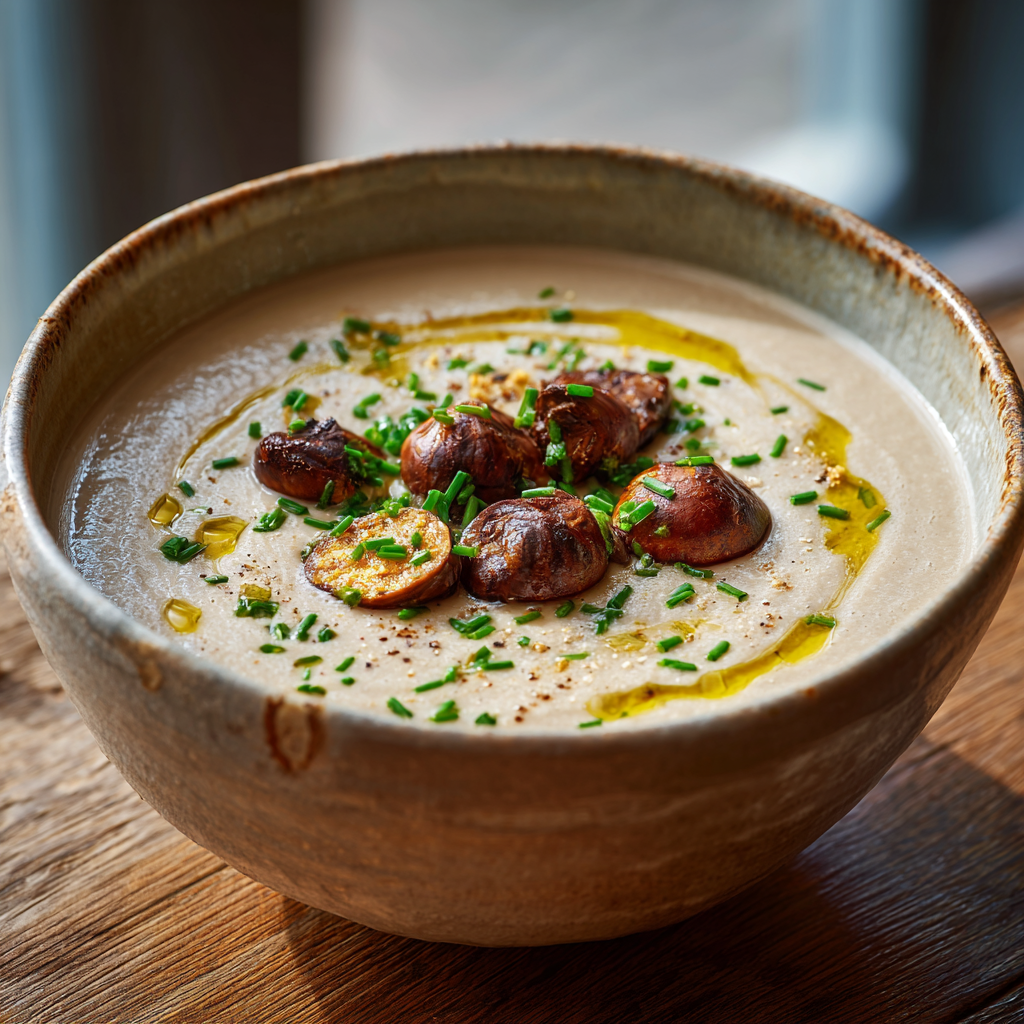
Traditional Italian Chestnut Soup (Zuppa di Castagne)
Ingredients
Method
- Score an “X” on each chestnut. Boil for about 30 minutes until the shells open. Peel while warm and set aside.
- Heat olive oil in a large pot. Add onion, carrot, and celery. Cook on medium heat until soft and fragrant.
- If using pancetta, add it now and cook until lightly crisp.
- Add mushrooms to the pot. Sauté until they release moisture and turn golden. Add garlic and cook for 1–2 minutes.
- Add peeled chestnuts to the pot. Pour in the broth. Add herbs, tomato purée, or chili flakes if using.
- Bring to a gentle simmer. Cook for 20–25 minutes until chestnuts are fully soft and flavors blend.
- Turn off heat. Let cool slightly. Blend with an immersion blender until creamy (or transfer to a blender in batches).
- Season with salt and pepper. Reheat gently if needed. Serve warm with a drizzle of olive oil, herbs, or a spoon of crème fraîche.
Notes
- Pre-cooked chestnuts save a lot of time without losing flavor.
- Porcini mushrooms make a big difference in taste. Even a small handful of dried porcini boosts flavor.
- The soup tastes even better the next day as the flavors deepen.
- Serve warm—not boiling hot—to appreciate the earthy, nutty notes.