
Jump to Recipe
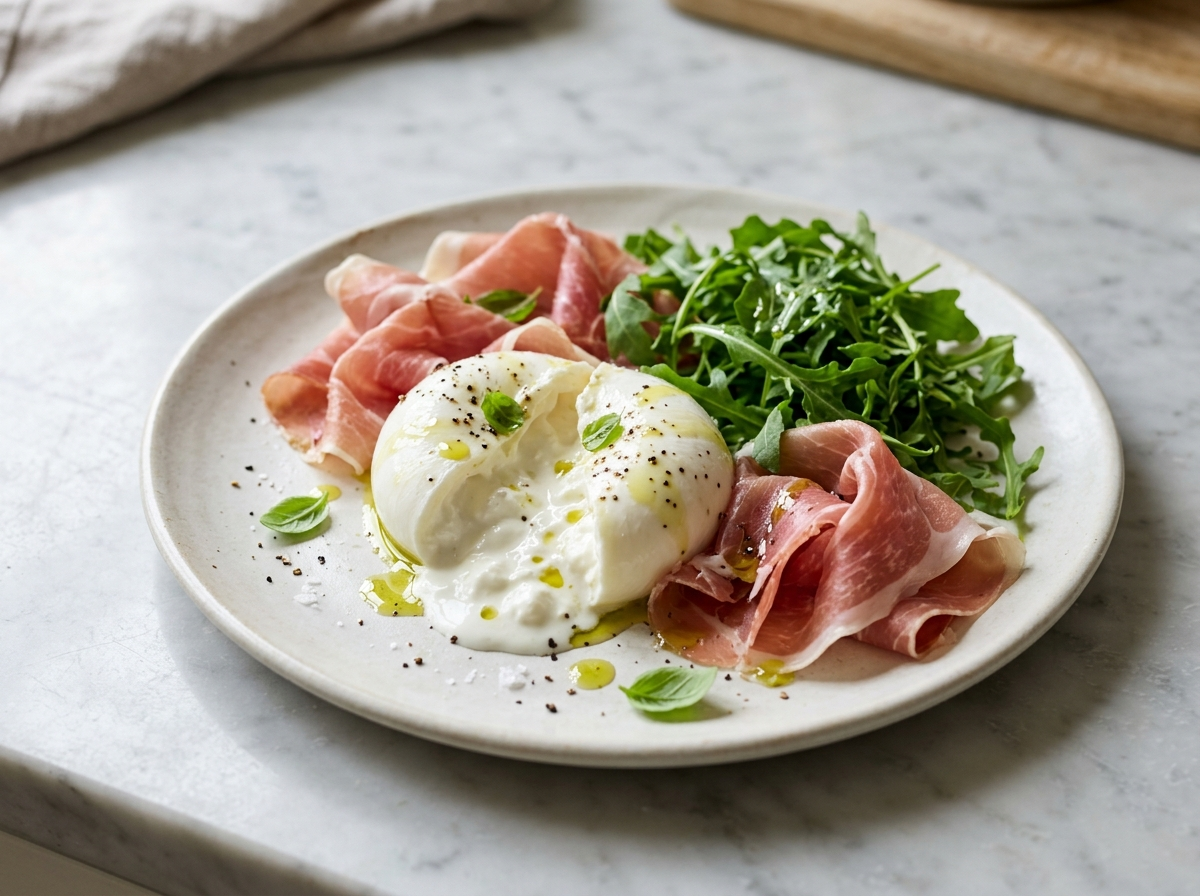
Burrata con prosciutto crudo is an Italian antipasto built from two ingredients doing all the work: a whole ball of cold, milky burrata and thin slices of dry-cured prosciutto crudo, usually Parma or San Daniele. Add olive oil, black pepper, and a small handful of arugula, and you’re done. No stove, no oven.
The texture is the whole point. Burrata’s outer shell holds firm, then gives way to a soft, creamy center once you tear into it. Set against the chewy, salty prosciutto, that contrast is why the dish works even with just four or five ingredients.
One thing trips people up: cutting the burrata too far ahead of serving. The whey pools out fast and turns the plate watery within 15 minutes, so I slice it right at the table or just before guests sit down.
This is a five-minute starter for a dinner party or a light lunch. Buy the best burrata and prosciutto you can find here, since there’s nowhere for lesser ingredients to hide.
Why You’ll Love This Recipe
- No stove needed, ready in under 10 minutes
- Only five ingredients, all of them doing real work
- Looks like restaurant plating with almost no effort
- Works as a starter, light lunch, or wine pairing
Ingredient Notes
- burrata: Buy burrata that’s been in the fridge no more than a few days, older burrata turns rubbery and loses the creamy center. Fior di latte or a buffalo version both work.
- prosciutto crudo: Ask for it sliced paper-thin at the counter rather than pre-packaged, thick slices turn chewy instead of melting. Parma or San Daniele are both reliable choices.
- arugula: Wild arugula is more peppery and holds up next to the rich cheese. Baby spinach works as a milder substitute if arugula isn’t around.
- extra virgin olive oil: Use a fruity, good-quality oil since it’s doing real flavor work here, not just moisture. A grassy Tuscan or Ligurian oil both work well.
- lemon zest: A little zest over the top cuts through the richness. Skip it if you’d rather keep the flavor purely savory.
Fresh Burrata con Prosciutto Crudo Antipasto Platter
Ingredients
Method
- Remove burrata from its packaging and drain on paper towels for 5 minutes to pull off excess whey.
- Let burrata sit at room temperature for 20 to 30 minutes before serving so the center stays soft.
- Arrange arugula over a shallow platter, then set the burrata in the center.
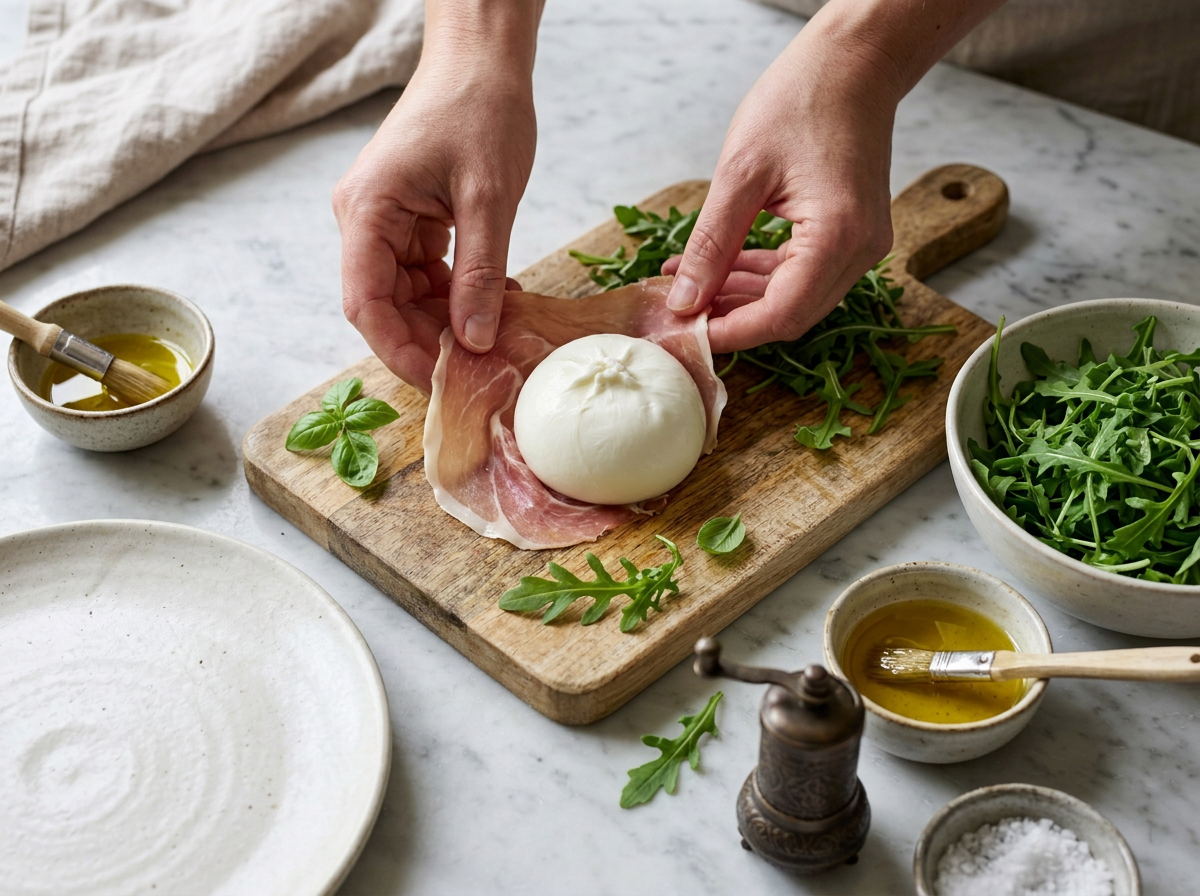
- Drape prosciutto crudo slices loosely around the burrata, leaving folds and gaps rather than flat sheets.
- Tear the burrata open with two forks just before serving so the creamy center spills out.
- Drizzle with extra virgin olive oil, season with flaky salt and black pepper, and finish with lemon zest if using.
- Serve immediately, with warm bread on the side if you like.
Notes
- Buy burrata within 2 days of the sell-by date for the creamiest center.
- Slice prosciutto crudo paper-thin, thick slices turn chewy instead of melting.
- Don't dress the arugula separately, oil straight from the burrata plate is enough.
- Cut burrata at the table, not in the kitchen, to keep the whey from pooling.
Tips for Success
- Bring burrata to room temperature for 20 to 30 minutes before serving so the center stays soft, not chalky.
- Drain the burrata on paper towels for a few minutes to stop the whey from pooling on the plate.
- Slice prosciutto crudo just before plating so it doesn’t dry out or stick together in the fridge.
- Use a flaky sea salt on the burrata itself, not on the prosciutto, which is already salty.
- Tear the burrata open with two forks instead of slicing it so the creamy center spills naturally.
Variations
- Swap arugula for thinly shaved fennel and orange segments for a brighter, more citrus-forward plate.
- Add fresh figs when they’re in season for a sweeter contrast against the salty prosciutto crudo.
- Drizzle with aged balsamic instead of plain olive oil for a deeper, more caramelized finish.
Storage and Reheating
Burrata con prosciutto crudo doesn’t store well once assembled, the cheese turns watery and the prosciutto dries out within an hour or two at room temperature. Eat it the same day you plate it.
If you have unopened burrata left over, keep it in its liquid in the fridge for up to 2 days, no longer. Prosciutto crudo keeps wrapped tightly in the fridge for 3 to 4 days.
There’s no reheating step since the dish is served cold. If the burrata has already been cut, use leftovers in scrambled eggs or over warm pasta the next day rather than serving them cold again.
Serving Suggestions
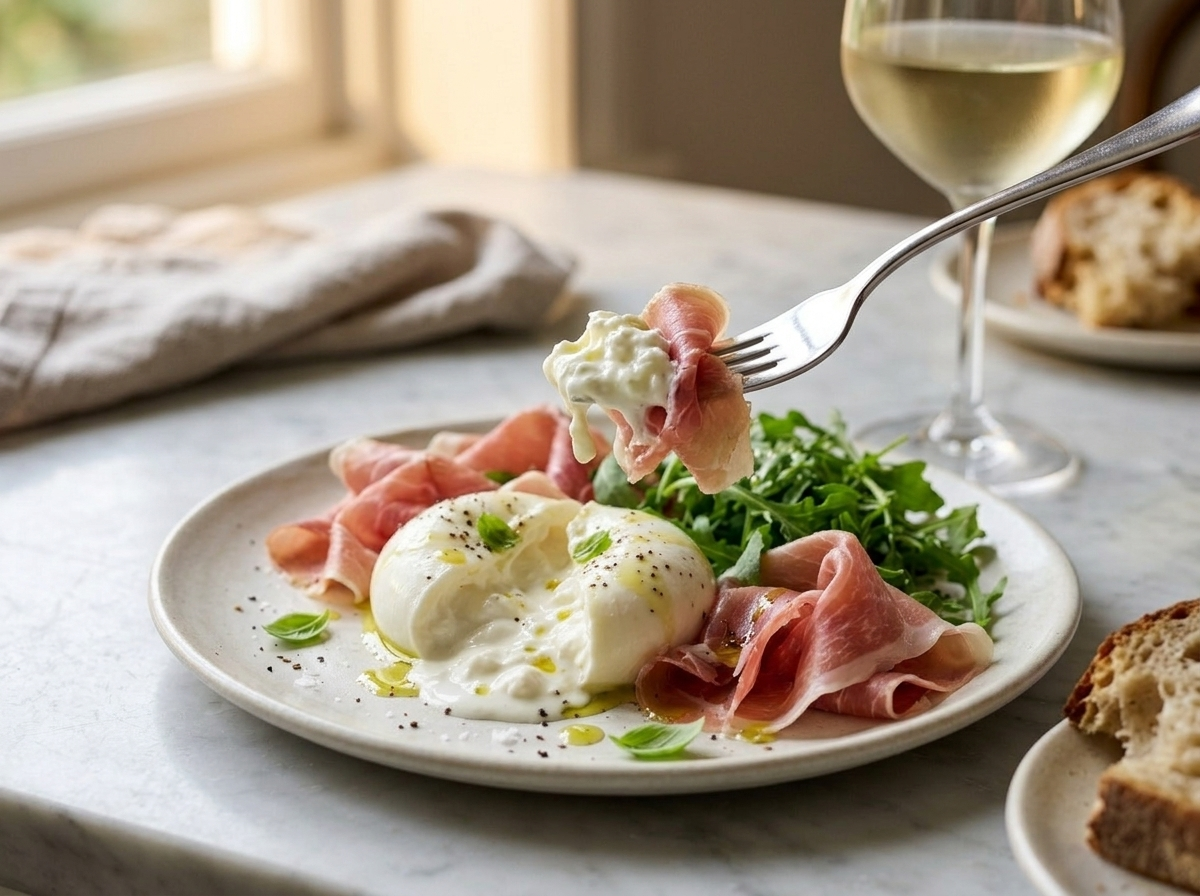
Burrata con prosciutto crudo works as a starter before a pasta course, or as a light lunch with a green salad on the side. Serve it with warm Ligurian flatbreads or grissini so nobody has to leave the creamy center behind.
For a bigger spread, add roasted peppers, marinated baby artichokes, and a bowl of olive oil for dipping bread. A glass of chilled Vermentino or Franciacorta rounds it out.
In summer, pair it with sliced ripe tomatoes or fresh figs alongside the prosciutto for extra sweetness against the salt.
FAQ
Why is my burrata leaking watery liquid when I cut it open?
That liquid is whey, and it’s normal, not a sign the burrata has gone bad. Fresh burrata holds liquid inside its shell along with small curds of cream and mozzarella, so cutting it releases some right away. Drain it on paper towels for a few minutes before plating to keep the platter from pooling.
Can I use stracciatella instead of burrata for this antipasto?
Yes, stracciatella works, though the texture changes since it’s the creamy filling without the outer shell. You’ll get the same rich, milky flavor and soft curds, just a looser, more spreadable result once plated. Spoon it over the arugula rather than tearing it the way you would a whole burrata ball.
Can I assemble burrata con prosciutto crudo ahead of time for a party?
Not fully, since burrata should be torn open right before serving or the plate turns watery within 15 to 20 minutes. You can drain the burrata, wash the arugula, and slice the prosciutto crudo an hour ahead, then arrange and tear the cheese open once guests are ready to eat.
What wine pairs well with burrata con prosciutto crudo?
A dry white with some acidity works best, since it cuts through the richness of the cheese and the salt in the prosciutto. Vermentino, Franciacorta, or a light Pinot Grigio all pair well. If you’d rather have red, keep it light and cold, like a chilled Bardolino.
Is burrata con prosciutto crudo gluten free?
Yes, burrata, prosciutto crudo, arugula, and olive oil are all naturally gluten free on their own. The only thing to watch is what you serve alongside it, since bread or grissini for scooping up the cheese usually contain wheat. Swap in gluten-free bread or crackers if that’s a concern.
What’s the difference between prosciutto crudo and prosciutto cotto?
Prosciutto crudo is raw, dry-cured ham aged for months, while prosciutto cotto is cooked, wet-cured ham closer to a mild deli ham. Crudo has a concentrated, salty-savory flavor and slightly chewy bite that pairs with burrata, cotto is softer and milder. For this dish, crudo is the right choice, not cotto.