
Jump to Recipe
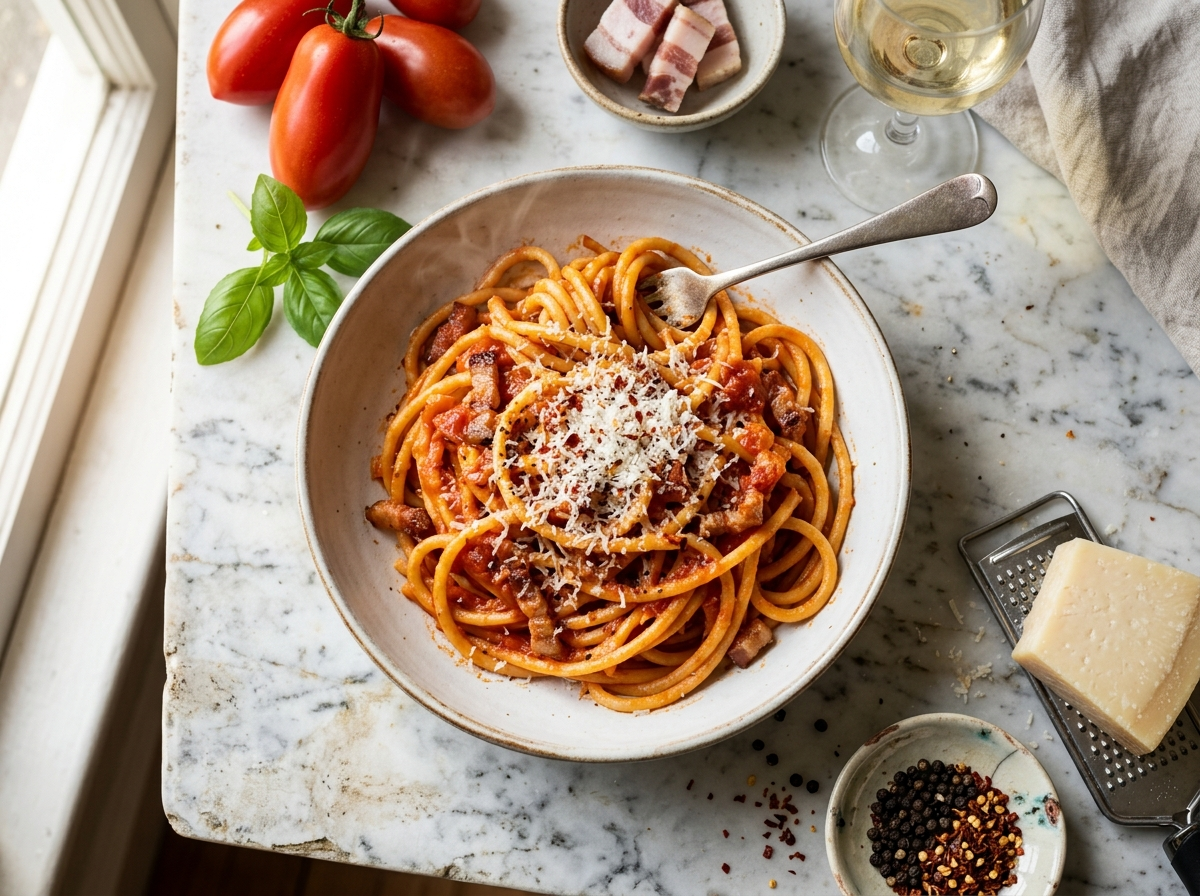
Bucatini all’Amatriciana comes from Amatrice, a town in the Lazio mountains, and it has exactly four non-negotiable ingredients: guanciale, tomato, Pecorino Romano, and black pepper. That’s the whole dish.
The sauce cooks in about 15 minutes. You render the guanciale slowly until the fat turns translucent and the edges crisp, then add white wine to deglaze, then the tomatoes. The pasta water ties it together at the end.
Bucatini is the right pasta here because its hollow center traps the sauce and the fat from the guanciale, a coating effect you also see at work in bold pantry-driven pasta sauces. Spaghetti works in a pinch but you lose some of that coating effect.
I use San Marzano tomatoes from a can because the season for fresh plum tomatoes is short. The canned version is consistent year-round and the sauce doesn’t need to cook long enough to mask any difference.
Why You’ll Love This Recipe
- Sauce ready in 15 minutes while pasta water heats
- Four core ingredients, no specialist technique needed
- Guanciale fat doubles as the base cooking fat
- Pecorino and pasta water create a naturally glossy coating
Ingredient Notes
- Guanciale: Cured pork cheek with a higher fat ratio than pancetta, which gives the sauce its characteristic richness. If you can’t find guanciale, pancetta tesa (flat, unsmoked) is the closest substitute. Avoid smoked bacon, which changes the flavor profile significantly.
- San Marzano tomatoes: Whole peeled San Marzano DOP tomatoes, crushed by hand, give a clean, slightly sweet base. Any good-quality whole peeled plum tomatoes work if San Marzano are unavailable.
- Pecorino Romano: Finely grated Pecorino Romano is sharp and salty, which balances the fat from the guanciale. Don’t substitute Parmigiano here, it changes the flavor profile entirely, though a 50/50 blend is acceptable if Pecorino is too sharp for your taste.
- Bucatini: Thick, hollow pasta that holds the sauce well. Perciatelli is the same shape under a different name. Spaghetti is a workable backup but the result is lighter.
- Dry white wine: A small amount is used to deglaze the pan after the guanciale crisps. Some traditional recipes skip it or use white wine vinegar. Use whatever dry white you’d drink.
- Dried chili flakes: Optional in the strictest traditional version, but common in most Roman home kitchens. Add a small pinch with the guanciale if you want background warmth.
Bucatini all’Amatriciana
Ingredients
Method
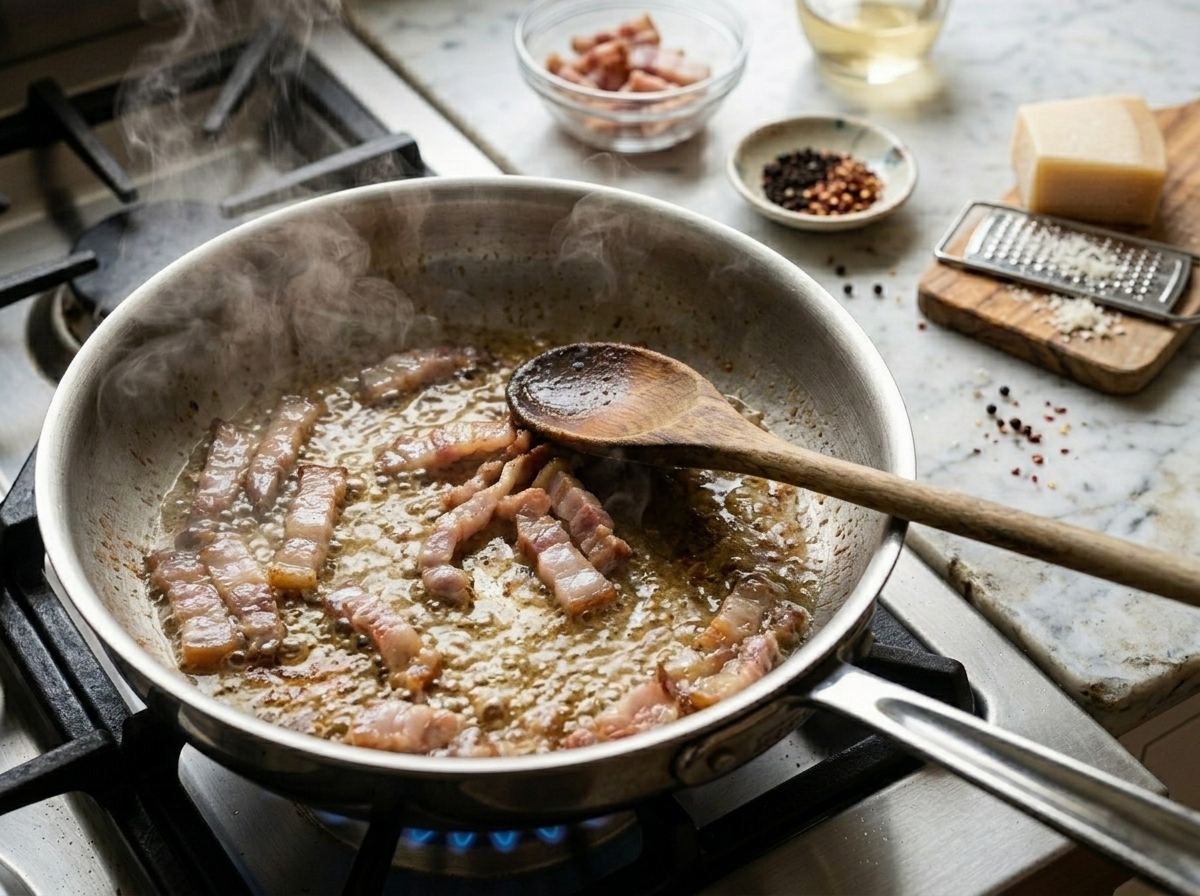
- Place the guanciale strips in a cold 12-inch skillet. Set over medium-low heat and cook, stirring occasionally, for 8 to 10 minutes until the fat is completely translucent and the edges are pale gold. Do not rush this step.
- If using chili flakes, add them now and stir for 30 seconds.
- Pour in the white wine and raise the heat to medium. Let it bubble for 1 to 2 minutes until the alcohol smell is gone and the liquid has reduced by half.
- Add the hand-crushed tomatoes to the pan. Season lightly with black pepper. Stir to combine with the guanciale fat.
- Simmer over medium heat, stirring occasionally, for 12 to 15 minutes until the sauce thickens slightly and the tomatoes lose their raw edge. Taste and adjust salt sparingly.
- Bring a large pot of heavily salted water to a boil. Cook the bucatini for 1 minute less than the packet instructions, usually 8 to 9 minutes, until just under al dente.
- Before draining, ladle out about 120 ml of starchy pasta water and set aside. Drain the bucatini.
- Add the drained bucatini to the sauce in the skillet. Toss over medium heat for 1 to 2 minutes, adding pasta water a splash at a time, until the sauce coats every strand and looks glossy.
- Pull the pan off the heat. Add the grated Pecorino Romano and toss quickly and continuously for 30 to 45 seconds until the cheese melts into the sauce without clumping.
- Divide between warmed bowls immediately. Finish with extra Pecorino and a twist of black pepper at the table.
Notes
Tips for Success
- Render guanciale over medium-low heat until the fat is translucent before turning up the heat to crisp the edges.
- Crush whole canned tomatoes by hand directly into the pan so you control the texture.
- Salt pasta water heavily and reserve at least 120 ml before draining.
- Finish pasta in the sauce off the heat, adding pasta water a splash at a time until the sauce coats each strand.
- Add Pecorino Romano off the heat only, stirring quickly to melt it without clumping.
Variations
- Use bucatini with a small pinch of dried Calabrian chili for a spicier southern-Italian take.
- Replace white wine with 1 tsp white wine vinegar if you prefer to cook without alcohol.
- Use rigatoni instead of bucatini for a Rome trattoria-style version with more sauce pooling inside the ridges.
Storage and Reheating
Store leftovers in an airtight container in the fridge for up to 2 days. The sauce separates slightly as it cools, which is normal.
Reheat in a skillet over medium heat with a splash of water, stirring to re-emulsify the sauce around the pasta. Avoid the microwave if you can, it tends to dry out the bucatini unevenly.
This dish doesn’t freeze well. The texture of the bucatini degrades after freezing and thawing.
Serving Suggestions
Serve straight from the pan into warmed bowls with extra Pecorino grated at the table. The pasta cools fast, so don’t let it sit.
A simple green salad dressed with lemon and olive oil works alongside it without competing. Bitter greens like radicchio or cicoria are the Roman default.
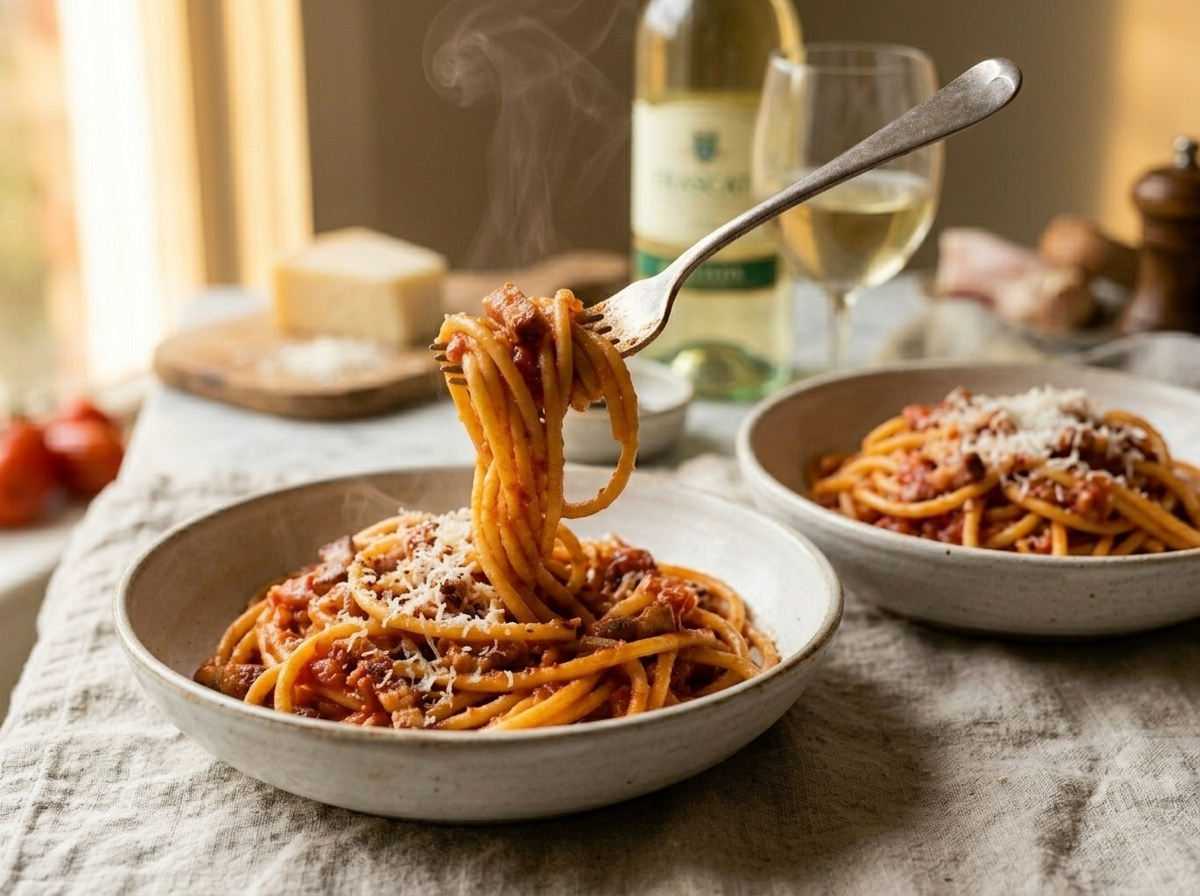
A glass of dry white wine, a light Frascati or Vermentino, pairs cleanly with the fatty guanciale and the acidic tomato, much as it does alongside this Roman trattoria classic.
FAQ
Why does my Amatriciana sauce look oily and not coating the bucatini?
The sauce needs starchy pasta water to emulsify properly. Add the pasta water a splash at a time while tossing vigorously off the heat. If the pan is too hot when you add the Pecorino, the fat can also split, so pull the pan off the flame first.
Can I use pancetta instead of guanciale in Amatriciana?
Yes, pancetta tesa is the most common substitute and works well. Avoid smoked pancetta or bacon because the smoke flavor competes with the tomato and Pecorino in a way guanciale’s clean pork fat doesn’t.
Can I make the Amatriciana sauce the day before and store it separately?
The tomato and guanciale sauce keeps in the fridge for up to 3 days in a sealed container. Cook fresh pasta when you’re ready to serve and finish it in the reheated sauce with a little pasta water to bring it back together.
What’s the difference between Amatriciana and Gricia?
Gricia is Amatriciana without the tomato, often called the ‘white Amatriciana.’ It’s an older dish from the same Amatrice area and uses guanciale, Pecorino Romano, black pepper, and pasta water only — the same lean pantry approach you find in five-ingredient pasta built on fat and starch.
Is Bucatini all’Amatriciana gluten-free?
No, traditional bucatini is made from durum wheat semolina and contains gluten. You can use a certified gluten-free pasta in a similar shape, though the texture will differ from traditional bucatini.
How do I know when the guanciale is ready to add the tomatoes?
The fat should look completely translucent and the meat edges should be lightly golden, not dark. If you see the edges going too dark before the fat renders, lower the heat. The whole process takes about 8 to 10 minutes over medium-low.