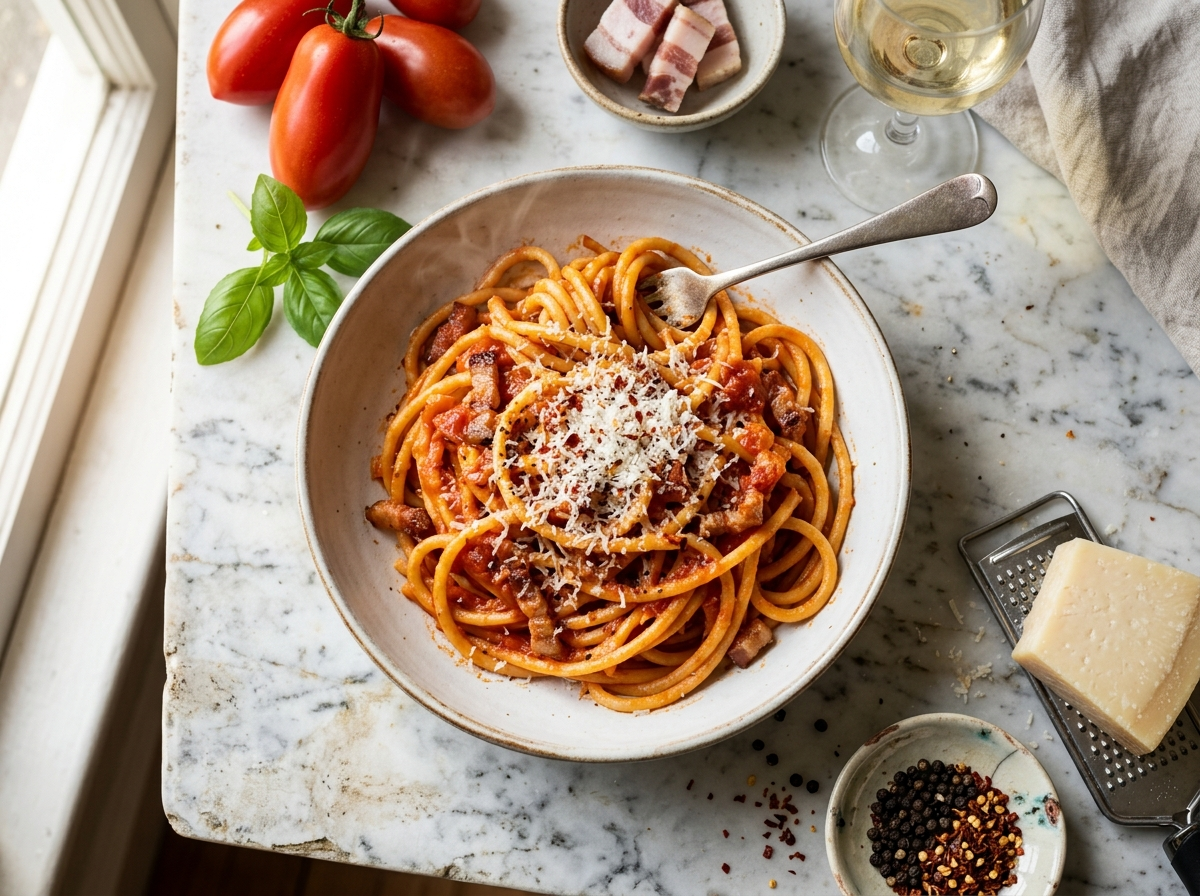
Ingredients
Method
Render the guanciale
- Place the guanciale strips in a cold 12-inch skillet. Set over medium-low heat and cook, stirring occasionally, for 8 to 10 minutes until the fat is completely translucent and the edges are pale gold. Do not rush this step.
- If using chili flakes, add them now and stir for 30 seconds.
- Pour in the white wine and raise the heat to medium. Let it bubble for 1 to 2 minutes until the alcohol smell is gone and the liquid has reduced by half.
Build the sauce
- Add the hand-crushed tomatoes to the pan. Season lightly with black pepper. Stir to combine with the guanciale fat.
- Simmer over medium heat, stirring occasionally, for 12 to 15 minutes until the sauce thickens slightly and the tomatoes lose their raw edge. Taste and adjust salt sparingly.
Cook the pasta
- Bring a large pot of heavily salted water to a boil. Cook the bucatini for 1 minute less than the packet instructions, usually 8 to 9 minutes, until just under al dente.
- Before draining, ladle out about 120 ml of starchy pasta water and set aside. Drain the bucatini.
Finish and serve
- Add the drained bucatini to the sauce in the skillet. Toss over medium heat for 1 to 2 minutes, adding pasta water a splash at a time, until the sauce coats every strand and looks glossy.
- Pull the pan off the heat. Add the grated Pecorino Romano and toss quickly and continuously for 30 to 45 seconds until the cheese melts into the sauce without clumping.
- Divide between warmed bowls immediately. Finish with extra Pecorino and a twist of black pepper at the table.
Notes
Always finish the pasta in the sauce rather than pouring sauce over plated pasta. That final 2-minute toss in the pan is what creates the cohesive, glossy coating that defines the dish.