
Jump to Recipe
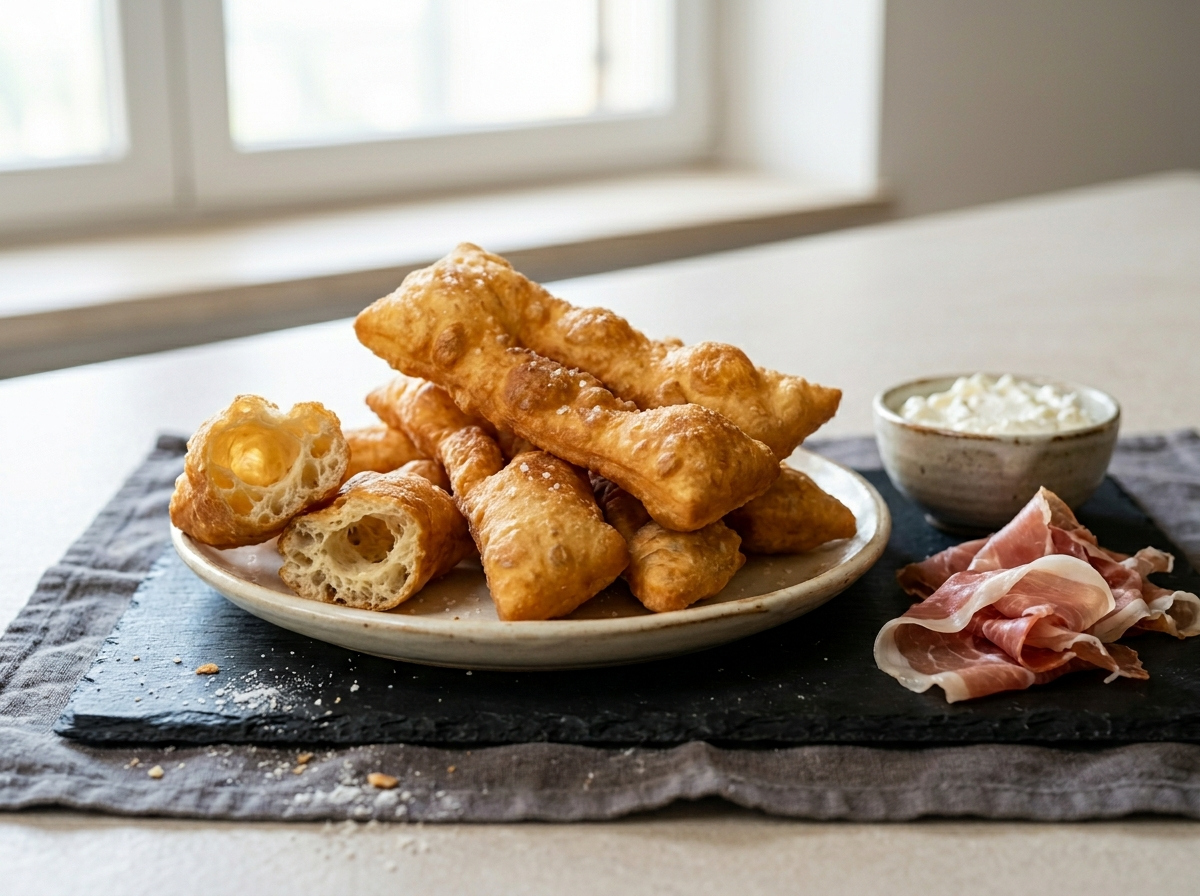
Sgabei are strips of leavened dough, fried until they blister and puff, from the Lunigiana area where Liguria and Tuscany meet. They look rustic but they cook fast and the result is hard to argue with.
The dough is basic: flour, water, yeast, a little salt, and olive oil. What matters is resting it long enough to develop some structure, then stretching it thinly so the inside goes hollow when it hits the oil.
Locally, sgabei come out of the fryer and land straight onto paper, then get served alongside lardo, stracchino, or a sharp salted cheese. Salt while they’re hot. That’s the whole recipe.
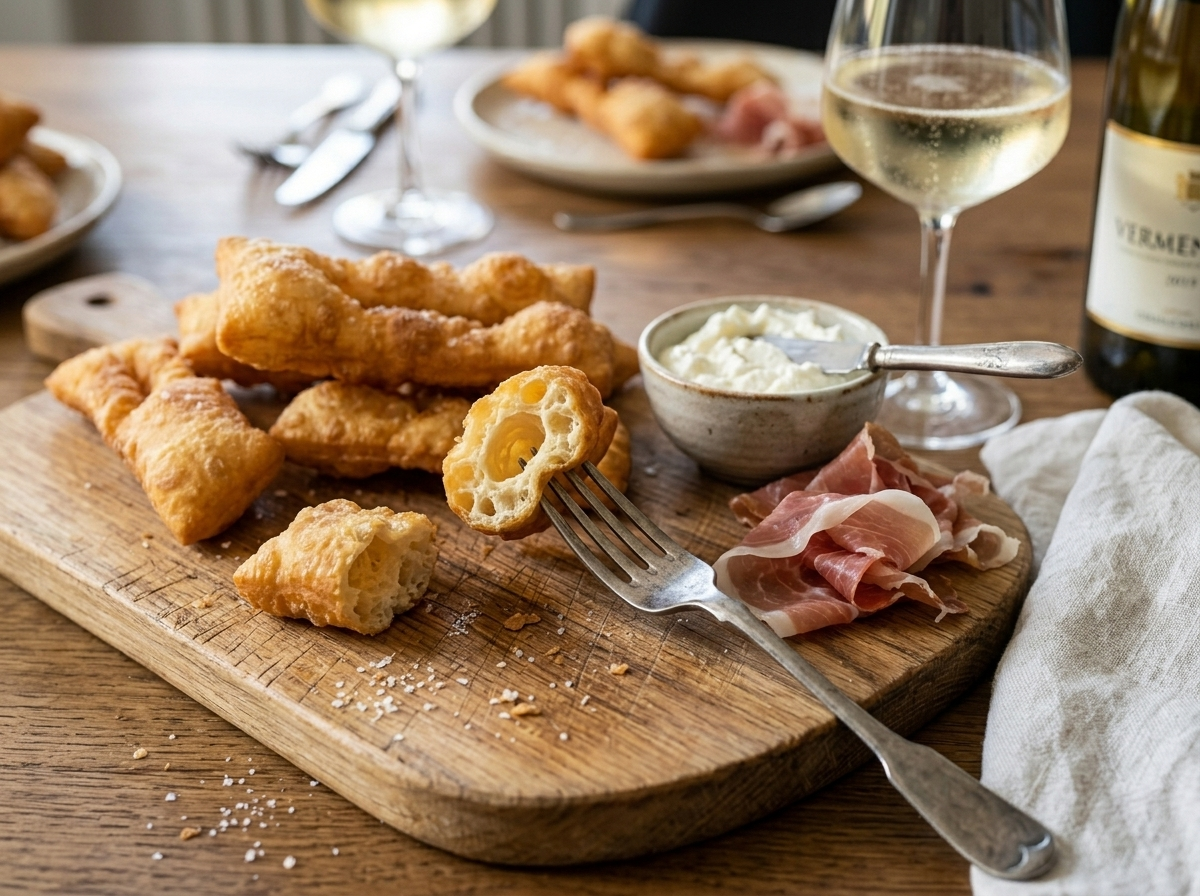
They work as a starter before a meat-heavy dinner, or as the main event at an informal gathering with a board of charcuterie and a cold glass of Vermentino — much like Tuscan garlic-rubbed grilled bread anchors a casual spread in the same regional tradition.
Why You’ll Love This Recipe
- Ready in under 90 minutes including dough rest
- Five pantry ingredients, no special equipment
- Crisp outside, airy inside with each fry
- Pairs with both savory charcuterie and soft cheese
Ingredient Notes
- 00 flour: The fine grind gives a tender, slightly chewy dough. Plain all-purpose flour works if 00 is unavailable, though the texture is marginally less silky.
- instant dry yeast: Instant yeast goes straight into the flour without proofing. If using active dry yeast, dissolve it in the warm water first and let it foam for 5 minutes.
- extra virgin olive oil: A mild, grassy Ligurian-style olive oil is traditional. A light-flavored oil works too, but skip heavy or bitter ones – they’ll dominate the dough.
- warm water: Aim for around 35-38 C (95-100 F), warm to the touch but not hot. Too hot and you risk killing the yeast.
- frying oil: Sunflower or light vegetable oil with a high smoke point is practical here. Some Lunigiana cooks fry in lard, which gives a richer flavor and a slightly different crust.
- fine sea salt: Salt the dough lightly, then salt the sgabei again the moment they come out of the oil. That second hit of salt on the hot surface is non-negotiable.
Sgabei: Fried Leavened Dough from Lunigiana
Ingredients
Method
- Combine the flour, instant yeast, and salt in a large mixing bowl and stir briefly to distribute.
- Add the olive oil and warm water, then mix with a fork until a shaggy dough forms.
- Turn the dough out onto a lightly floured surface and knead for 6-8 minutes until smooth and slightly elastic. The dough should feel soft and just barely tacky.
- Shape the dough into a ball, return it to the bowl, and cover with a clean kitchen towel or plastic wrap. Leave at room temperature for 60-90 minutes until the dough has roughly doubled in size and feels pillowy.
- Lightly flour your work surface. Divide the rested dough into 16-18 equal pieces, each roughly the size of a walnut.
- Using your fingers or a rolling pin, stretch each piece into a rough rectangle or oval about 10-12 cm long and 1-2 mm thick. Don't worry about perfect edges - irregular shapes are part of the character.
- Set the stretched pieces on a lightly floured tray in a single layer while you heat the oil. Do not stack them.
- Pour the frying oil into a deep heavy-bottomed saucepan. Heat over medium-high heat to 175-180 C (347-356 F). Use a thermometer to confirm the temperature.
- Drop in a small test piece of dough. It should sink briefly, then rise to the surface and begin to puff and blister within 10-15 seconds. If it browns immediately, lower the heat slightly.
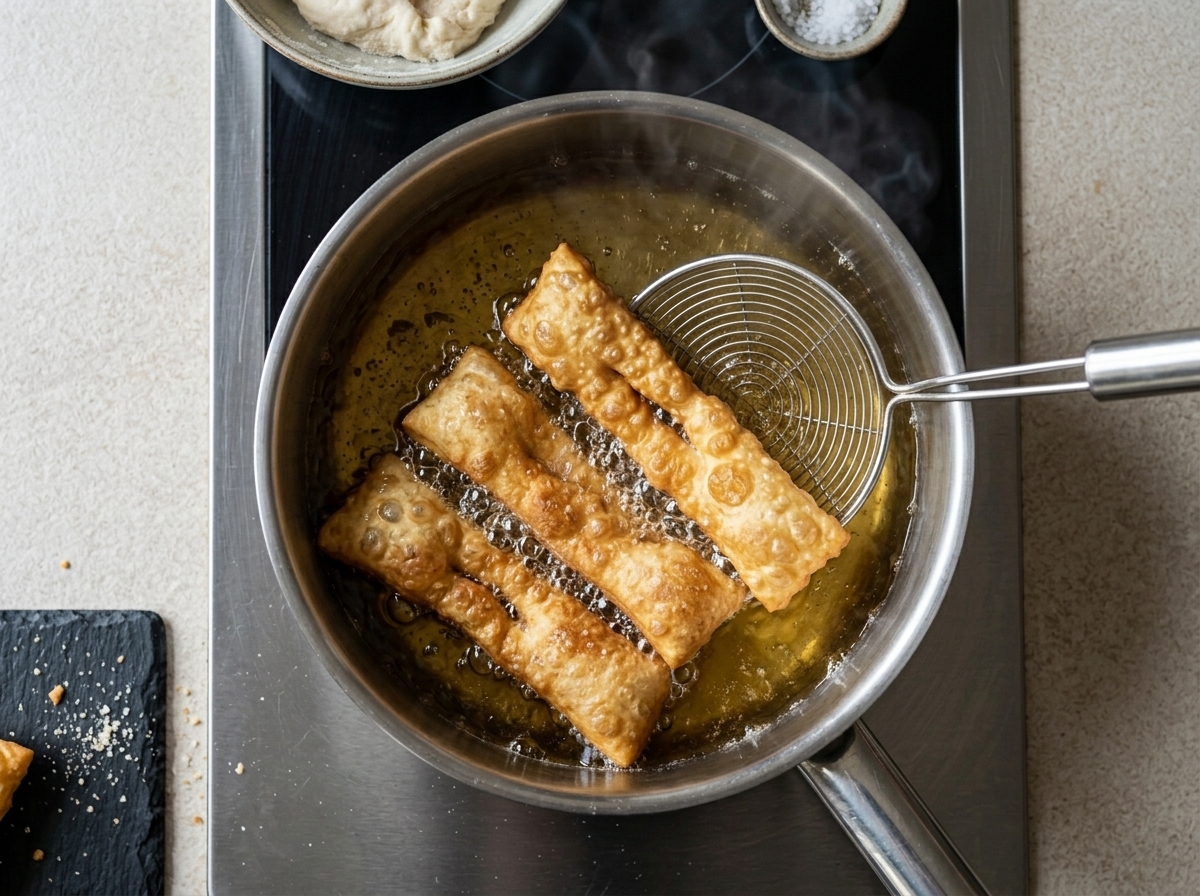
- Fry 3-4 sgabei at a time for 1.5-2 minutes per side, turning once with a slotted spoon, until golden-brown and blistered on both sides.
- Lift the sgabei out with a slotted spoon and transfer to a wire rack. Season with fine sea salt immediately while the surface is still glistening. Check and adjust the oil temperature between batches, then repeat with the remaining dough.
Notes
Tips for Success
- Rest the dough at room temperature for at least 60 minutes until visibly puffed and soft before shaping.
- Stretch each piece to roughly 1-2 mm thickness – thicker dough won’t hollow out properly during frying.
- Hold the oil temperature at 175-180 C (347-356 F) using a thermometer; drop in a small test piece before the batch.
- Fry in small batches of 3-4 pieces so the oil temperature stays stable and each sgabeo browns evenly.
- Drain on a wire rack rather than paper towels to keep the bottom crust from steaming and going soft.
Variations
- Add 1 tsp of fresh rosemary or sage to the dough for a fragrant herbed version common in northern Tuscany.
- Use lard instead of olive oil in the dough and for frying, which gives a slightly richer, flakier crust.
- Stuff small portions of dough around a cube of stracchino before frying for a filled, molten-centered version.
Storage and Reheating
Sgabei are best eaten within minutes of frying. The crust softens as they cool and no storage method fully recovers that first crunch.
If you must hold them, keep fried sgabei uncovered on a wire rack at room temperature for up to 30 minutes. Do not wrap or cover them – trapped steam turns them chewy fast.
The raw dough can be made up to 24 hours ahead. Cover the bowl tightly with plastic wrap and refrigerate after the first hour of rise. Pull it out 30 minutes before you plan to fry so it relaxes back to room temperature.
Serving Suggestions
Set out sgabei on a wooden board alongside thin slices of lardo di Colonnata, mortadella, or prosciutto crudo. A small bowl of stracchino or crescenza cheese for spreading is the classic accompaniment in Lunigiana.
For a sharper contrast, serve with a firm aged pecorino or a slice of gorgonzola dolce, the same instinct for bold contrast that makes Italian mixed fried fish so satisfying alongside sharp accompaniments. The salt of the cheese against the neutral fried dough is the point.
A cold, lightly sparkling white wine cuts through the oil well. Vermentino from nearby Colli di Luni is the natural choice, but a dry Lambrusco or Prosecco Brut also works.
FAQ
Why are my sgabei dense instead of hollow inside?
The dough was likely too thick or the oil wasn’t hot enough. Stretch each strip to around 1-2 mm and make sure the oil is at 175-180 C before the dough goes in. A too-cool oil lets the dough absorb fat rather than puff.
Can I use pizza dough instead of making the sgabei dough from scratch?
You can, and it works reasonably well. Store-bought pizza dough tends to be slightly richer and denser, so the finished sgabei will be a bit more bread-like and less airy than the traditional version.
Can I freeze the sgabei dough and fry it later?
Yes. Shape the dough into a ball after mixing, wrap it tightly, and freeze for up to 4 weeks. Thaw overnight in the fridge, then let it come to room temperature for 30 minutes and give it a second short rise before stretching and frying.
What cheese is most traditional to serve with sgabei?
Stracchino and crescenza are the most common pairings in Lunigiana because their mild, creamy tang contrasts cleanly with the fried dough. Lardo di Colonnata spread directly on the hot sgabeo is equally traditional.
Are sgabei the same as gnocco fritto from Emilia-Romagna?
They’re close relatives but not identical. Gnocco fritto is typically made with lard in the dough and cut into diamond shapes, while sgabei use olive oil and are stretched into longer, irregular strips. The texture and flavor of the crust differ slightly as a result.
Is this sgabei recipe vegetarian?
The dough itself is vegetarian when made with olive oil and fried in vegetable oil. The traditional accompaniments like lardo and cured meats are not, but you can serve sgabei just as well with cheese, olive tapenade, or roasted peppers.