
Jump to Recipe
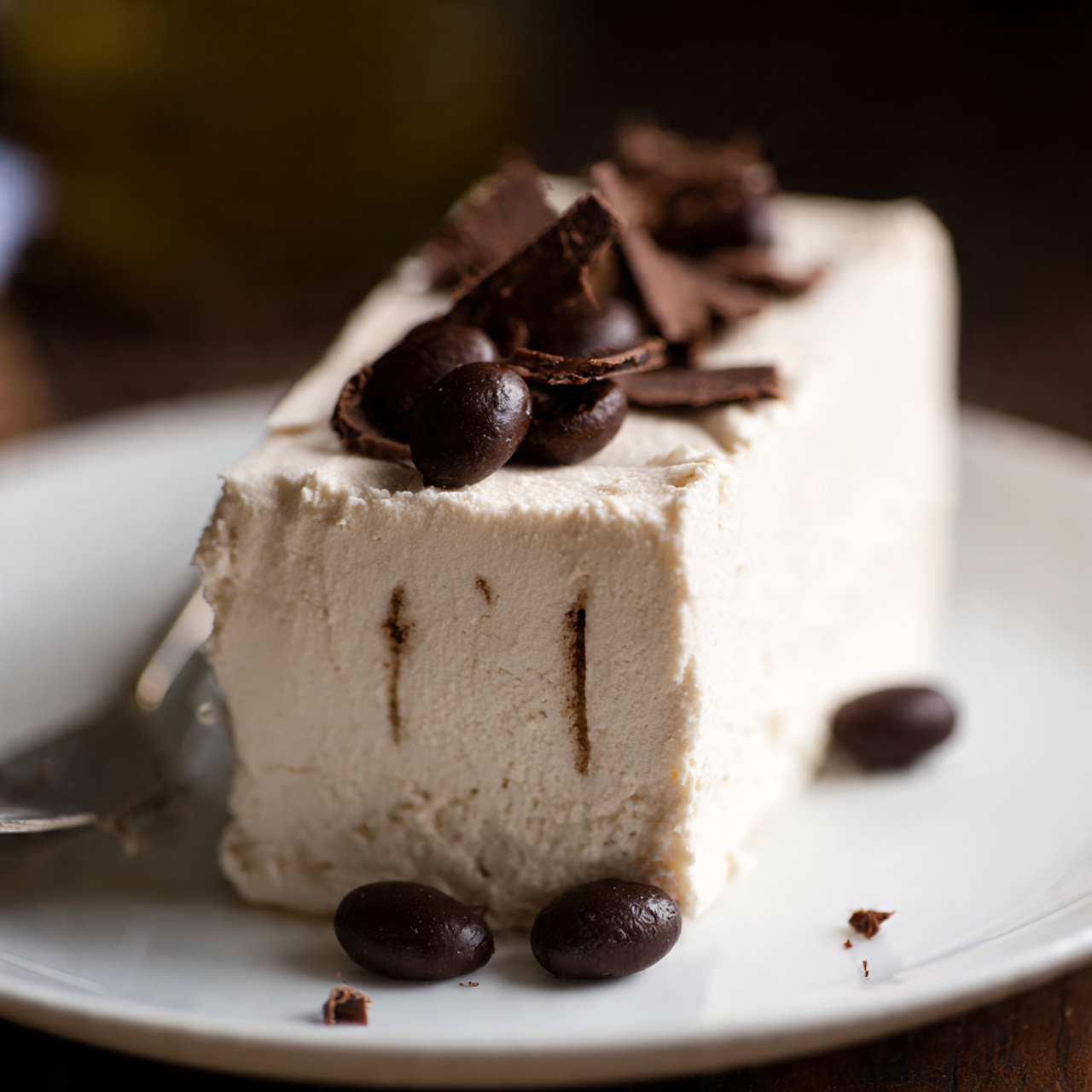
I still remember the first time I sliced into a chilled loaf and found a silky, café-bright frozen mousse that tasted like a warm Italian morning. This coffee-forward semifreddo delivers bold espresso notes folded into a creamy base, and it sets without a machine—just careful whipping and a lined pan for neat slices.
Semifreddo literally means half-frozen; we trap air by whipping eggs and cream, not by churning. Small choices—dissolving espresso powder in a splash of liqueur, cooking eggs over a bain-marie to 165°F, and folding gently—control ice crystals and yield a smooth texture.
Plan on about 8 hours or overnight for firm slices, or four hours for a softer set. I’ll guide you through the exact cues for ribbon-thick eggs, the feel of cream at soft peaks, and the easy way to line a loaf pan so the top looks clean and gift-ready.
Key Takeaways
- Semifreddo is “half-frozen”—whip eggs and cream for lightness instead of churning.
- Cook eggs over a bain-marie to 165°F for safety and stability.
- Dissolve espresso powder in a splash of liqueur for even, non-bitter flavor.
- Line a loaf pan for clean unmolding and a smooth top for garnish.
- Freeze 8 hours or overnight for firm slices; ~4 hours gives a softer set.
What makes semifreddo special compared with ice cream, gelato, and parfait
The secret behind a sliceable frozen loaf is simple: trap air early, control ice, and respect gentle heat. I want to show how structure and ingredients do the heavy lifting so you get clean slices and a creamy mouthfeel without an ice maker.
How Italian “half‑frozen” mousse stays creamy without a machine
We whip eggs and cream to build the foam up front. That whipped structure holds air pockets that keep the frozen dessert light. Unlike ice cream, which relies on churning a custard while it freezes, this method locks in volume before the mixture goes into the freezer.
Air, sugar, and fat: the ice crystal control behind that silky texture
Ice crystals dictate texture: small crystals equal silkiness. Sugar lowers the freezing point, and cream’s fat coats water to slow crystal growth. A splash of espresso or liqueur adds dissolved solids and a touch of alcohol that also helps prevent large ice formation.
- Gentle heat in a bowl over simmering water stabilizes eggs so they whip glossy, not scrambled.
- More air up front means less dependence on churning and less ice when you slice.
- Compared to gelato, which is churned slower and served warmer, this half‑frozen mousse slices firm yet soft when briefly tempered.
For a related take on Italian frozen desserts and technique, see this saffron gelato guide: Italian saffron gelato notes.
Ingredients, tools, and smart prep for flawless results
Good mise en place makes all the difference; set your tools and ingredients before you heat a bowl. Chill the cream and a metal bowl in the fridge so whipping is quick and even. Measure sugar, egg yolks, and a pinch of salt ahead.
I prefer instant espresso dissolved in a tablespoon of liqueur for even flavor, or a reduced brewed shot if you like. Balance sugar so the espresso reads clear but not bitter; sugar also helps keep the texture from freezing too hard.
- Cook eggs, sugar, and salt over barely simmering water until the mixture reaches 165°F—about 10 minutes in stainless, 15 in glass—whisking constantly for a safe, stable foam.
- Use a stand mixer for steady volume, or a hand whisk if you have patience; either way, stop the cream just shy of stiff peaks before folding in the espresso.
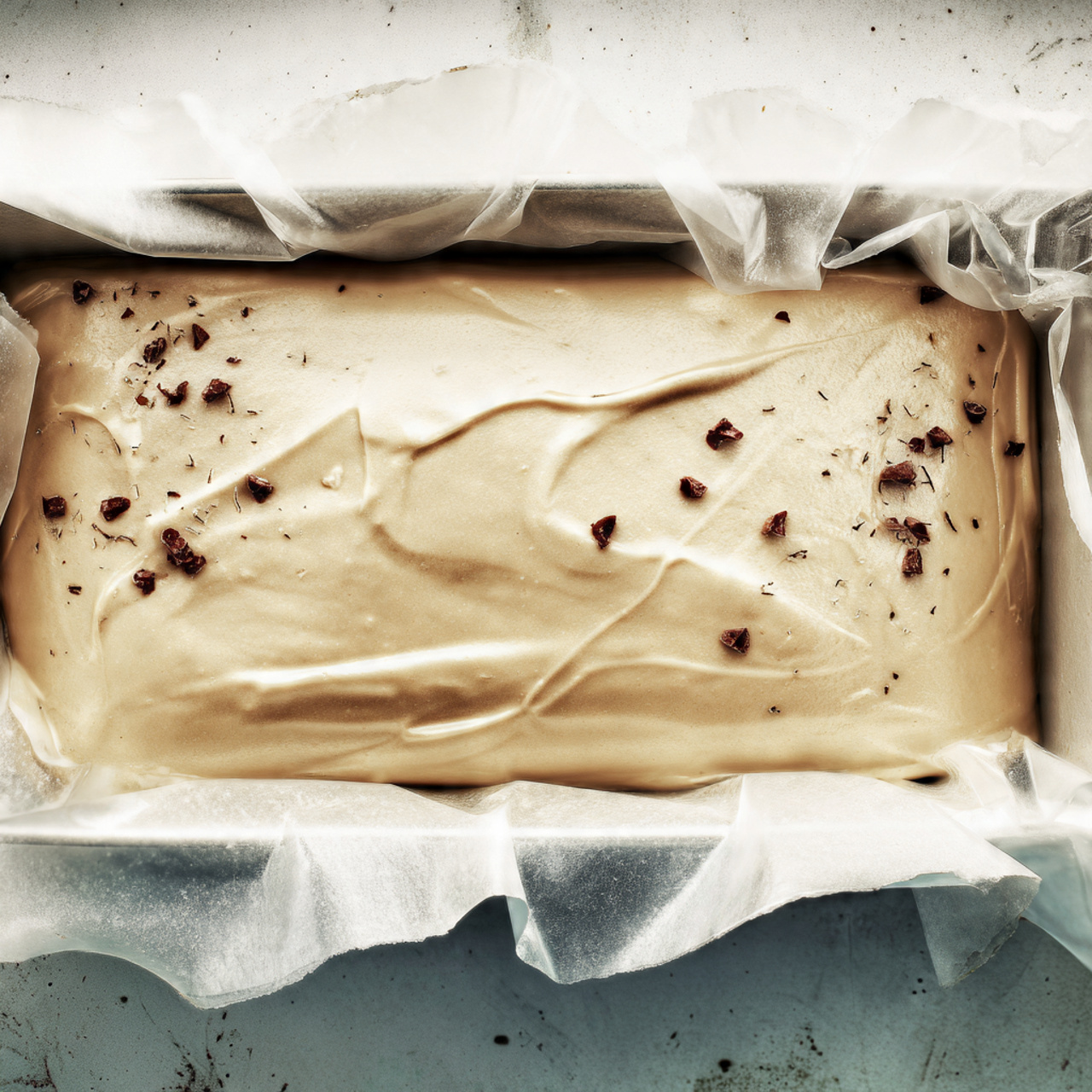
- Lightly grease and line a loaf pan with plastic, smoothing into corners for clean unmolding.
| Tool | Why it matters | Tip |
|---|---|---|
| Metal bowl | Stays cold; whips cream faster | Chill 15 minutes before use |
| Thermometer | Ensures eggs reach 165°F for safety | Digital instant‑read is best |
| Loaf pan + plastic | Clean release and neat slices | Press plastic into corners, leave overhang |
Coffee semifreddo recipe: step-by-step you can trust
This step-by-step walkthrough keeps texture predictable and slicing effortless. Follow exact times, temperatures, and few touch tests so the loaf is creamy at the edges and firm enough to slice.
Line the pan for clean unmolding
Lightly grease a loaf pan and press a full sheet of plastic into the corners so the bottom lifts out pristine and the top stays smooth for garnish.
Whip first, then flavor
Chill the bowl and whip 2 cups of cream until thick. Dissolve 1 tablespoon instant espresso in 1 tablespoon coffee liqueur, fold it into the whipped cream, and finish to stiff peaks without overwhipping.
Cook the eggs to a stable base
Whisk 4 large eggs, 1/2 cup sugar, and 1/4 teaspoon salt in a bowl set over an inch of simmering water. Heat to 165°F—about 10 minutes in stainless or 15 in glass—whisking constantly until the mixture thickens.
Whip, fold, and freeze
Transfer the hot bowl to a mixer and whip on high for 5–8 minutes until the foam is thick, quadrupled, and passes the figure-eight test. Fold in the whipped cream in two additions with wide, slow strokes to preserve air.
- Transfer to the prepared pan, smooth the top, and cover with plastic.
- Freeze about 4 hours for a soft set; 8 hours or overnight for firm, bakery-style slices.
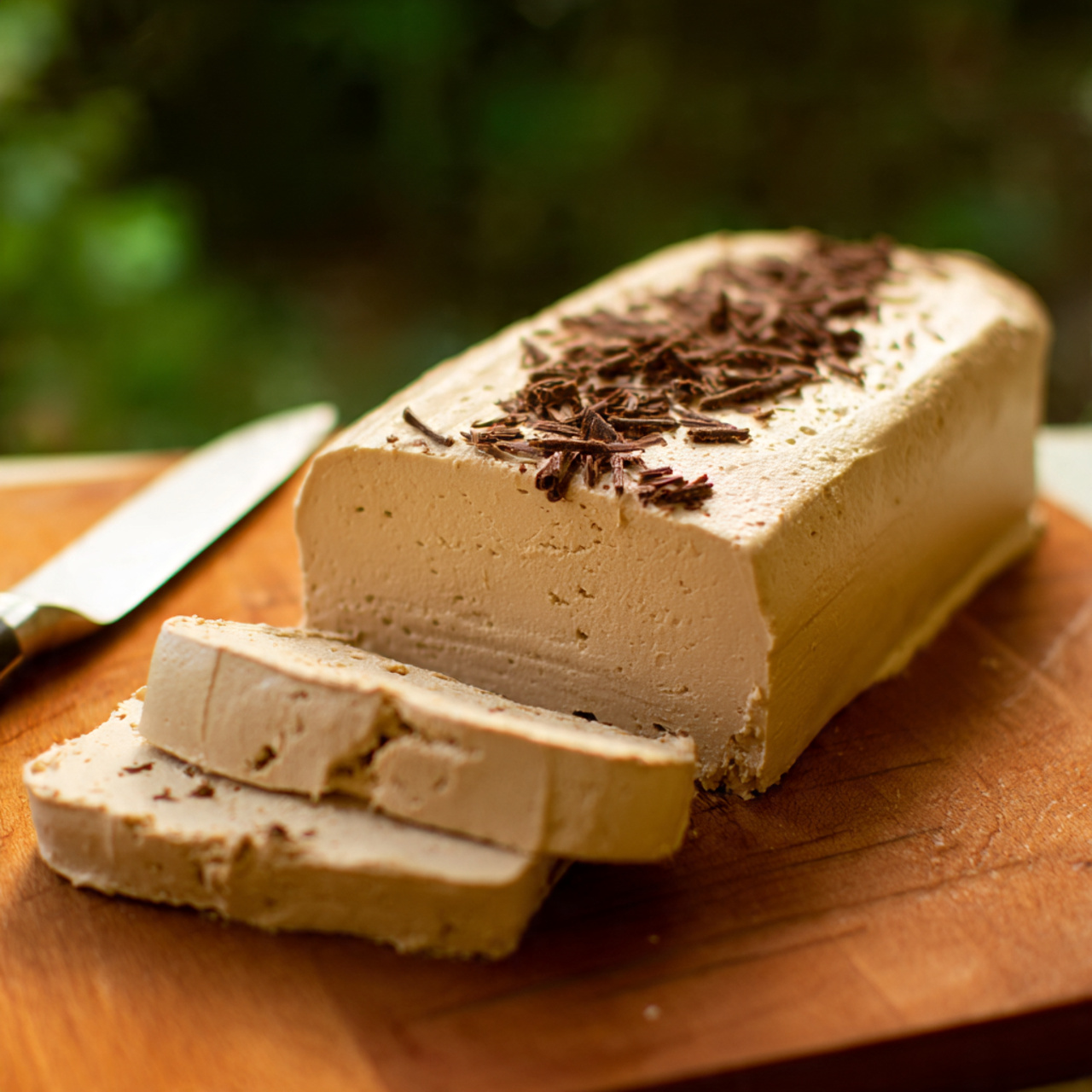
- To slice, dip a knife in hot water and wipe dry between cuts for clean edges.
| Step | Key cue | Time / Temp |
|---|---|---|
| Whip cream | Thick, glossy; folds hold | 3–5 minutes; finish to stiff peaks |
| Cook eggs | Thickened, ribbon-stage | 10 minutes (stainless) / 15 minutes (glass); 165°F |
| Whip egg foam | Quadrupled volume, figure‑eight passes | 5–8 minutes on high with mixer |
| Freeze | Firm but not icy | 4 hours (soft) / 8+ hours (firm) |
Variations, toppings, and troubleshooting that elevate your dessert
When I want fast individual portions, I portion the base into 4-ounce jars and freeze them for about four hours or overnight. Jars speed freeze time and travel well to the table.
Jar method for individual servings
Fill small jam jars, seal, and set on a flat tray to freeze. They thaw faster at the table and make plating effortless.
Coconut iced coffee twist
For a dairy‑light version, cook full‑fat coconut milk with cold brew, sugar, egg yolks, a pinch of cornstarch, and salt to make a thick custard. Chill the custard, fold into whipped cream, then freeze 5–6 hours for a silky, tropical take.
Texture and crunchy toppings
Shaved chocolate, cocoa nibs, sliced almonds, or crushed cookies add welcome texture. Chocolate-covered espresso beans make a lively garnish without overwhelming the base.
Fixes for grainy cream and icy texture
If your cream looks grainy, you likely passed stiff peaks. Gently fold in a tablespoon or two of fresh cream to rescue the mixture.
To avoid ice, keep sugar balanced and fold slowly with a spatula so air stays in. If the loaf freezes too hard, thaw 30–45 minutes in the refrigerator before slicing.
- Warm the knife between cuts for clean edges.
- Add vanilla or orange zest for a bright lift; swirl chocolate sauce for a marbled effect.
- Watch visual cues—peaks that hold and a glossy foam are your best guide with a mixer or by hand.
| Method | Portion | Freeze time |
|---|---|---|
| Jar | 4 oz | 4 hours / overnight |
| Loaf pan | Family style | 5–8 hours |
| Coconut custard twist | Loaf or jars | 5–6 hours |
Serve with confidence: timing, storage, and pairing ideas
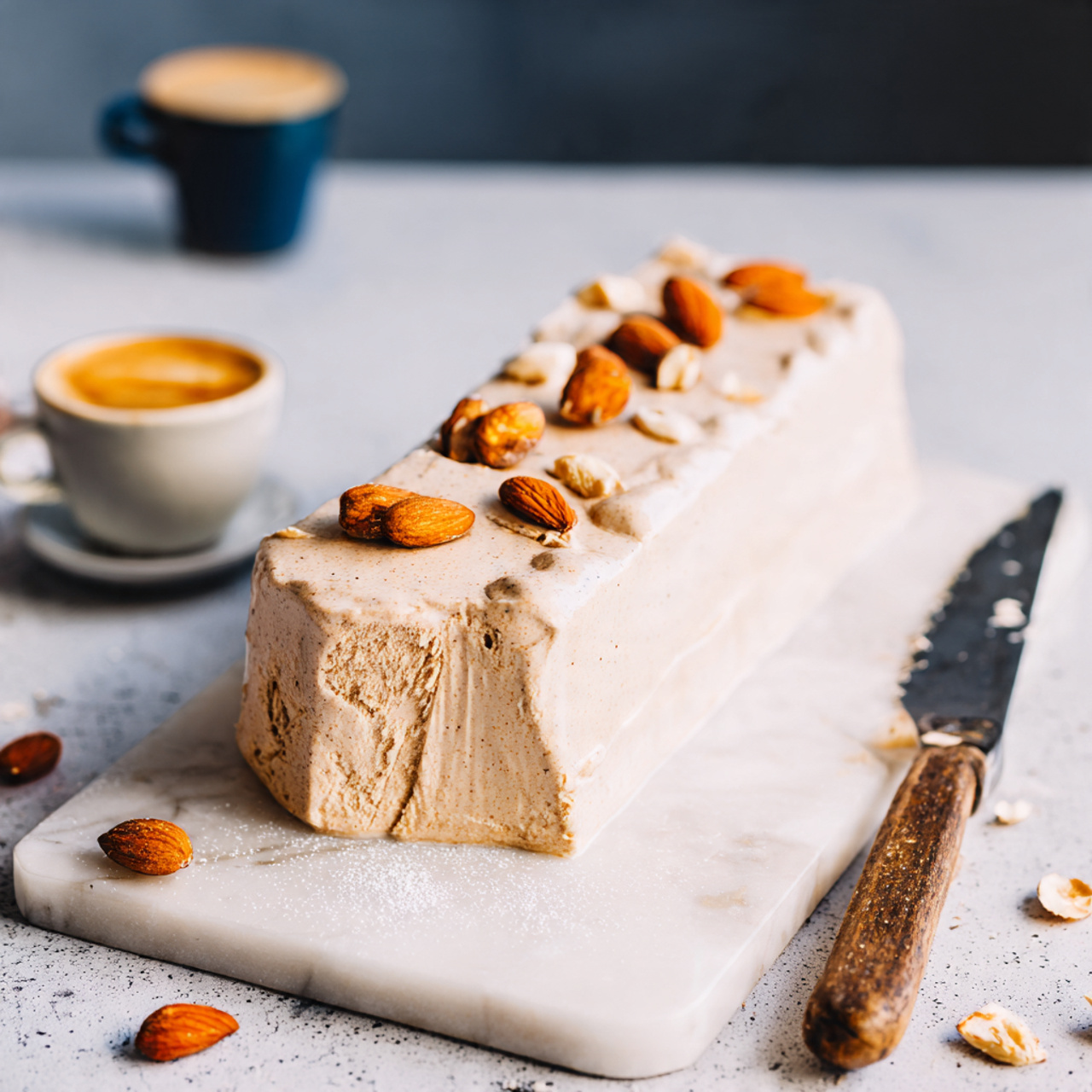
Plan your timing like a host: chill overnight for clean slices or choose a shorter set for spoonable portions.
For firm, bakery-style slices give the loaf a full 8 hours or overnight. For a softer, spoonable texture aim for about 4 hours. If you make this a day ahead, move the pan to the refrigerator 30–45 minutes before serving so the cream and mixture relax without becoming icy.
Keep leftovers well wrapped in the same loaf pan or in covered containers. Press plastic onto the surface to limit air and ice. If you must re-freeze, return slices flat to the pan, cover tightly, and use within a week for best texture.
Serve with whipped cream and shaved chocolate, or add toasted almonds and a pinch of salt to lift the coffee notes. Pair a small cup of espresso, an amaro on the rocks, or a splash of marsala for a true Italian finish.
A warm knife passed through water and dried between cuts keeps edges neat. Gentle handling from freezer to table is the last, small act that makes this dessert feel like a family-made classic.
Coffee Semifreddo (Italian Half-Frozen Coffee Mousse)
Ingredients
Method
- Lightly grease a loaf pan.
- Press a full sheet of plastic wrap into the pan, smoothing it into the corners.
- Leave an overhang so you can lift the semifreddo out later.
- Chill a metal bowl for 10–15 minutes.
- Add the cold heavy cream and whip until thick.
- Dissolve the instant espresso in the coffee liqueur.
- Fold the espresso mixture into the cream.
- Continue whipping just until stiff peaks form.
- Keep the whipped cream in the fridge while you prepare the eggs.
- Place a heatproof bowl over a pot with 1 inch of simmering water (bain-marie).
- Add the eggs, sugar, and salt.
- Whisk constantly until the mixture reaches 165°F.
- About 10 minutes in a stainless bowl
- About 15 minutes in a glass bowl
- The mixture should look thick, pale, and fall in a slow ribbon from the whisk.
- Move the bowl to a mixer.
- Whip on high speed for 5–8 minutes until the foam is glossy, thick, and has quadrupled in volume.
- When you lift the whisk and draw a figure-eight, it should hold its shape briefly.
- Add half the whipped cream to the egg foam.
- Fold gently with wide strokes to keep the air inside.
- Add the second half and fold again until no streaks remain.
- Pour the mixture into the prepared loaf pan.
- Smooth the top and cover with plastic wrap.
- Freeze:
- 4 hours for a soft, spoonable semifreddo
- 8 hours or overnight for clean, firm slices
- Lift the semifreddo out using the plastic wrap.
- Dip a sharp knife in hot water, wipe dry, and slice.
- Garnish with chocolate shavings, cocoa nibs, nuts, or cookies.
Notes
- If the cream ever looks grainy, you probably went past stiff peaks. Fold in 1–2 tablespoons of fresh cream to fix it.
- Sugar helps keep the semifreddo creamy and prevents big ice crystals—don’t reduce it too much.
- If the loaf is very firm, let it rest in the fridge for 30–45 minutes before slicing.
- A warm knife gives perfectly clean slices every time.
- Instant espresso is great here because it dissolves evenly and keeps the flavor smooth, not bitter.
- If you want a stronger coffee flavor, dissolve a little extra espresso powder into the liqueur before folding.