
Jump to Recipe
Anatra arrosto, roast duck with herbs, comes down to rendering the fat slowly and crisping the skin at the end. A 2.2 kg / 4.8 lb duck roasts at 160 C / 320 F for 1 hour 45 minutes, then at 220 C / 425 F for 20 minutes.
The seasoning is rosemary, sage, thyme and crushed fennel seed, rubbed under and over the skin. It’s the savory Tuscan and Veneto style, with no sweet glaze to burn.
Duck is mostly skin and fat, so most of the work is draining the pan. You’ll pour off roughly a cup of fat over two rounds. Save it for potatoes.
Allow 3 hours 15 minutes start to finish, with most of that hands-off. The wine pan sauce comes together while the duck rests.
Why You’ll Love This Recipe
- Skin turns glassy and crisp without any deep frying
- Hands-off roasting leaves time for sides and sauce
- Rendered duck fat roasts potatoes for days afterward
- One roasting pan and one small skillet do all the work
Ingredient Notes
- Whole duck: Pekin (Long Island) duck has the most fat to render and the crispest skin. Thaw a frozen bird in the fridge for 2 days, and use a leaner Muscovy only if you shorten the roast.
- Kosher salt: I use Diamond Crystal here. With Morton kosher salt use 1 tbsp, and with fine table salt use 2 tsp.
- Fennel seeds: Crush them lightly in a mortar or with the flat of a knife. They add a faint sweetness that suits the rosemary and sage.
- Dry white wine: Use something you’d drink, like Vermentino or Pinot Grigio. Without wine, use extra stock plus 1 tsp white wine vinegar.
- Reserved duck fat: Spoon 1 tbsp from the jar once the roast is done. Olive oil works in the sauce if you’ve poured every drop of fat into storage.
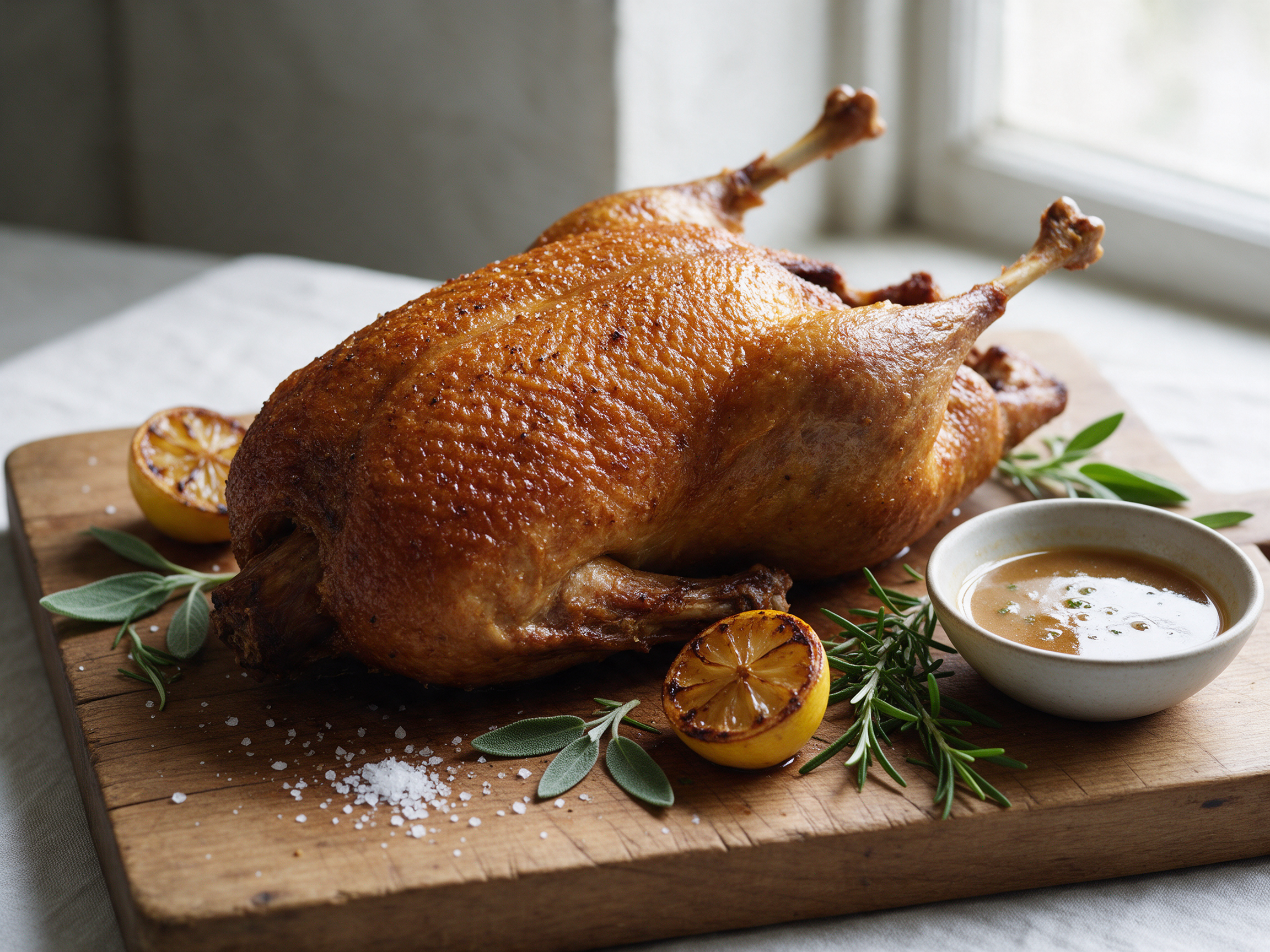
Anatra Arrosto: Crisp-Skinned Roast Duck with Herbs
Ingredients
Method
- Remove the giblets and neck from the duck and trim the loose neck skin and any large fat pieces at the cavity opening. Pat the bird completely dry inside and out with paper towels. Prick the skin all over at a shallow angle with a skewer or paring knife, avoiding the meat, especially across the breast and thighs.
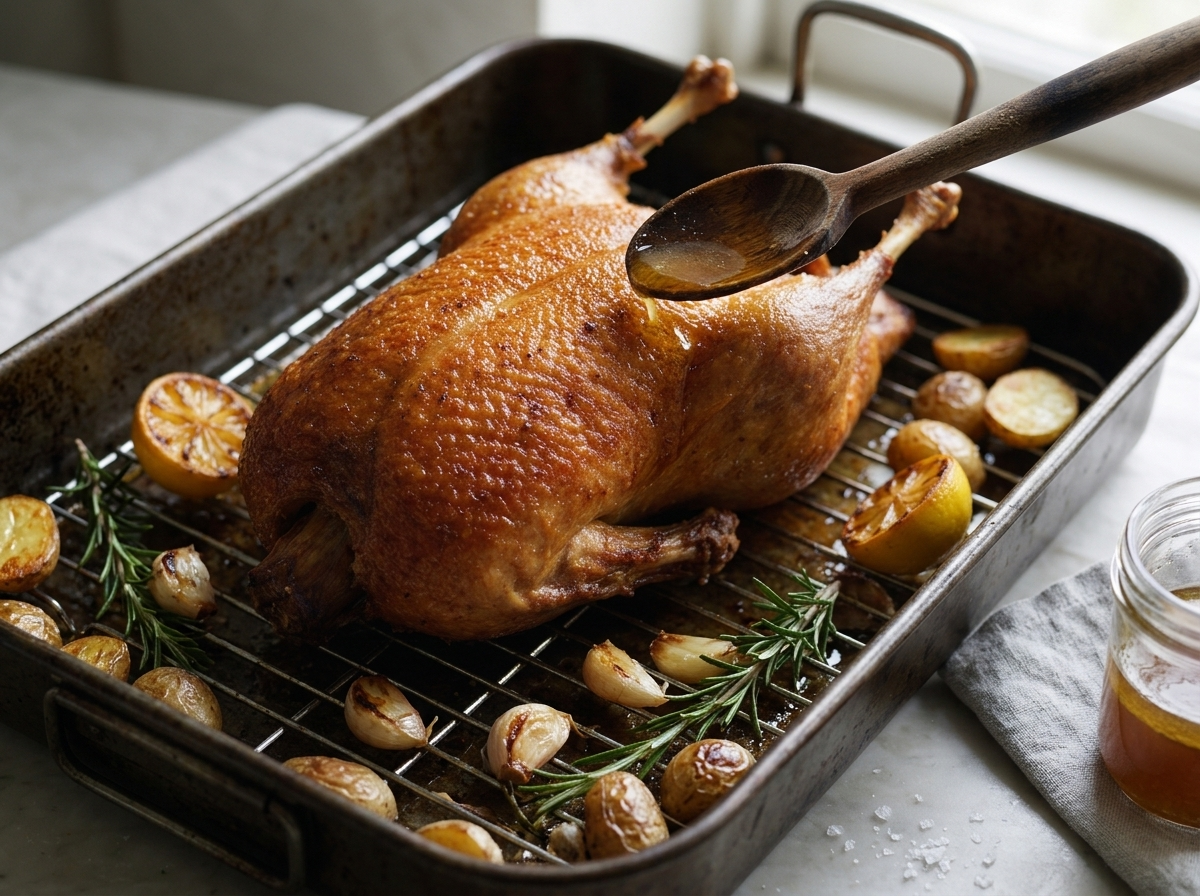
- Mix the salt, pepper, chopped rosemary, sage, thyme and fennel seeds in a small bowl. Rub the mixture over the skin and inside the cavity, working a little under the breast skin. Fill the cavity with the lemon halves, garlic, bay leaves and herb sprigs, then tie the legs together with twine. Set the duck breast-side up on the wire rack in a 35 x 25 cm / 14 x 10-inch roasting pan and leave it uncovered at room temperature for 30 minutes while the oven heats to 160 C / 320 F.
- Roast the duck for 60 minutes. Remove the pan, close the oven door, and carefully pour the hot fat into a 1 L / 1-quart heatproof jar. Return the pan to the oven.
- Roast for another 45 minutes, then drain the fat again. Raise the oven to 220 C / 425 F and roast for 20 minutes, until the skin is deep golden and crisp and the thickest part of the thigh reads at least 165 F / 74 C. If the skin still looks pale or rubbery, give it 10 more minutes, because the fat under it hasn't fully rendered.
- Move the duck to a cutting board and tent it loosely with foil. While it rests for 20 minutes, heat 1 tbsp reserved duck fat in a 20 cm / 8-inch skillet over medium heat. Cook the shallot for 2 minutes until soft, add the wine, and boil for about 4 minutes until reduced by half. Pour in the stock and simmer for 5 to 6 minutes, until the sauce lightly coats a spoon. Off the heat, whisk in the butter and season with salt.
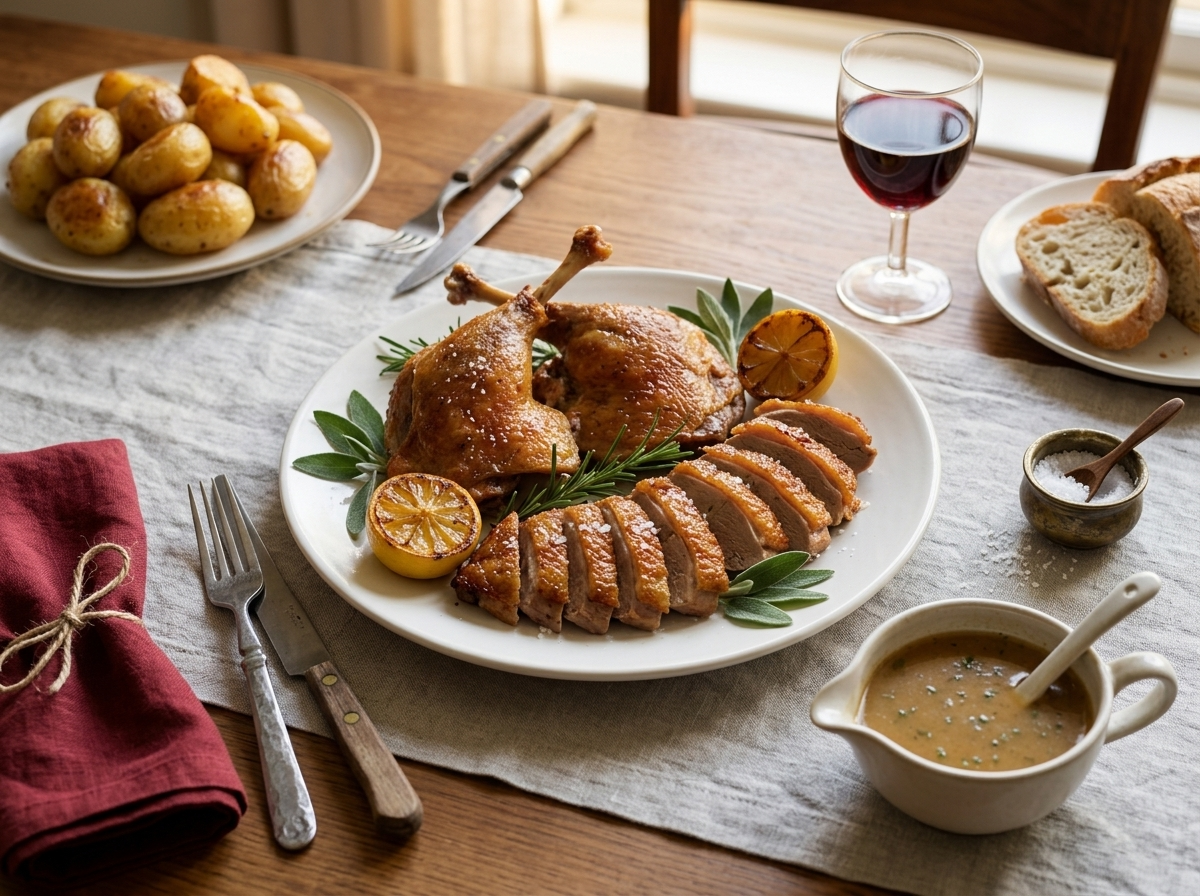
- Carve the duck by cutting off the legs at the hip joint, then slicing each breast away from the breastbone. Serve right away with the pan sauce spooned over the meat.
Notes
- Thaw a frozen duck in the fridge for 2 days before roasting.
- Don't rinse the duck. Wash your hands and board after handling raw poultry.
- Keep the oven at 160 C / 320 F until the final 20-minute hot finish.
- Pour any juices from the carving board into the pan sauce.
- Strain every drop of rendered fat into a clean jar, because it's worth keeping.
Tips for Success
- Pat the duck dry with paper towels inside and out, since any surface moisture steams the skin instead of crisping it.
- Prick the skin at a shallow angle across the breast and thighs, avoiding the meat, so fat escapes without letting juices leak out.
- Drain the roasting pan into a heatproof jar twice, at 60 and 105 minutes, so the duck roasts instead of frying in its own fat.
- Probe the thickest part of the thigh without touching bone, and wait for at least 165 F / 74 C before you pull the duck.
- Pour the rendered fat through a fine sieve into a clean jar and use it for roast potatoes or sautéed greens.
Variations
- Swap the lemon for orange halves and scatter 2 fennel bulbs, cut in wedges, around the duck for the final 45 minutes of roasting.
- Use red wine instead of white in the sauce and add 4 lightly crushed juniper berries for a darker, more game-leaning flavor.
- Roast 4 duck legs on a rack at 160 C / 320 F for about 90 minutes, then crisp at 220 C / 425 F for 10 to 15 minutes.
Storage and Reheating
Refrigerate leftover duck in a covered container for 3 to 4 days, with the pan sauce in a separate jar. Carve the meat off the bones first if you want to save space.
Reheat duck pieces skin-side up on a wire rack set over a sheet pan at 200 C / 400 F for 10 to 12 minutes, until the skin crackles again and the meat is hot throughout. Warm the sauce in a small saucepan over low heat.
Cooked duck pieces freeze for up to 2 months, wrapped tightly. Thaw overnight in the fridge before reheating. Strained duck fat keeps 1 month in the fridge or 6 months in the freezer.
Serving Suggestions
Carve the duck right after the 20-minute rest and serve at once. Take the legs off at the hip joint, then slice each breast away from the breastbone in long pieces, skin side up, with a spoonful of pan sauce.
Roast potatoes cooked in the reserved duck fat are the obvious side. White beans with sage, braised red cabbage, or a bitter leaf salad dressed with lemon all cut through the richness.
For wine, pick something with acidity and moderate tannin, such as Chianti Classico or a Pinot Noir.
FAQ
Why is my roast duck skin rubbery instead of crisp?
Rubbery skin means the fat under it hasn’t fully rendered, or the skin was wet going in. Return the duck to a 220 C / 425 F oven for 10 more minutes. Next time, pat it dry, prick the skin, and drain the pan twice.
How do I know when anatra arrosto is done?
The duck is done when the thickest part of the thigh reads at least 165 F / 74 C, the skin is deep golden and crisp, and the juices run clear. Probe the thigh without touching the bone. Rest the bird for 20 minutes before carving.
Can I use dried herbs instead of fresh rosemary, sage and thyme?
Yes. Use about a third of the amount, which is 1 teaspoon each of dried rosemary, sage and thyme in the rub. Dried herbs are more concentrated, so a heavier hand turns the skin bitter. The lemon and garlic in the cavity still carry the aroma.
Can I freeze leftover roast duck and the rendered fat?
Yes. Cooked duck pieces freeze for up to 2 months when wrapped tightly. Strained duck fat keeps 1 month in the fridge or 6 months in the freezer. Thaw the meat overnight in the fridge, then re-crisp the skin in a 200 C / 400 F oven for 10 to 12 minutes.
Which sides and wine go with herb roast duck?
Potatoes roasted in the duck fat, braised red cabbage, or white beans with sage all suit the rich meat. A bitter leaf salad with lemon dressing cuts through the fat. For wine, choose one with good acidity, such as Chianti Classico or a Pinot Noir.
How do I make roast duck with herbs dairy free?
Leave out the 1 teaspoon of butter in the pan sauce and whisk in 1 teaspoon of the reserved duck fat instead. Everything else in the recipe is already dairy free. It’s gluten free too, as long as your chicken stock is, so check the label.