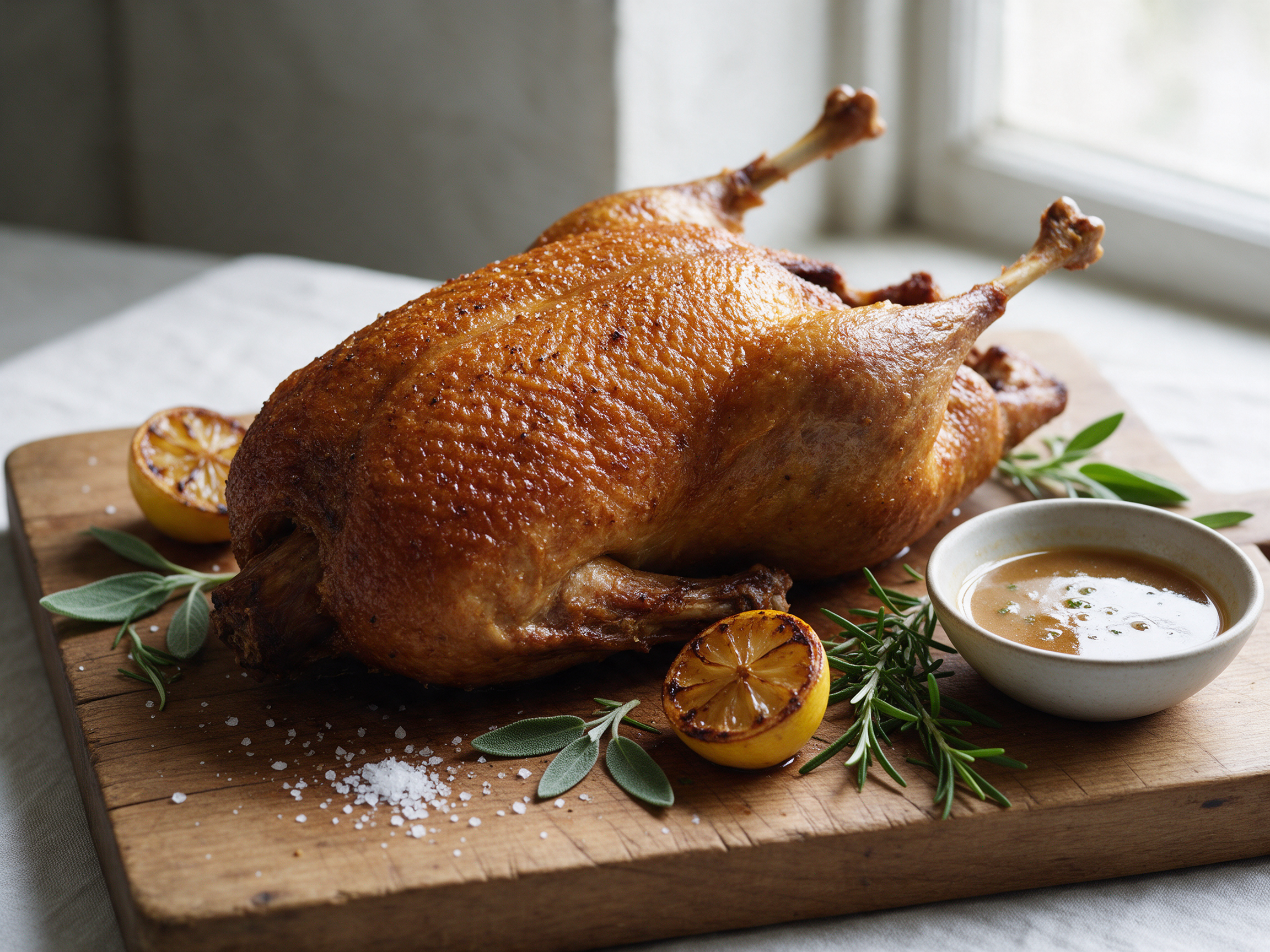
Remove the giblets and neck from the duck and trim the loose neck skin and any large fat pieces at the cavity opening. Pat the bird completely dry inside and out with paper towels. Prick the skin all over at a shallow angle with a skewer or paring knife, avoiding the meat, especially across the breast and thighs.
Mix the salt, pepper, chopped rosemary, sage, thyme and fennel seeds in a small bowl. Rub the mixture over the skin and inside the cavity, working a little under the breast skin. Fill the cavity with the lemon halves, garlic, bay leaves and herb sprigs, then tie the legs together with twine. Set the duck breast-side up on the wire rack in a 35 x 25 cm / 14 x 10-inch roasting pan and leave it uncovered at room temperature for 30 minutes while the oven heats to 160 C / 320 F.
Roast the duck for 60 minutes. Remove the pan, close the oven door, and carefully pour the hot fat into a 1 L / 1-quart heatproof jar. Return the pan to the oven.
Roast for another 45 minutes, then drain the fat again. Raise the oven to 220 C / 425 F and roast for 20 minutes, until the skin is deep golden and crisp and the thickest part of the thigh reads at least 165 F / 74 C. If the skin still looks pale or rubbery, give it 10 more minutes, because the fat under it hasn't fully rendered.
Move the duck to a cutting board and tent it loosely with foil. While it rests for 20 minutes, heat 1 tbsp reserved duck fat in a 20 cm / 8-inch skillet over medium heat. Cook the shallot for 2 minutes until soft, add the wine, and boil for about 4 minutes until reduced by half. Pour in the stock and simmer for 5 to 6 minutes, until the sauce lightly coats a spoon. Off the heat, whisk in the butter and season with salt.
Carve the duck by cutting off the legs at the hip joint, then slicing each breast away from the breastbone. Serve right away with the pan sauce spooned over the meat.