
Jump to Recipe
Cappelletti romagnoli in brodo is the small filled pasta from Emilia-Romagna, folded into tiny rings and simmered in clear meat broth until the filling turns fragrant with nutmeg and the pasta edges go silky. It’s the dish that shows up on Christmas Eve and New Year’s tables across Romagna, alongside other regional favorites like cassone romagnolo flatbread, made in big batches because everyone wants seconds.
The filling here is a mix of roast pork loin, prosciutto crudo, mortadella, and grated parmigiano, bound with a single egg. That combination is what separates cappelletti from tortellini, which usually leans on a coarser meat filling. I fold mine by hand around a fingertip, which takes practice, but a bent chopstick handle works fine too.
Making the broth from scratch takes the better part of an afternoon, much like a slow-simmered chestnut and borlotti bean minestra, and that’s the part I don’t rush. A weak broth means a flat bowl of soup no matter how good the filling turns out.
You can fold the cappelletti a day or two ahead and freeze what you don’t cook right away, so the actual cooking on the day is just a short simmer.
Why You’ll Love This Recipe
- Hand-folded pasta rings hold a rich three-meat filling
- Homemade broth turns this soup into a real primo
- Freezes well before cooking, ideal for Christmas prep
- Classic Emilia-Romagna dish, simpler than it first looks
Ingredient Notes
- 00 flour: Gives the smoothest dough for rolling thin. All-purpose flour works too, just knead a minute longer.
- eggs: Use large eggs at room temperature so the dough comes together evenly and the filling binds without going watery.
- pork loin: Boneless pork loin gives a lean, mild filling. Pork shoulder works if you want a fattier bite.
- prosciutto crudo: Adds salt and depth without extra cooking. Prosciutto cotto is a milder substitute if that’s what you have.
- mortadella: Brings the soft texture Emilia-Romagna fillings are known for. Choose a plain version if you’re avoiding pistachios, since some mortadella includes them.
- parmigiano reggiano: Grate it fine so it melts into the filling instead of clumping. Grana padano works as a budget swap.
- nutmeg: Freshly grated nutmeg gives the filling its Emilia-Romagna signature. Ground jarred nutmeg fades fast, use fresh if you can.
- lemon zest: A small amount brightens the rich meats. Don’t skip it even though it seems minor.
- broth: Homemade capon or beef broth gives the cleanest flavor. Good quality low-sodium stock is a fair stand-in on a weeknight.
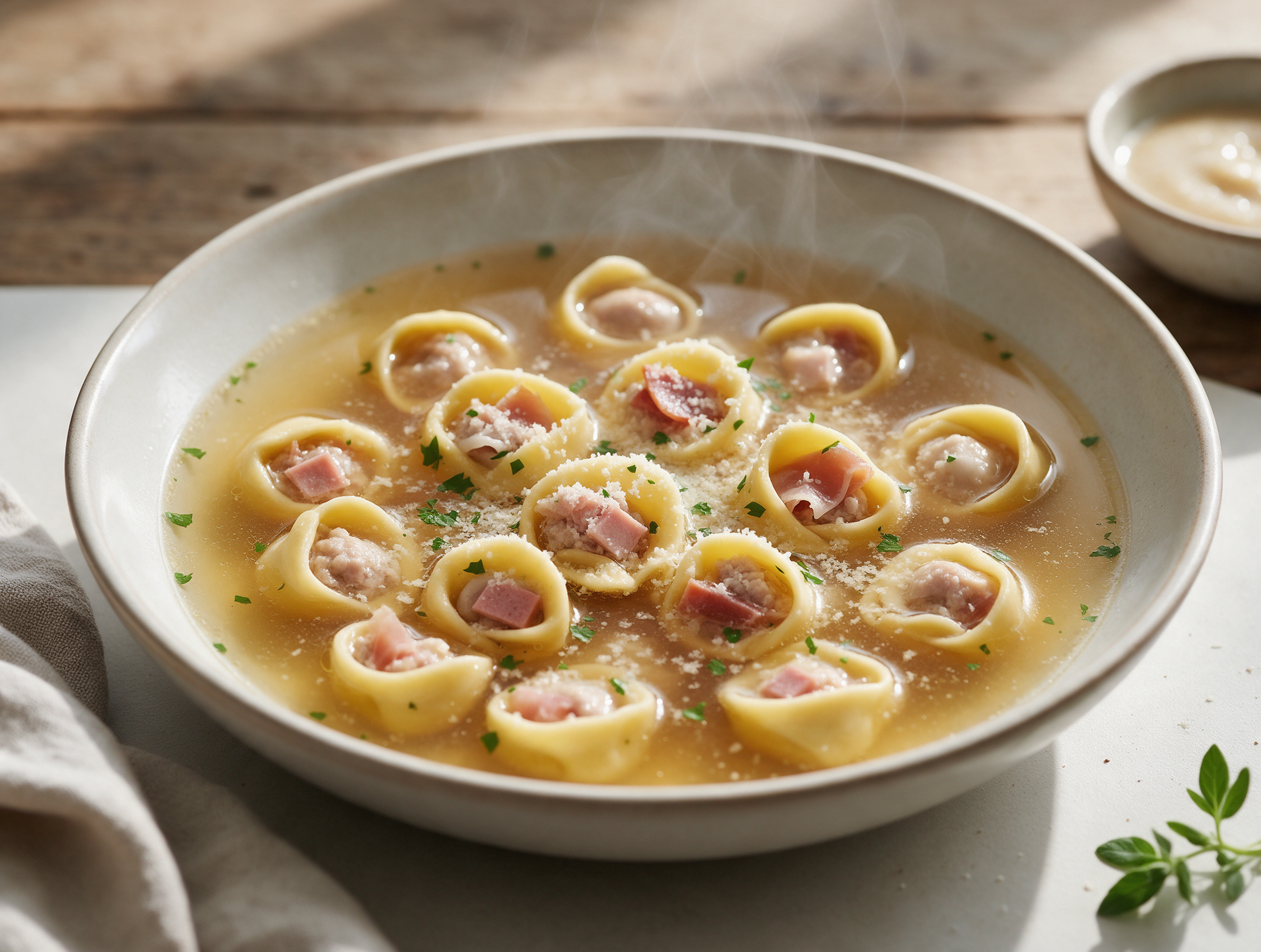
Cappelletti Romagnoli in Brodo: Filled Pasta Soup
Ingredients
Method
- Melt the butter in a 26 cm / 10-inch skillet over medium heat. Add the pork loin and brown on all sides, about 5 minutes.
- Lower the heat, cover, and cook for 20 to 25 minutes, turning once, until the pork reaches 160 F / 71 C internally and flakes easily with a fork. Let it cool completely.
- Finely chop the cooled pork with the prosciutto and mortadella by hand or in short pulses in a food processor, until the mixture looks like coarse crumbs, not a paste.
- Transfer to a bowl and mix in the parmigiano, the filling egg, nutmeg, lemon zest, a pinch of salt, and black pepper. Cover and chill for 30 minutes so it firms up.
- Mound the flour on a board or in a large bowl and make a well in the center. Crack in the 3 dough eggs and mix with a fork, gradually pulling in flour from the sides.
- Knead by hand for 8 to 10 minutes until the dough is smooth and springs back when pressed. Wrap in plastic and rest at room temperature for 30 minutes.
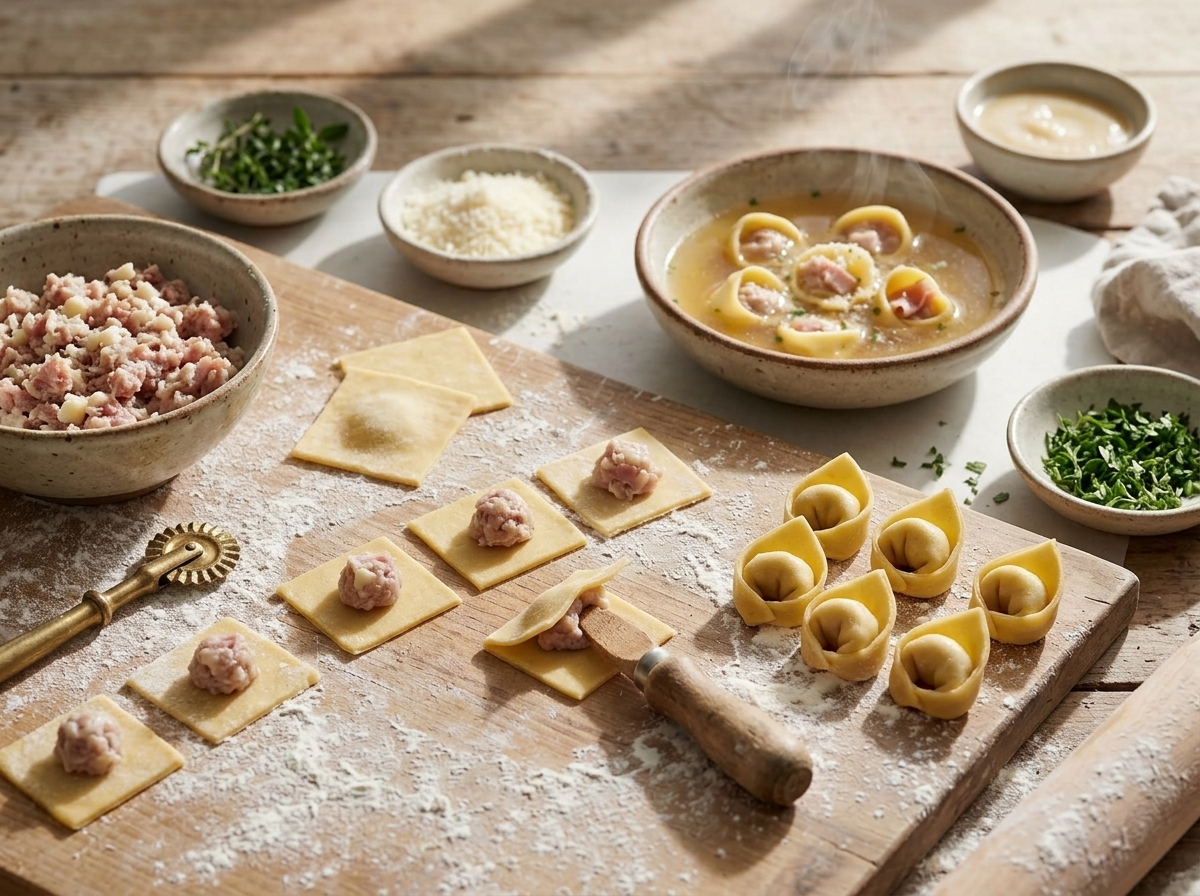
- Roll the dough into thin sheets, about 1 mm thick, using a pasta machine or rolling pin. Keep unused dough covered so it doesn't dry out.
- Cut the sheets into 4 cm squares with a knife or pastry cutter.
- Place 1/2 tsp of filling in the center of each square. Fold into a triangle and press the edges to seal, then wrap the triangle around your fingertip and pinch the two points together to form the cappelletto ring.
- Arrange the shaped cappelletti in a single layer on a floured tray as you go, without stacking, so they don't stick together.
- Bring the broth to a gentle simmer in a 6-quart / 5.5 L stockpot.
- Slide the cappelletti into the simmering broth in batches so the pot isn't crowded. Cook for 4 to 5 minutes until they float and the pasta is tender at the edges but still holds its shape.
- Ladle the broth and cappelletti into bowls, top with grated parmigiano, and serve right away.
Notes
- Cook the pork loin until it flakes easily, about 160 F / 71 C internal, before chopping.
- Rest the dough 30 minutes before rolling to prevent shrinking.
- Seal every cappelletto firmly, loose seams open in the broth.
- Freeze extra cappelletti uncooked rather than storing them cooked.
Tips for Success
- Chop the cooled pork filling by hand or pulse briefly in a food processor, over-processing turns it into paste.
- Rest the dough for 30 minutes before rolling so it doesn’t spring back and shrink your cappelletti squares.
- Seal each cappelletto firmly at the edges, any gap lets the filling leak out into the broth.
- Freeze uncooked cappelletti on a tray first, then bag them, so they don’t clump together in the freezer.
- Taste the broth for salt before adding pasta, the prosciutto and parmigiano in the filling already bring plenty.
Variations
- Swap the pork and cured meats for a mushroom and ricotta filling for a vegetarian take on the same shape.
- Use chicken broth in place of capon broth if capon isn’t available, the soup stays clean-tasting either way.
- Serve the cappelletti dry, tossed in melted butter and sage instead of broth, for a simpler weeknight plate.
Storage and Reheating
Uncooked cappelletti keep well. Arrange them in a single layer on a floured tray and freeze for 2 hours, then transfer to a freezer bag for up to 2 months. Cook them straight from frozen, adding an extra minute or two to the simmer.
Already-cooked cappelletti in brodo don’t hold up as well, the pasta keeps absorbing broth in the fridge and turns soft. If you have leftovers, refrigerate for up to 2 days in an airtight container and reheat gently on the stovetop over low heat until just warmed through, about 4 to 5 minutes, adding a splash of extra broth if it’s thickened too much.
Serving Suggestions
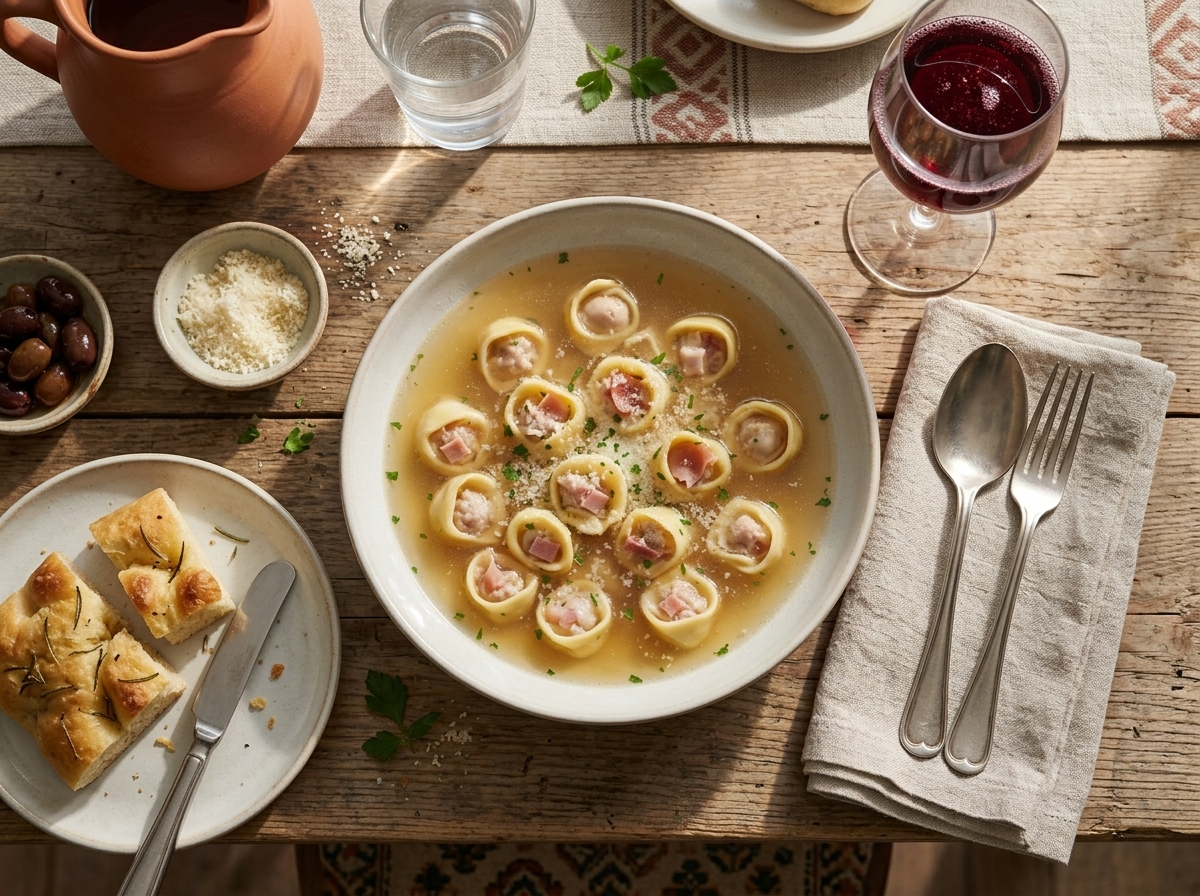
Ladle the broth and cappelletti into shallow bowls and finish with a generous grating of parmigiano reggiano and a crack of black pepper. This is traditionally the first course of a Christmas Eve or New Year’s meal in Romagna, served before a simpler main.
A light Sangiovese di Romagna or a dry Lambrusco pairs well, cutting through the richness of the filling. Crusty bread on the side is optional, the broth is the point here, much like in busecca milanese stew.
FAQ
Why did my cappelletti fall apart in the broth?
Cappelletti usually fall apart because the edges weren’t sealed tightly enough or the broth boiled too hard. Press each seam firmly and pinch the two ends together with damp fingertips. Keep the broth at a gentle simmer, not a rolling boil, once the pasta goes in so the shapes hold together.
Can I use ground pork instead of roast pork loin for the filling?
Yes, ground pork works if you brown it well and let it cool before chopping. The texture turns out slightly softer than roasted loin, which gives a firmer bite once minced by hand. Drain off excess fat before mixing it with the prosciutto and parmigiano so the filling doesn’t turn greasy.
Can I freeze cappelletti romagnoli before cooking them?
Yes, uncooked cappelletti freeze well for up to 2 months. Freeze them in a single layer on a floured tray first, then transfer to a freezer bag once solid. Cook them straight from frozen in simmering broth, adding a minute or two to the cooking time.
What wine goes with cappelletti romagnoli in brodo?
A light Sangiovese di Romagna or a dry Lambrusco works well with cappelletti in brodo. Both have enough acidity to cut through the richness of the pork, prosciutto, and parmigiano filling. A simple white like Albana di Romagna is a good alternative if you prefer white wine.
Is cappelletti romagnoli in brodo gluten free?
No, the dough is made with wheat flour, so this recipe isn’t gluten free as written. You can swap in a 1:1 gluten-free flour blend for the dough, though the pasta will be more fragile to fold and seal. The broth and filling themselves don’t need any gluten-free adjustment.
What’s the difference between cappelletti romagnoli and tortellini in brodo?
Cappelletti romagnoli are folded into a rounded hat shape and typically filled with roast pork, prosciutto, mortadella, and parmigiano, while tortellini from Bologna use a similar meat mix but are folded smaller and tighter. Cappelletti are also traditionally larger and slightly thicker at the fold. Both are simmered in meat broth for the holidays.