
Jump to Recipe
Peperoni cruschi are dried sweet peppers from Basilicata, fried in hot olive oil for about 10 to 15 seconds until they puff up and turn crisp, close to a vegetable chip. The peppers used are typically Senise peppers, sun-dried whole with their stems left on for handling, then flash-fried just before the oil starts to smoke.
I first had these crumbled over spaghetti with breadcrumbs at a trattoria near Matera, and the texture stuck with me. They shatter between your teeth the way a good potato chip does, but the flavor runs sweeter and smokier, not hot.
The whole process from oil to plate takes about five minutes. The only real risk is timing: leave them in the oil a few seconds too long and they turn from crisp red to bitter black, so you work in small batches and pull them fast.
Salt them the second they come out of the oil, while the surface is still warm enough to hold it.
Why You’ll Love This Recipe
- Ready in under 15 minutes with three pantry ingredients
- Crumbles over pasta, eggs, or burrata for instant crunch
- Naturally gluten-free and vegan snack
- Uses shelf-stable dried peppers, no fresh produce needed
Ingredient Notes
- dried Senise peppers (peperoni cruschi): Look for these in Italian specialty shops or online as whole dried sweet peppers. If you can’t find them, dry fresh long sweet peppers in a low oven at 80C/175F for several hours until brittle.
- extra virgin olive oil: Use a mid-grade olive oil rather than your best bottle, since the peppers fry so briefly the oil quality matters less than getting it to the right temperature.
- fine sea salt: Salt while the peppers are still warm from the oil. Cold, crisped peppers won’t hold loose salt well.
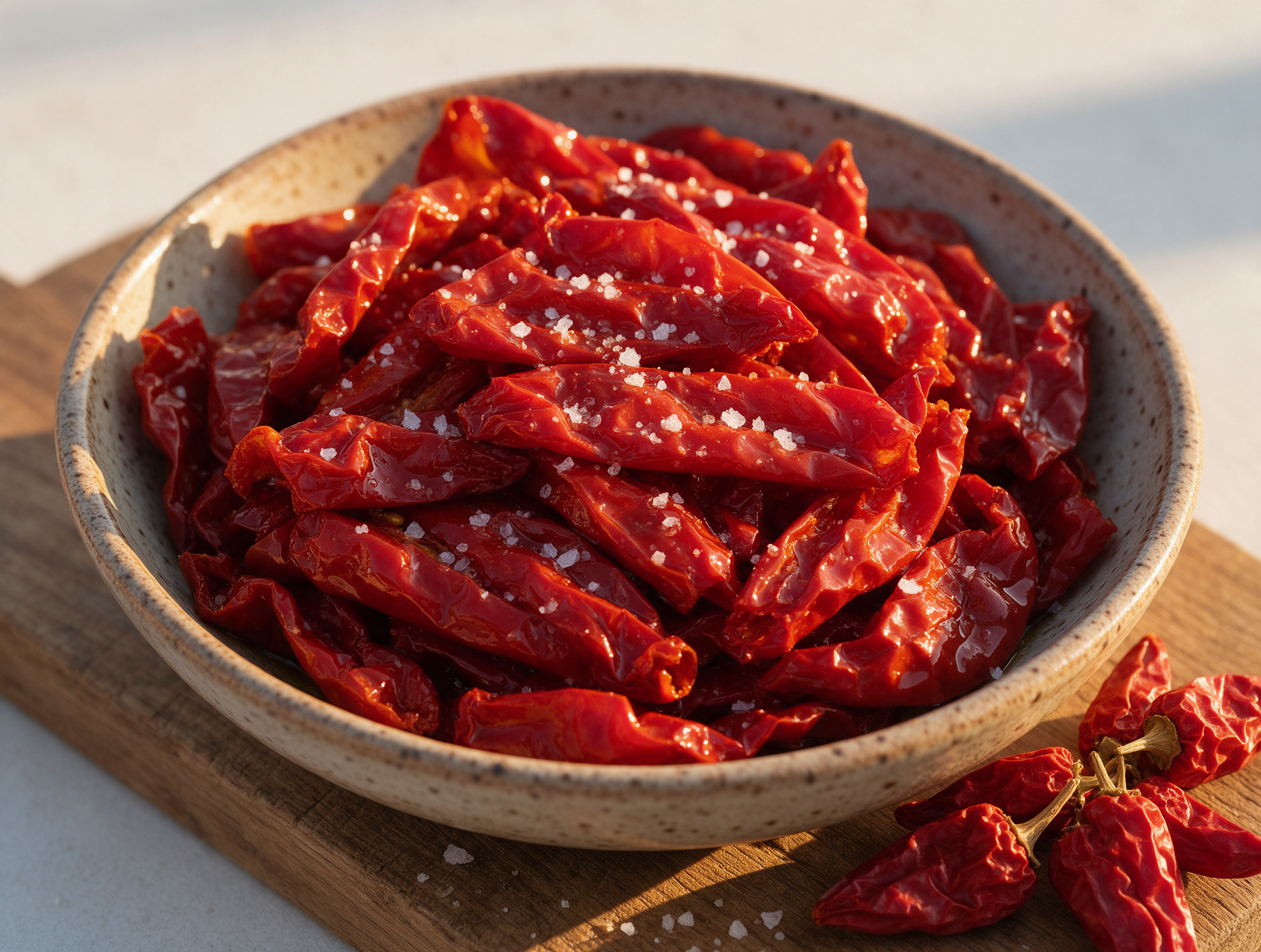
Peperoni Cruschi: Crispy Fried Basilicata Peppers
Ingredients
Method
- Wipe each dried pepper clean with a dry cloth or paper towel. Do not rinse them, since any moisture will make the hot oil spit.
- Snap the stem off each pepper and shake out the seeds through the opening. Discard both.
- Pour the olive oil into a 24 cm / 9.5-inch skillet to a depth of about 2 cm / 0.75 inch and heat over medium until it reaches 160C/320F on an instant-read thermometer.
- Test the oil with one pepper. It should puff and sizzle steadily within 2 to 3 seconds; if it blackens right away, pull the pan off the heat for a minute to cool the oil slightly.
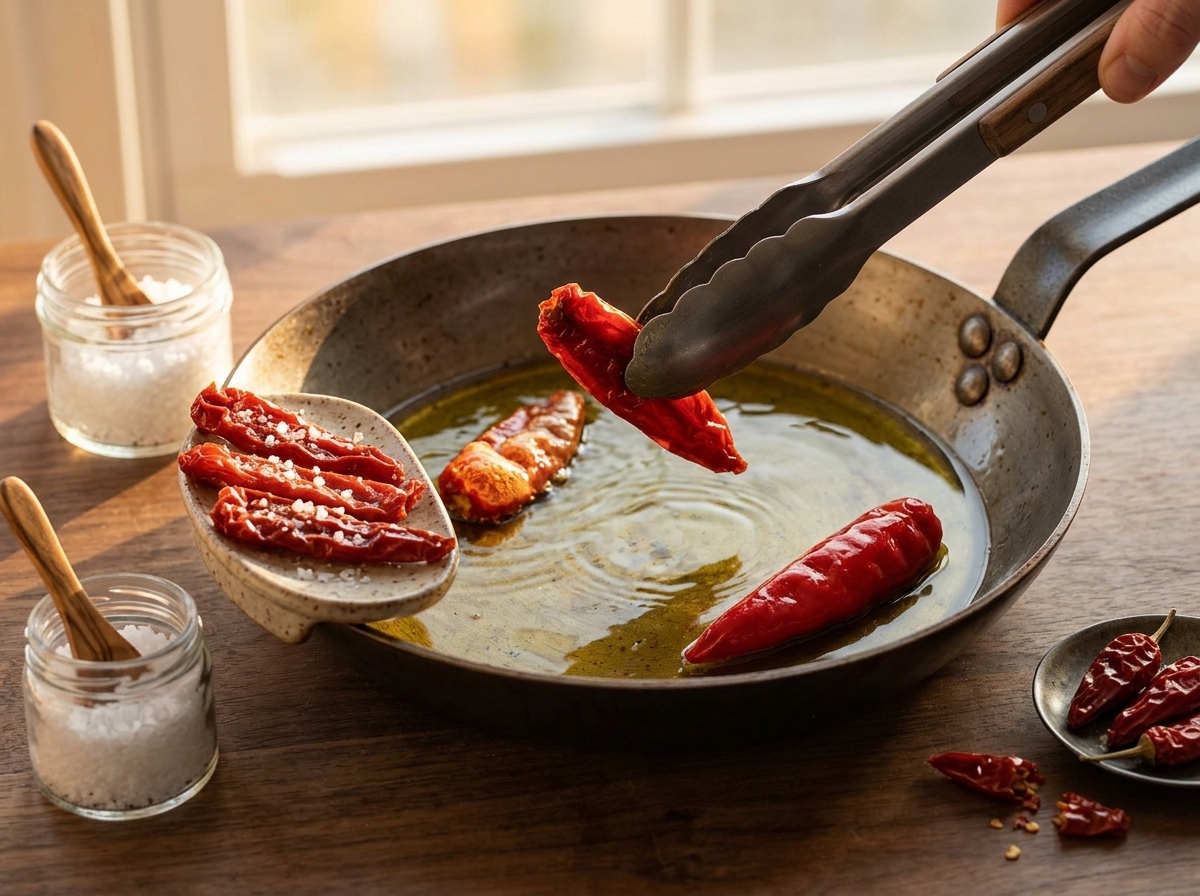
- Fry the peppers in batches of 5 to 6, turning once with tongs, for 10 to 15 seconds total until they puff up and deepen to a rich red.
- Lift each batch out with a slotted spoon as soon as it's red, before it darkens further, and drain on a paper towel-lined tray.
- Salt the peppers immediately while still warm. They crisp fully as they cool over the next minute or two.
- Let the oil come back to 160C/320F between batches and repeat with the remaining peppers.
- Serve warm or at room temperature, crumbled over pasta or eggs, or on their own as a snack.
Notes
- Work in small batches of 5-6 so the oil temperature doesn't drop.
- Pull peppers the moment they turn deep red, not black.
- Wipe peppers dry before frying to stop the oil from spitting.
- Salt while hot, the surface won't hold salt once cooled.
Tips for Success
- Wipe dried peppers clean with a dry cloth instead of washing them, since any moisture makes the hot oil spit.
- Snap off the stem and shake out the seeds before frying, so the pepper fries evenly and doesn’t scorch around the core.
- Keep the oil around 160C/320F and test with one pepper first, since a too-hot pan turns them bitter in seconds.
- Fry in batches of 5 to 6 peppers so each one has room to puff without steaming its neighbors.
- Drain on paper towels and salt immediately, because the crisp texture sets as they cool and won’t take salt well later.
Variations
- Toss the fried peppers with a crushed garlic clove and a pinch of chili flakes while they’re still warm.
- Crumble cruschi over spaghetti aglio e olio with toasted breadcrumbs for a classic Basilicata pasta dish.
- Grind cooled cruschi to a coarse powder and use it as a smoky, sweet seasoning over roasted potatoes or eggs.
Storage and Reheating
Peperoni cruschi keep well because they started out dried, so there’s little moisture left to go stale. Store them in an airtight container at room temperature for 4 to 5 days, layered with a paper towel to catch any residual oil.
Skip the fridge, since condensation there makes them go soft and chewy instead of crisp. If a batch loses its crunch, frying a fresh one is faster than trying to revive the old batch, and a pan reheat just adds more oil without bringing back the shatter.
For make-ahead, fry a big batch when you already have oil hot for something else, then use them cold over pasta or eggs through the week.
Serving Suggestions
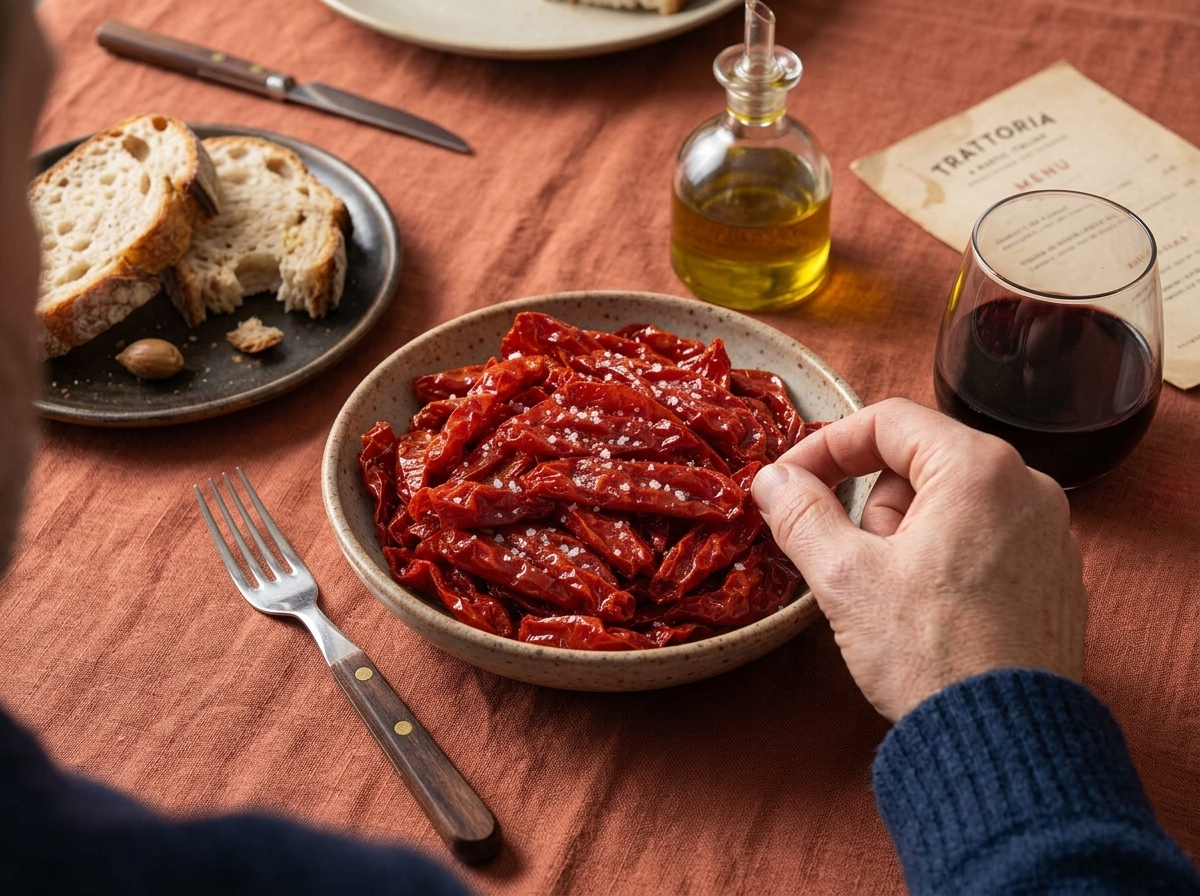
Peperoni cruschi work as a stand-alone snack with a glass of wine, salted and eaten by hand like chips.
Crumbled over spaghetti with garlic, olive oil, and toasted breadcrumbs, they turn a five-ingredient pasta into something with real crunch and color. They’re just as good scattered over a fried egg, folded into a frittata, or crushed on top of creamy burrata with a drizzle of the frying oil.
In Basilicata, cooks also crumble them into baccalà dishes or grind them to a coarse powder for a smoked, sweet seasoning.
FAQ
Why did my peperoni cruschi turn black and bitter instead of crisp red?
Your oil was too hot or the peppers stayed in too long. Peperoni cruschi go from crisp red to scorched black in just a few extra seconds, so pull them the instant they puff and deepen in color. Test the oil with one pepper first and adjust the heat before frying a full batch.
Can I use fresh bell peppers instead of dried Senise peppers for peperoni cruschi?
No, fresh peppers won’t fry into the same shattering texture since cruschi rely on being dried out first. You can buy dried sweet peppers online if Senise peppers aren’t local, or oven-dry fresh long sweet peppers at 80C/175F for several hours until brittle before frying.
How do I store peperoni cruschi so they stay crisp for a few days?
Keep them in an airtight container at room temperature for 4 to 5 days, with a paper towel layered in to absorb extra oil. Avoid the fridge, since condensation there softens the skin and kills the crunch you just fried in.
What goes well with peperoni cruschi besides pasta?
Peperoni cruschi work crumbled over fried eggs, folded into a frittata, or crushed on top of burrata with a drizzle of the frying oil. In Basilicata they also turn up in baccalà dishes and as a topping for bruschetta with soft cheese.
Are peperoni cruschi gluten free and vegan?
Yes, peperoni cruschi are naturally gluten-free and vegan since they’re just dried sweet peppers fried in olive oil with salt. They make a straightforward snack for both diets as long as you check that any oil used hasn’t been shared with other fried foods.
What’s the difference between peperoni cruschi and regular fried peppers?
Peperoni cruschi start out fully dried, so a quick 10 to 15 second fry crisps them like a chip instead of softening them like fresh peppers do. Regular fried peppers stay pliable and juicy, while cruschi shatter and have a concentrated, sweeter flavor from the drying process.