
Jump to Recipe
Palombo in umido is a coastal Italian braise built on shark steaks, tomato, and sweet peas simmered until the sauce turns silky and the fish flakes clean.
Palombo, the Italian name for smooth-hound shark, has dense boneless flesh with just a central cartilage instead of small bones, and it holds up well to a slow simmer rather than a quick sear.
I first made this after a fishmonger in Ancona sold me palombo steaks instead of the swordfish I’d asked for. The soffritto and white wine base turned out better suited to this fish than a grill ever would.
This version keeps the sauce loose, with tomato and peas doing most of the work, while the fish goes in only long enough to cook through, about 15 minutes total. Serve it with bread for the sauce.
Why You’ll Love This Recipe
- One pan, about 50 minutes start to finish
- Boneless fish, just a central cartilage to avoid
- Sauce works a day ahead, fish cooks fresh in 15 minutes
- Naturally gluten-free and dairy-free weeknight dinner
Ingredient Notes
- palombo: Smooth-hound shark steaks have dense, boneless flesh with just a central cartilage. Swordfish or monkfish work as a substitute, though they cook a few minutes faster.
- olive oil: Use a fruity extra-virgin for the soffritto since its flavor carries through the finished sauce.
- dry white wine: Any dry white you’d drink works fine. Skip it and use extra stock plus a splash of lemon juice if needed.
- canned whole peeled tomatoes: Crushing them by hand instead of using pre-crushed tomatoes gives a cleaner-tasting, less watery sauce.
- peas: Frozen peas work year-round and go in straight from the freezer. Fresh peas need a minute or two less simmering.
- soffritto (onion, carrot, celery): Dice small and cook slowly so the vegetables melt into the sauce instead of staying crunchy.
- parsley: Stir in right at the end so it stays vivid and doesn’t cook down into the sauce.
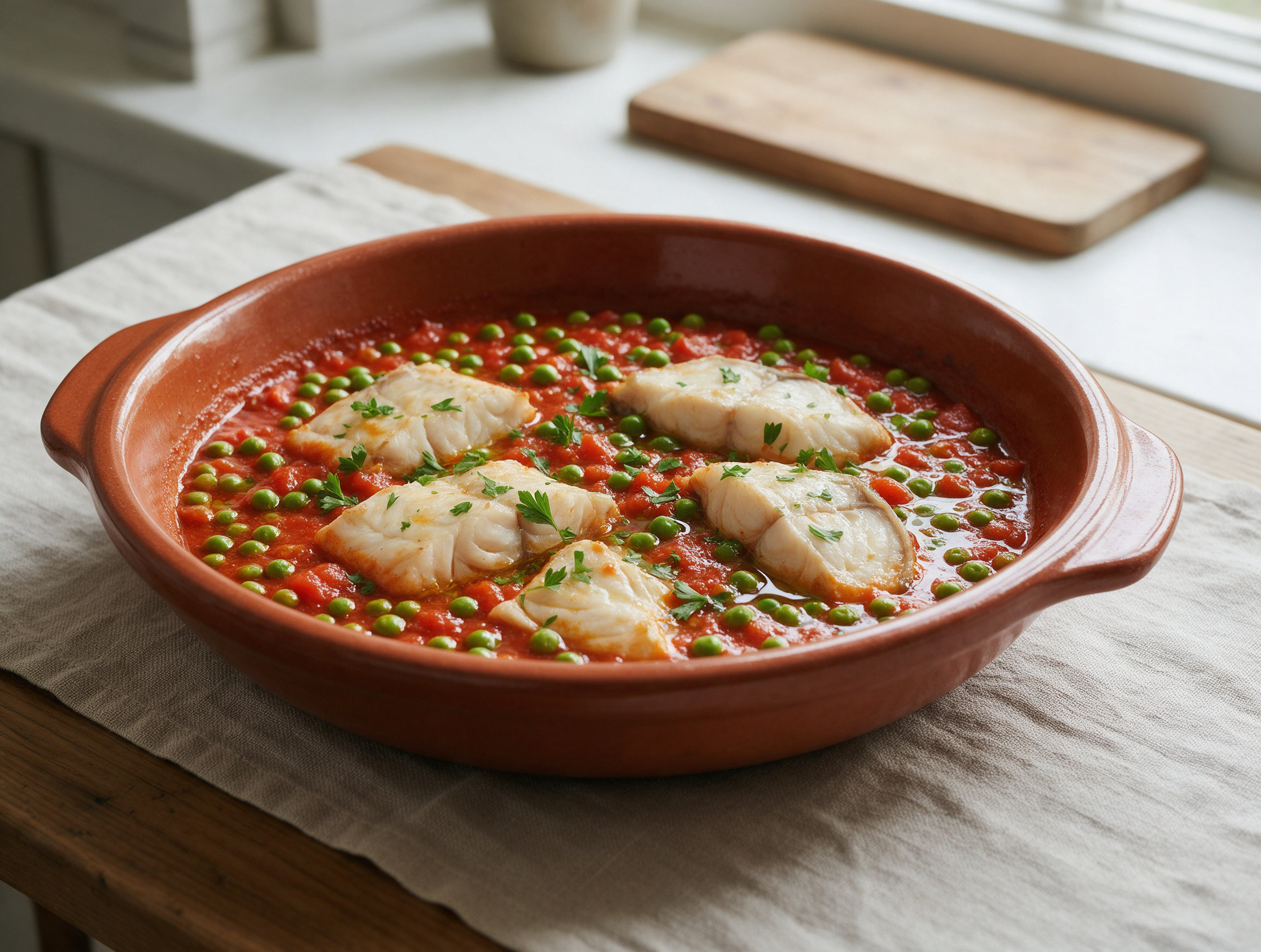
Palombo in Umido: Braised Fish with Peas and Tomato
Ingredients
Method
- Heat the olive oil in a 30 cm / 12-inch braising pan over medium heat. Add the onion, carrot, and celery, and cook for 6 to 8 minutes, stirring often, until softened and pale gold.
- Add the garlic and cook for 1 minute until fragrant.
- Season the palombo steaks with salt and pepper. Nestle them into the pan and sear for about 2 minutes per side, just enough to lightly color the surface.
- Pour in the white wine and let it bubble for 1 to 2 minutes, scraping up any browned bits from the bottom of the pan.
- Add the crushed tomatoes, bay leaf, chili flakes if using, and the fish stock. Bring to a gentle simmer.
- Partially cover the pan and simmer for 12 to 15 minutes, spooning sauce over the fish occasionally, until it's nearly opaque throughout.
- Stir in the peas and cook uncovered for 8 to 10 minutes more, until they're bright green and tender and the fish flakes easily at 145 F / 63 C.
- Remove the bay leaf, stir in the parsley, and adjust the salt. Rest off heat for 2 minutes before serving.
Notes
- Buy palombo steaks the day you plan to cook them, they turn soft quickly.
- Don't skip searing the fish first, it builds flavor in the sauce.
- Simmer gently, a hard boil toughens the fish.
- Taste the sauce before adding fish, salt levels vary by canned tomato brand.
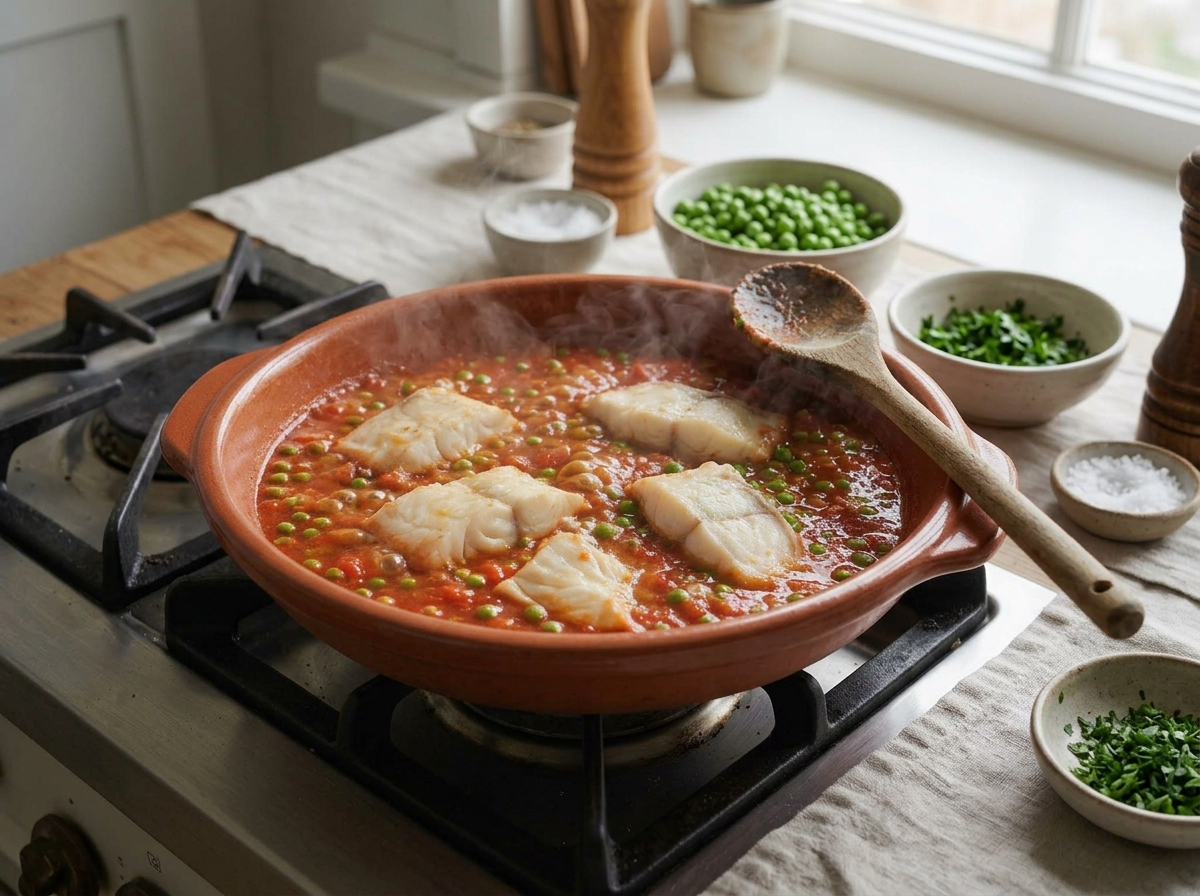
Tips for Success
- Pat palombo steaks dry before searing so they color instead of steaming in the pan.
- Simmer the sauce uncovered for 5 minutes before adding the fish so it isn’t watery.
- Add peas only in the last 8 to 10 minutes so they stay bright green, not mealy.
- Check the fish at the thickest point with a fork, it should flake and read 145 F / 63 C.
- Rest the pot off heat for 2 minutes before serving so the sauce settles around the fish.
Variations
- Swap peas for fava beans in spring, adding them at the same point in the simmer.
- Stir in chopped black olives and capers for a puttanesca-style version of the sauce.
- Use passata instead of chopped tomatoes for a smoother, more concentrated braise.
Storage and Reheating
Store cooled palombo in umido in an airtight container in the fridge for up to 2 days. The peas soften further, but the sauce often tastes better once the flavors settle overnight.
Reheat gently in a covered 26 cm / 10-inch skillet over low heat for 5 to 7 minutes, spooning sauce over the fish, until warmed through. Skip high microwave power, it toughens the fish, use 50% power in short bursts if that’s your only option.
The sauce alone, made without fish, freezes well for up to 2 months. Freezing already-cooked fish makes the texture grainy once thawed, so add fresh palombo when you reheat a frozen batch of sauce.
Serving Suggestions
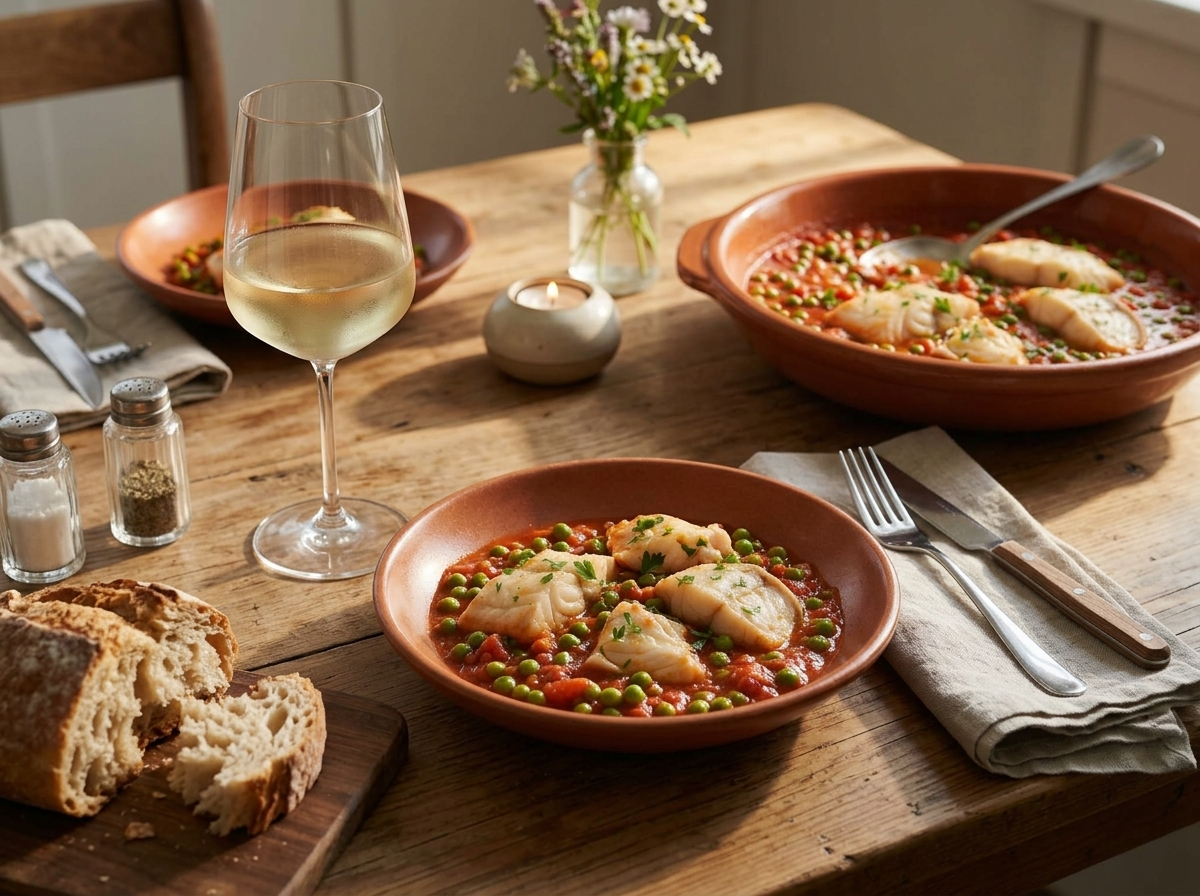
Serve palombo in umido with crusty bread for mopping the sauce, or spoon it over soft polenta for a heartier plate.
A simple green salad with lemon dressing cuts through the tomato. A chilled glass of Verdicchio or another dry white, the same bottle you cooked with, rounds out the meal.
FAQ
How do I know when palombo in umido is done?
The fish is done when it turns opaque and flakes easily with a fork, at an internal temperature of 145 F / 63 C. The sauce should coat the back of a spoon rather than looking watery. Overcooked palombo turns stringy, so pull it as soon as it flakes.
Can I use a different fish instead of palombo?
Yes, swordfish or monkfish both work well since they’re dense and hold together during a braise. Cod or another flaky white fish can work too, but it cooks faster and can break apart, so cut the simmer time by 3 to 4 minutes and check it early.
Can I make palombo in umido ahead of time?
You can make the tomato and pea sauce base up to a day ahead and refrigerate it. Reheat the sauce to a simmer, then add the fresh palombo steaks and cook them just before serving. Adding raw fish to already-cooked sauce keeps the texture from turning tough.
What goes well with palombo in umido?
Crusty bread for the sauce, soft polenta, or plain rice all work well since the braise is loose enough to soak into a starch. A simple lemon-dressed salad on the side balances the tomato. A dry white wine like Verdicchio pairs naturally with the dish.
Is palombo in umido gluten free?
Yes, this recipe is naturally gluten-free since there’s no flour or breadcrumb thickener in the sauce. Just double check your stock and wine labels if you’re cooking for someone with celiac disease, as some brands add gluten-based additives.
What’s the difference between palombo and dogfish?
Palombo is the Italian name for smooth-hound shark, a different species from the spiny dogfish sold in some fish and chip shops. Palombo has denser, sweeter flesh and doesn’t need the soaking some dogfish requires to remove an ammonia smell from improper bleeding.