
Jump to Recipe
Bietole ripassate is Swiss chard blanched first, then pan-sauteed with garlic and chili flakes in olive oil. It’s a Tuscan and Roman trattoria side dish, ready in about 22 minutes, and it works with almost anything you’re roasting or grilling that night.
The two-step method matters here. Chard stems need a few minutes in boiling water to soften before they hit the pan, and blanching the leaves too keeps their color a deep, glossy green instead of the dull khaki you get from sauteing raw chard straight through.
Once the chard is drained and squeezed dry, the actual cooking takes less than 5 minutes. Garlic and chili flakes go into hot oil first, and they turn from fragrant to bitter fast, so keep an eye on the pan during that stage.
I make a double batch on Sundays and keep it in the fridge for grain bowls and omelets through the week. It’s a good way to use up a bunch of chard before it wilts in the crisper drawer.
Why You’ll Love This Recipe
- Ready from raw bunch to plate in about 22 minutes
- Uses one pan and a pot you already own
- Stretches a single chard bunch into a full side for four
- Tastes good warm, at room temperature, or straight from the fridge
Ingredient Notes
- Swiss chard: Look for firm, unblemished leaves with crisp stems. Rainbow chard works too, though the stems can taste slightly more mineral and earthy.
- garlic: Slice it thin rather than mincing so it browns evenly and you can pick out any piece that scorches.
- chili flakes: Standard red pepper flakes are fine. Calabrian chili flakes give a fruitier heat if you can find them.
- olive oil: Use a decent extra virgin olive oil since it’s doing most of the flavor work here, not just cooking duty.
- lemon: Optional, but a squeeze at the end brightens the dish if your chard leans bitter. Skip it if you prefer the flavor plain.
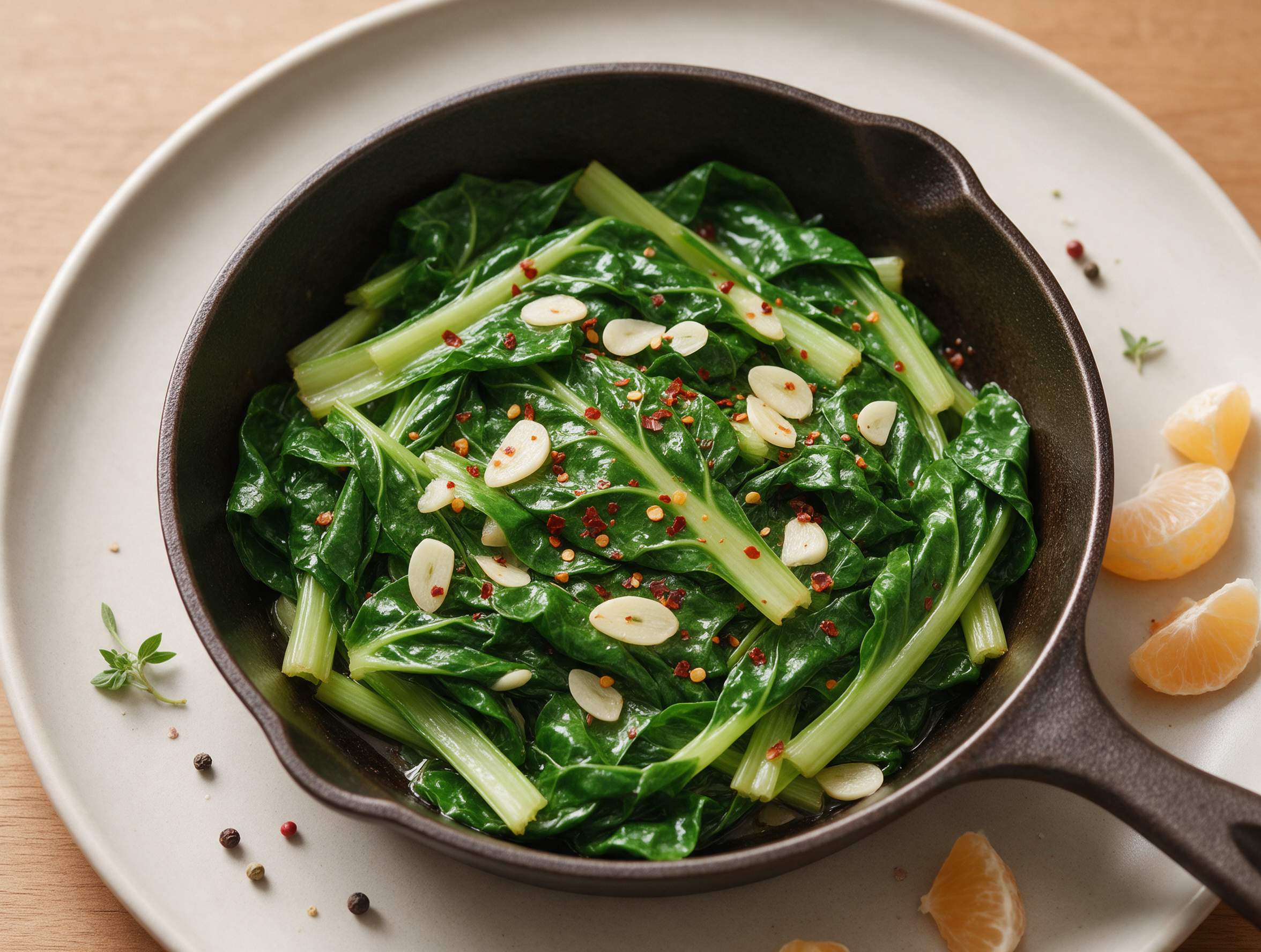
Bietole Ripassate: Sauteed Chard with Garlic and Chili
Ingredients
Method
- Rinse the chard well. Cut the stems away from the leaves, chop the stems into 1 cm pieces, and roughly chop the leaves.
- Bring a 6-quart / 5.7 L pot of well-salted water to a boil. Add the chopped stems and blanch for 2 minutes.
- Add the leaves to the pot and blanch both together for another 2 minutes, until the leaves are wilted and the stems are just tender.
- Drain the chard in a colander, rinse briefly under cold water, then squeeze it firmly with your hands to remove as much water as possible.
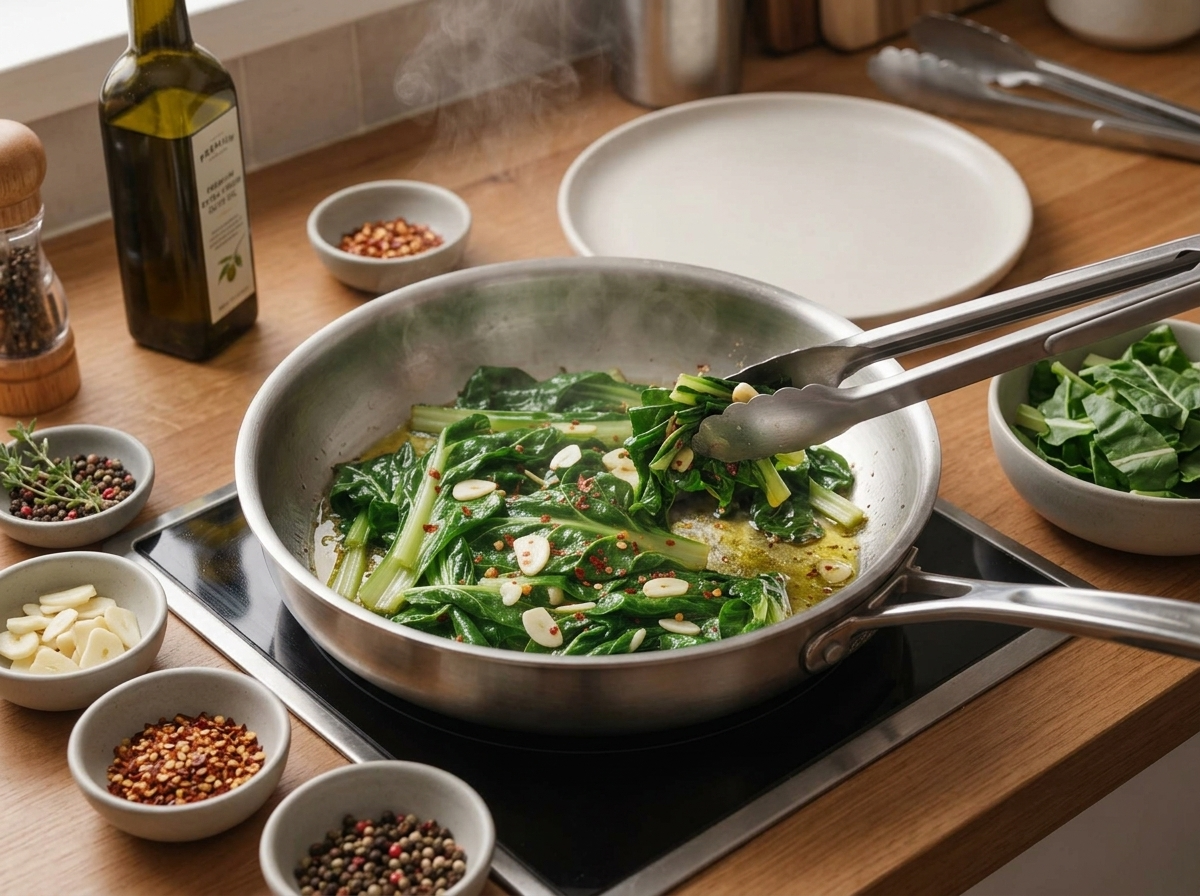
- Heat the olive oil in a 12-inch / 30 cm skillet over medium heat. Add the sliced garlic and chili flakes and cook for 45 to 60 seconds, until the garlic turns golden at the edges and smells fragrant. Watch it closely, as it burns fast once it starts to color.
- Add the drained chard to the skillet and toss to coat in the garlic oil. Raise the heat to medium-high and cook for 4 to 5 minutes, tossing occasionally, until the chard looks glossy and any leftover water has evaporated.
- Season with salt to taste and add more chili flakes if you want extra heat.
- Finish with a squeeze of lemon if using, transfer to a serving dish, and serve warm.
Notes
- Salt the blanching water generously, close to sea water, to season the chard from the inside.
- Don't skip squeezing the chard dry or the pan will steam instead of saute.
- Slice garlic instead of mincing so you can control browning more easily.
- Double the batch since cooked chard keeps well and reheats fast for weeknight lunches.
Tips for Success
- Separate stems from leaves before blanching since stems need a head start to soften.
- Squeeze the drained chard firmly in your hands to remove excess water before it hits the hot oil.
- Watch the garlic closely once it hits the pan; it goes from golden to bitter in under 20 seconds.
- Cook the chard uncovered so residual moisture evaporates instead of steaming the leaves soft and gray.
- Taste before adding salt at the end since blanching water already seasons the chard some.
Variations
- Add a handful of golden raisins and toasted pine nuts for a sweet-savory Sicilian-style version.
- Swap chili flakes for a whole dried peperoncino, crushed lightly, for a smokier, less even heat.
- Finish with a few anchovy fillets melted into the garlic oil for a salty, umami-heavy side.
Storage and Reheating
Bietole ripassate keeps 3-4 days in an airtight container in the fridge. The stems and leaves hold their texture well since they’re already cooked twice.
Reheat in a 10-inch skillet over medium heat with a small drizzle of olive oil, tossing for 2-3 minutes until warmed through. A splash of water helps if the chard looks dry from the fridge.
It also tastes good cold or at room temperature straight from the container, which makes it an easy add-on to lunch bowls without any reheating at all.
Serving Suggestions
Bietole ripassate sits well next to roast chicken, grilled sausages, or a simple pan-seared fish fillet. The garlic and chili give it enough character to stand up to plain proteins without competing.
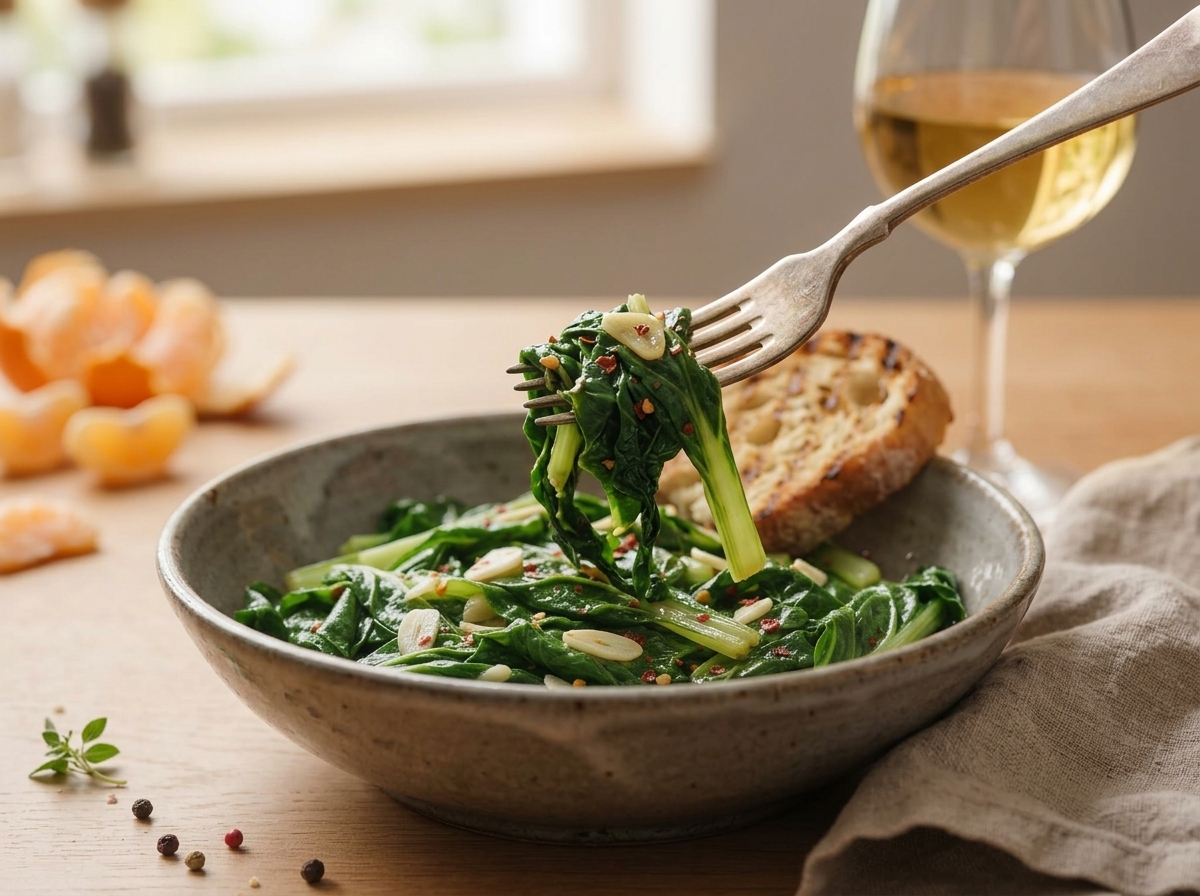
Pile it onto grilled bread rubbed with a cut garlic clove for a quick bruschetta, or fold it into a frittata with a handful of grated pecorino.
For a full trattoria-style plate, serve it alongside white beans dressed in olive oil and a wedge of lemon, with crusty bread to mop up the pan juices.
FAQ
Why does my bietole ripassate turn out bitter or metallic tasting?
Bitterness usually comes from older chard or skipping the blanching step. Raw chard sauteed straight in the pan keeps more of its natural bitterness, while a quick boil in salted water pulls a lot of that flavor out before it hits the oil. Older, larger leaves are more bitter than young ones, so pick smaller bunches when you can.
Can I use rainbow chard or spinach instead of Swiss chard?
Rainbow chard works exactly the same way and just adds colorful stems to the pan. Spinach is a different texture though; it has no thick stems to blanch separately and cooks in under a minute, so you’d skip the stem step entirely and reduce the saute time to 2 minutes.
Can I blanch the chard ahead and finish it later?
Yes, blanch and squeeze the chard up to 2 days ahead and store it in the fridge in an airtight container. When you’re ready to eat, just saute it fresh with the garlic and chili flakes for 4-5 minutes, which keeps the final texture from turning mushy.
What do you serve with bietole ripassate?
It pairs well with roast chicken, grilled sausages, or seared white fish since the garlic and chili give it enough flavor to stand next to simple proteins. It also works folded into a frittata or piled onto grilled bread as a quick bruschetta topping.
Is bietole ripassate vegan and gluten free?
Yes, as written it’s both vegan and gluten free since it’s just chard, olive oil, garlic, chili flakes, and salt. Check that any bread or cheese you serve alongside it doesn’t reintroduce gluten or dairy if that matters to your meal.
What does ‘ripassata’ mean in bietole ripassate?
Ripassata means ‘re-passed’ or ‘passed again’, referring to the technique of blanching a vegetable first and then sauteing it a second time in a hot pan. It’s the same method used for spinaci alla romana and broccoli ripassati, and it’s common across central and southern Italian home cooking for greens.