
Jump to Recipe
Piccione ripieno is whole squab stuffed with a pork sausage and chicken liver filling, seared to color the skin, then roasted until the stuffing reads 165 F / 74 C in the center.
I first had a version of this outside Modena, where the birds came small and dark, the stuffing threaded with sage and Marsala. Farmed squab from the butcher is milder and far easier to find than wild wood pigeon.
The stuffing is the part that needs respect. Because it holds raw sausage and liver, you can’t treat this like a duck breast you pull off the heat still pink in the middle. The filling has to cook through completely, so the whole bird spends a bit longer in the oven than a plain roasted squab, and the breast ends up rosy rather than rare.
A hard sear before roasting gets the skin crackling the same way it does for crispy roasted chicken legs, instead of steaming under foil. Deglaze the same skillet with wine and stock for the sauce, and dinner is done in under 90 minutes.
Why You’ll Love This Recipe
- One skillet does the searing, roasting and sauce
- Stuffing uses pantry staples plus one trip to the butcher
- Ready for a dinner party in under 90 minutes
- Pan sauce comes free from the same browned bits
Ingredient Notes
- squab (pigeon): Look for farmed squab at an Italian or specialty butcher, about 400-450 g each. Quail work in a pinch but shrink the stuffing amount and cut roasting time by 10 minutes.
- chicken livers: Standing in for pigeon giblets if your butcher doesn’t include them. Trim any green-tinged bits, which taste bitter.
- Italian sausage: Use a coarse pork sausage like luganega, casing removed. Fennel sausage works too and adds a mild anise note.
- pancetta: Adds fat and salt to the stuffing. Diced bacon is a workable swap, just cut back on added salt.
- brandy or Marsala: Deglazes the liver pan and rounds out the stuffing. A dry sherry works if that’s what’s open.
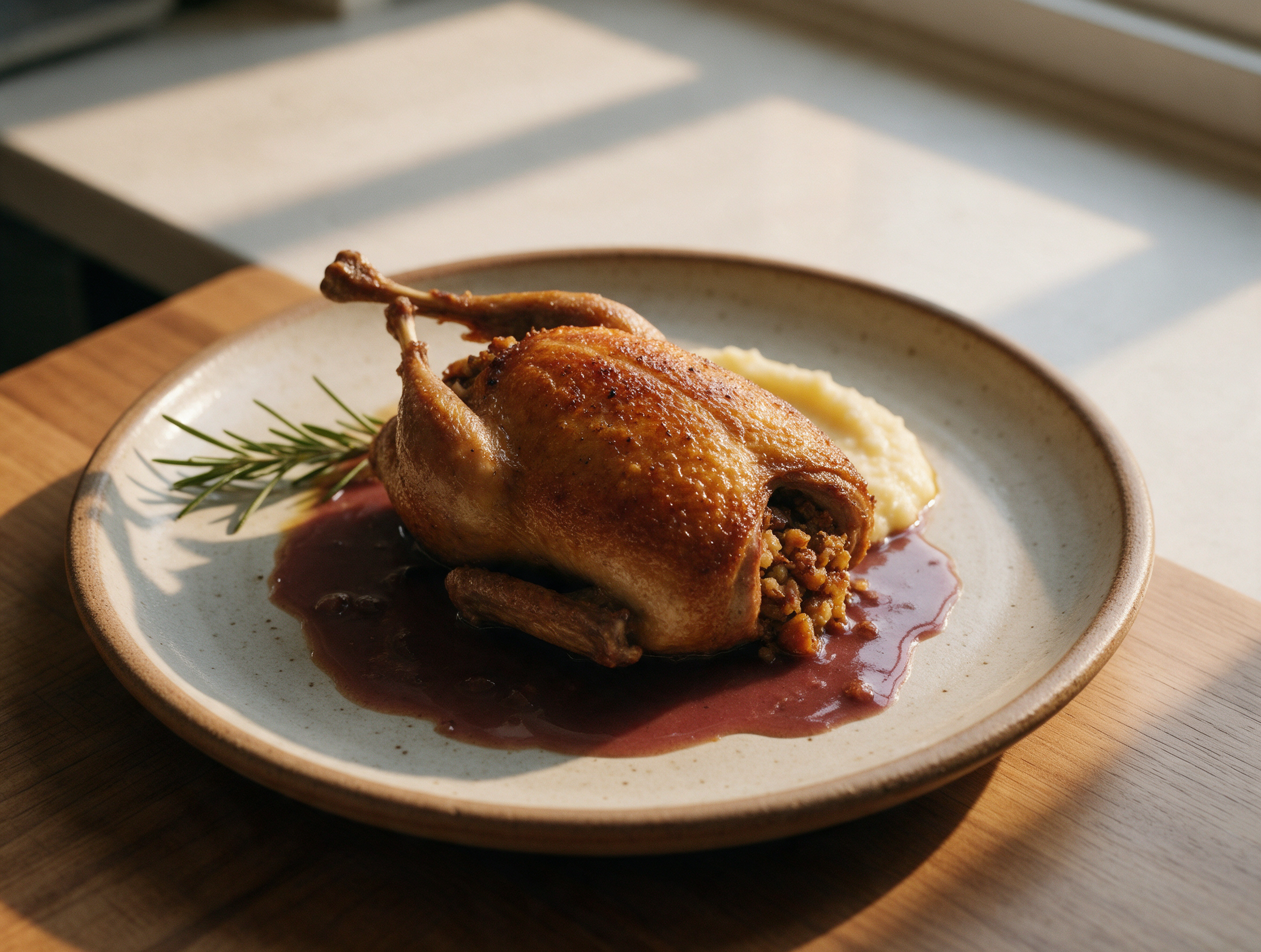
Piccione Ripieno: Stuffed Roast Pigeon with Sausage
Ingredients
Method
- Heat 1 tbsp olive oil in a 30 cm / 12-inch oven-safe skillet over medium heat. Add the pancetta and garlic and cook for 3 to 4 minutes until the pancetta renders and turns golden.
- Add the chopped chicken livers to the skillet and cook for 3 to 4 minutes until browned outside but still soft inside. Pour in the brandy, scrape up any browned bits, then remove from heat and cool for 10 minutes.
- In a mixing bowl, combine the sausage, breadcrumbs, egg, parmesan, sage, rosemary, 1 tsp salt and a good grind of pepper. Add the cooled liver mixture and mix with your hands until evenly combined.
- Heat the oven to 200 C / 392 F. Pat the pigeons completely dry inside and out, then season the cavities with salt and pepper.
- Divide the stuffing among the four cavities, packing it loosely since it expands as it cooks. Truss the legs closed with kitchen twine.
- Wipe out the skillet, add the remaining olive oil and 15 g butter over medium-high heat. Sear the pigeons on all sides, two birds at a time if the skillet feels crowded, 4 to 5 minutes per side, until the skin is deep golden.
- Return all four pigeons to the skillet, breast side up. Transfer the skillet to the oven and roast for 30 to 35 minutes, until an instant-read thermometer inserted into the center of the stuffing reads 165 F / 74 C and the thigh juices run clear.
- Transfer the pigeons to a plate, tent loosely with foil, and rest for 10 minutes. Remove the twine before serving.
- Set the same skillet over medium heat, pour in the white wine, and scrape up the browned bits. Simmer for 2 to 3 minutes until reduced by half.
- Add the stock and simmer for 5 to 6 minutes until slightly thickened and reduced to about 150 ml. Whisk in the remaining 15 g butter off the heat.
- Spoon the sauce over the pigeons and serve while warm.
Notes
- Reserve any giblets that come with the squab, they add flavor to the stuffing.
- Truss the legs snugly so the stuffing stays put during searing.
- Check stuffing temperature at the thickest point, not near the cavity opening.
- Use the same skillet for sauce, the browned bits carry most of the flavor.
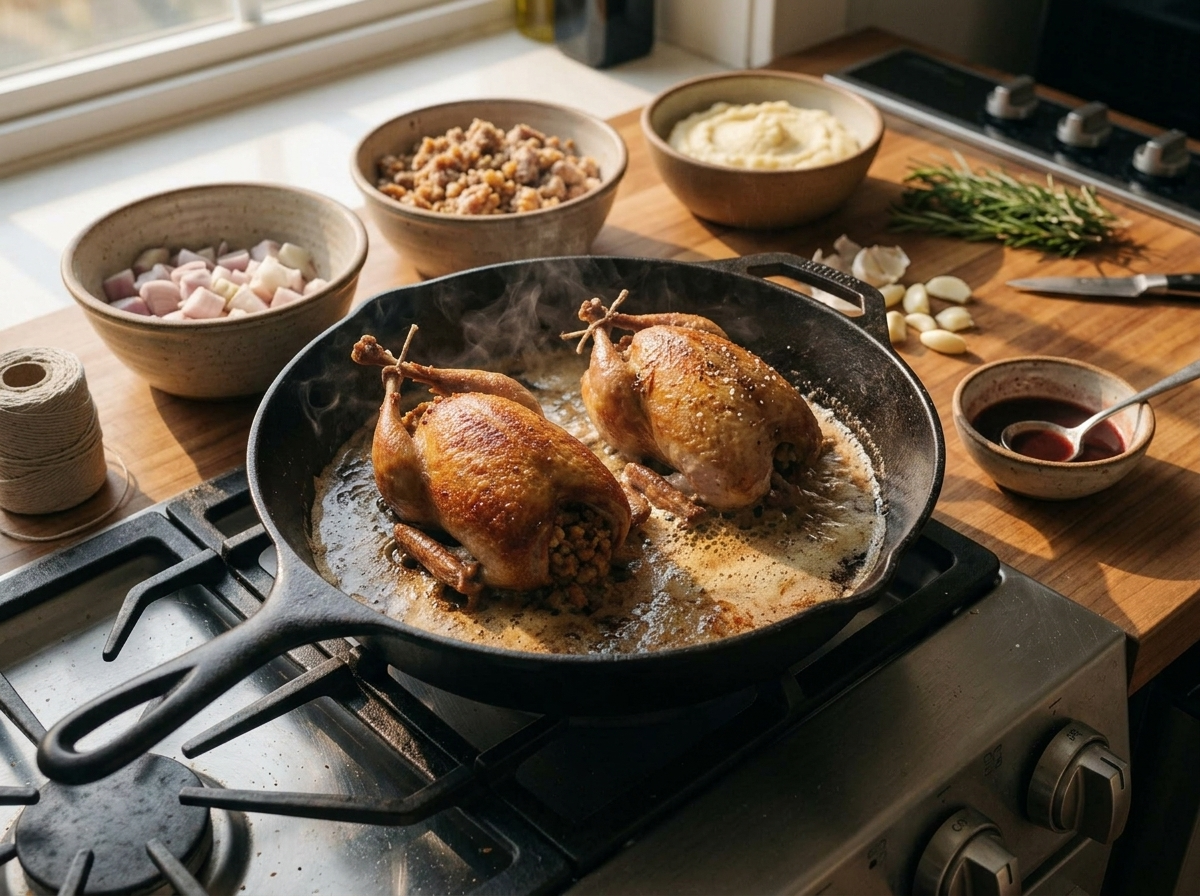
Tips for Success
- Pat the pigeons fully dry before searing so the skin browns instead of steaming.
- Pack the stuffing loosely, it swells slightly as it cooks and can split tight cavities.
- Sear two birds at a time if your skillet feels crowded, so the skin colors evenly.
- Check the stuffing temperature at the thickest part of the cavity, not just the thigh.
- Rest the birds 10 minutes before cutting the twine, the juices redistribute and the sauce won’t wash out.
Variations
- Swap the sausage for wild boar sausage if your butcher carries it, for a deeper, gamier stuffing flavor.
- Add 2 tbsp chopped dried porcini, soaked and drained, to the stuffing for an earthier base note.
- Finish the sauce with a spoon of chestnut puree in autumn for a sweeter, thicker pan sauce.
Storage and Reheating
Refrigerate leftover pigeon in an airtight container for 3 to 4 days. The skin won’t stay crisp, but the meat and stuffing hold their flavor well.
Reheat in a 180 C / 350 F oven, covered loosely with foil, for 10 to 12 minutes until warmed through at the center. A microwave works in a pinch but softens the skin further.
Cooked pigeon freezes well for up to 2 months. Thaw overnight in the fridge before reheating in the oven.
Serving Suggestions
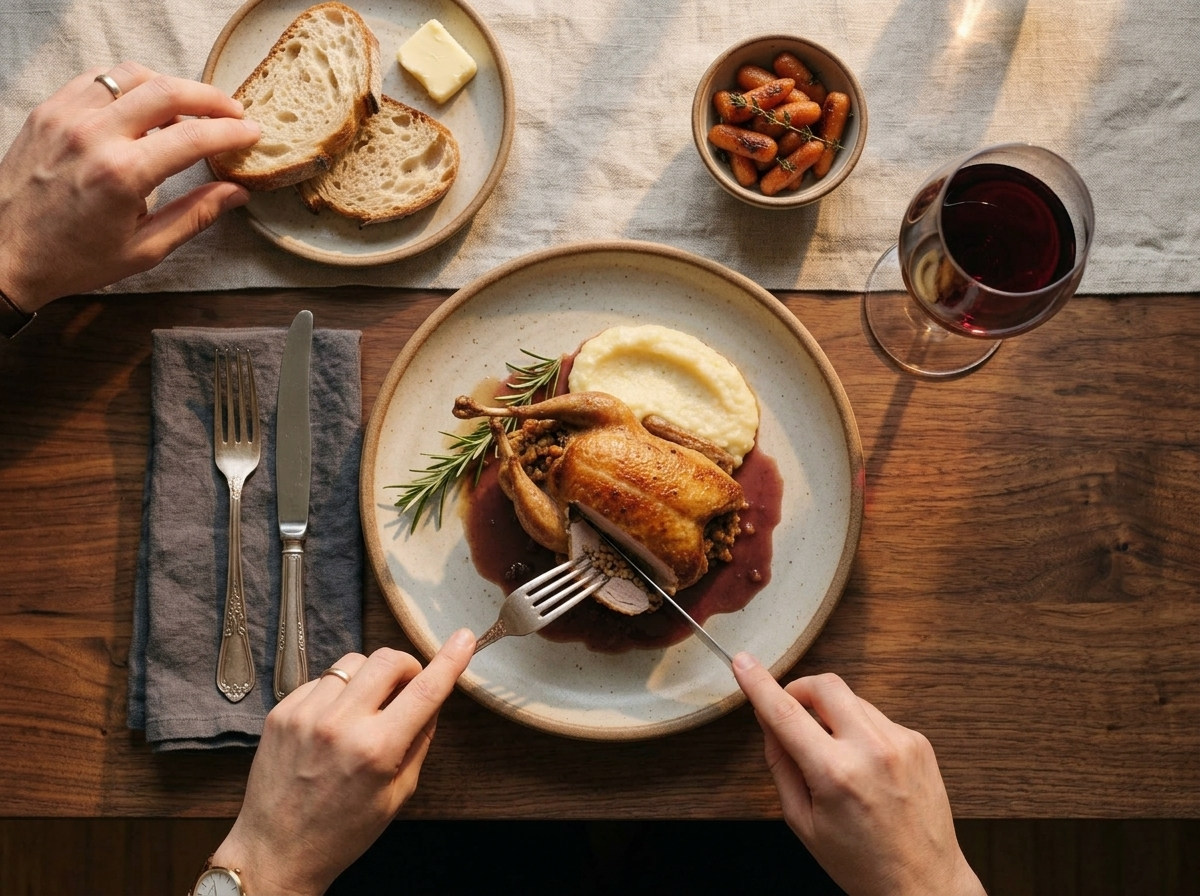
Soft polenta is the classic base here, it soaks up the pan sauce without competing with the stuffing. Braised radicchio with balsamic and parmesan or wilted chicory add a bitter edge that cuts the richness of the liver and pancetta.
For something lighter, a simple salad of bitter greens with a sharp vinaigrette resets the palate between bites.
Pour a dry Lambrusco or a young Barolo alongside. Both have enough acid to stand up to the sausage and Marsala without fighting the sauce.
FAQ
Why is the skin on my piccione ripieno soggy instead of crisp?
Soggy skin usually means the birds went into the pan wet or the skillet wasn’t hot enough before searing. Pat the pigeons completely dry inside and out, then sear over medium-high heat until deep golden before they ever touch the oven. A cold skillet steams the skin instead of crisping it.
Can I use chicken livers instead of the giblets that come with the pigeon?
Yes, chicken livers work well and that’s what this recipe calls for. Trim off any green-tinged spots, which turn bitter when cooked, and chop them small so they distribute evenly through the sausage and breadcrumb mixture.
Can I stuff the pigeons the night before I roast them?
You can make the stuffing up to a day ahead and keep it covered in the fridge, but stuff the cavities right before searing rather than storing pre-stuffed birds. This limits the time raw sausage and liver sit inside the cavity before cooking.
What sides pair well with piccione ripieno besides polenta?
Braised radicchio, wilted chicory or a simple bitter green salad all work well alongside the stuffing’s richness. Crisp-edged roasted pumpkin wedges also hold up next to the pan sauce. Avoid anything too sweet, it competes with the Marsala and sausage.
Is it a problem that the breast meat on piccione ripieno isn’t pink like typical squab?
No, that’s expected and correct here. Because the cavity holds raw sausage and liver, the whole bird roasts until the stuffing reaches 165 F / 74 C, which cooks the breast further than a plain seared squab served rare. The meat stays moist even at that temperature.
What’s the difference between piccione ripieno and quaglie ripiene (stuffed quail)?
Piccione ripieno uses squab, which is larger and fattier than quail, giving a richer stuffed bird with more pan sauce potential. Quaglie ripiene cook faster and hold less stuffing per bird, so the flavor balance leans lighter and quicker to the table.