Jump to Recipe
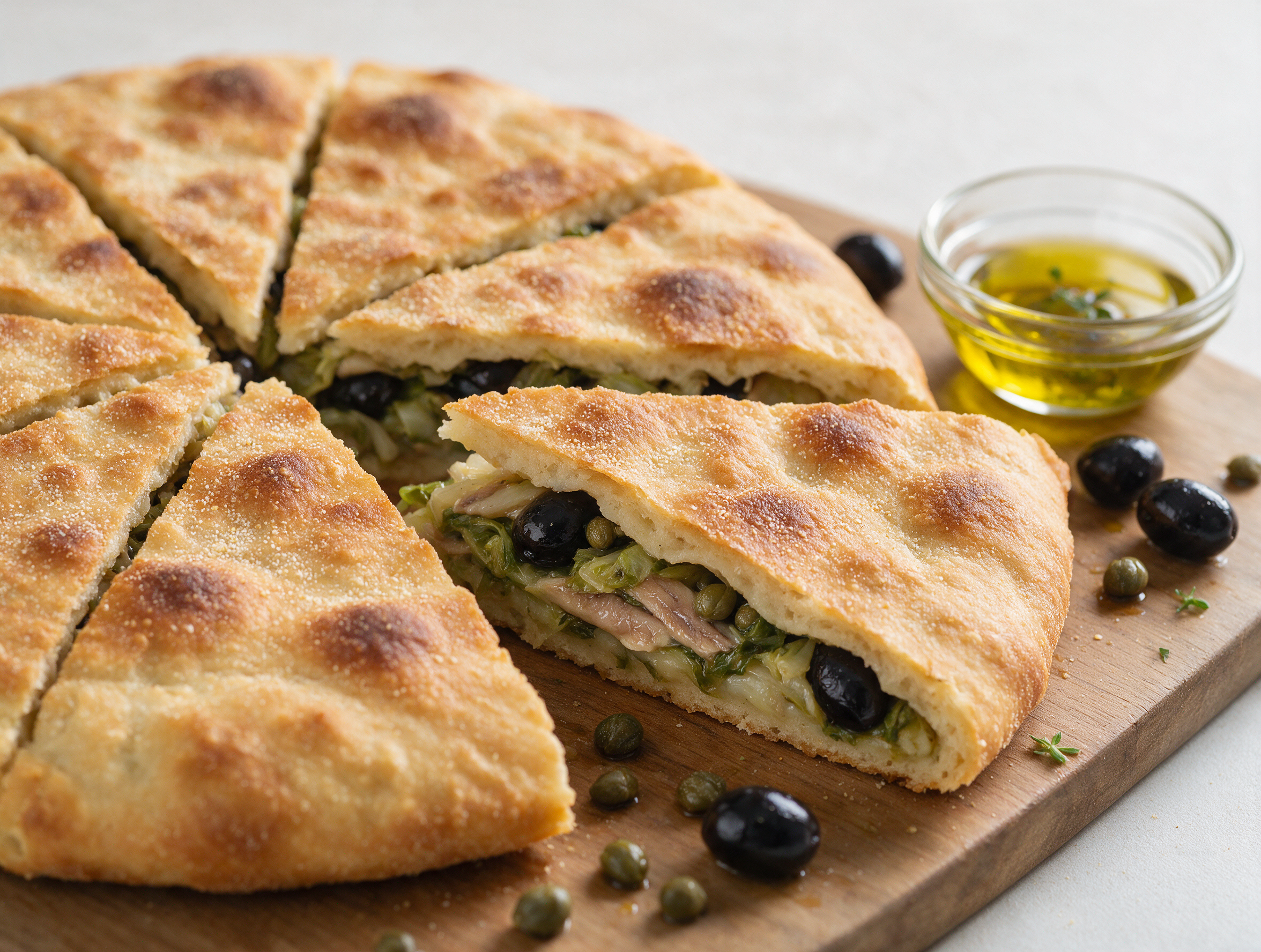
Cudduruni salentino is a double-crust baked focaccia from Puglia’s Salento peninsula, filled with braised scarola, black olives, capers and a few anchovy fillets, then sealed and baked until the crust turns deep gold. It sits closer to a savory pie than a topped focaccia, since the filling goes between two thin sheets of dough instead of on top.
I first ran into a version of this at a bakery counter in Lecce, sold by the slice, still warm from the oven. The dough uses a little semolina and mashed potato, which keeps the crumb soft even after it cools to room temperature.
The filling is straightforward. Wilt escarole with garlic and chili, then stir in olives, capers and chopped anchovies for salt and depth. Roll the dough thin, fill one half, fold the other over, seal the edges, brush with oil, and bake at 220 C / 425 F until the top is deep gold and sounds hollow when tapped.
One thing to watch: if the escarole is watery, drain it well before filling or the bottom crust turns soggy.
Why You’ll Love This Recipe
- Soft potato-semolina dough stays tender for days
- Scarola and olive filling needs no fancy ingredients
- Bakes on one sheet pan and slices like a pie
- Tastes just as good the next day, good for packed lunches
Ingredient Notes
- Durum wheat semolina (semola rimacinata): Gives the crust a slightly yellow color and a firmer bite. You can replace it with the same weight of bread flour if you don’t have it.
- Boiled potato: Keeps the dough soft after baking. Mash it while still warm so it blends smoothly into the flour.
- Escarole (scarola): A sturdy, slightly bitter leafy green. Curly endive or a mix of chard and spinach works if escarole isn’t around.
- Anchovy fillets: Melt into the filling and add salt and depth rather than a fishy taste. Leave them out for a vegetarian filling and add a little extra salt.
- Black olives: Use oil-cured or brine-cured pitted olives, halved. Avoid stuffed or pimento olives, which throw off the flavor.
Cudduruni Salentino: Stuffed Baked Focaccia
Ingredients
Method
- Boil the potato until tender, about 15 minutes, then mash it and let it cool to room temperature.
- Dissolve the yeast and sugar in the warm water and let it sit for 5 to 10 minutes until foamy on top.
- In a large mixing bowl, combine the flour, semolina and salt. Add the mashed potato, yeast mixture and 2 tablespoons olive oil.
- Knead by hand or in a stand mixer for 8 to 10 minutes until you have a smooth, elastic dough.
- Shape the dough into a ball, place it in an oiled bowl, cover and let it rise for 90 minutes, until roughly doubled.
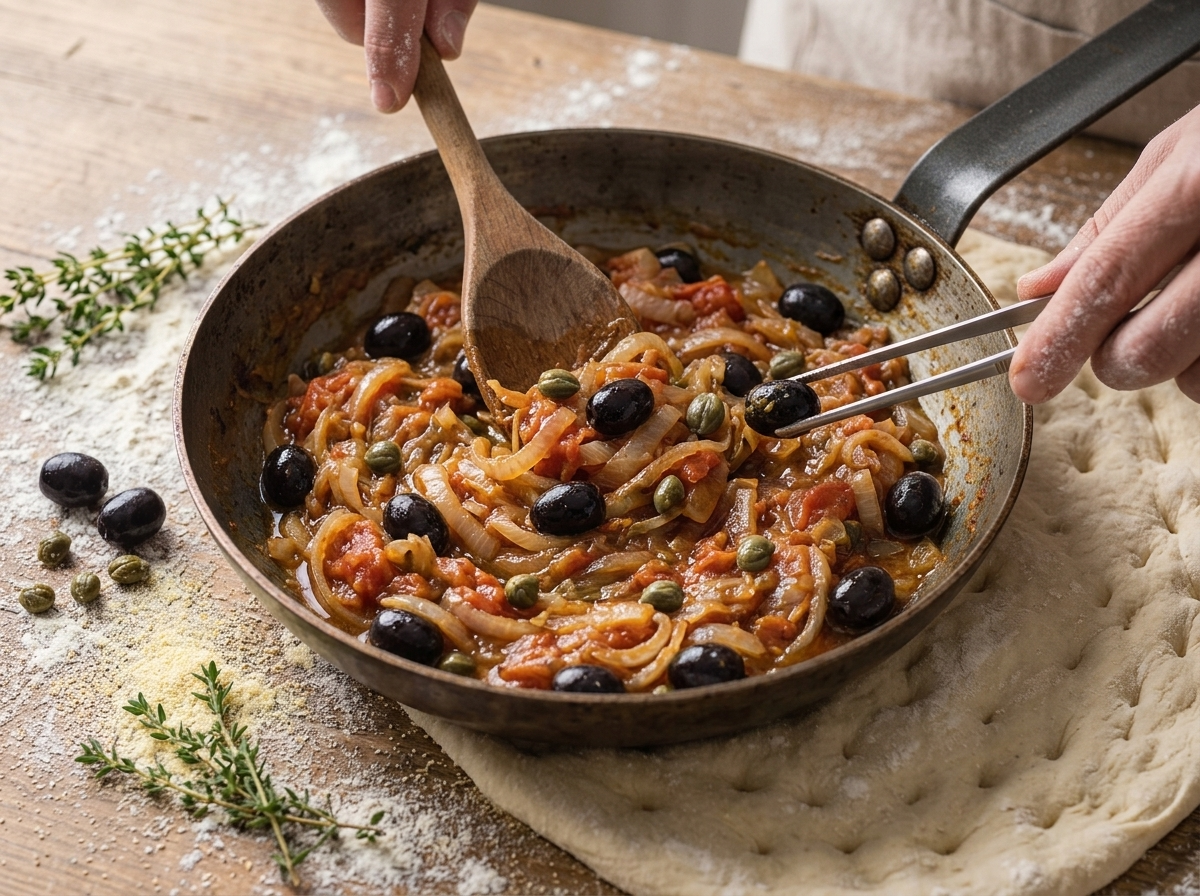
- While the dough rises, heat 2 tablespoons olive oil in a 12-inch skillet over medium heat. Add the garlic and chili flakes and cook for 30 seconds until fragrant.
- Add the escarole in batches, stirring until each batch wilts down before adding more. Cook for 8 to 10 minutes until soft and most of the liquid has cooked off.
- Stir in the olives, capers, anchovies and black pepper. Cook for 2 more minutes, then transfer everything to a colander and press out any extra liquid. Let the filling cool completely.
- Heat the oven to 220 C / 425 F and line a sheet pan 33 x 46 cm / 13 x 18 inch with parchment.
- Divide the dough into two pieces, one slightly larger for the bottom. Roll the larger piece to about 4 mm thick and fit it into the pan.
- Spread the cooled filling evenly over the dough, leaving a 2 cm border uncovered around the edge.
- Roll the second piece of dough to the same thickness and lay it over the filling. Pinch and crimp the edges firmly to seal.
- Brush the top with the remaining tablespoon of olive oil and pierce a few small steam vents with the tip of a knife.
- Bake for 25 to 30 minutes until the top is deep golden and sounds hollow when tapped.
- Cool on the pan for 10 minutes before slicing into 8 wedges. Serve warm or at room temperature.
Notes
- Boil and mash the potato ahead so it cools before going into the dough.
- Cook the filling until most of the liquid evaporates, not just wilted.
- Seal the edges firmly with a fork before the first proof of the top crust.
- Use a light hand with salt in the filling since anchovies and capers are salty already.
Tips for Success
- Drain the wilted escarole in a colander for 10 minutes before filling, or the bottom crust turns soggy.
- Roll both dough disks to the same thickness, about 4 mm, so the crust bakes evenly all the way through.
- Rinse the capers under cold water before adding them, since the filling already gets plenty of salt from the anchovies.
- Crimp the edges tightly with a fork or your fingers, because a loose seal lets filling juices leak out while baking.
- Let the focaccia rest for 10 minutes on the pan before slicing, so the filling sets and doesn’t spill out.
Variations
- Swap escarole for a mix of chard and wild greens, a common combination in home versions across Salento.
- Leave out the anchovies and add extra capers plus a pinch of salt for a vegetarian filling.
- Add a handful of halved cherry tomatoes to the filling for a sweeter, juicier bite in every slice.
Storage and Reheating
Cudduruni salentino keeps for 3 to 4 days in an airtight container in the fridge once it’s cooled to room temperature. Slice it before storing so you can reheat only what you need.
Reheat slices in a 180 C / 350 F oven for 10 to 12 minutes until the crust crisps back up and the filling is warm through. Skip the microwave, since it leaves the dough gummy instead of crisp.
You can also freeze it unbaked. Assemble the sealed focaccia, wrap it well, and freeze for up to 2 months. Bake straight from frozen at 220 C / 425 F, adding 10 to 12 minutes to the baking time.
Serving Suggestions
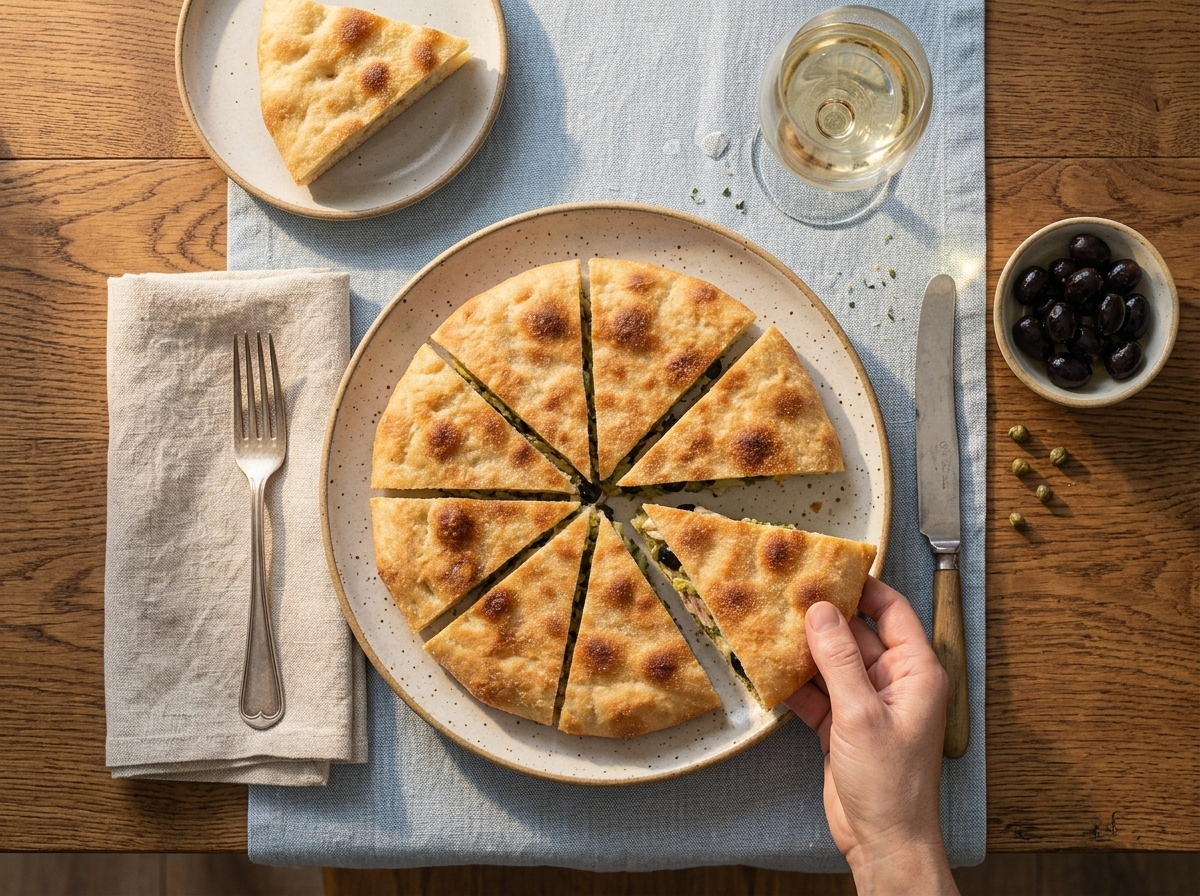
Cut cudduruni salentino into wedges and serve it warm or at room temperature, the way it’s sold from bakery counters in Lecce. A simple green salad with lemon and olive oil balances the salty filling well.
A glass of dry white wine from Puglia, like Verdeca or Fiano, works with the anchovy and olive filling without fighting it.
It also travels well cold, so pack a wedge for a picnic or a lunchbox alongside some fresh tomatoes and a piece of fruit.
FAQ
How do I know when cudduruni salentino is fully baked?
The crust should be deep golden brown on top and sound hollow when you tap it, usually after 25 to 30 minutes at 220 C / 425 F. If the top browns fast but the center still feels soft when pressed, tent it loosely with foil and give it a few more minutes.
Can I use spinach instead of escarole in cudduruni salentino?
Yes, spinach works, though the filling will taste milder and softer since escarole has more bite. Squeeze the cooked spinach very well before mixing it with the olives and capers, since it releases more liquid than escarole and can make the bottom crust soggy.
Can I freeze cudduruni salentino before baking?
Yes, assemble the sealed, unbaked focaccia and freeze it wrapped tightly for up to 2 months. Bake it straight from frozen at 220 C / 425 F, adding about 10 to 12 minutes to the baking time listed for the fresh version.
What pairs well with cudduruni salentino for a Puglian-style lunch?
A simple green salad and a glass of dry white wine like Verdeca or Fiano both work with the salty olive and anchovy filling. Sliced tomatoes with olive oil on the side round it out for a light lunch without much extra cooking.
Is cudduruni salentino vegetarian?
No, the traditional filling includes anchovy fillets along with the escarole, olives and capers. Leave the anchovies out and add a pinch more salt to the filling for a vegetarian version that still tastes balanced.
What’s the difference between cudduruni salentino and a Sicilian cudduruni?
Cudduruni salentino is a sealed, double-crust focaccia with the filling baked inside, while the Sicilian version from Enna is an open, deep-dish focaccia topped with potatoes, tomatoes and anchovies rather than folded shut. Both are regional but use dough and toppings differently.