
Jump to Recipe
Busiate al pesto trapanese is a raw pesto from Trapani, on the western tip of Sicily, made by pounding ripe tomatoes, almonds, garlic and basil together instead of cooking them into a sauce. The pasta itself is busiate, a short spiral hand-rolled around a thin rod, and its ridges hold onto the coarse pesto in a way flatter shapes can’t.
The texture, not the tomatoes, sets this apart from a Genovese pesto. Almonds replace pine nuts and give the sauce more body, while the tomatoes add water and acidity instead of relying on cheese and oil alone.
If you can’t find busiate, fusilli lunga or trofie do a fair job of grabbing the sauce. Cutting corners in the food processor is the one place this recipe tends to go wrong: pulse too long and you get tomato soup instead of a chunky pesto.
Why You’ll Love This Recipe
- Comes together in about 30 minutes start to finish
- No stove needed for the sauce, just a food processor
- Almonds give the pesto more body than a classic Genovese
- Works with pantry staples plus one trip for ripe tomatoes
Ingredient Notes
- Busiate pasta: Traditional Trapani shape, hand-rolled around a thin rod. Fusilli lunga or trofie are good substitutes if you can’t find it.
- Cherry tomatoes: Use the ripest, sweetest tomatoes you can find since they’re not cooked. Off-season, well-drained canned San Marzano works in a pinch.
- Blanched almonds: Skin-on raw almonds work too, just toast them a minute longer for a slightly darker, more rustic pesto.
- Pecorino Siciliano: Pecorino Romano or a young caciocavallo are both fine stand-ins if Pecorino Siciliano isn’t available.
- Fresh basil: Pick leaves right before using, they bruise and darken quickly once cut.
- Extra virgin olive oil: Use a fruity, assertive oil since it’s a main flavor here, not just a cooking fat.
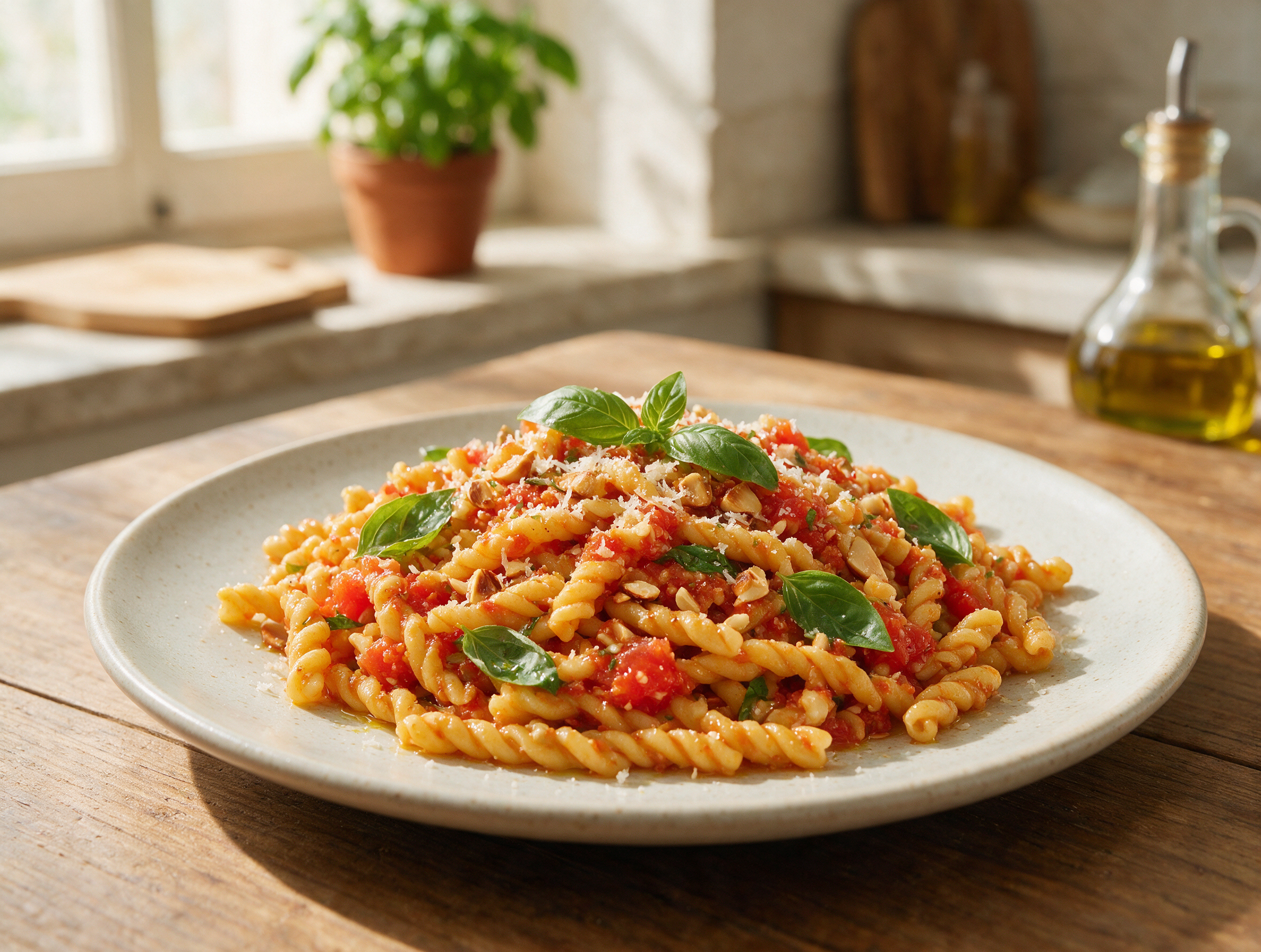
Sicilian Busiate al Pesto Trapanese with Fresh Almonds
Ingredients
Method
- Toast the almonds in a 20 cm / 8-inch skillet over medium heat for 3 to 4 minutes, shaking the pan often, until golden and fragrant. Tip onto a plate to cool.
- Bring a small pot of water to a boil, score an X on the base of each tomato, and blanch for 30 seconds. Transfer to a bowl of ice water, then peel off the skins.
- In a food processor, pulse the garlic and cooled almonds until coarsely chopped, about 8 to 10 short pulses.
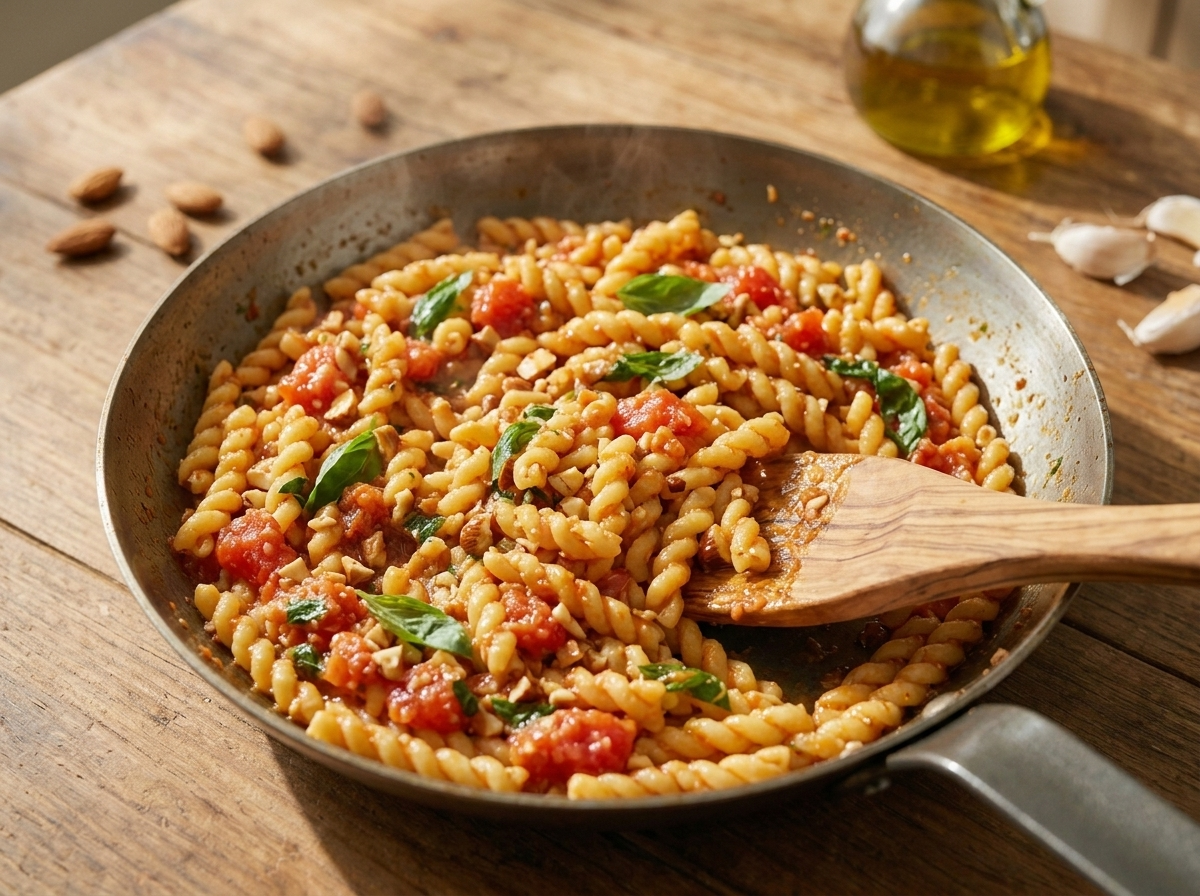
- Add the peeled tomatoes, basil, and salt. Pulse in short bursts, 5 to 6 times, until you have a chunky, wet paste, not a smooth puree, stopping while you can still see small pieces of tomato and almond.
- Scrape the pesto into a large mixing bowl. Stir in the olive oil, grated pecorino, and chili flakes by hand. Taste and adjust salt.
- Bring a 6-quart / 5.5 L stockpot of water to a rolling boil and add the coarse salt. Add the busiate and cook according to the package, about 10 to 12 minutes, until al dente.
- Just before draining, scoop out and reserve at least 1 cup / 240 ml of the pasta water.
- Drain the busiate and add it directly to the bowl with the pesto trapanese, off the heat.
- Toss well, adding a splash of the reserved pasta water at a time, until the sauce coats the pasta in a loose, glossy layer.
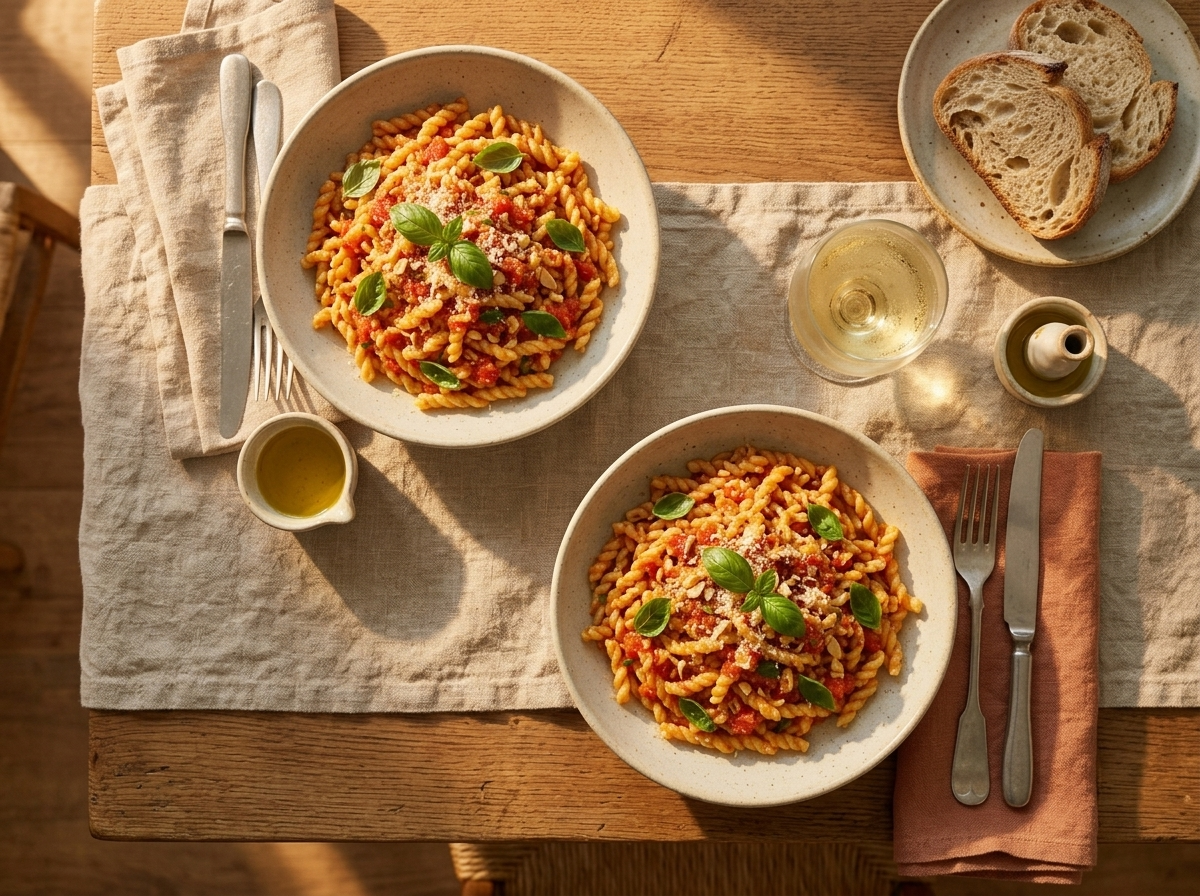
- Divide among bowls, top with extra grated pecorino, a few torn basil leaves, and a drizzle of olive oil. Serve right away.
Notes
- Peel the tomatoes after blanching for a smoother, less watery pesto.
- Pulse the pesto in short bursts, never blend it smooth.
- Toast almonds just until golden, they burn fast after that.
- Toss pesto with pasta off the heat to keep the garlic and basil raw.
- Reserve pasta water before draining, you'll need it to loosen the sauce.
Tips for Success
- Toast the almonds in a dry skillet until golden, about 3 to 4 minutes, since raw almonds taste chalky in the pesto.
- Pulse the pesto in short bursts so tomatoes, almonds and basil stay coarse instead of turning into a smooth puree.
- Peel the tomatoes after a 30-second blanch for a smoother, less watery pesto that clings to the pasta.
- Reserve at least 1 cup of pasta water before draining, you’ll need it to loosen the raw sauce.
- Toss the hot busiate with pesto off the heat so the garlic and basil stay raw and vivid.
Variations
- Swap almonds for walnuts or pistachios for a different fat and color, pistachios give the pesto a green tint.
- Roast half the tomatoes at 200 C / 390 F for 20 minutes and blend them in for a deeper, sweeter base.
- Skip the pecorino and stir in 1 tbsp nutritional yeast plus extra salt for a dairy-free version.
Storage and Reheating
Store leftover busiate al pesto trapanese in an airtight container in the fridge for 2 to 3 days. The raw garlic gets sharper and the basil darkens a bit, but the pasta still tastes good cold as a pasta salad or warmed through.
To reheat, warm it gently in a 20 cm / 8-inch skillet over low heat with a splash of water or olive oil, tossing for 2 to 3 minutes just to take the chill off. Don’t crank the heat, high heat cooks the raw garlic and dulls the basil.
Freezing isn’t a good option here. The raw tomato pesto separates and turns watery once thawed, and the basil loses its color, so make a fresh batch instead if you want to plan ahead.
Serving Suggestions
Busiate al pesto trapanese works as a full meal with a simple green salad and crusty bread on the side. In Trapani, cooks often serve it alongside grilled swordfish or tuna, since the same coastal tomatoes and almonds show up in other local dishes.
Pour a chilled glass of Grillo or Catarratto, both Sicilian whites with enough acidity to stand up to the raw garlic and pecorino. For a bigger spread, add a plate of caponata or marinated olives before the pasta comes out.
FAQ
Why is my pesto trapanese watery instead of thick and coarse?
Watery pesto usually means the tomatoes weren’t peeled or you over-processed them into pure juice. Peeling the tomatoes after a quick blanch removes the loose skin and some surface water, and pulsing in short bursts keeps the pesto chunky instead of liquid. If it’s still thin, stir in a little more grated pecorino, the same cheese that thickens silky spaghetti cacio e pepe, to thicken it.
Can I use fusilli or another pasta shape instead of busiate?
Yes, fusilli lunghi or trofie both work well since their ridges and twists grab the chunky pesto the same way busiate’s spiral does. Busiate is the traditional Trapani shape, hand-rolled around a thin rod, but any short or long twisted pasta holds this raw sauce. Avoid smooth shapes like spaghetti, since the pesto slides off.
Can I make the pesto trapanese ahead of time?
You can make the pesto up to 2 days ahead if you store it in an airtight container with a thin layer of olive oil on top to stop the basil and garlic from browning. Keep it in the fridge and let it sit at room temperature for 15 minutes before tossing with hot pasta. Toss with pasta only right before serving.
What goes well with busiate al pesto trapanese for a full Sicilian meal?
Grilled swordfish or tuna, like this Sicilian braised swordfish with olives and capers, is the classic Trapani pairing, since the region built this pesto around what grows near the coast. A simple arugula salad with lemon, or a plate of caponata, rounds out the meal without competing with the raw tomato flavor. Crusty bread and a chilled glass of Grillo work too.
Is busiate al pesto trapanese gluten free?
Not as written, since busiate is made from durum wheat semolina and the dish isn’t gluten free. Swap in a gluten-free corn or rice fusilli, which holds a similar twisted shape and texture, and the raw almond-tomato pesto itself is naturally gluten free. Double check your pecorino, some aged cheeses share processing lines.
How do I know when the almonds are toasted enough for the pesto?
The almonds are ready when they turn pale gold and smell nutty, which takes about 3 to 4 minutes in a dry skillet over medium heat. Shake the pan often since they go from golden to burnt quickly once they start coloring. Pull them off the heat right away and spread them on a plate.