Jump to Recipe
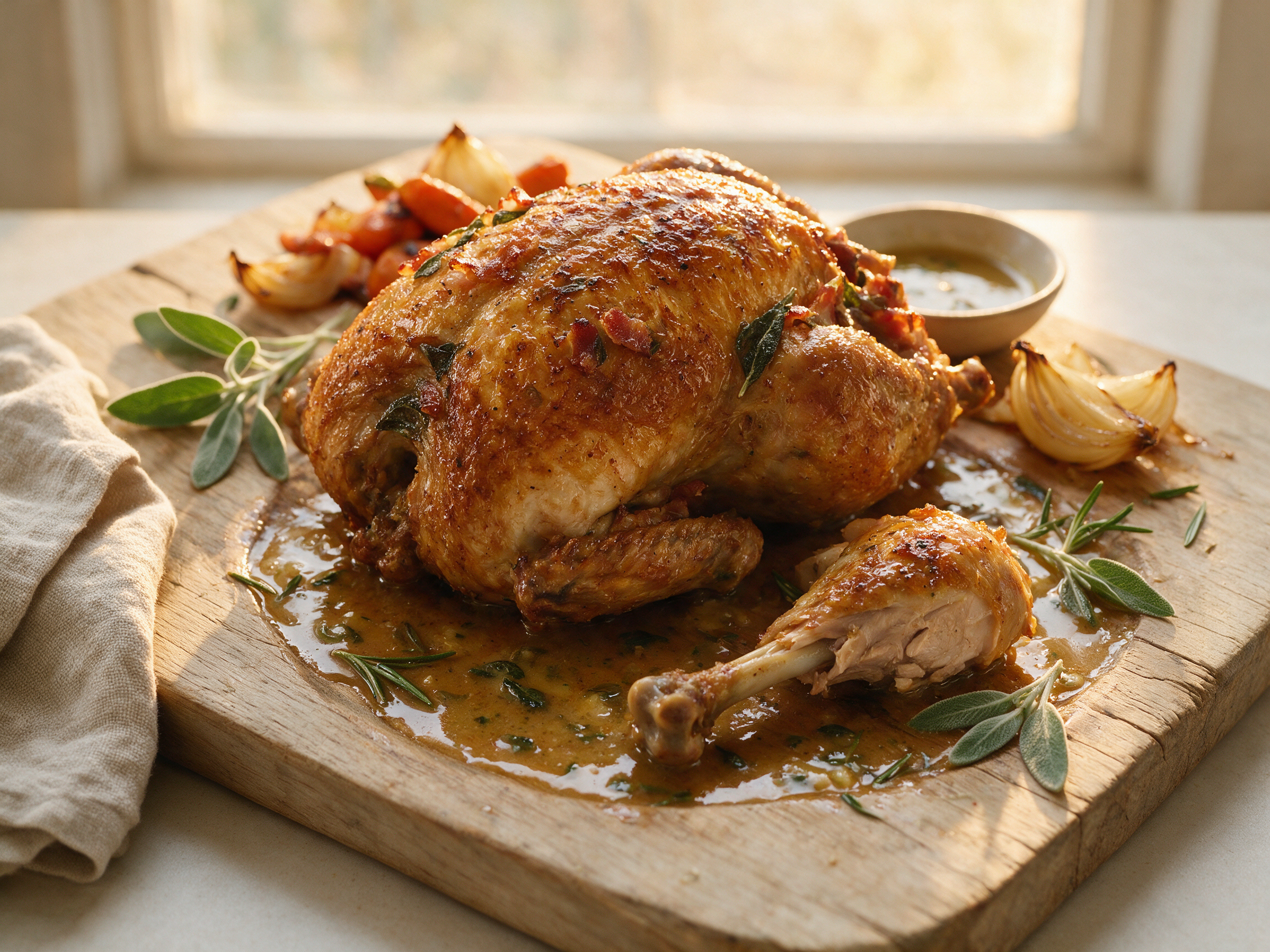
Faraona arrosto is a whole guinea fowl roasted with a pancetta and sage butter tucked under the skin, then finished with a white wine pan sauce. It’s a dish you’ll find on Italian farmhouse tables for Sunday lunch, standing in for the usual roast chicken.
Guinea fowl has leaner, slightly gamier meat than chicken, closer to pheasant. That leanness is also its weak spot: skip the butter under the skin, or roast past 165F/74C, and the breast turns dry and stringy fast. Basting through the second half of cooking is what keeps it from happening.
I roast the bird on a bed of carrot, celery, and onion so the vegetables catch the fat and give the pan sauce a head start. The skin comes out deep golden, almost crackling in spots.
This works for a weekend dinner or a low-key holiday main, and it scales up easily if you need to roast two birds side by side for a bigger table.
Why You’ll Love This Recipe
- Pancetta butter under the skin keeps the lean breast juicy
- One pan roasts the bird and builds the sauce base
- Skin turns deep golden without extra fuss
- Leftover carcass makes a good stock
Ingredient Notes
- guinea fowl: Look for one around 1.3 kg / 3 lb. If your butcher doesn’t carry it, a whole chicken of the same weight is the closest substitute.
- pancetta: Diced pancetta melts into the butter as it roasts. Bacon works in a pinch, though it’s smokier.
- butter: Use it softened so it blends easily with the pancetta and herbs. Melted butter won’t hold under the skin.
- sage: Fresh sage holds up better to the long roast than dried. Use half the amount if you’re substituting dried.
- white wine: A dry white like Pinot Grigio or Vermentino works well. Dry vermouth is a fine substitute if that’s what’s open.
- chicken stock: Use a low-sodium stock so you can control the seasoning of the pan sauce at the end.
Faraona Arrosto: Roast Guinea Fowl with Pancetta and Sage
Ingredients
Method
- Take the guinea fowl out of the fridge 30 minutes before cooking so it roasts evenly. Pat the skin completely dry with paper towels.
- Heat the oven to 200C/400F. Chop the pancetta and sage finely, then mash together with the softened butter, half the crushed garlic, and a pinch of salt and pepper to make a compound butter.
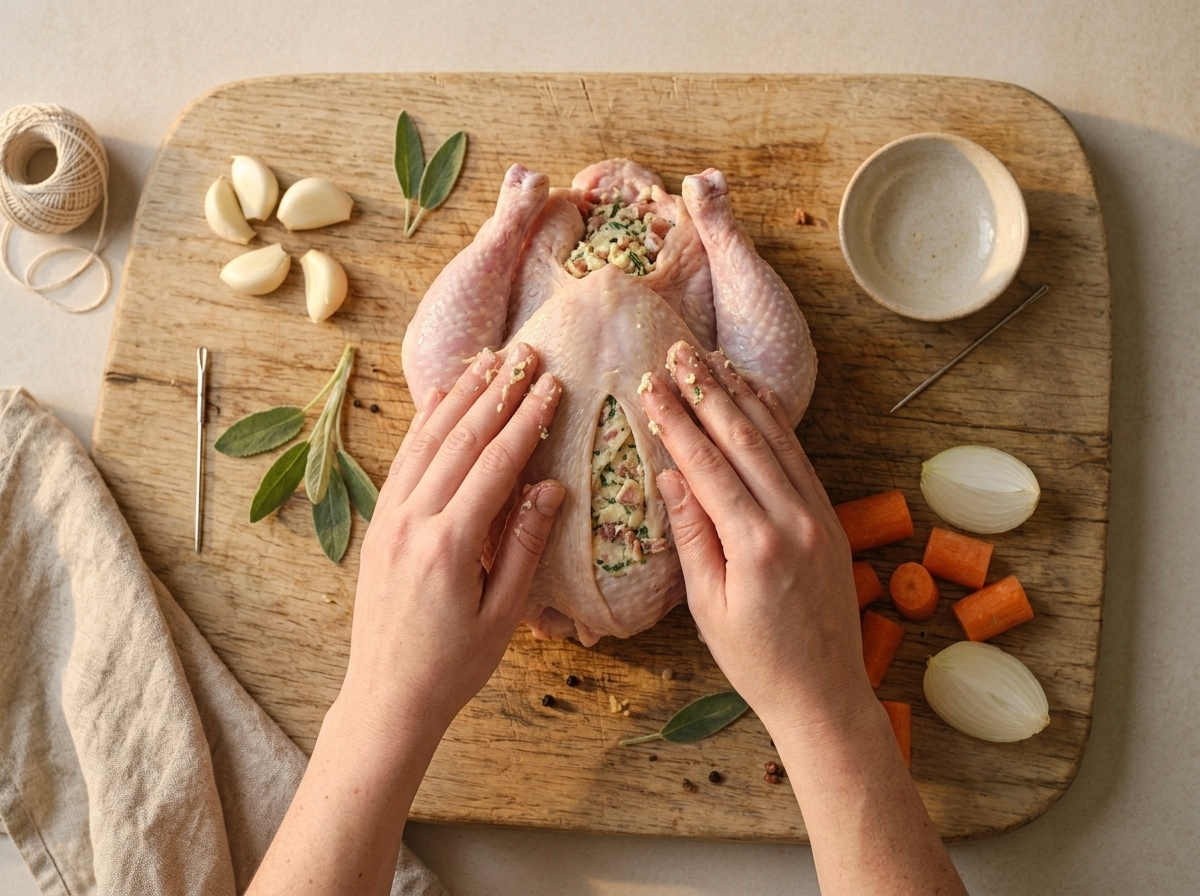
- Loosen the skin over the breast and thighs with your fingers, then push the pancetta butter underneath, spreading it evenly. Rub any leftover butter over the outside skin.
- Season the cavity with salt, then stuff with the lemon halves, remaining garlic, and rosemary sprigs. Tie the legs together with kitchen twine.
- Scatter the onion, carrots, and celery in the base of a 30 x 23 cm / 12 x 9-inch roasting pan, drizzle with olive oil, and set the guinea fowl on top, breast side up.
- Roast at 200C/400F for 20 minutes to color the skin, then lower the oven to 180C/355F and continue roasting for 50 to 60 minutes, basting with pan juices every 20 minutes.
- Check doneness with an instant-read thermometer inserted into the thickest part of the thigh, it should read 165F/74C, and the juices should run clear, not pink.
- Transfer the guinea fowl to a board, tent loosely with foil, and rest for 10 minutes before carving.
- Meanwhile, pour off excess fat from the roasting pan, set it over medium heat on the stovetop, and pour in the white wine, scraping up the browned bits.
- Simmer the wine for 2 to 3 minutes until reduced by half, then add the chicken stock and simmer for another 5 minutes until slightly thickened. Strain into a small saucepan and season to taste.
- Carve the guinea fowl into portions and spoon the pan sauce over the top before serving.
Notes
- Loosen the skin with your fingers, not a knife, to keep it intact.
- Baste every 20 minutes once the oven drops to 180C/355F.
- Rest the bird 10 minutes before carving for juicier meat.
- Save the carcass for a quick stock with the leftover roasting vegetables.
Tips for Success
- Pat the skin bone-dry before roasting so it crisps instead of steaming in the oven.
- Loosen the skin gently with your fingers, not a knife, so it doesn’t tear before the butter goes underneath.
- Baste every 20 minutes once the oven drops to 180C/355F to keep the lean breast from drying out.
- Rest the bird for a full 10 minutes before carving so the juices settle back into the meat.
- Deglaze the roasting pan while it’s still hot for a faster, more flavorful pan sauce.
Variations
- Swap pancetta for guanciale for a richer, more peppery flavor under the skin.
- Add whole peeled shallots and chestnuts to the pan in the last 30 minutes for a fall dinner.
- Replace the white wine with dry vermouth for a slightly herbal, more aromatic pan sauce.
Storage and Reheating
Store leftover faraona arrosto in an airtight container in the fridge for 3 to 4 days. Slice the meat before storing so it reheats more evenly.
Reheat portions in a 160C/320F oven, loosely covered with foil, for 10 to 15 minutes until warmed through to 165F/74C. Skip the microwave if you want the skin to stay decent, it turns rubbery fast under that heat.
You can freeze the cooked meat and sauce separately for up to 2 months. Thaw overnight in the fridge before reheating.
Serving Suggestions
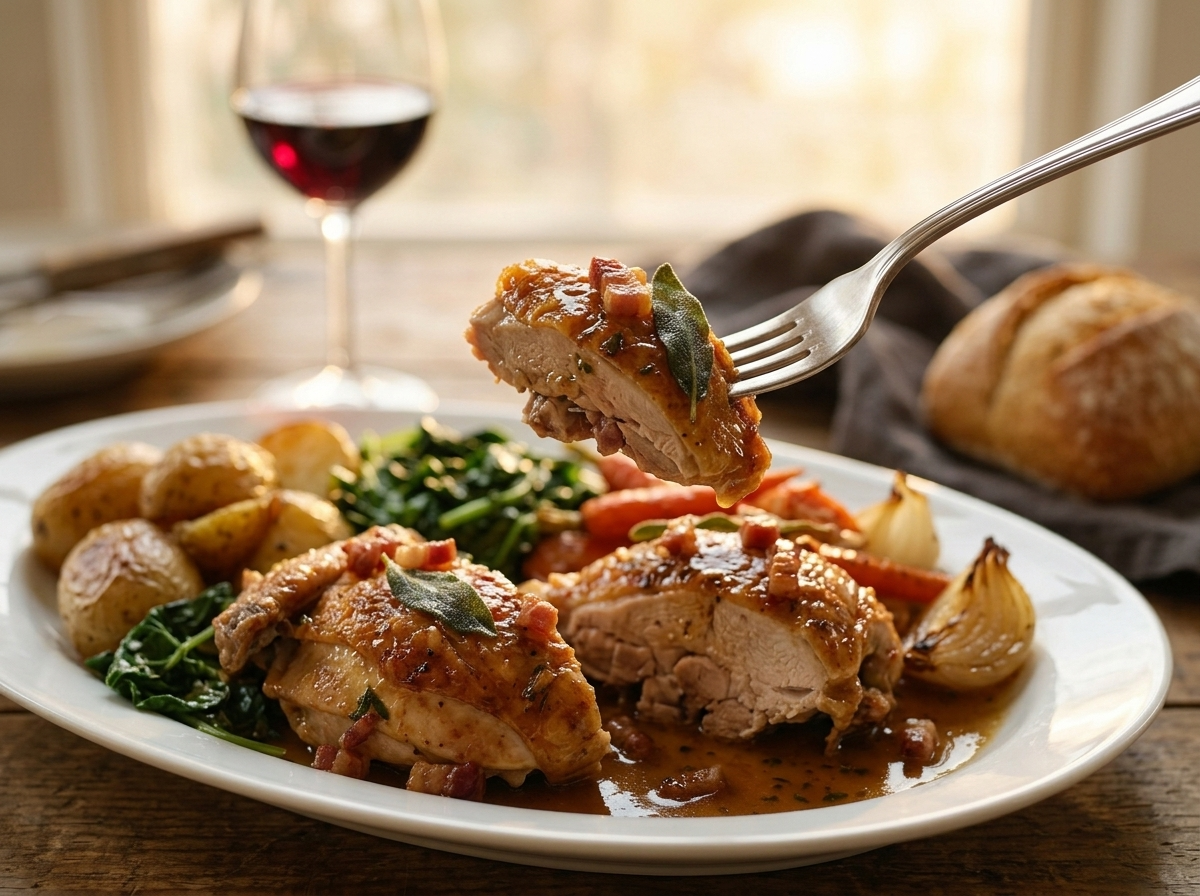
Roasted potatoes cooked in the same pan drippings are the obvious side, since they pick up the pancetta flavor. A soft polenta or wilted greens like chard work too if you want something lighter.
Spoon the pan sauce over the carved meat at the table rather than in the kitchen, it looks better and keeps the skin from getting soggy underneath.
A glass of Chianti or another light Italian red cuts through the richness of the pancetta butter. Crusty bread is good for mopping up whatever sauce is left on the plate.
FAQ
Why is my faraona arrosto skin not crisping up?
Wet skin is the usual cause. Pat the guinea fowl completely dry with paper towels before rubbing on the pancetta butter, and don’t cover the pan while roasting. Starting at a high 200C/400F for the first 20 minutes also helps render the fat and color the skin before you drop the oven to 180C/355F.
Can I use chicken instead of guinea fowl for this roast?
Yes, a whole chicken of similar weight, like a crispy galletto al mattone, works, though the flavor will be milder and less gamey. Chicken also carries more fat under the skin, so baste it less often and check it a few minutes earlier. Roast to the same 165F/74C in the thigh either way.
Can I make the pancetta butter ahead for faraona arrosto?
Yes, mix the pancetta, sage, and butter up to 2 days ahead and keep it covered in the fridge, or freeze it for up to a month. Let it soften at room temperature for 15 minutes before pushing it under the skin so it spreads without tearing.
What sides go well with roast guinea fowl?
Roasted potatoes cooked in the same pan drippings, a simple polenta, or wilted greens like chard or spinach all work. Crusty bread is good for the pan sauce, and a light Italian red like Chianti balances the richness of the pancetta butter.
Is faraona arrosto gluten free?
Yes, faraona arrosto is naturally gluten free since it’s just guinea fowl, pancetta, butter, wine, and vegetables. Double check your chicken stock label if you use a store-bought one, since some brands add wheat-based thickeners or flavor bases.
What’s the difference between faraona and regular chicken?
Faraona, or guinea fowl, has darker, leaner meat with a flavor closer to pheasant than to chicken. It cooks a bit faster because there’s less fat under the skin, which is why the pancetta butter under the skin matters here to keep the breast from drying out.