
Jump to Recipe
Risotto al nero di seppia is a Venetian rice dish where cuttlefish and squid ink turn the grains a deep, glossy black while the seafood cooks right into the sauce. The color looks dramatic on the plate, but the flavor is closer to a clean, briny broth than anything fishy or bitter.
I learned the technique from a cook in Venice who insisted on cuttlefish over squid because it holds its shape better through a long simmer. Squid works fine too, and I’ll note where the swap changes the timing.
The method is standard risotto: soffritto, wine, hot stock added a ladle at a time, stirred until the rice is al dente and the whole pot moves slowly when you tilt the pan. The ink goes in once the stock is already simmering, not at the very start.
One thing to watch: add the ink too early or let the pot boil hard, and the sauce turns gray and gritty instead of glossy black. Keep the heat gentle and the color takes care of itself.
Why You’ll Love This Recipe
- One pot, one technique, striking black color on the plate
- Cuttlefish stays firm instead of turning rubbery
- Fish stock and squid ink build deep flavor without heavy cream
- Good for a dinner party since the whole dish comes together in under an hour
Ingredient Notes
- cuttlefish: Buy it already cleaned from a fishmonger. Squid works as a substitute but cooks faster and turns rubbery if oversauteed.
- squid ink: Sold in small sachets near the fresh fish counter or online. Fresh ink sacs work too, but the amount varies too much for consistent color.
- carnaroli rice: Holds a firmer bite than arborio through a 18 to 20 minute simmer. Arborio is a fine substitute if that’s what you can find.
- fish stock: Use a light, clean stock, not a heavy shellfish bisque. Homemade or a good store-bought version both work.
- dry white wine: A crisp, unoaked white like Pinot Grigio or Vermentino deglazes the pan without adding sweetness.
- butter: Added cold at the end for the mantecatura, this is what makes the risotto glossy rather than dry.
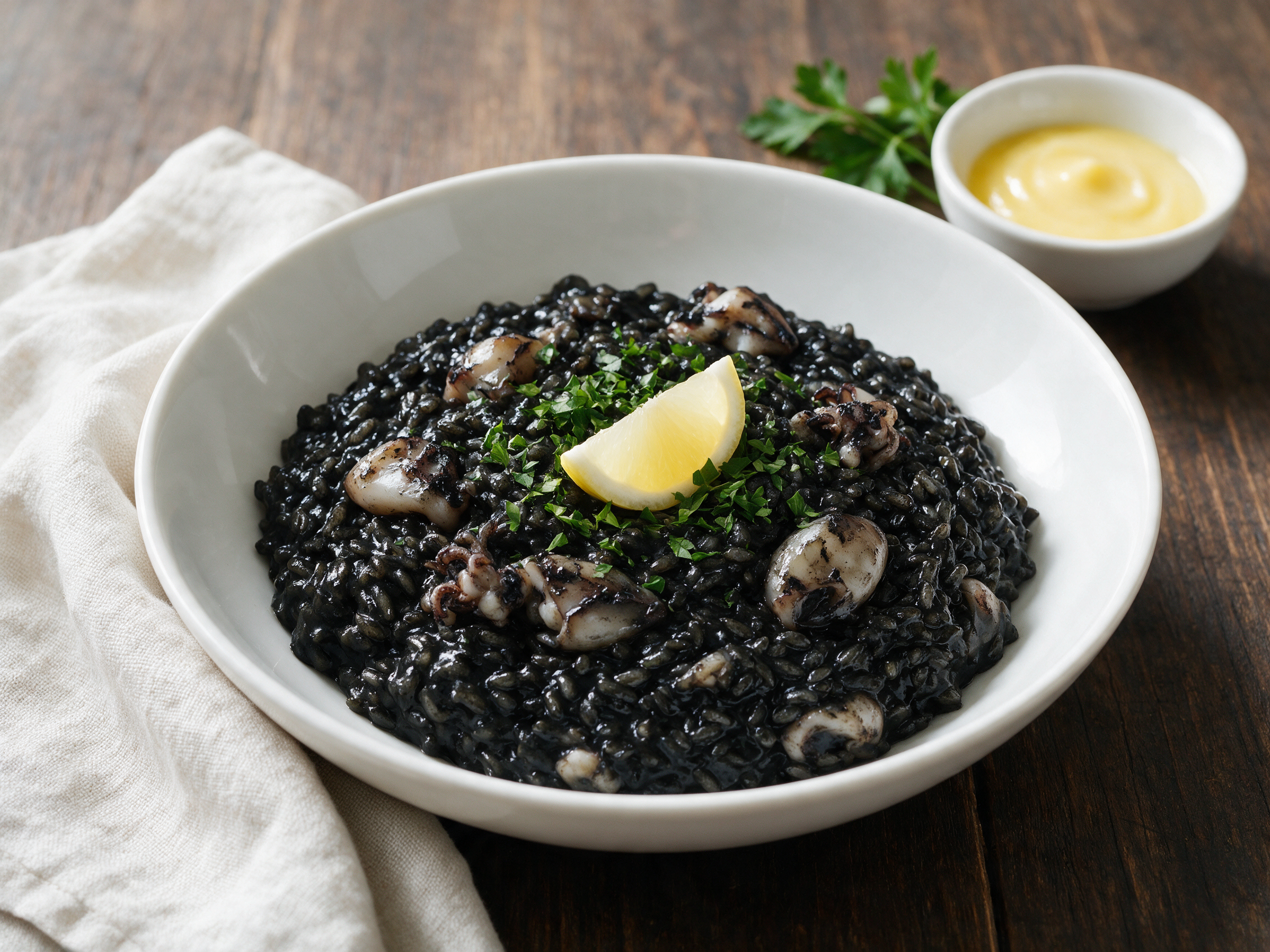
Risotto al Nero di Seppia with Cuttlefish and Wine
Ingredients
Method
- Pour the fish stock into a 3-quart / 2.8 L saucepan and bring to a bare simmer over low heat. Keep it warm on the back burner while you cook.
- Heat the olive oil in a 30 cm / 12-inch risotto pot over medium heat. Add the onion and garlic and cook 4 to 5 minutes, stirring, until soft and translucent.
- Add the cuttlefish strips and cook 3 to 4 minutes, stirring, until just opaque. Season with a pinch of salt.
- Add the rice and stir constantly for 2 minutes, until the edges of the grains look glassy.
- Pour in the white wine and stir until it's fully absorbed, about 1 to 2 minutes.
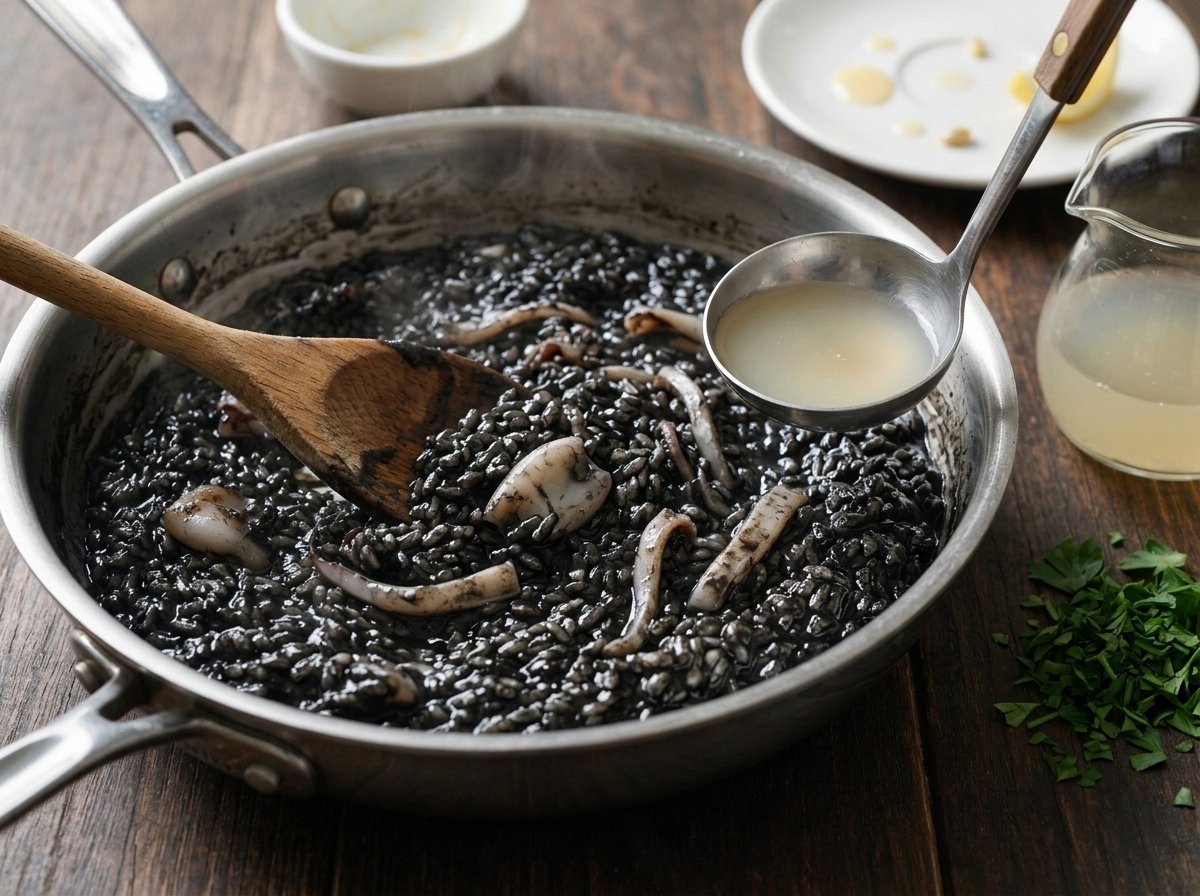
- Add a ladle of hot stock, stirring until absorbed before adding the next. Repeat this for about 8 minutes.
- Once the pot is hot and steady, stir the squid ink into the next ladle of stock before adding it, mixing until the rice turns evenly black.
- Keep adding stock one ladle at a time, stirring often, for another 8 to 10 minutes, until the rice is al dente and the mixture is loose enough to spread slowly across the plate when you tilt it.
- Remove the pot from the heat. Stir in the cold butter and parsley until glossy, then cover and rest 1 minute.
- Spoon onto warm plates and serve with lemon wedges and a crack of black pepper.
Notes
- Keep the stock at a bare simmer the whole time, never a rolling boil.
- Add squid ink after the second ladle of stock, once the pot is hot.
- Cut cuttlefish into strips no thicker than 1 cm for even cooking.
- Rest the finished risotto 1 minute off heat before plating.
Tips for Success
- Warm the stock before adding it, since cold stock stops the cooking and stretches the timing.
- Stir in the squid ink once the stock is already hot, not at the start, so the color stays glossy.
- Use carnaroli rice if you can find it, since it holds a firmer bite through the long simmer.
- Cut cuttlefish into small, even strips so every spoonful gets a piece without overcooking the seafood.
- Finish off the heat with cold butter using the same mantecatura finishing technique and let the pot rest one minute before serving.
Variations
- Swap cuttlefish for squid tubes and cut the initial saute to 2 minutes since squid turns rubbery faster.
- Stir a spoonful of tomato paste into the soffritto for a version with more acidity and a rounder color.
- Add a handful of chopped clams in the last 5 minutes of cooking for a nero di seppia e vongole variation.
Storage and Reheating
Store leftover risotto in an airtight container in the fridge for up to 2 days. Seafood risotto doesn’t hold as long as a plain vegetable version, so don’t push past that window.
Reheat gently in a 25 cm / 10-inch skillet over medium-low with a splash of hot stock or water, stirring until it loosens back to a creamy consistency, about 4 to 5 minutes. A microwave works in a pinch at 50% power with the same splash of liquid, stirred halfway through.
Skip the freezer here. The rice turns mushy on thawing and the ink flavor flattens out.
Serving Suggestions
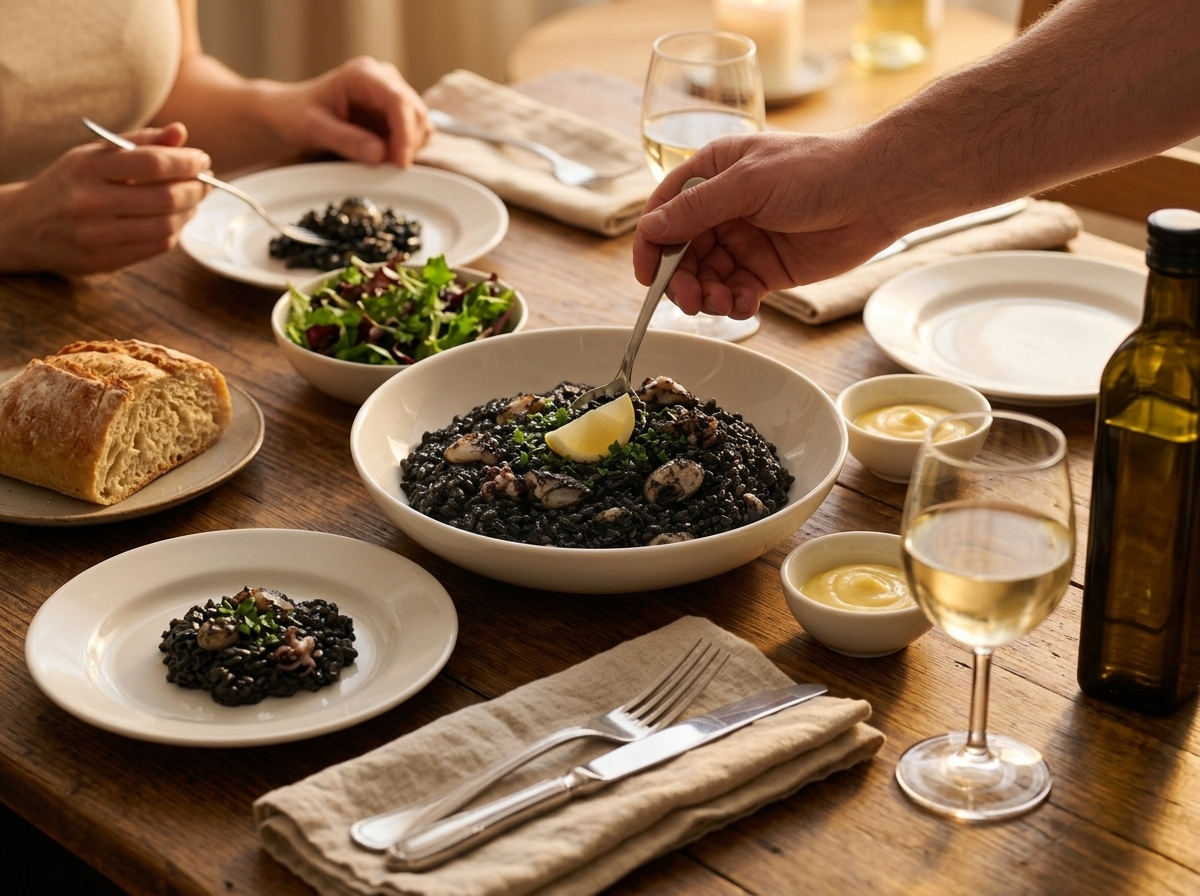
Serve risotto al nero di seppia straight from the pot onto warm plates, since it loses its loose, glossy texture fast once it sits. A wedge of lemon on the side and a scatter of parsley are all it needs.
Crusty bread and a simple green salad with a sharp vinaigrette, or a plate of crispy Venetian cod fritters, round out the meal without competing with the ink flavor.
Pour a dry, mineral white like Soave or Vermentino alongside it. The acidity cuts through the butter and matches the briny sauce.
FAQ
Why did my risotto al nero di seppia turn gray instead of black?
Usually it’s not enough ink, or the ink went in too early. Squid ink sachets vary in strength, so use at least 3 sachets (about 12 g) for 320 g of rice, and stir it in once the pot is already simmering, not at the start. Old or cheap ink also loses color, so check the packet date.
Can I use squid instead of cuttlefish in this risotto?
Yes, squid works though the texture differs slightly. It cooks faster and turns rubbery if oversauteed, so cut the initial saute from 4 minutes to about 2. Cuttlefish stays firmer through the simmer, which is why Venetian versions favor it, but squid is easier to find and cheaper.
How long does leftover risotto al nero di seppia keep in the fridge?
It keeps for up to 2 days in an airtight container, shorter than a vegetable risotto since it’s built on seafood. Reheat gently in a skillet with a splash of hot stock, stirring until it loosens back to creamy, about 4 to 5 minutes. Skip freezing, the rice turns mushy on thawing.
What wine pairs well with risotto al nero di seppia?
A dry, mineral white like Soave, Vermentino, or a Friulian Pinot Grigio works best. The acidity cuts through the butter and matches the briny ink without competing with it. A light, slightly chilled Venetian red like Bardolino also works if you prefer red.
Is risotto al nero di seppia gluten free?
Yes, it’s naturally gluten free since it’s built on rice, not pasta. Double-check your fish stock and squid ink sachets though, since some processed versions use a wheat-based filler or anti-caking agent. Homemade stock and plain ink sachets remove any doubt.
What’s the difference between risotto al nero di seppia and risotto ai frutti di mare?
Risotto al nero di seppia is built around cuttlefish and its ink, giving a black color and concentrated, briny flavor. Risotto ai frutti di mare is a mixed seafood risotto, usually with shrimp, mussels, and clams, and stays pale since no ink goes in. Both share the same base technique.