
Jump to Recipe
Strudel di mele altoatesino is the apple strudel of Alto Adige, South Tyrol’s Italian-German border region, made with a hand-stretched dough instead of store-bought filo. The dough gets rolled and pulled by hand until it’s thin enough to read a newspaper through it, then wrapped around apples, toasted breadcrumbs, and raisins plumped in rum.
I first learned this from a neighbor near Bolzano who insisted the breadcrumbs matter more than people think. They soak up the apple juice as it bakes, so the bottom of the strudel stays crisp instead of turning to mush.
This isn’t the Viennese version with its ultra-thin, almost invisible pastry. Alto Adige’s strudel dough is slightly sturdier, built to hold a generous, chunky apple filling without splitting.
Give yourself an hour for the dough to rest and the apples to macerate. The actual hands-on work is under 40 minutes.
Why You’ll Love This Recipe
- Hand-stretched dough gives a sturdier bite than delicate filo versions
- Toasted breadcrumbs keep the bottom crust from turning soggy
- Freezes well unbaked or baked for make-ahead dessert
- Uses pantry staples, no special equipment beyond a clean kitchen towel
Ingredient Notes
- apples: Use a firm, tart variety like Renetta, Golden Delicious, or Granny Smith. Soft apples like Red Delicious break down into sauce during the 40-minute bake.
- flour: All-purpose flour gives the dough enough structure to stretch thin without tearing. Bread flour works too and makes the dough slightly chewier.
- raisins: Soak them in rum for at least 20 minutes so they plump instead of turning leathery in the oven.
- breadcrumbs: Plain dry breadcrumbs, toasted in butter, are what keep the bottom crust from going soggy. Panko works but toasts faster, watch it closely.
- butter: Used for toasting breadcrumbs and brushing the dough. A neutral oil works for a dairy-light version, though the crust browns less evenly.
- rum: Dark rum adds depth to the raisins. Warm apple juice or grappa both work as alcohol swaps.
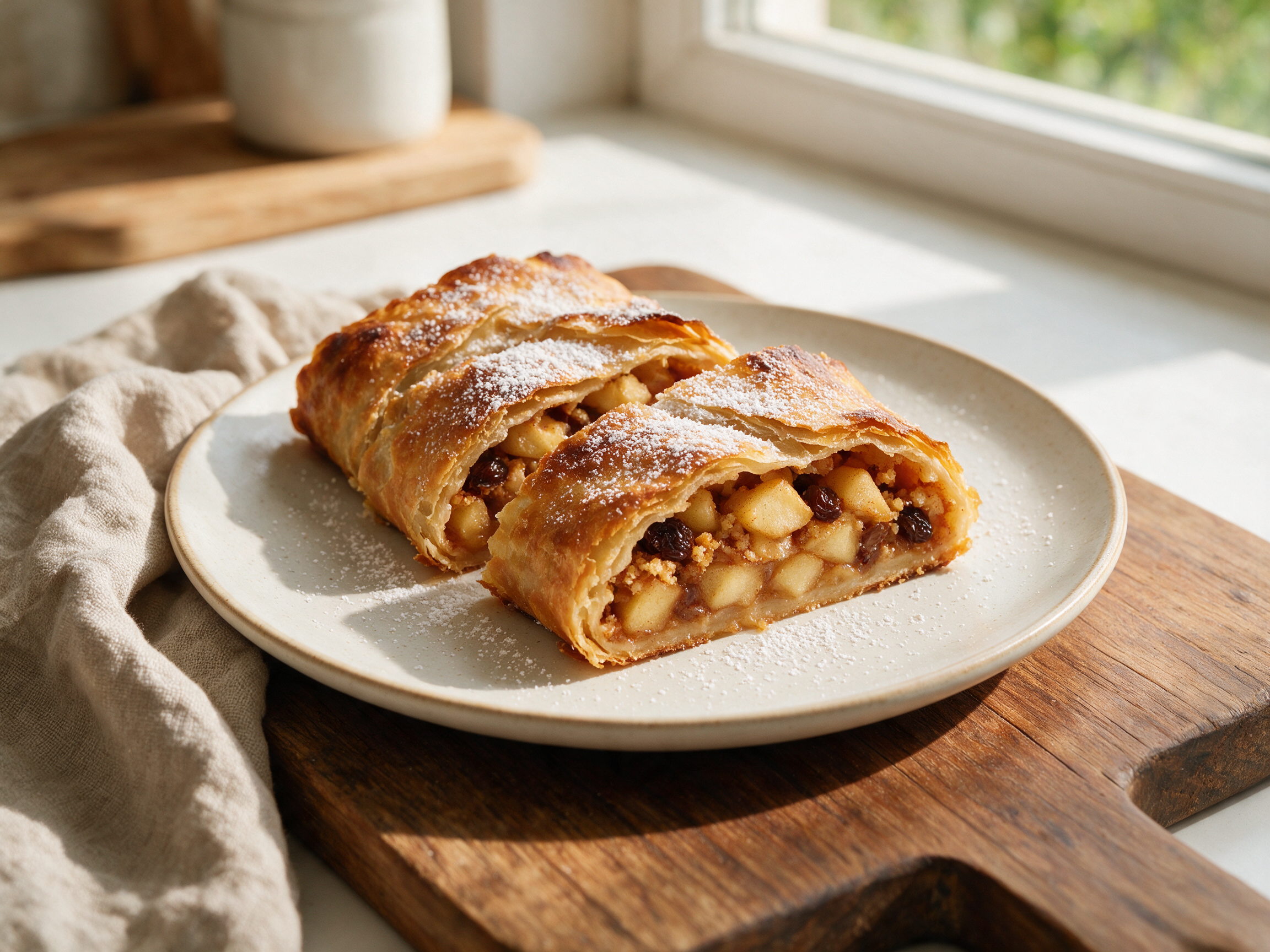
Classic South Tyrolean Apple Strudel with Rum Raisins
Ingredients
Method
- Combine the raisins and dark rum in a small bowl. Set aside to plump for at least 20 minutes.
- In a mixing bowl, combine the flour, egg, lukewarm water, sunflower oil, and salt. Knead 8-10 minutes until smooth and elastic. Shape into a ball, wrap, and rest at room temperature for 30 minutes.
- Melt the 50 g butter in a 20 cm / 8-inch skillet over medium heat. Add the breadcrumbs and toast, stirring often, for 3-4 minutes until deep golden. Set aside to cool.
- Toss the sliced apples with sugar, cinnamon, lemon zest, and lemon juice in a large bowl. Let sit while you stretch the dough.
- Heat the oven to 180 C / 355 F and line the sheet pan with parchment.
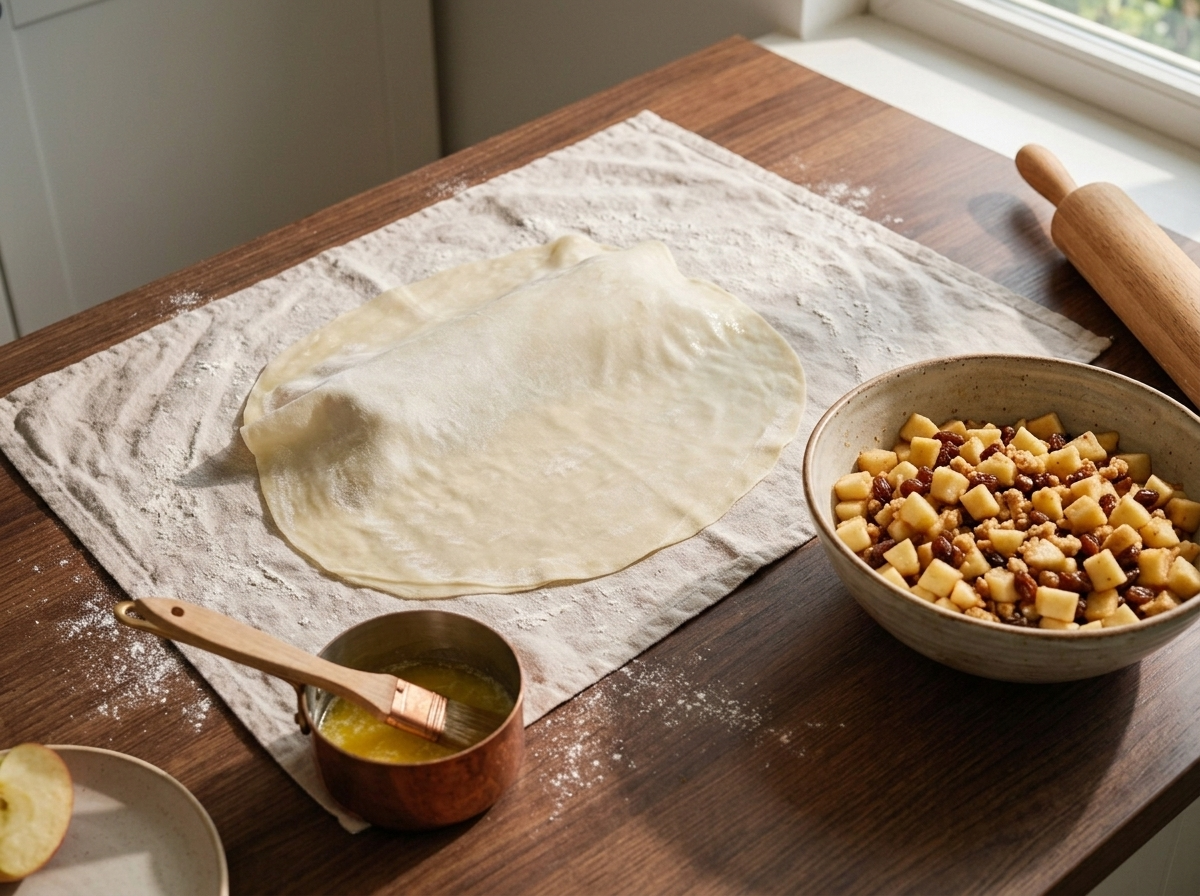
- Lay a large clean kitchen towel on your counter and dust with flour. Roll the dough out as thin as you can with a rolling pin, then use the backs of your hands to stretch it gently from underneath until it's paper-thin and roughly 60 x 40 cm. Patch any small tears with a scrap of dough.
- Brush the stretched dough with a little melted butter. Scatter the toasted breadcrumbs over the bottom two-thirds of the dough.
- Drain the raisins and scatter them, along with the walnuts, over the breadcrumbs. Spoon the apple mixture on top, leaving a 3 cm border on all sides.
- Using the towel to help lift and guide, roll the strudel tightly from the filled end, tucking the sides in as you go. Transfer seam-side down to the lined sheet pan.
- Brush the top of the strudel with the remaining melted butter. Bake for 35-40 minutes until the crust is deep golden brown and the apples feel tender when pierced through the seam with a knife.
- Cool on the pan for 15 minutes so the filling sets. Dust with powdered sugar, slice, and serve warm.
Notes
- Rest dough at least 30 minutes before stretching.
- Toast breadcrumbs until deep gold, not pale.
- Patch dough tears with a scrap piece rather than starting over.
- Slice apples to 4 mm thickness for even cooking.
- Cool 15 minutes before slicing so the filling sets.
Tips for Success
- Rest the dough at least 30 minutes before stretching, skipping this makes it spring back and tear.
- Toast the breadcrumbs in butter until deep gold before adding them so they can absorb the apple juice.
- Slice apples no thicker than 4 mm so they cook through in 40 minutes without turning mushy.
- Patch any tears in the stretched dough with a scrap piece, thin spots are fine but holes let filling leak.
- Use a tart, firm apple like Renetta or Granny Smith, soft varieties collapse into sauce during baking.
Variations
- Swap the rum for warm apple juice or grappa if you want a different soak for the raisins.
- Add 40 g of chopped walnuts or pine nuts to the filling for crunch against the soft apples.
- Replace half the sugar with the same weight of honey for a deeper, less sharp sweetness.
Storage and Reheating
Strudel di mele altoatesino keeps at room temperature for 1 day loosely covered with a towel, or in the fridge for 3-4 days wrapped in foil.
Reheat individual slices in a 160 C / 320 F oven for 8-10 minutes to bring the crust back to crisp. Skip the microwave, it turns the pastry rubbery.
To freeze, wrap the baked and cooled strudel whole in foil then a freezer bag, and it holds for up to 2 months. Thaw overnight in the fridge, then reheat in the oven as above before slicing.
Serving Suggestions
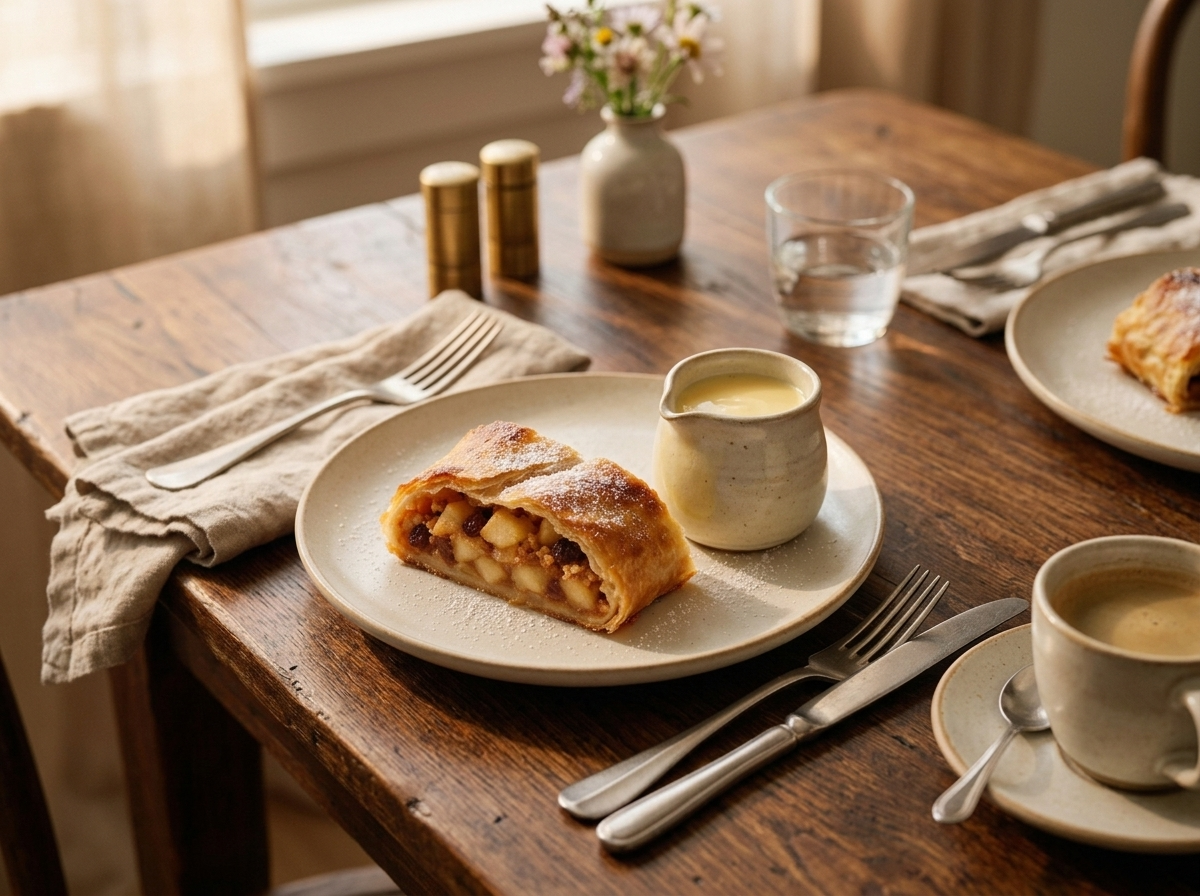
Strudel di mele altoatesino is traditionally served warm, dusted with powdered sugar, alongside a jug of vanilla sauce or a spoon of softly whipped cream.
In Alto Adige it often turns up at breakfast too, plain with just coffee, cut into thick wedges.
For a fall dinner, follow a bowl of canederli or a light vellutata with a slice of this as dessert, maybe with a small glass of grappa on the side.
FAQ
Why did my strudel di mele altoatesino turn soggy on the bottom?
A soggy bottom usually means the breadcrumbs weren’t toasted enough or the apples released too much juice. Toast the breadcrumbs in butter until deep golden before layering them under the apples, and slice apples no thicker than 4 mm so they release less liquid as they bake at 180 C / 355 F.
Can I use phyllo dough instead of stretching my own strudel dough?
Yes, phyllo works as a shortcut, though the texture changes. Layer 6 to 8 sheets brushed with melted butter between each one to mimic the sturdier bite of hand-stretched Alto Adige dough, then fill and roll the same way. The bake time stays close to 35-40 minutes at 180 C / 355 F.
Can I make strudel di mele altoatesino a day ahead of serving?
Yes, bake it a day ahead and store it wrapped in foil at room temperature, then reheat at 160 C / 320 F for 8-10 minutes before serving. You can also prep the filling and dough separately up to a day ahead and assemble just before baking for the crispest crust.
What goes well with South Tyrolean apple strudel besides vanilla sauce?
Softly whipped cream or plain yogurt both cut through the sweetness without competing with the cinnamon apples. A short espresso, a glass of Gewurztraminer, or even a frothy Garibaldi cocktail, common in Alto Adige, also pairs well if you’re serving this after dinner.
Is strudel di mele altoatesino dairy-free if I skip the butter?
No, not entirely, since the dough itself is dairy-free but the breadcrumbs are traditionally toasted in butter. Swap in the same amount of neutral oil or a dairy-free butter alternative and the filling still toasts up fine, just slightly less rich.
What’s the difference between strudel di mele altoatesino and Viennese apple strudel?
The dough is the main difference. Alto Adige’s version uses a slightly thicker, sturdier hand-stretched dough built to hold a chunky apple filling, while Viennese strudel dough is stretched almost transparent around a finer-cut filling. Both use raisins and cinnamon, but the South Tyrolean version leans on toasted breadcrumbs more heavily.