
Jump to Recipe
Migliaccio napoletano is a Neapolitan semolina and ricotta cake, baked until the top turns pale gold and the inside sets into a texture somewhere between custard and cornbread. It’s the Carnevale dessert Naples makes every February, though nothing stops you from baking it in July.
The name comes from miglio, millet, the grain that filled the older version of this cake before semolina took over. Modern migliaccio uses semolina cooked into a thick porridge, then folded into sweetened ricotta with eggs and citrus zest.
I learned the hard way that this cake needs patience after the oven, not during it. Cut it warm and the center looks undercooked even when it’s fully baked, because the crumb only firms up as it cools.
Give it a few hours on the counter, or better, overnight in the fridge, and the slice holds clean with a texture close to a lemon-scented semolina custard.
Why You’ll Love This Recipe
- Needs only pantry staples: semolina, ricotta, eggs, citrus
- Bakes in one pan, no layers or frosting
- Keeps well for days, tastes better the next day
- Traditional Carnevale cake with a light, custardy crumb
Ingredient Notes
- semolina: Use fine or medium semolina (semolino rimacinato), not coarse pasta semolina, for a smooth cook.
- ricotta: Drain ricotta if it looks watery. A wet ricotta thins the batter and slows the set.
- milk: Whole milk gives the richest porridge. Low-fat works but the cake tastes leaner.
- eggs: Room temperature eggs blend into the ricotta without leaving streaks.
- citrus zest: Use both lemon and orange zest for the classic Neapolitan aroma, though lemon alone works too.
- butter: Butter greases the pan and enriches the semolina porridge. Lard is the traditional fat if you want the old-school version.
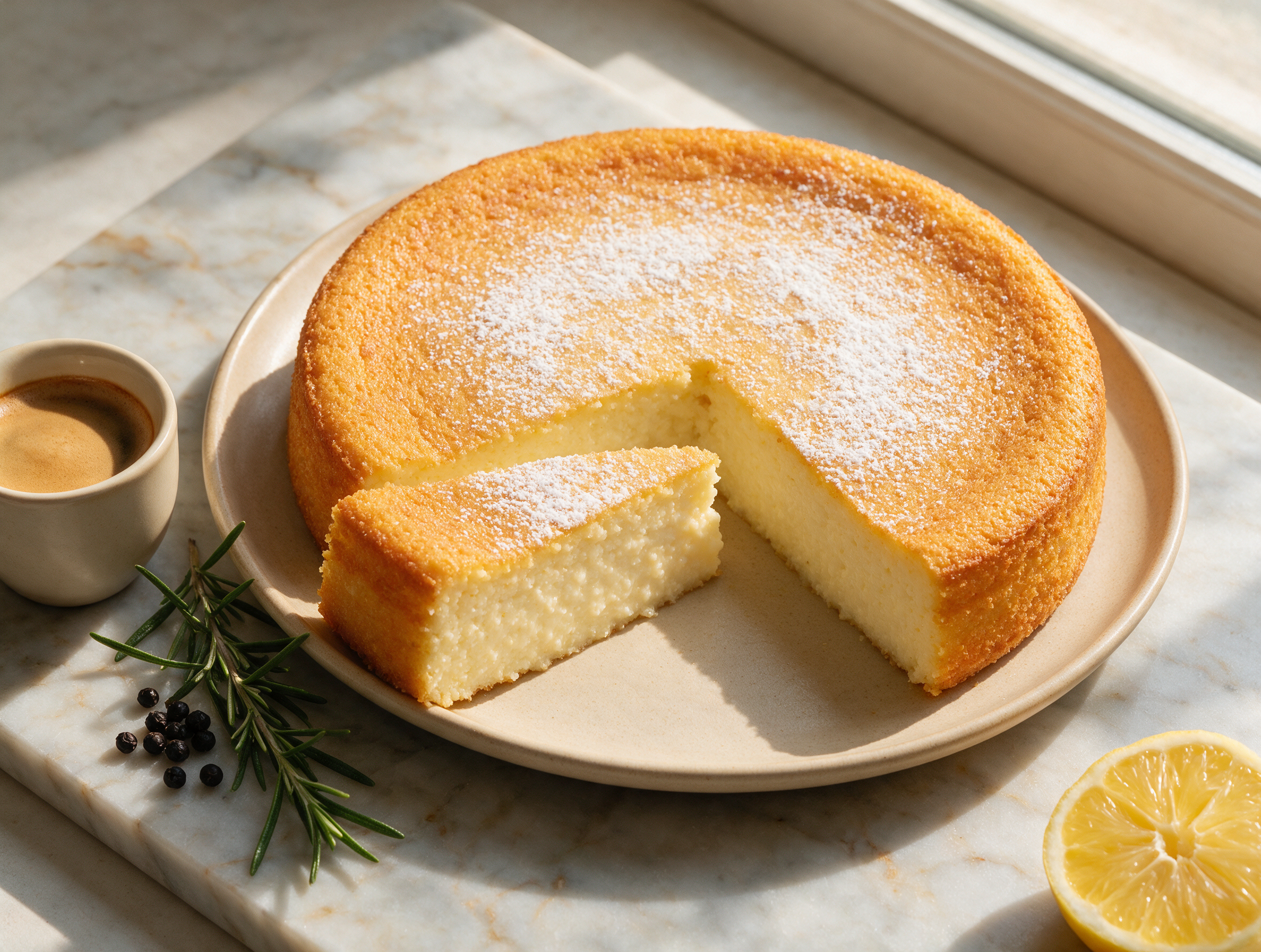
Migliaccio Napoletano with Ricotta and Semolina Cake
Ingredients
Method
- Combine the milk, water, 30 g butter, and a pinch of salt in a 3-quart / 2.8L saucepan. Bring to a boil over medium heat.
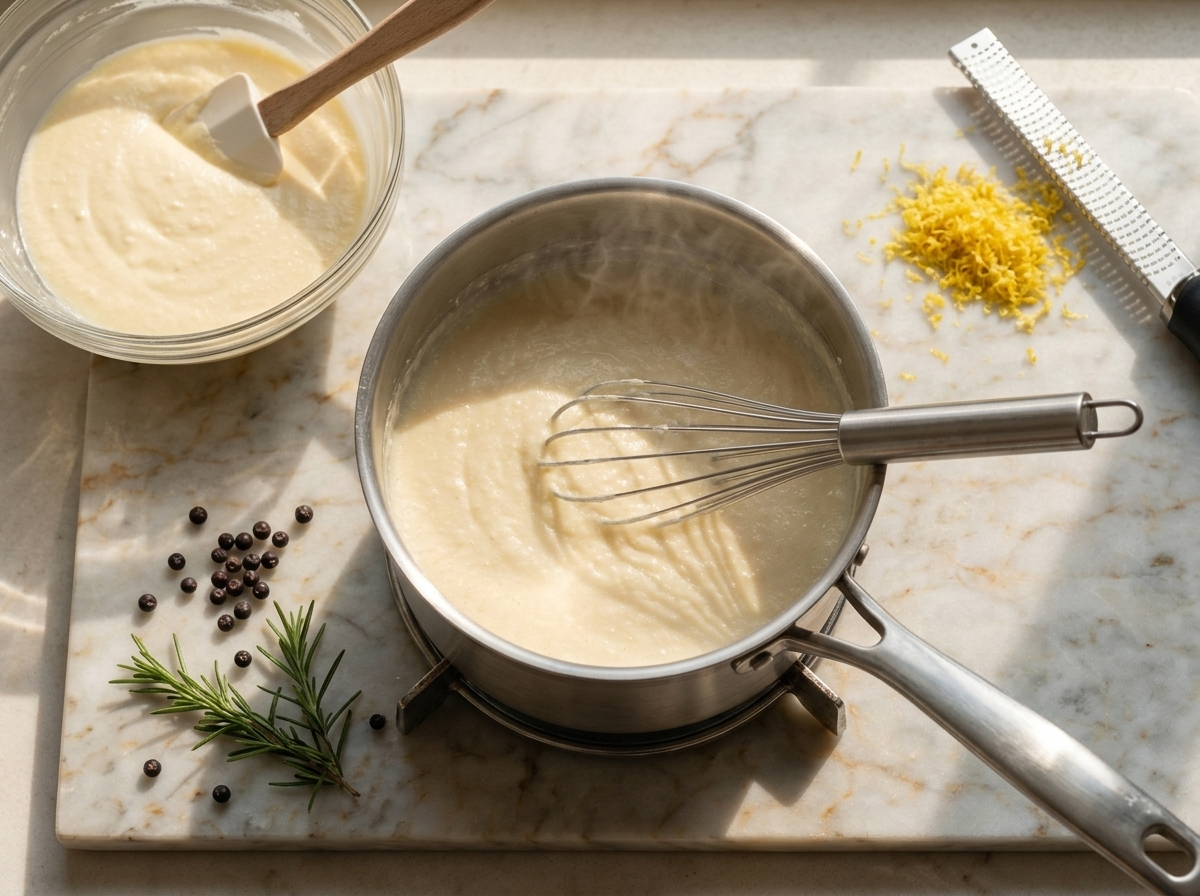
- Pour in the semolina in a steady stream, whisking constantly to avoid lumps. Cook for 3 to 4 minutes, stirring, until the mixture thickens and pulls from the sides of the pan.
- Remove from heat and let the semolina porridge cool for 15 minutes, stirring occasionally so a skin doesn't form on top.
- Heat the oven to 180C / 356F. Grease a 26 cm / 10-inch springform pan with butter and dust with a spoonful of semolina, tapping out the excess.
- In a large mixing bowl, beat the ricotta and sugar together until smooth, with no lumps of ricotta left.
- Add the eggs one at a time, beating well after each addition. Stir in the lemon zest, orange zest, vanilla extract, and cinnamon if using.
- Fold the cooled semolina porridge into the ricotta mixture in two additions, mixing until the batter is smooth and pale yellow.
- Pour the batter into the prepared pan and smooth the top with a spatula.
- Bake for 50 to 60 minutes, until the top is golden and a toothpick inserted in the center comes out clean, with only a slight jiggle underneath.
- Turn off the oven and let the cake sit inside with the door cracked for 10 minutes, then transfer the pan to a wire rack.
- Cool completely at room temperature, at least 3 hours, before removing the springform ring. Chill further if you have time.
- Dust with powdered sugar and slice into wedges to serve.
Notes
- Cool the semolina porridge before mixing to avoid scrambled eggs.
- Let the cake rest at least 3 hours before slicing.
- Dust the pan with semolina, not flour, for authentic texture.
- Use both lemon and orange zest for classic Neapolitan flavor.
Tips for Success
- Cook the semolina until it pulls from the sides of the pan, about 3 to 4 minutes, or the batter stays grainy.
- Cool the semolina porridge for 15 minutes before mixing so it doesn’t scramble the eggs.
- Grease the pan and dust with semolina, not flour, for a texture true to the original.
- Cool the cake completely, at least 3 hours, before slicing for clean, non-gummy pieces.
- Skip the cinnamon if you want the cleaner citrus-forward version most Naples bakeries use.
Variations
- Add 2 tbsp orange blossom water or rum instead of vanilla for a more traditional Neapolitan flavor.
- Swap half the ricotta for mascarpone for a richer, denser crumb.
- Stir in 50 g candied citron peel (cedro) for the old-fashioned bakery-style version.
Storage and Reheating
Migliaccio keeps well because the semolina base holds moisture without turning soggy. Store it covered in the fridge for 4 to 5 days. The texture actually improves after the first full day as the crumb firms up.
This cake isn’t one you reheat. Serve it cold from the fridge or let a slice sit at room temperature for 20 minutes before eating. Warming it in the microwave turns the crumb rubbery.
For longer storage, wrap individual slices tightly and freeze for up to 2 months. Thaw overnight in the fridge, then bring to room temperature before serving.
Serving Suggestions
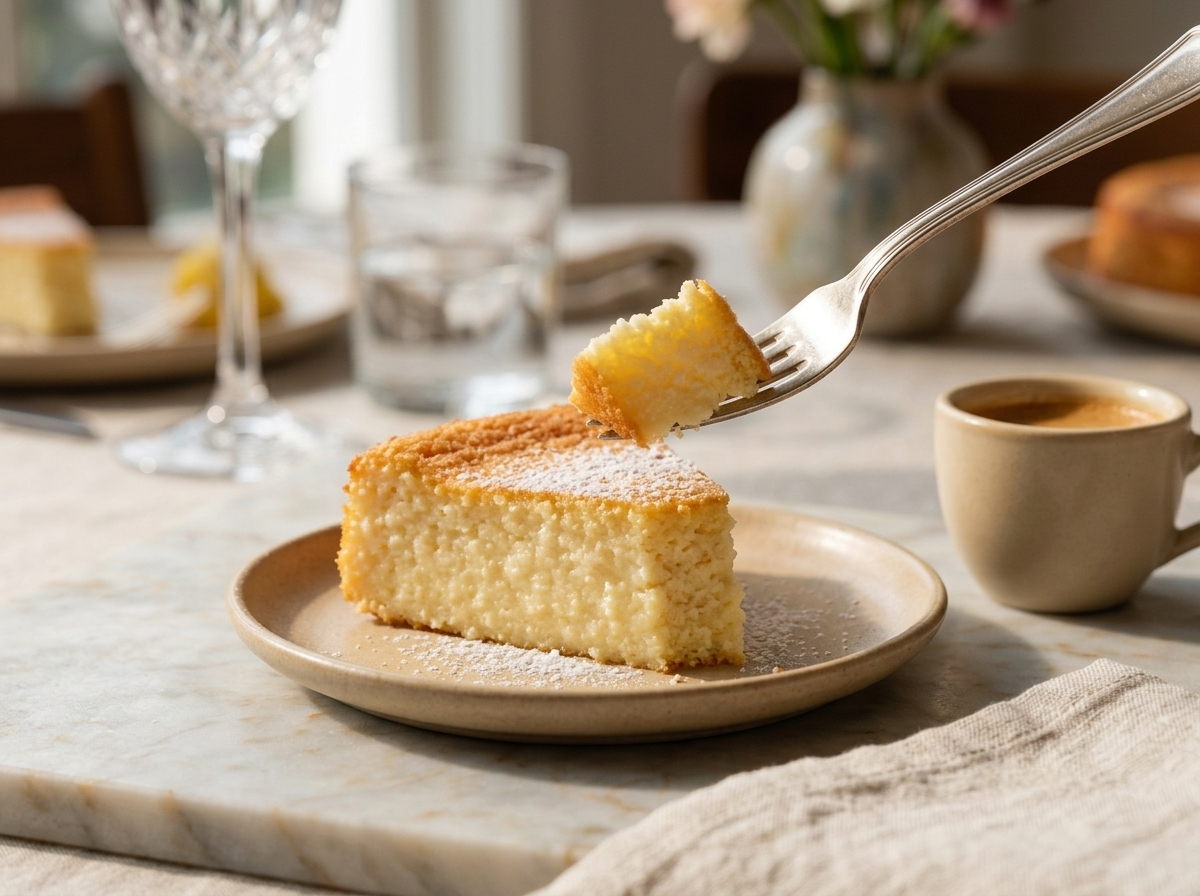
Migliaccio napoletano is dusted with powdered sugar and served plain in most Naples kitchens, cut into small squares or wedges. A short espresso alongside is the standard pairing during Carnevale.
For a fuller dessert course, add a spoonful of macerated strawberries or a drizzle of orange blossom syrup, though the cake carries its own citrus flavor without much help.
Leftover slices work well tucked into a lunchbox or eaten standing at the counter with coffee, the way most Neapolitan bakeries expect you to eat it.
FAQ
Why is my migliaccio still wet in the middle after baking?
This usually means the cake needs to cool, not bake longer. Migliaccio firms up as it cools, so a jiggly center straight from the oven is normal if a toothpick already comes out clean. If the toothpick isn’t clean, give it another 8 to 10 minutes at 180C/356F before checking again.
Can I use ricotta di pecora instead of cow’s milk ricotta?
Yes, sheep’s milk ricotta works and gives a slightly tangier, richer version common in Campania. Use the same 500 g amount and drain it well, since pecora ricotta tends to hold more whey. The bake time and 180C/356F oven temperature stay the same.
Can I make migliaccio napoletano a day ahead?
Yes, and it’s better that way. Bake it the day before, cool completely, then refrigerate covered overnight so the semolina crumb sets fully and slices cleaner than a same-day cake. Bring to room temperature or serve cold before dusting with powdered sugar.
What goes with migliaccio napoletano besides powdered sugar?
A short espresso is the classic Naples pairing, cutting through the cake’s citrus and dairy richness. Macerated berries or a light orange syrup work if you want a fuller dessert plate. Skip whipped cream, it competes with the ricotta rather than complementing it.
Is migliaccio napoletano gluten free?
No, migliaccio isn’t gluten free because it’s built on wheat semolina, which gives the cake its structure. Rice semolina or a gluten-free semolina substitute can work in a pinch, but the texture turns denser and less silky. There isn’t a reliable gluten-free version that matches the original crumb.
What’s the difference between migliaccio napoletano and pastiera napoletana?
Migliaccio uses semolina cooked in milk as its base and bakes into a denser, custard-like crumb, while pastiera uses cooked wheat berries and a shortcrust shell. Migliaccio is quicker to make and traditionally eaten at Carnevale, and pastiera is the Easter counterpart with a longer prep.