
Jump to Recipe
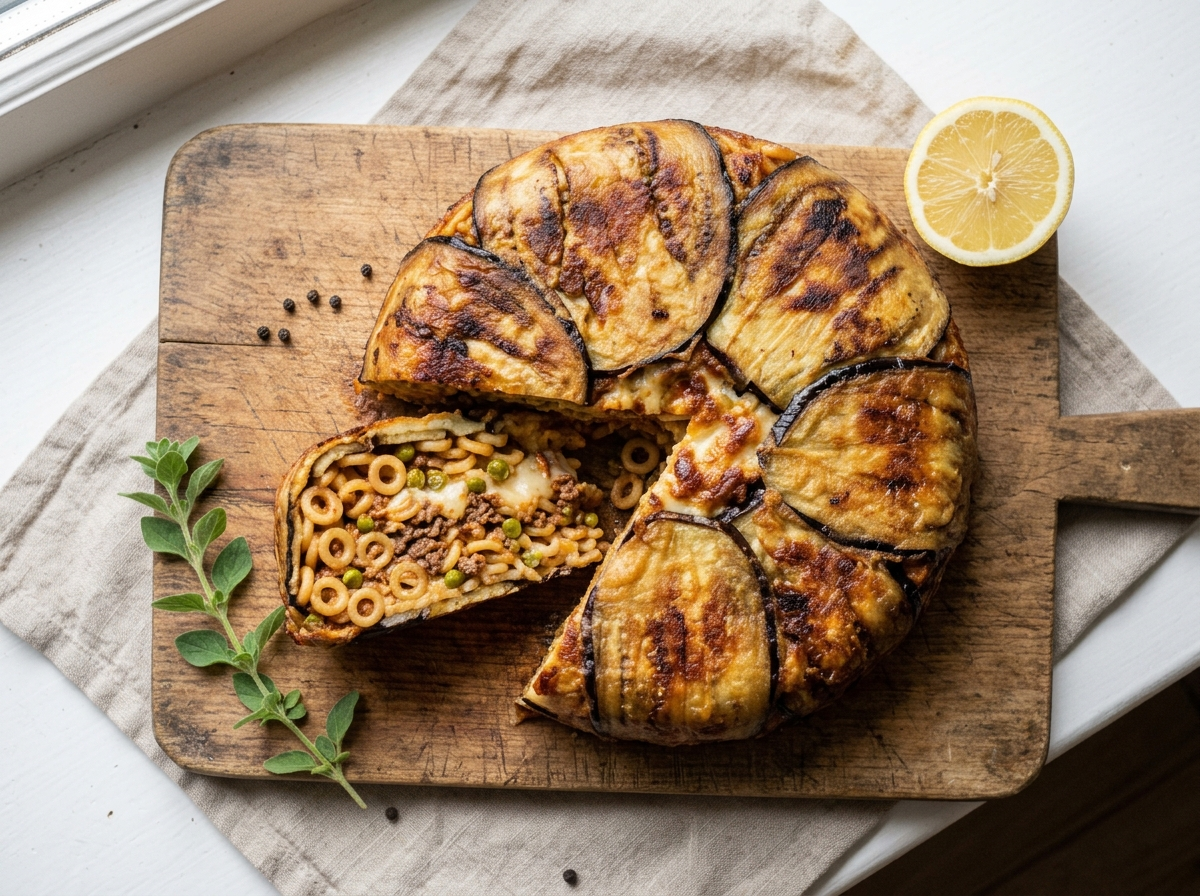
Timballo di anelletti palermitani is a baked pasta mold from Palermo built around ring-shaped anelletti pasta, a beef ragu, peas, caciocavallo cheese, and a shell of fried eggplant slices. It bakes at 180 C / 350 F until the top turns golden and holds together when you cut into it, more like a savory cake than a casserole.
This is festive food. Sicilian families make it for Sunday lunch, Ferragosto, or any gathering where you want a centerpiece as festive as sarde a beccafico coming out of the mold. It takes real time between frying eggplant, simmering the ragu, and baking, but none of the steps are hard.
The eggplant does double duty here. It lines the mold so the timballo has a defined edge when unmolded, and it adds a soft, slightly caramelized layer against the firmer pasta inside.
I mix beaten eggs into the pasta before baking. That’s the detail that keeps the slices from sliding apart on the plate, and it’s the step most home cooks skip and then wonder why their timballo falls apart.
Why You’ll Love This Recipe
- Bakes into clean, sliceable wedges like a savory cake
- Fried eggplant shell adds texture against soft pasta
- Feeds a crowd and reheats well the next day
- Classic Palermo party food with real make-ahead value
Ingredient Notes
- Anelletti pasta: Small ring-shaped pasta typical of Palermo. Ditalini or another short tube pasta works if you can’t find anelletti.
- Eggplant: Salt the sliced eggplant and let it drain 30 minutes before frying to cut the bitterness and reduce oil absorption.
- Caciocavallo cheese: A firm, tangy Southern Italian cheese. Provolone or scamorza both melt similarly if caciocavallo isn’t available.
- Ground beef: Use 80/20 beef for a richer ragu, or mix half beef and half pork for a more traditional flavor.
- Tomato passata: Smooth strained tomatoes work best here. Crushed canned tomatoes are fine but give a slightly chunkier sauce.
- Eggs: Beaten into the pasta mixture, eggs act as the binder that keeps slices intact once the timballo is unmolded.
- Pecorino romano: Adds a sharp, salty note that balances the sweetness of the ragu and peas.
Timballo di Anelletti Palermitani: Sicilian Baked Pasta
Ingredients
Method
- Slice eggplant into 1/2 cm rounds, salt generously, and drain in a colander for 30 minutes.
- Pat slices dry with paper towels.
- Fry in batches in 175 C / 350 F oil until golden on both sides, about 2 to 3 minutes per side, then drain on paper towels.
- Heat olive oil in a large skillet over medium heat and cook the onion 5 minutes until soft.
- Add ground beef, breaking it up, and cook until no pink remains and it reaches 160 F / 71 C, about 8 minutes.
- Stir in tomato passata, bay leaf, sugar, salt, and pepper. Simmer uncovered 35 minutes, stirring occasionally, until thickened.
- Bring a large pot of salted water to a boil and cook anelletti 2 to 3 minutes less than the package directs, then drain.
- In a large bowl, combine pasta with two-thirds of the ragu, peas, caciocavallo cubes, pecorino, and beaten eggs. Toss well.
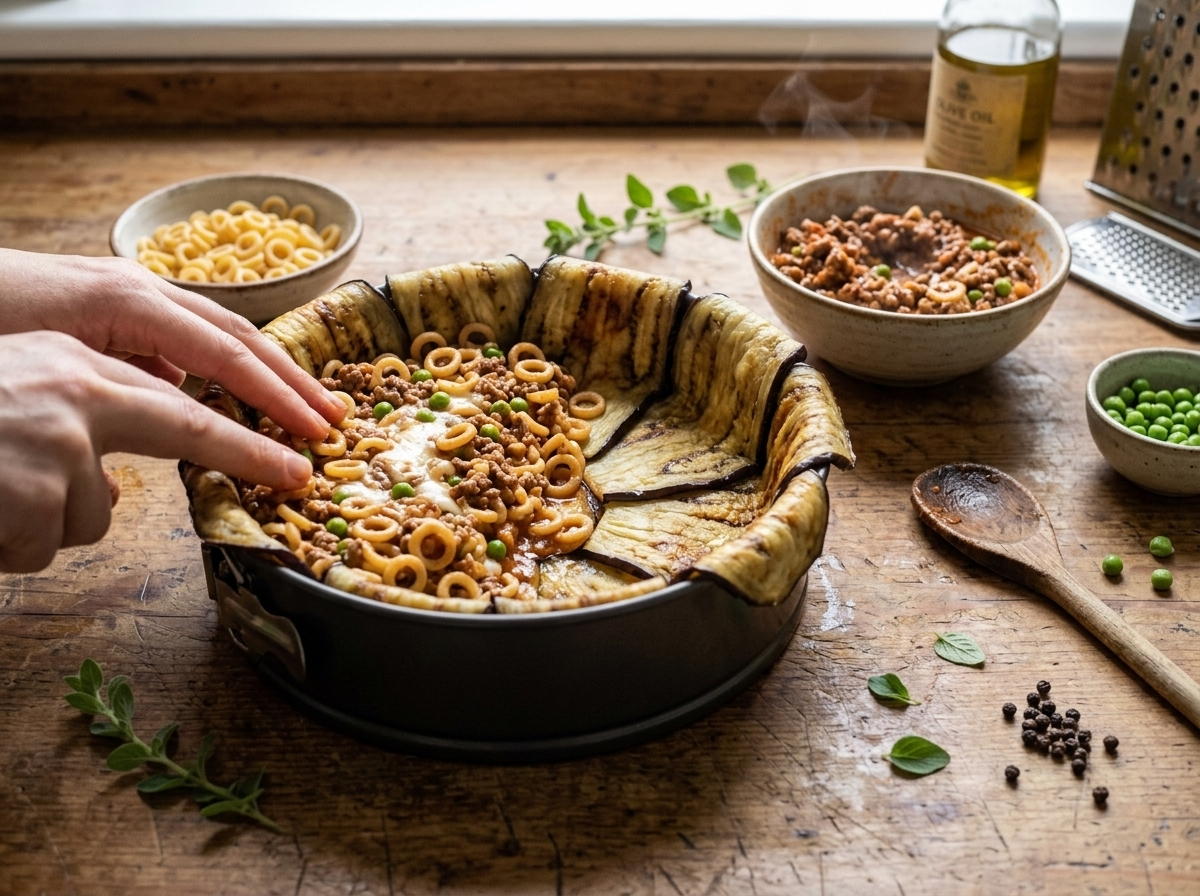
- Grease a 24 cm springform pan with olive oil and coat with breadcrumbs, tapping out excess.
- Line the bottom and sides with fried eggplant slices, overlapping slightly.
- Fill the mold with the pasta mixture, pressing down firmly with the back of a spoon.
- Top with remaining ragu, another layer of eggplant slices, and a sprinkle of breadcrumbs.
- Bake at 180 C / 350 F for 30 to 35 minutes until the top is golden and the edges pull slightly from the pan.
- Let rest 10 to 15 minutes before releasing the springform and unmolding onto a plate.
Notes
- Cook ground beef until no pink remains and it reaches 160 F / 71 C for food safety.
- Salt eggplant slices ahead so they drain while you make the ragu.
- Undercook the pasta since it finishes cooking in the oven.
- Let the timballo rest fully before unmolding, it firms up as it cools.
Tips for Success
- Salt eggplant slices and drain them 30 minutes before frying to remove bitterness.
- Undercook the anelletti by 2 to 3 minutes since it finishes cooking in the oven.
- Press the pasta mixture down firmly in the mold so slices hold together when cut.
- Rest the baked timballo 10 to 15 minutes before unmolding so it doesn’t collapse.
- Line a springform pan with parchment paper for the cleanest, easiest release.
Variations
- Use a mix of ground beef and pork instead of all beef for a richer, more traditional ragu.
- Swap eggplant for zucchini slices for a lighter shell that absorbs less oil during frying.
- Layer in sliced hard-boiled eggs with the pasta, a trick borrowed from pasta ‘ncasciata.
Storage and Reheating
Store leftover timballo covered in the fridge for up to 4 days. Slice it cold and reheat individual portions in a 160 C / 320 F oven for 15 to 20 minutes, or microwave a slice for 90 seconds to 2 minutes.
To freeze, wrap the fully cooled timballo whole or in individual slices tightly in plastic and foil. It keeps well for up to 2 months in the freezer.
Thaw overnight in the fridge before reheating in the oven, covered with foil for the first 15 minutes so it doesn’t dry out, then uncovered for the last 5 to 10 minutes to re-crisp the top.
Serving Suggestions
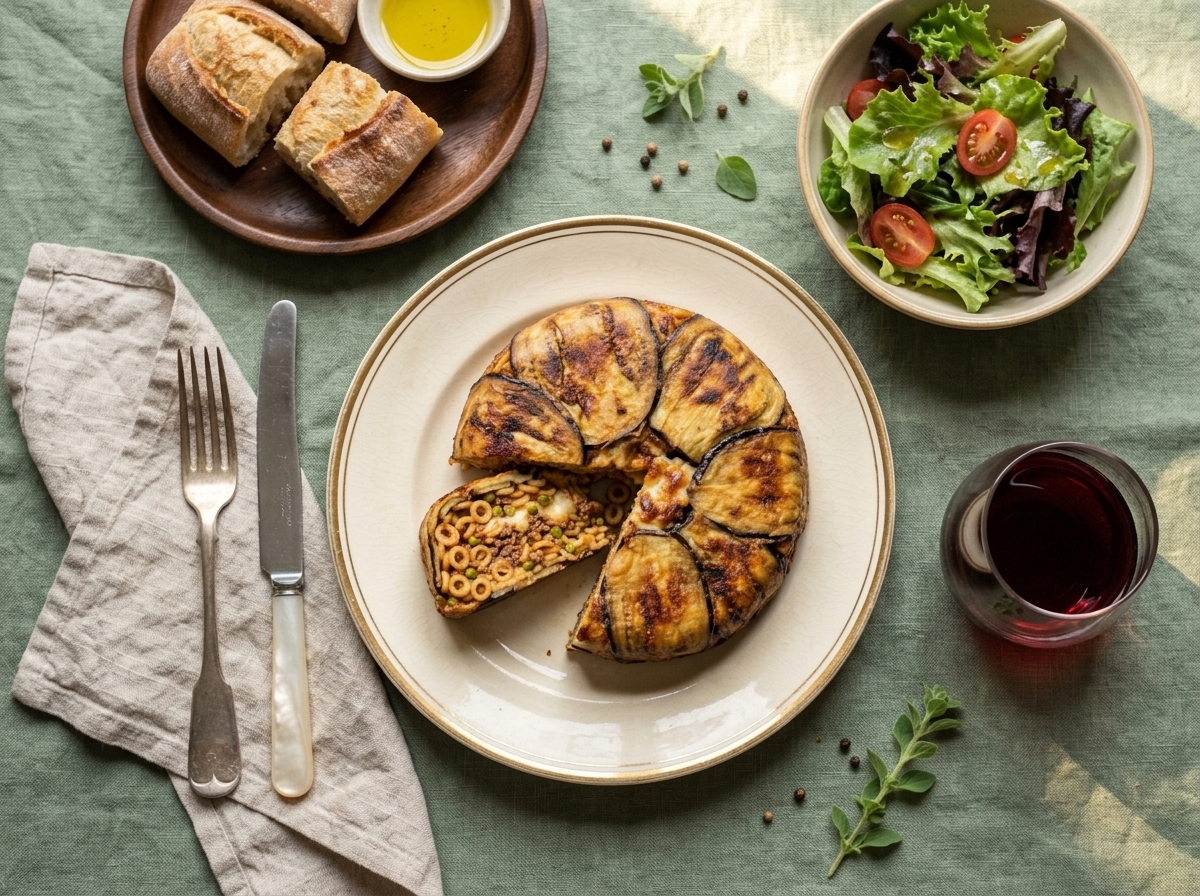
Serve timballo di anelletti as the main course with nothing more than a simple green salad, or a Sicilian side like insalata pantesca, dressed in lemon and olive oil to cut the richness. It’s substantial enough to stand alone at the center of the table.
A glass of Nero d’Avola or another dry Sicilian red wine is the traditional pour alongside it. Crusty bread on the side works for anyone who wants to mop up extra ragu.
This is a natural choice for Sunday lunch, a summer Ferragosto gathering, or any occasion where you want a pasta dish that looks like it took more effort than it actually did.
FAQ
Why did my timballo di anelletti fall apart when I unmolded it?
It usually means the pasta mixture needed more binder or the resting time got skipped. Beaten eggs mixed into the anelletti help the layers set as they cool, and resting the timballo 10 to 15 minutes out of the oven lets the cheese and eggs firm up before you flip it. Cutting in too soon while the center is still loose is the main culprit.
Can I use ditalini instead of anelletti pasta?
Yes, ditalini or another short tubular pasta works if you can’t find anelletti. The ring shape is traditional in Palermo and holds sauce well, but ditalini gives a similar texture and bakes in the same time. Avoid long pasta shapes since they won’t pack into the mold evenly.
Can I freeze timballo di anelletti palermitani after baking?
Yes, a fully cooled timballo freezes well for up to 2 months when wrapped tightly in plastic and foil. Freeze it whole or in individual slices for easier reheating later. Thaw overnight in the fridge, then reheat covered in a 160 C / 320 F oven for 20 to 25 minutes until warmed through.
What goes well with timballo di anelletti palermitani?
A simple green salad with lemon and olive oil balances the richness of the pasta and cheese. A glass of Nero d’Avola or another dry Sicilian red wine is the traditional pour alongside it. Crusty bread rounds out the meal since the timballo is filling enough to work as a main course on its own.
Is timballo di anelletti palermitani gluten free?
No, the standard version isn’t gluten free since it uses wheat pasta and breadcrumbs for the crust. You can swap in gluten-free anelletti or ditalini and use gluten-free breadcrumbs, since the rest of the ingredients, meat, eggplant, and cheese, are naturally gluten free. Check your pasta brand’s cook time since gluten-free shapes often cook faster.
What’s the difference between timballo di anelletti and pasta alla Norma?
Pasta alla Norma is a stovetop dish of pasta tossed with fried eggplant, tomato sauce, and ricotta salata, eaten right after cooking. Timballo di anelletti is baked and molded, layered with ragu, cheese, and fried eggplant, then sliced like a cake once unmolded. Norma comes from Catania while the timballo is tied to Palermo’s festive cooking.