
Jump to Recipe
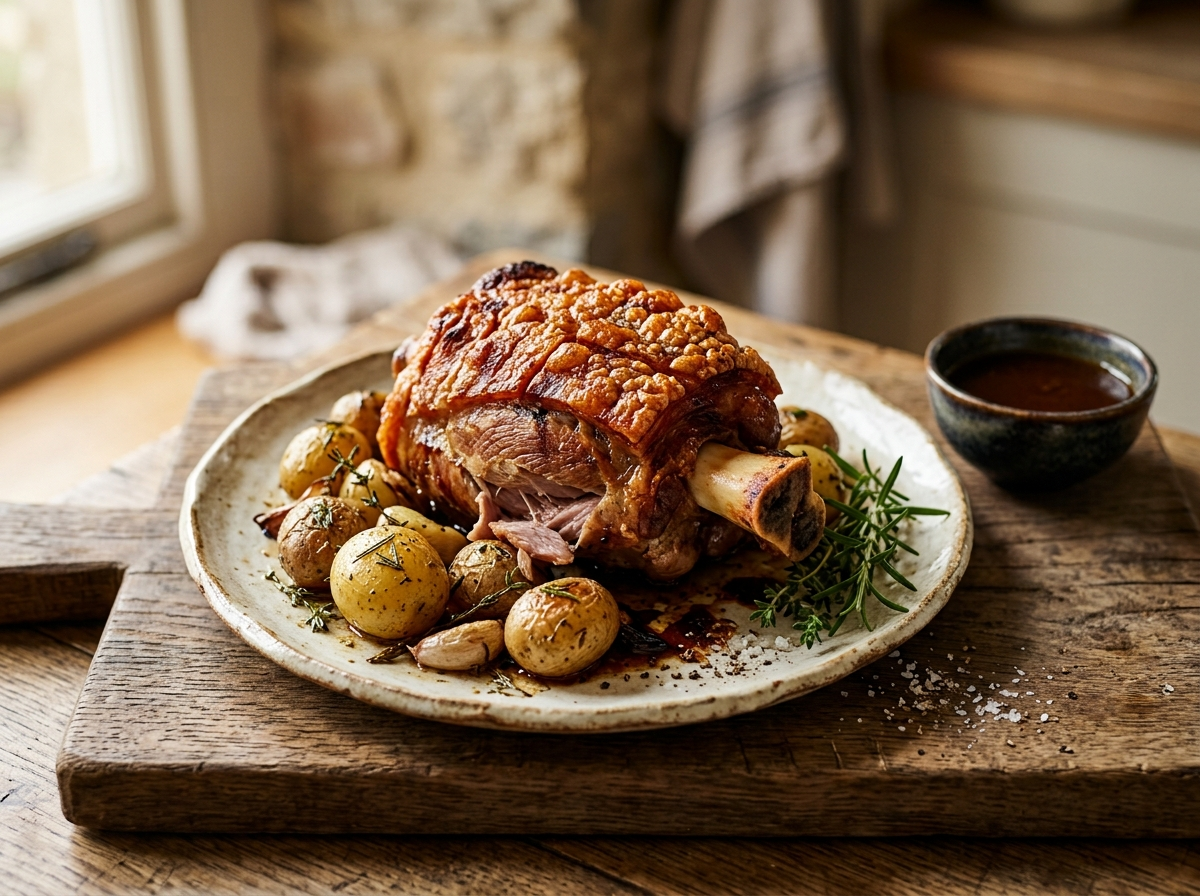
Stinco di maiale al forno is a whole pork shank roasted low and slow in the oven until the meat pulls away from the bone and the skin turns dark gold and crackled. It’s a Sunday dinner staple across northern Italy, especially Trentino and Emilia-Romagna, much like arista di maiale al forno, where it shows up next to polenta or roasted potatoes.
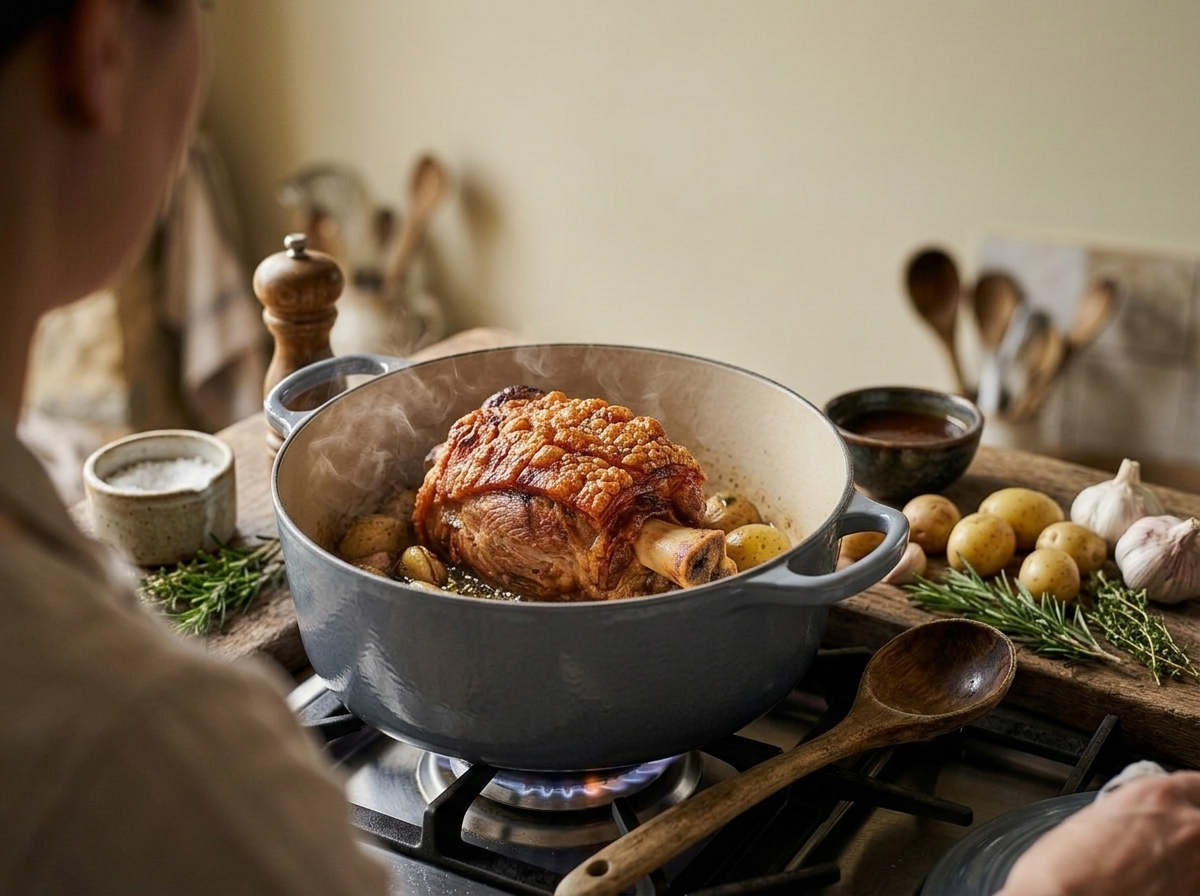
The shank is a tough cut, full of connective tissue, so a hot fast roast won’t work here. You sear it first for color, then braise it covered in wine and stock at 170C / 340F for about two hours before uncovering it to crisp the skin.
I learned the hard way that rushing the covered stage leaves the meat stringy instead of falling off the bone. Give it the full two hours and check with a fork before you uncover the pot.
The result is a shank that pulls apart easily, a dark pan sauce worth spooning over everything, and skin that shatters like crackling.
Why You’ll Love This Recipe
- Skin turns deep gold and crackled, not chewy
- One pot handles the searing, braising and roasting
- Meat falls off the bone with just a fork
- Leftover pan sauce doubles as gravy for polenta
Ingredient Notes
- Pork shanks: Look for bone-in shanks with the skin still on, about 500-600g each. Pork hock is the same cut and works identically.
- White wine: A dry white like Pinot Grigio keeps the sauce clean-tasting. Skip sweet wines, they throw off the balance.
- Stock: Chicken or vegetable stock both work. Check the label if you need this gluten free, some brands add wheat-based thickeners.
- Potatoes: Baby potatoes roast well alongside the shanks in the last 40-45 minutes. Larger potatoes need halving so they cook through in time.
- Rosemary: Fresh sprigs give the best aroma. Dried rosemary works in a pinch, use about a third of the amount.
Crackled-Skin Stinco di Maiale al Forno
Ingredients
Method
- Pat pork shanks fully dry with paper towels and season all over with salt and pepper.
- Heat olive oil in a large Dutch oven over medium-high heat. Sear shanks 3-4 minutes per side until deep golden brown, then remove and set aside.
- Add onion, carrot, celery and garlic to the same pot. Cook 5-6 minutes, stirring, until softened and lightly golden.
- Return shanks to the pot. Add rosemary, bay leaves, wine and stock, the liquid should come about halfway up the shanks.
- Bring to a simmer on the stovetop, then cover tightly with a lid or foil.
- Heat oven to 170C / 340F. Transfer the covered pot to the oven and roast 2 hours, turning shanks once halfway through.
- Uncover the pot, add potatoes around the shanks, and increase oven to 200C / 390F. Roast uncovered 40-45 minutes, until the skin is deep gold and crackled and internal temp reads 90C / 194F, meat should pull easily from the bone with a fork.
- Rest shanks 10 minutes in the pot before serving. Skim excess fat from the pan sauce, then spoon over the shanks and potatoes.
Notes
- Pat shanks fully dry before searing for better skin crackle.
- Don't skip the covered braise stage, it breaks down the connective tissue.
- Check for 90C / 194F internal temp before uncovering the pot.
- Skim fat from the sauce before serving for a cleaner finish.
Tips for Success
- Sear the shanks in batches if your pot is small, crowding drops the pan temperature and stops proper browning.
- Score the skin lightly before searing so it renders and crackles instead of staying rubbery.
- Use a dry white wine like Pinot Grigio, it won’t overpower the pork the way a sweet wine would.
- Check the internal temperature at 90C / 194F, the meat should pull apart easily with a fork at that point.
- Add the potatoes only for the final uncovered stage so they roast instead of turning mushy in the braising liquid.
Variations
- Swap white wine for apple cider for a slightly sweeter pan sauce that pairs well with roasted apples.
- Add a few juniper berries and a cinnamon stick to the braise for an Alpine, Trentino-style version.
- Finish with a splash of balsamic vinegar in the last 10 minutes for a deeper, tangier glaze on the skin.
Storage and Reheating
Stinco di maiale al forno keeps in the fridge for up to 3 days. Store the shanks and pan sauce together in an airtight container so the meat stays moist.
Reheat covered in a 160C / 320F oven for 20-25 minutes, spooning the sauce over halfway through, until warmed through. A microwave works in a pinch but softens the skin.
Freeze cooked shanks and sauce, without the potatoes, for up to 2 months. Thaw overnight in the fridge before reheating in the oven.
Serving Suggestions
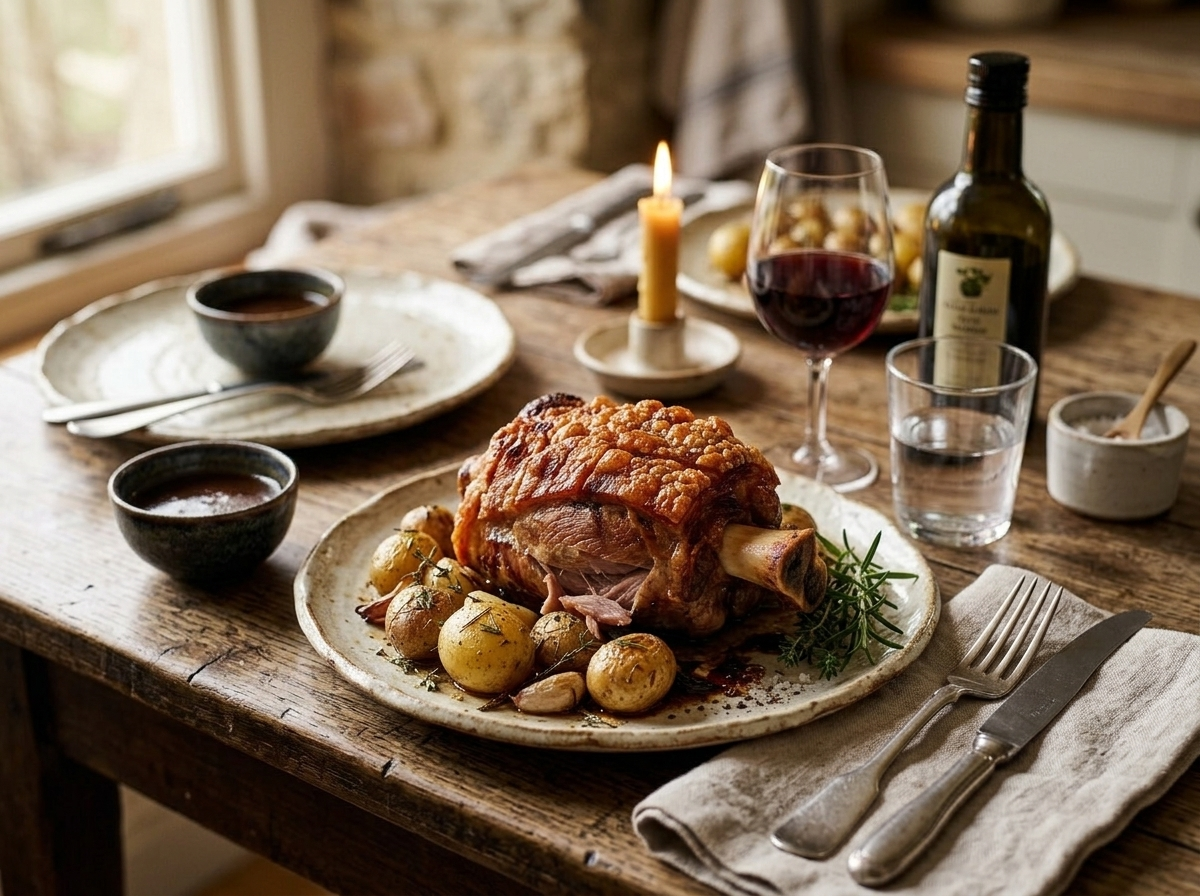
Stinco di maiale al forno pairs well with soft polenta or mashed potatoes to soak up the pan sauce. Braised greens or a bitter radicchio salad cut through the richness.
For a full Sunday meal, start with a light broth-based soup and pour a medium-bodied red like Barbera alongside the shank.
Leftover meat, pulled off the bone, makes a good filling for sandwiches or a next-day tagliatelle al ragù bolognese.
FAQ
Why is the skin on my stinco di maiale al forno not crispy?
Usually the skin stayed covered too long or too much liquid pooled on top. Uncover the pot for the last 40-45 minutes and raise the oven to 200C / 390F so the surface dries out and browns. Patting the shanks dry with paper towels before searing also helps the skin crackle instead of steam.
Can I use pork hock instead of pork shank for this recipe?
Yes, fresh pork hock works the same way since it’s the same cut, just sometimes labeled differently by the butcher. Look for a bone-in piece with the skin still attached, roughly 500-600g each. Cooking time stays the same, about 2 hours covered plus 40-45 minutes uncovered at 200C / 390F.
Can I make stinco di maiale al forno a day ahead?
Yes, and it actually tastes better the next day once the sauce has had time to settle. Cook it fully, cool, then store shanks and sauce together in the fridge for up to 3 days. Reheat covered in a 160C / 320F oven for 20-25 minutes before serving so the skin re-crisps.
What goes well with stinco di maiale al forno?
Soft polenta or roasted potatoes are the classic match since they soak up the wine-based pan sauce. A bitter green like radicchio or braised chicory balances the richness of the pork. A glass of medium-bodied red wine, like Barbera or Montepulciano, rounds out the meal.
Is stinco di maiale al forno gluten free?
Yes, as written this recipe is gluten free since the sauce relies on wine, stock and vegetables instead of flour. Just double check your stock’s label, some brands add wheat-based thickeners. The shank, herbs and vegetables are all naturally gluten free.
What’s the difference between stinco di maiale and osso buco?
Stinco di maiale uses a whole pork shank roasted in one piece, while ossobuco alla milanese is veal or beef shank cut crosswise into rounds and braised in a shallower liquid. Stinco finishes mostly uncovered for crackled skin, while osso buco stays submerged and has no skin at all. Both share a similar wine and stock base.