Jump to Recipe
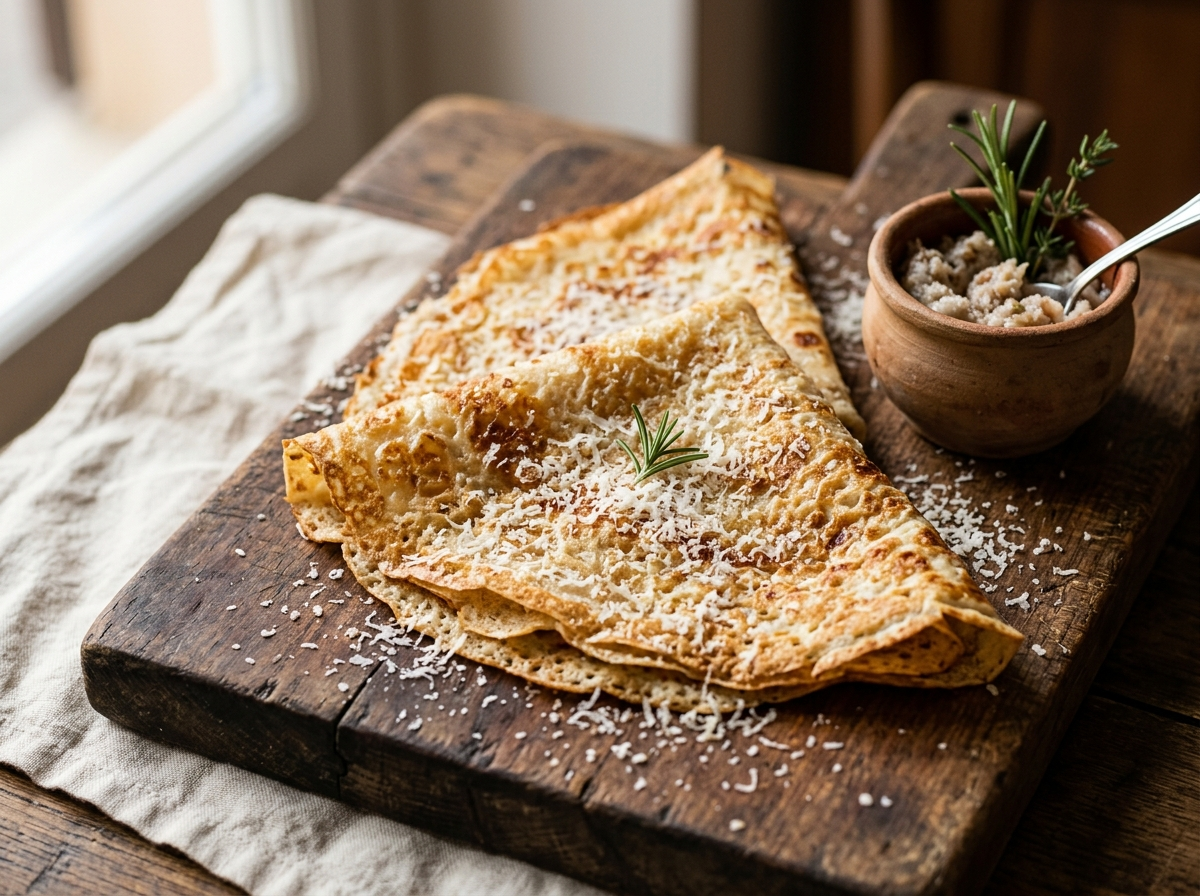
Borlengo is a large, paper-thin crepe from the Apennine foothills above Modena and Vignola. The batter is nothing but flour, water, a pinch of salt, and sometimes an egg – it barely qualifies as batter at all. That leanness is the point.
The cooking surface is a heavy iron pan called a rola or testo, coated in lard. The batter goes in almost as thin as water and crisps in a matter of seconds. The result is translucent and blistered at the edges, somewhere between a French crepe and a flatbread cracker.
Once cooked, each borlengo gets a smear of cunza – a paste of lard rendered with rosemary and garlic – then a generous snowfall of grated Parmigiano Reggiano. You fold it in quarters and eat it immediately.
This is peasant food from the mountains, made from what farmers could keep in the house through winter: flour, water, pork fat, aged cheese. Good ingredients, a patient hand with the pan, and straightforward technique.
Why You’ll Love This Recipe
- Four simple pantry ingredients make the whole batter
- Ready in under 30 minutes once your pan is hot
- The cunza filling takes only 5 minutes to prepare
- Deeply savory, crispy, and unlike any other Italian crepe
Ingredient Notes
- 00 flour: Finely milled 00 flour gives the most delicate, translucent crepe. All-purpose flour works but produces a slightly thicker result. Do not use bread flour.
- lard (for the pan): Rendered pork lard is traditional and gives borlengo its distinct flavor and crunch. A small amount of solid vegetable shortening can substitute, though the flavor changes noticeably.
- lard (for cunza): Good-quality soft lard blends easily with rosemary and garlic. If you can find it, use freshly rendered leaf lard. Butter is a common cheat that most people accept at the table.
- Parmigiano Reggiano: Freshly grated Parmigiano is non-negotiable here – it melts slightly on the warm crepe and binds with the cunza. Grana Padano works in a pinch.
- fresh rosemary: One small sprig is enough. Infuse it in the lard over low heat for 3-4 minutes so the fat carries the flavor without tasting raw or grassy.
- egg (optional): Some recipes add one egg to the batter to help the crepe hold together in a standard nonstick pan. Omit it for a more traditional result if you have a well-seasoned iron pan.
Borlengo Modenese: Crispy Paper-Thin Crepes from Emilia-Romagna
Ingredients
Method
- Combine the flour and salt in a mixing bowl. Whisk in the cold water gradually until the batter is smooth and has no lumps. If using the egg, whisk it in now. The batter should be very thin, almost watery.
- Cover the bowl and rest the batter at room temperature for 30 minutes. The flour will hydrate fully and the batter will look slightly thicker.
- Place the lard in a small saucepan over low heat. Add the minced garlic and rosemary leaves. Cook gently for 3-4 minutes, stirring, until the garlic turns pale and fragrant but not brown.
- Remove from heat, add a pinch of salt, and stir to combine. Keep warm on the lowest heat setting or set aside at room temperature. The cunza should be soft and spreadable.
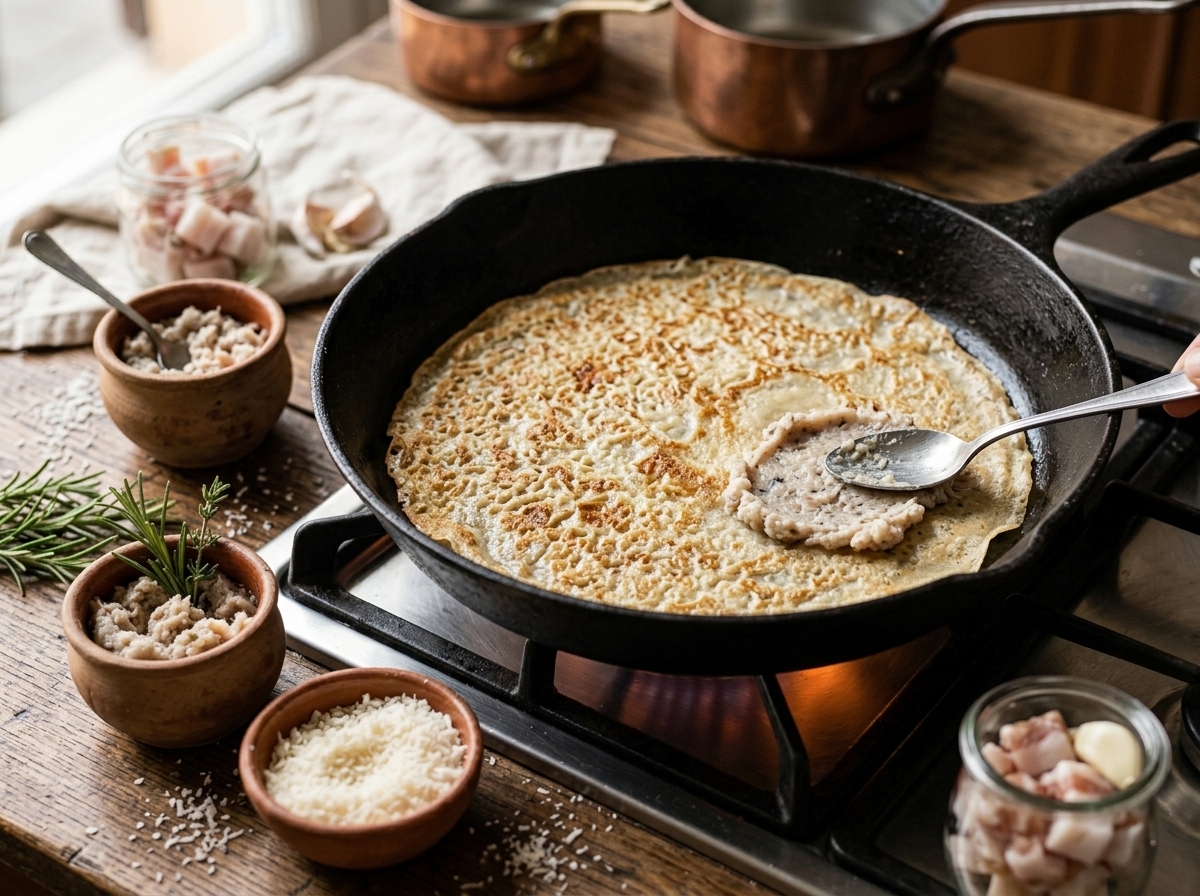
- Heat a 28-30 cm cast iron or carbon steel skillet over high heat for 2-3 minutes until very hot. Brush a thin, even coat of lard over the entire surface using a pastry brush.
- Stir the batter briefly, then pour one ladleful (about 80 ml) into the center of the pan. Immediately tilt and swirl the pan in a wide circle to spread the batter as thin as possible across the whole surface.
- Cook for 60-90 seconds until the top looks completely dry and matte and the edges are starting to crisp and pull away from the pan. Do not flip.
- Using a spoon or small spatula, quickly spread a thin layer of cunza over the surface of the borlengo while it's still in the pan. Scatter over a generous pinch of grated Parmigiano Reggiano.
- Slide the borlengo onto a board, fold in half and then in half again to form a quarter-circle triangle. Serve immediately while still hot and crispy.
- Repeat with the remaining batter, brushing fresh lard into the pan before each pour. Cook all 8 borlengo and serve in batches.
Notes
Tips for Success
- Rest the batter for at least 30 minutes so the flour fully hydrates and the crepe cooks evenly.
- Heat the pan until a drop of water bounces off before adding lard, then coat thinly and consistently.
- Pour the batter and immediately tilt the pan in a wide circle to spread it as thin as physically possible.
- Cook each borlengo on one side only – the top should look dry and matte before you add the cunza.
- Have the cunza and Parmigiano ready at the pan so you can fill and fold in under 20 seconds while still hot.
Variations
- Swap cunza for a thin spread of soft aged pecorino blended with rosemary for a sharper flavor.
- Add finely chopped pancetta to the cunza for extra texture and a smokier finish.
- Make a sweet version with butter, local honey, and a pinch of salt instead of cunza and Parmigiano.
Storage and Reheating
Cooked borlengo do not store well – the crispness disappears within minutes of folding. If you must hold them, stack with parchment between layers and reheat in a dry iron pan over high heat for 30-40 seconds per side.
The batter keeps in the fridge for up to 24 hours in a sealed container. Stir well before each pour as the flour settles. The cunza can be made 3-4 days ahead and kept refrigerated in a small jar.
Serving Suggestions
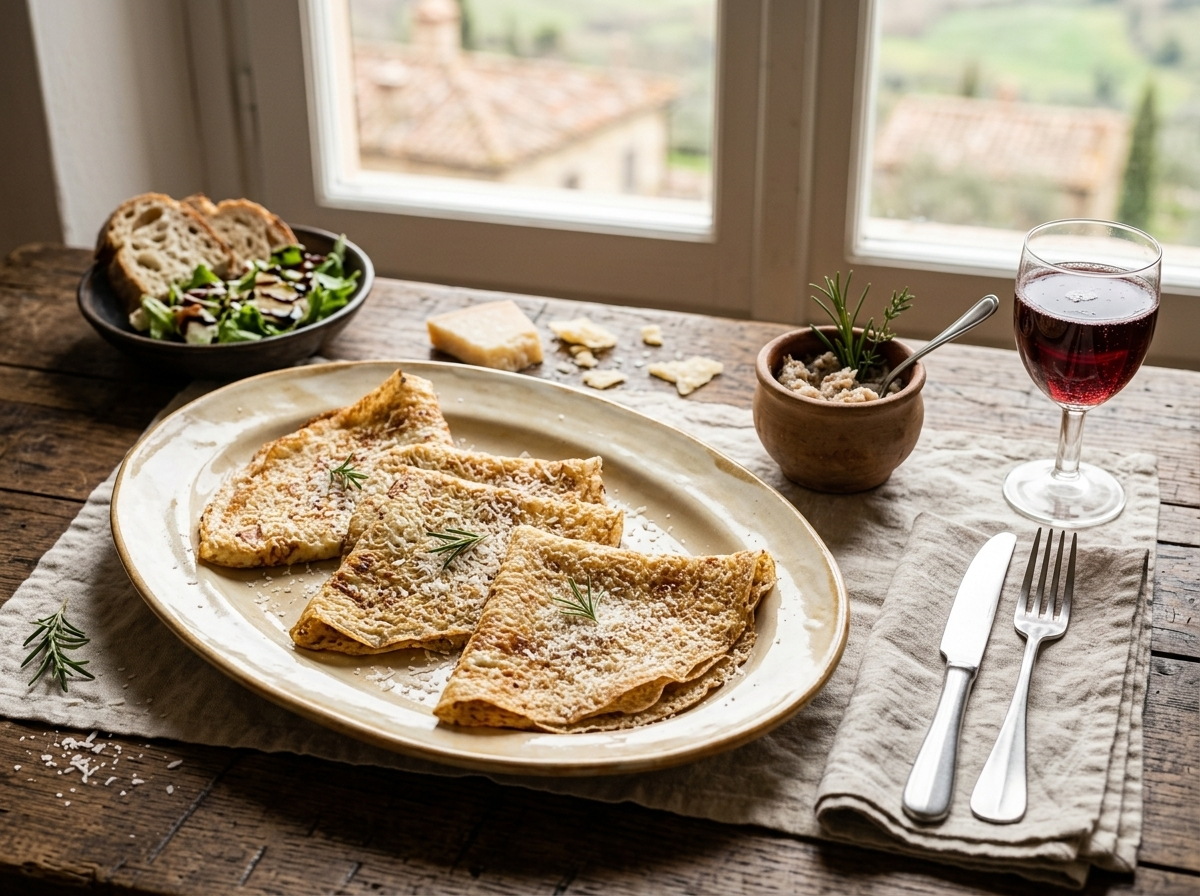
Borlengo are street food and farmhouse food at the same time. Serve them folded in quarters on a wooden board, two or three per person, with extra Parmigiano on the side and a small bowl of cunza for anyone who wants more.
In the Modena hills, they’re eaten as a starter or a midday snack alongside cold cuts and a glass of Lambrusco di Sorbara – the light sparkling red cuts through the fat cleanly. Sparkling water with a squeeze of lemon works just as well.
For a more substantial spread, serve alongside tigelle or gnocco fritto so guests can compare the different textures of Emilian street food classics.
FAQ
Why is my borlengo tearing when I tilt the pan?
The batter is too thick or the pan isn’t hot enough. Borlengo batter should be thinner than standard crepe batter – add water a tablespoon at a time until it runs like light cream. The pan needs to be properly hot before you pour.
Can I use butter instead of lard to grease the pan for borlengo?
You can, but the crepe won’t crisp the same way. Lard has a higher smoke point and coats the pan more evenly, which is what creates the blistered, crackly texture. Clarified butter is a closer substitute than whole butter.
What is the difference between borlengo and a regular French crepe?
Borlengo batter contains no milk, no butter, and often no egg – it’s almost entirely flour and water. The result is crispier and more translucent than a French crepe, cooked in lard rather than butter, and always savory with cunza and Parmigiano.
Can I make the cunza for borlengo a few days ahead?
Yes. Cook the lard with rosemary and garlic, let it cool completely, then seal it in a small glass jar in the fridge for up to 4 days. Bring it back to room temperature before spreading so it doesn’t tear the hot crepe.
Is borlengo modenese gluten-free?
No, traditional borlengo is made entirely from wheat flour. There’s no straightforward gluten-free swap that replicates the structure of the original crepe, since the thin flour-water batter is what makes the texture work.
What goes well with borlengo besides the traditional cunza filling?
A glass of Lambrusco di Sorbara is the classic local pairing – its light fizz and mild tannin balance the richness of the lard. On the food side, cold cuts like coppa or mortadella di Bologna alongside tigelle make a full Emilian spread.