Ingredients
Method
Make the batter
- Combine the flour and salt in a mixing bowl. Whisk in the cold water gradually until the batter is smooth and has no lumps. If using the egg, whisk it in now. The batter should be very thin, almost watery.
- Cover the bowl and rest the batter at room temperature for 30 minutes. The flour will hydrate fully and the batter will look slightly thicker.
Make the cunza
- Place the lard in a small saucepan over low heat. Add the minced garlic and rosemary leaves. Cook gently for 3-4 minutes, stirring, until the garlic turns pale and fragrant but not brown.
- Remove from heat, add a pinch of salt, and stir to combine. Keep warm on the lowest heat setting or set aside at room temperature. The cunza should be soft and spreadable.
Cook the borlengo
- Heat a 28-30 cm cast iron or carbon steel skillet over high heat for 2-3 minutes until very hot. Brush a thin, even coat of lard over the entire surface using a pastry brush.
- Stir the batter briefly, then pour one ladleful (about 80 ml) into the center of the pan. Immediately tilt and swirl the pan in a wide circle to spread the batter as thin as possible across the whole surface.
- Cook for 60-90 seconds until the top looks completely dry and matte and the edges are starting to crisp and pull away from the pan. Do not flip.
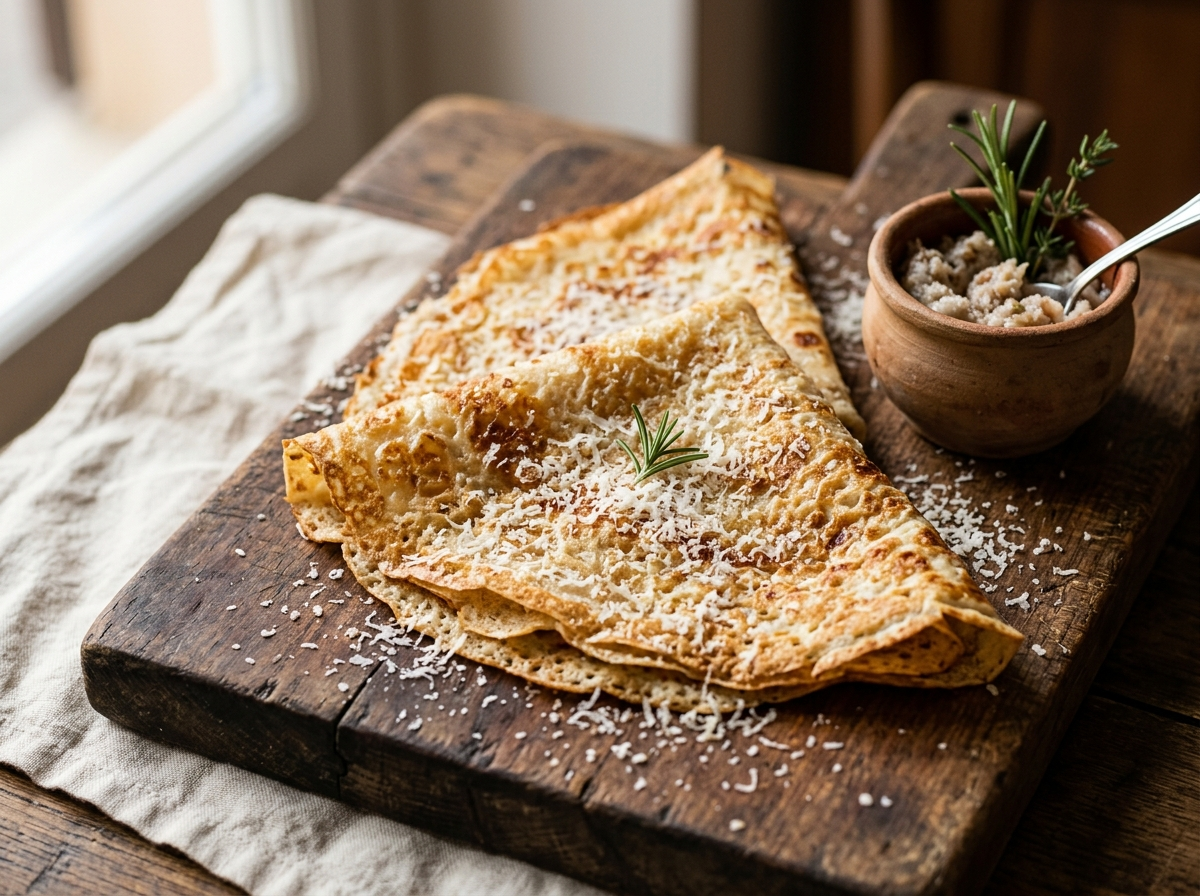
- Using a spoon or small spatula, quickly spread a thin layer of cunza over the surface of the borlengo while it's still in the pan. Scatter over a generous pinch of grated Parmigiano Reggiano.
- Slide the borlengo onto a board, fold in half and then in half again to form a quarter-circle triangle. Serve immediately while still hot and crispy.
- Repeat with the remaining batter, brushing fresh lard into the pan before each pour. Cook all 8 borlengo and serve in batches.
Notes
The batter must be thinner than any crepe batter you've made before - if it coats the back of a spoon, add more water. A pan that isn't hot enough is the single most common reason borlengo turns out soft instead of crispy.