
Jump to Recipe
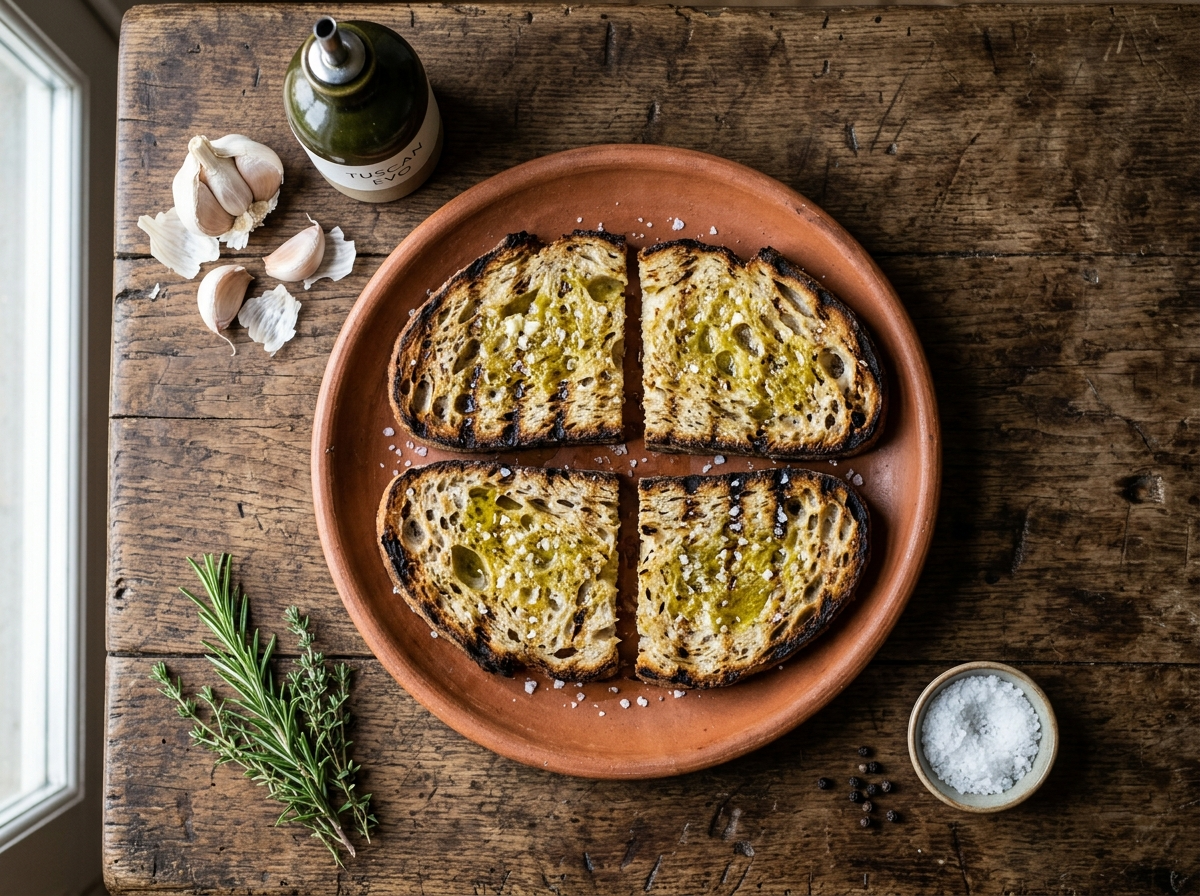
Fettunta is Tuscan dialect for ‘oily slice,’ and the name tells you exactly what this is: a thick slab of grilled bread rubbed with raw garlic and drenched in fresh extra virgin olive oil. No butter, no seasoning mix, no shortcuts.
In Tuscany it appears every November at the olive oil harvest, when frantoiani offer it to visitors to taste the new-season oil straight from the press. The bread is just a vehicle for evaluating the oil’s flavor.
The recipe has four ingredients. The bread should be a day old, with a dense, open crumb. The garlic should be raw and rubbed hard while the bread is still hot. The oil should be poured, not drizzled, and the salt added after.
Make it once with a genuinely good olive oil and you’ll understand why Tuscans don’t complicate it.
Why You’ll Love This Recipe
- Ready in under 10 minutes with pantry staples
- Showcases high-quality olive oil at its clearest
- Naturally vegan and dairy-free with no substitutions needed
- Scales from one slice to a crowd with zero extra effort
Ingredient Notes
- Tuscan unsalted bread (pane sciocco): Authentic fettunta uses pane sciocco, the saltless Tuscan loaf. A good sourdough or country loaf with an open crumb works well outside Italy. Avoid soft sandwich bread, it won’t hold the oil.
- Extra virgin olive oil: This is the whole point of the dish. Use a fresh, peppery Tuscan EVOO if you can find one. A new-harvest oil labeled ‘olio nuovo’ will have the grassy, slightly bitter edge the dish is built around.
- Garlic cloves: Use large, firm cloves. Rub them on the hot bread while the surface is still rough and open so the garlic actually grates into the crumb. One clove per slice is enough for a noticeable bite without being aggressive.
- Coarse sea salt or flaky salt: Add salt after the oil so it stays on top and you get a crunch in each bite. Maldon or a coarse sea salt works well. Fine salt disappears into the oil.
Fettunta Toscana: Tuscan Garlic-Rubbed Grilled Bread with Olive Oil
Ingredients
Method
- Heat a cast-iron grill pan over high heat for 2 minutes until very hot, or prepare a charcoal grill with live coals.
- Place the bread slices on the grill and cook without pressing for 2 minutes until clear char lines appear on the underside.
- Flip each slice and grill the second side for 1 to 2 minutes until both sides are charred and the surface feels dry and crisp.
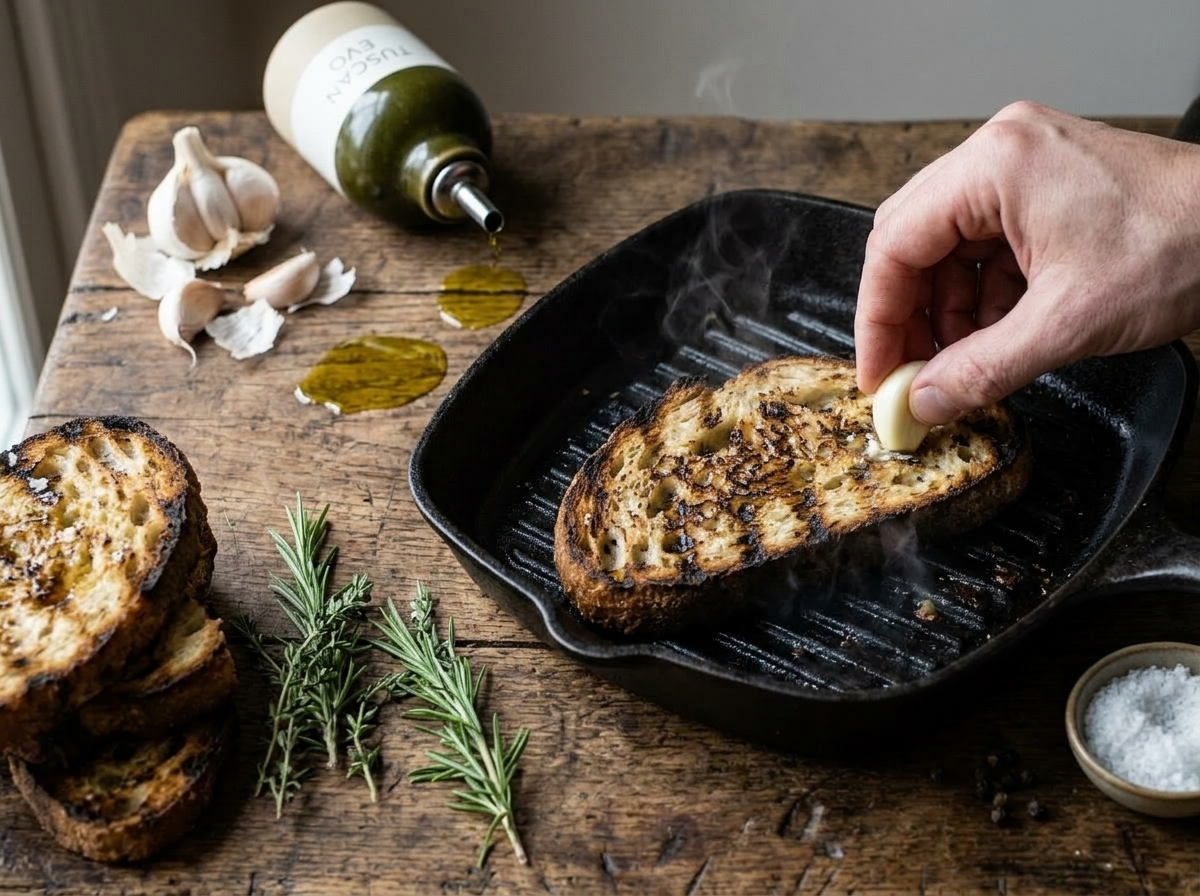
- Remove the bread from the heat and immediately rub one peeled garlic clove firmly across the top surface of each slice for about 10 to 15 seconds, using short back-and-forth strokes so the garlic grates into the warm crumb.
- Pour 1 to 1.5 tablespoons of extra virgin olive oil in a slow, thin stream over the full surface of each slice, letting it soak into the crumb.
- Scatter a pinch of flaky salt over each slice and serve immediately while the bread is still hot.
Notes
Tips for Success
- Grill the bread over live charcoal or in a cast-iron grill pan until char marks appear on both sides, about 2 minutes per side.
- Rub the garlic clove immediately while the bread is hot, the rough toasted surface acts like a grater and the heat releases more aroma.
- Pour the olive oil in a thin, steady stream across the full surface rather than dotting it on, 1 to 1.5 tablespoons per slice is the right amount.
- Salt after the oil so the crystals sit on top and give textural contrast rather than dissolving into the bread.
- Serve within 2 minutes of finishing, fettunta is a hot bread dish and goes flat quickly once the oil soaks fully through.
Variations
- Top with freshly diced ripe tomato, torn basil, and a pinch of black pepper for a bruschetta-adjacent version.
- Rub with a halved ripe tomato before the garlic for a pan con tomate crossover that works well in summer.
- Add a few shavings of pecorino toscano on top of the oil for a slightly richer, saltier finish common in southern Tuscany.
Storage and Reheating
Fettunta is meant to be eaten the moment it comes off the grill. There is no real storage version, the bread goes soggy within minutes once the oil soaks through.
If you have leftover grilled bread before adding the toppings, store it uncovered at room temperature for up to one day and re-toast it briefly in a hot pan or under the broiler before rubbing with garlic and adding oil.
Do not refrigerate already-finished fettunta. The oil solidifies and the bread texture is lost completely.
Serving Suggestions
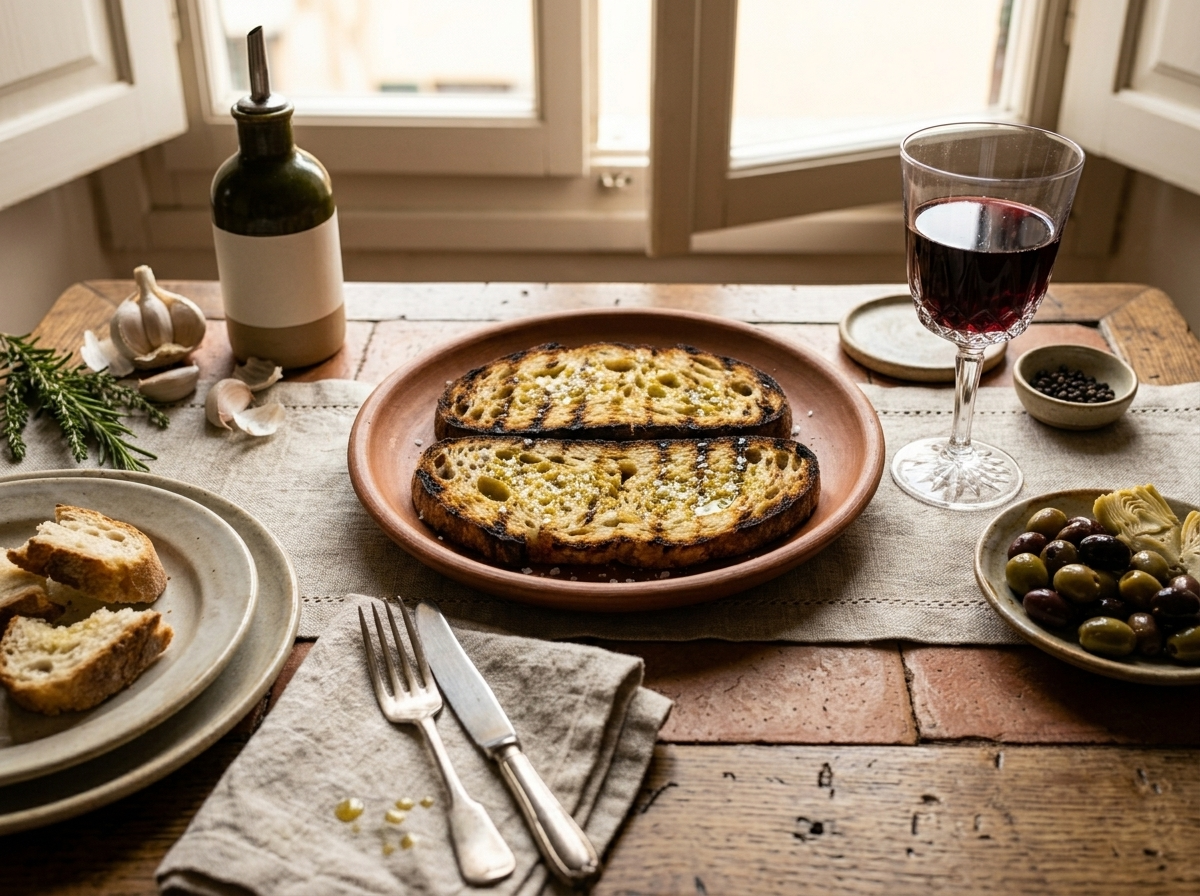
Fettunta is traditionally served as a standalone antipasto, often before a meal of ribollita, pappa al pomodoro, or a simple Tuscan bean dish. The contrast between the hot oily bread and a bowl of warm legume soup is a classic Tuscan pairing.
At harvest time it appears on its own with a glass of young Chianti or Morellino di Scansano, wines covered in depth in this Italian wine pairing guide. The slight bitterness of new-season oil holds up well against a wine with some tannin.
For a simple table spread, serve alongside olives, a wedge of aged pecorino, and sliced salumi. Keep portions to one or two slices so it stays in the antipasto role rather than filling the table before the main course arrives.
FAQ
Why does my fettunta taste flat even with garlic and olive oil?
The most common reason is a bland or oxidized olive oil. Fettunta has nowhere to hide an average oil, so the flavor falls flat if the oil lacks the grassy, peppery edge of a fresh EVOO. Try sourcing a new-harvest bottle and the difference is immediate.
Can I use regular salted Italian bread instead of pane sciocco for fettunta?
You can, but the result will be saltier and the balance shifts because the oil and salt you add on top stack against an already seasoned base. If salted bread is all you have, skip or reduce the finishing salt and taste as you go.
How do I know when the bread is grilled enough for fettunta?
Look for clear char marks on both sides and a surface that feels crisp and slightly rough when you tap it, not just warm or toasted. That rough, charred surface is what allows the garlic to grate into the crumb rather than just sliding across it.
What is the difference between fettunta and bruschetta?
Fettunta is purely about the bread and oil, no tomato topping, and originates in olive oil harvest culture in Tuscany. Bruschetta in its original Roman form is also simple grilled garlic bread, but the word is now used broadly in Italy and internationally to describe any topped grilled bread, whereas fettunta stays strictly minimal.
Is fettunta toscana gluten-free?
No, the dish is built around wheat bread and cannot be made gluten-free without changing its core character. If you need a gluten-free version, a thick slice of a good GF sourdough-style loaf that toasts firmly is the closest substitute, though the crumb texture will differ.
Can I prepare fettunta for a group ahead of a dinner party?
You can grill all the bread slices up to 30 minutes ahead and keep them on a wire rack uncovered at room temperature. Rub with garlic and add the oil only when guests sit down, because the bread softens fast once oiled and loses its crunch.