
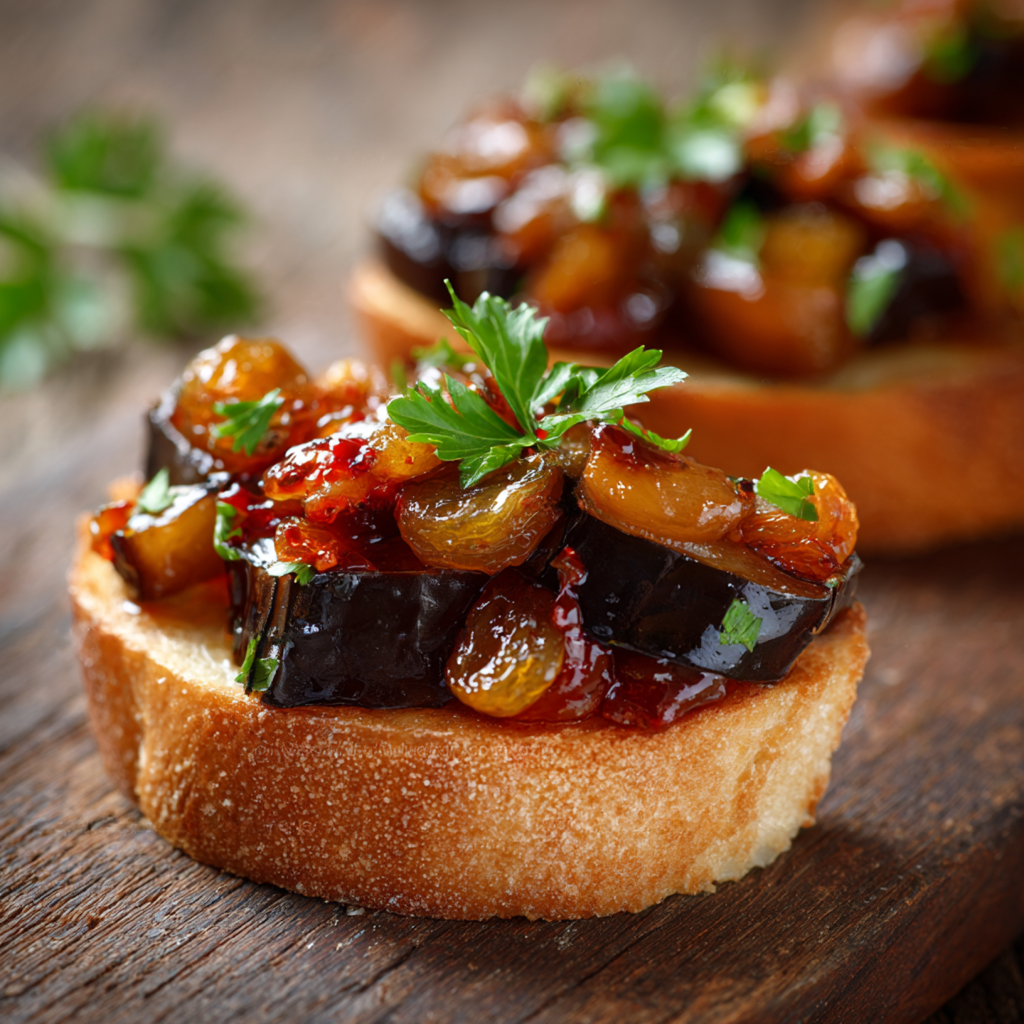
Jump to Recipe
I learned the caponata di melanzane recipe at my grandmother’s table, where caramelized eggplant and sharp vinegar met like old friends. The scent of frying onions, the briny pop of capers and olives, and the gentle sweetness of simmered tomatoes taught me how simple ingredients make deep, honest flavor.
Here I share what I still do in my home kitchen: salt and drain eggplant for silky texture, brown or roast pieces for concentrated taste, and balance acidity with a touch of sugar and red wine vinegar. You’ll get clear cues for doneness, stovetop and roasted paths, smart swaps for pantry limits, and practical storage tips so it keeps for days or freezes cleanly.
Think of this as a trustworthy family method that makes a bright relish for bread, pasta, or a holiday spread—and that pairs beautifully with a Nero d’Avola or any medium-bodied red with lively acidity.
Key Takeaways
- A trusted family method for eggplant caponata with both stovetop and roasted options.
- Techniques covered: salting, browning, simmering, and finishing with vinegar and sugar.
- Clear cues for texture to avoid mushy eggplant and keep a glossy, spreadable body.
- Ingredient swaps and timing tips that preserve classic Sicilian flavor.
- Make-ahead and storage guidance: refrigerate up to 5 days, freeze up to 3 months.
A Sicilian classic with sweet-sour soul and family-tested technique
The dish I grew up with finds its heart in a bright sweet-sour finish and the slow coaxing of simple vegetables.
What makes authentic eggplant irresistible
True authenticity rests on agrodolce—the balance of vinegar and sugar that lifts eggplant and keeps it plush instead of heavy.
Softened celery and onion form the savory base. I always cook them over medium heat until silky before adding tomatoes or eggplant.
- Briny capers and olives add contrast to sweet tomatoes and caramelized aromatics.
- Use olive oil sparingly so the dish feels rich but not greasy.
- Give eggplant cubes space to brown; avoid crowding the pan to prevent steaming.
Experience from an Italian home cook: timing, taste, and tradition
Timing matters. A slow simmer lets flavors knit; chilling overnight makes the dish sing.
I choose fresh tomatoes in summer and good canned ones in winter. A splash of wine or extra vinegar can rescue a flat batch.
This family-tested approach keeps the dish honest. Small adjustments—how much oil or when to add capers—make the difference between good and unforgettable flavors.
Ingredients you’ll need for deep, balanced flavor
Good ingredients are the roadmap to a balanced, sweet-sour spread that feels like home. Below I name each element and explain its role, plus easy swaps when the pantry calls for it.
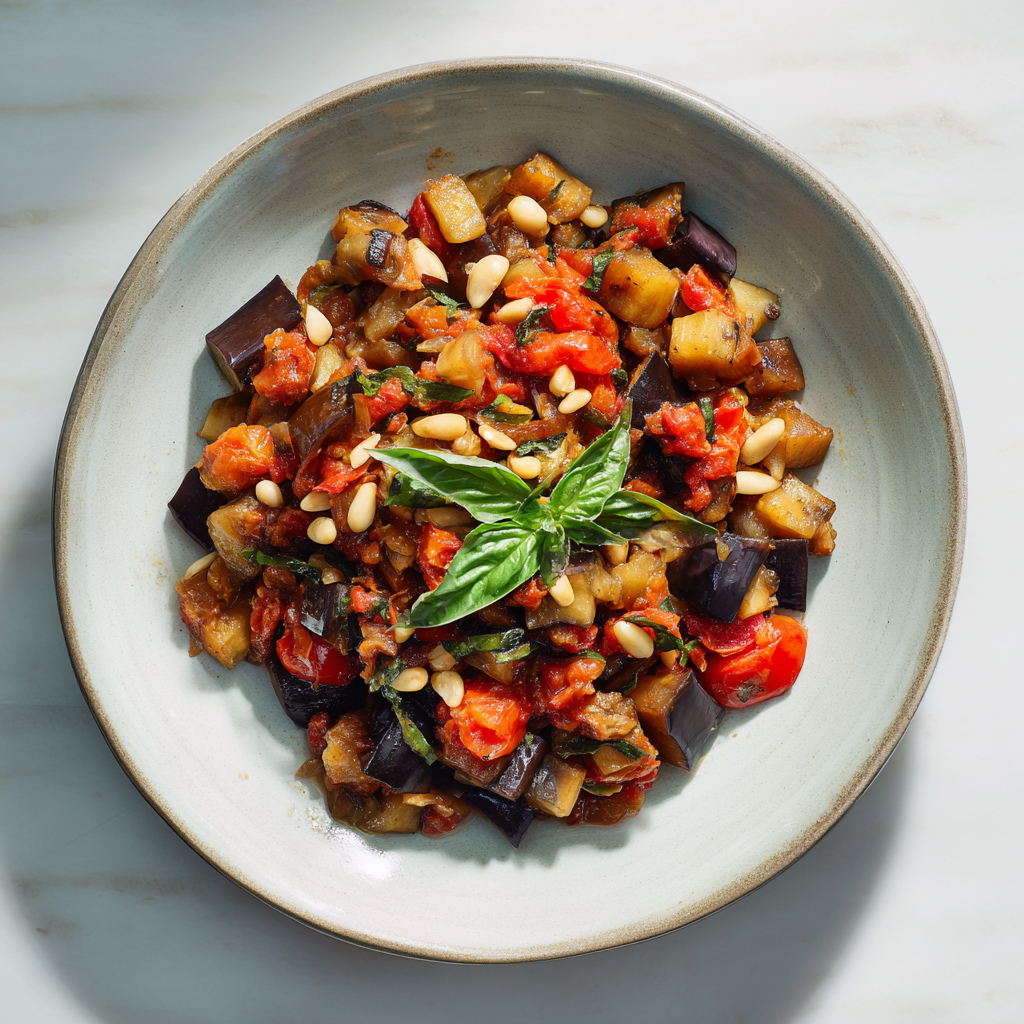
Core vegetables: eggplant, celery, onions, tomatoes, and garlic
Eggplant carries the dish. It soaks up sauce and the perfume of garlic and onions. Choose firm, glossy eggplant and plan about one generous cup per person when serving as a relish.
Celery and onions give a savory backbone. Chop them evenly so they soften into the sauce. Fresh tomatoes add brightness; a teaspoon of tomato paste deepens color and umami without taking over.
Briny boosters: olives and capers for savory contrast
Capers and a handful of chopped olives bring salinity and a briny pop. They cut through the sweetness and keep the layers lively.
If you lack Kalamata, use Gaeta or Niçoise. Pit and chop firmly so the olive pieces fold into the vegetables.
The sweet-sour backbone: red wine vinegar and sugar
I reach for red wine vinegar for classic character, though other wine vinegar varieties work. Add sugar sparingly—taste as the sauce reduces and adjust by a pinch.
Olive oil, salt, and pepper: simple essentials that shape the sauce
Use olive oil for richness and sheen. Split the oil: a few tablespoons to sauté aromatics, the rest to finish. Salt and a few grinds of pepper are your final tuning knobs.
Optional touches: pine nuts, golden raisins, and fresh herbs
Pine nuts add crunch; golden raisins lend a gentle sweetness. Finish with parsley or basil for fresh lift. For a lighter swap, use zucchini or yellow squash in place of eggplant.
Step-by-step cooking method: stovetop skillet or roasted
I start at the sink: cut eggplant into even cubes, toss with salt, and let them drain about 30 minutes. This step draws out water and tames bitterness. Rinse and pat the cubes fully dry before cooking.
Prep and purge
Set a large skillet or wide pan over medium heat. Warm a few tablespoons of olive oil and sweat chopped celery, onion, and garlic until soft and fragrant. This creates a silky base that sweetens as it cooks.
Fry or roast the eggplant
For plush, slightly crisp edges, shallow-fry the eggplant in fresh oil until the centers are tender and the faces turn faintly golden. For a lighter path, roast on a sheet pan until tender with browned tips. Watch the minutes and heat so pieces brown, not steam.
Build the sauce
Fold in tomato paste, chopped tomatoes, capers, and olives. Simmer uncovered about 15 minutes until the tomatoes collapse into a cohesive sauce that clings to the vegetables. Season during reduction with salt and freshly ground pepper.
Finish with vinegar and sugar
Finish with a splash of red wine vinegar and a measured spoon of sugar. Simmer a few more minutes until the sauce looks glossy. If you roasted the eggplant, add it at the end so pieces absorb flavor without falling apart.
- Let the pan rest off heat; flavors settle as the sauce tightens.
- Taste and adjust before cooling—this dish improves after a little time.
Mastering the agrodolce: how to balance sweet and sour
Balancing sweet and sour is less about rules and more about listening to your palate as the sauce reduces. I watch for a glossy, slightly thick body and a scent that smells rounded, not sharp.
Choosing your vinegar
I reach first for red wine vinegar for classic structure. It gives bright acid that lifts tomatoes and eggplant without overpowering them.
Sherry or other wine vinegar styles soften edges and add warm, nutty notes. A splash of red wine deepens fruit tones—cook it off so only aroma remains.
Tasting cues and simple fixes
- Reduce until the sauce clings and the aroma turns fragrant; concentration lessens harsh acidity.
- Start with less sugar. Add tiny pinches until the sweet sour balance sings.
- If the vinegar bites the front of your palate, simmer a minute longer or add a pinch of sugar.
- If flavors feel dull, add a small splash more vinegar and re-taste.
- Salt before final tasting—under-salted blends feel flat and mislead adjustments.
| Vinegar | Flavor Impact | Best Use |
|---|---|---|
| Red wine vinegar | Bright, classic acidity | Traditional finishes, preserves structure |
| Sherry vinegar | Round, nutty, softer edges | When you want mellow sweetness |
| White wine vinegar | Clean, lighter acid | Summer tomatoes or lighter eggplant versions |
Serving tips: best at room temperature for peak flavor
Bringing the dish up to room heat for a short time always reveals its true character. I pull it from the fridge and let it sit for 20 to 30 minutes so the aromas open and the texture softens.
It often tastes best on day 2 or day 3. Resting allows the tomato and vinegar notes to marry with olives and capers, giving a deeper, more cohesive taste.
Appetizer ideas: crostini, cheese boards, and mezze platters
Spoon a generous layer onto warm crostini and finish with fresh basil and a twist of pepper. It also pairs beautifully with aged cheeses and works well as part of a mezze platter alongside olives and crusty bread.
Main and side ideas: pasta tosses, polenta bowls, and eggs on toast
Toss with short pasta, adding a splash of pasta water to loosen the sauce. Ladle over creamy polenta and scatter toasted pine nuts for crunch.
For brunch, pile it on toast and crown with a soft-poached egg; the runny yolk blends into the tomato base and lifts the whole plate.
Wine pairing: why Nero d’Avola complements the relish’s richness
I reach for a Sicilian Nero d’Avola. Its bright red fruit, medium tannin, and lively acidity balance the relish’s sweet-sour profile and the salt of capers and olives. If you prefer white, choose a textured, acidic bottle and taste side by side.
- Let it rest at room temperature 20–30 minutes before serving.
- Make ahead: flavors deepen on day two—great for stress-free hosting.
- Finish with a drizzle of good olive oil and fresh herbs just before serving.
Caponata di melanzane recipe variations and smart substitutions
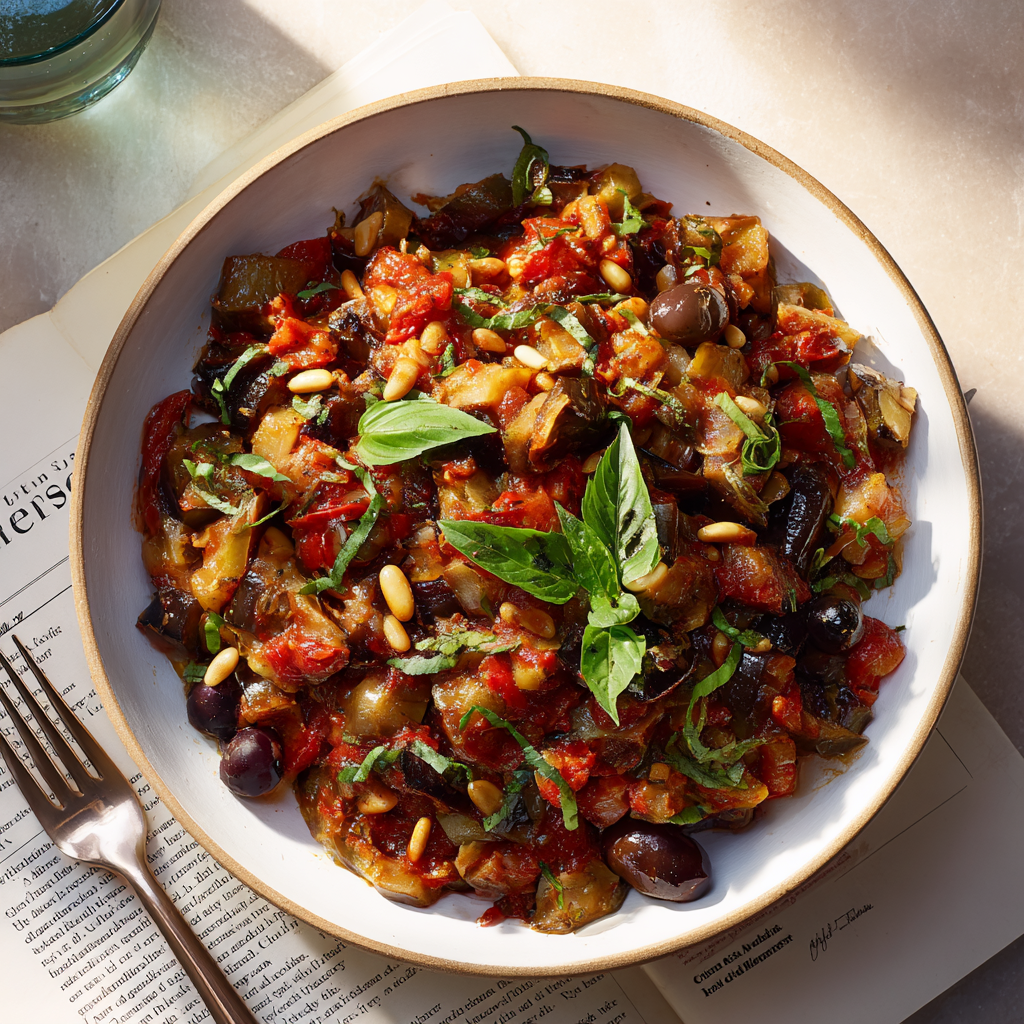
I often reach for zucchini when I want a lighter, faster version that still tastes like home. Zucchini or yellow squash give a soft, saucy bite but need less time than eggplant. Salt briefly, pat dry, and cut cooking minutes so they stay tender, not mushy.
If you avoid frying, roast cubes brushed with olive oil until just golden to get a fried eggplant effect. Swap tomato paste with sun-dried tomato paste for depth, or use a thick tomato sauce and reduce it to a glossy nappe.
- Replace Kalamata with Gaeta or Niçoise; chop finely so olives flavor evenly.
- Keep capers for that piquant pop—don’t skip them.
- Use golden raisins for layered sweetness and pine nuts for crunch.
- Reduce oil but bloom paste and spices gently; season in stages and taste at the end.
| Swap | Why | How to adjust | Result |
|---|---|---|---|
| Eggplant → Zucchini | Lighter, faster | Salt 10 min, shorten cook by 5–7 minutes | Tender, less oily bite |
| Frying → Roasting | Less oil, similar texture | Brush cubes, roast at 425°F until edges brown | Caramelized, firmer pieces |
| Tomato paste → Sun‑dried paste | More umami | Use equal tablespoons; reduce to gloss | Richer, darker sauce |
| Sugar → Golden raisins | Layered sweetness | Add early so they plump; fold in pine nuts at finish | Complex sweet notes and crunch |
Make-ahead, storage, freezing, and food safety notes
Store leftovers with care and they’ll reward you with deeper flavor the next day. Cool the pan to room temperature before covering to avoid steam that blunts texture and invites bacteria.
Flavor improves on day two: chill, then serve at room temperature
I find the dish sings on day 2. Chill in the fridge, then let portions sit 20 to 30 minutes at room temperature before serving. This brings back aroma and a spoonable texture.
Refrigeration and freezing: airtight containers, times, and thawing
Use shallow, airtight containers so food chills fast and keeps color and structure. Refrigerate up to 5 days. For longer storage, freeze portions for up to 3 months.
- Thaw overnight in the refrigerator, then stir gently to restore the sauce.
- If the surface looks dull, fold in a teaspoon of oil and a twist of pepper to revive sheen.
- If flavors feel muted after freezing, add a few drops of vinegar to brighten—taste as you go.
- Avoid high heat reheating unless tossing with pasta; quick warmth is fine but long heat softens eggplant too much.
| Storage | Best use | Thawing |
|---|---|---|
| Refrigerator (≤5 days) | Serve cold or room temperature | None needed |
| Freezer (≤3 months) | Reheat gently or use in pasta | Overnight in fridge |
| Labeling | Track date and portion size | Reduces waste |
Conclusion
Finish confidently: the method here gives you predictable texture and bright, balanced flavors.
This recipe sets a clear path to an eggplant caponata with tender vegetables, a glossy sauce, and lively agrodolce. Choose your heat—pan‑fry for plush richness or roast for a lighter finish—then fold everything and simmer a few minutes so flavors marry.
Season at each stage. Adjust pepper, vinegar, and salt to taste. Let the dish rest; serving at room temperature lets tomatoes and onion bloom and the garlic and celery meld.
Portion by the cup for guests and keep a teaspoon of vinegar handy to brighten before plating. With these cues on minutes, temperature, and pan size, you’ll turn simple ingredients into a signature dish you trust.
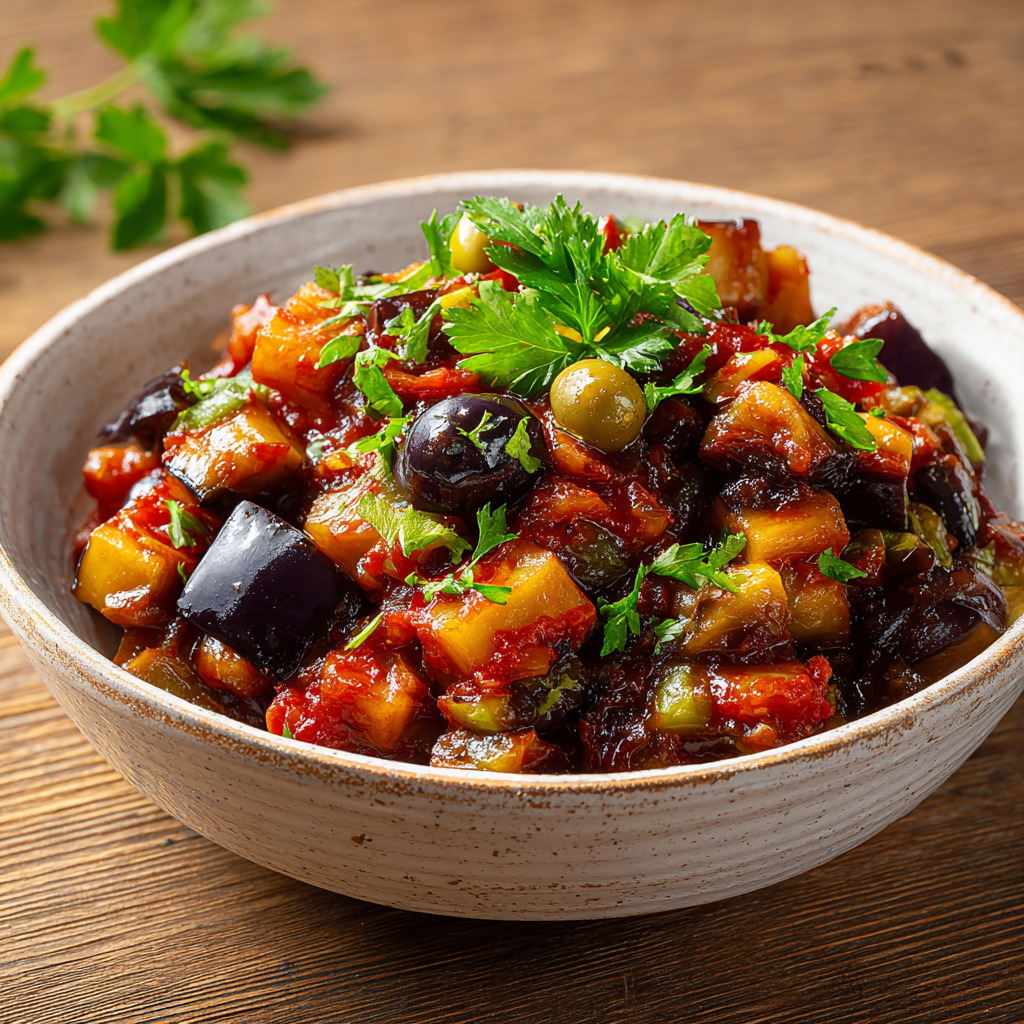
Caponata di Melanzane (Sicilian Sweet-Sour Eggplant Relish)
Ingredients
Method
- Cut eggplant into even cubes. Sprinkle with salt and let drain in a colander for 20–30 minutes. Rinse briefly and pat dry.
- Heat 2 tablespoons olive oil in a large skillet over medium heat. Add chopped celery, onion, and garlic. Cook until soft and fragrant, about 5–7 minutes.
- Stovetop: Shallow-fry eggplant cubes in fresh oil until centers are tender and edges lightly golden.
- Roasting (lighter option): Toss eggplant with a little olive oil and roast at 425°F (220°C) on a sheet pan until golden, 20–30 minutes.
- Add tomato paste, chopped tomatoes, capers, and olives to the pan. Simmer uncovered 15 minutes until tomatoes break down and form a thick sauce. Season with salt and pepper during simmering.
- Stir in red wine vinegar and sugar. Simmer a few more minutes until sauce is glossy. If roasted, add eggplant now and fold gently.
- Fold in golden raisins and pine nuts. Garnish with parsley or basil before serving.
- Let caponata cool slightly or chill. Serve at room temperature for best flavor. Pairs well with bread, pasta, polenta, or cheese boards.
Notes
- Eggplant can be swapped with zucchini or yellow squash for a lighter dish.
- Flavors improve if made a day ahead.
- Store in airtight containers in the fridge up to 5 days or freeze for up to 3 months.
- Serve at room temperature for best taste and texture.
- Optional pine nuts and raisins add texture and sweetness but can be omitted.