
Jump to Recipe
The kitchen fills with warmth when memories of my nonna’s hands dance across flour-dusted counters. She crafted delicate pastry that tells stories of Sicily’s sun-drenched landscapes. Every fold and twist whispers generations of culinary passion.
Simple ingredients transform into something magical that connects us deeply to our roots.
Key Takeaways
- Authentic Italian desserts are more than recipes—they’re family traditions
- Handmade pastries capture the essence of generational cooking techniques
- Sicilian desserts represent cultural heritage through intricate preparation
- Traditional cooking requires patience and respect for ingredients
- Homemade treats create meaningful connections between generations
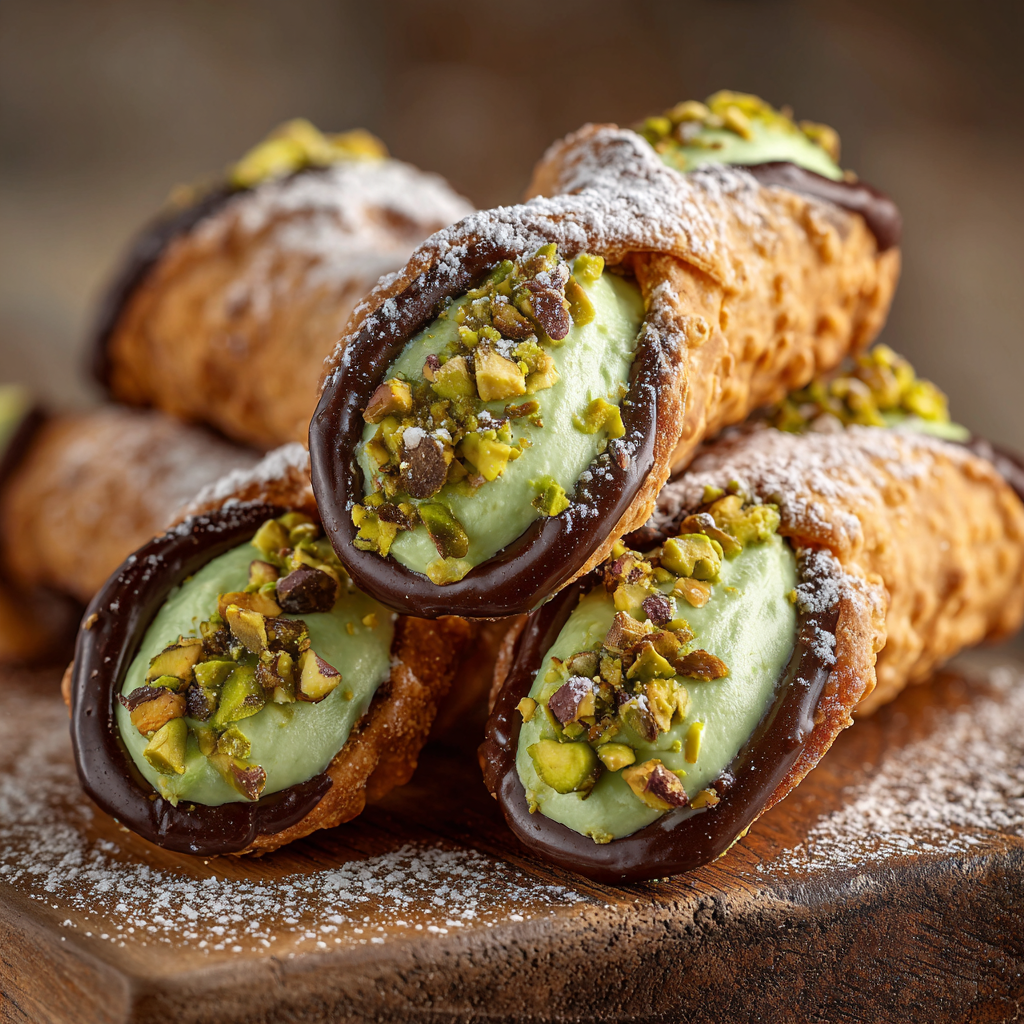
This pistachio cannoli recipe represents more than just a sweet treat. It’s a culinary journey that bridges generations. The recipe brings the soul of Italian baking directly into your kitchen.
What Makes Pistachio Cannoli a Sicilian Treasure Worth Making at Home
Pistachio cannoli represent far more than a simple dessert. They are a culinary journey through Sicily’s rich gastronomic heritage. These treats embody generations of family recipes and cultural traditions.
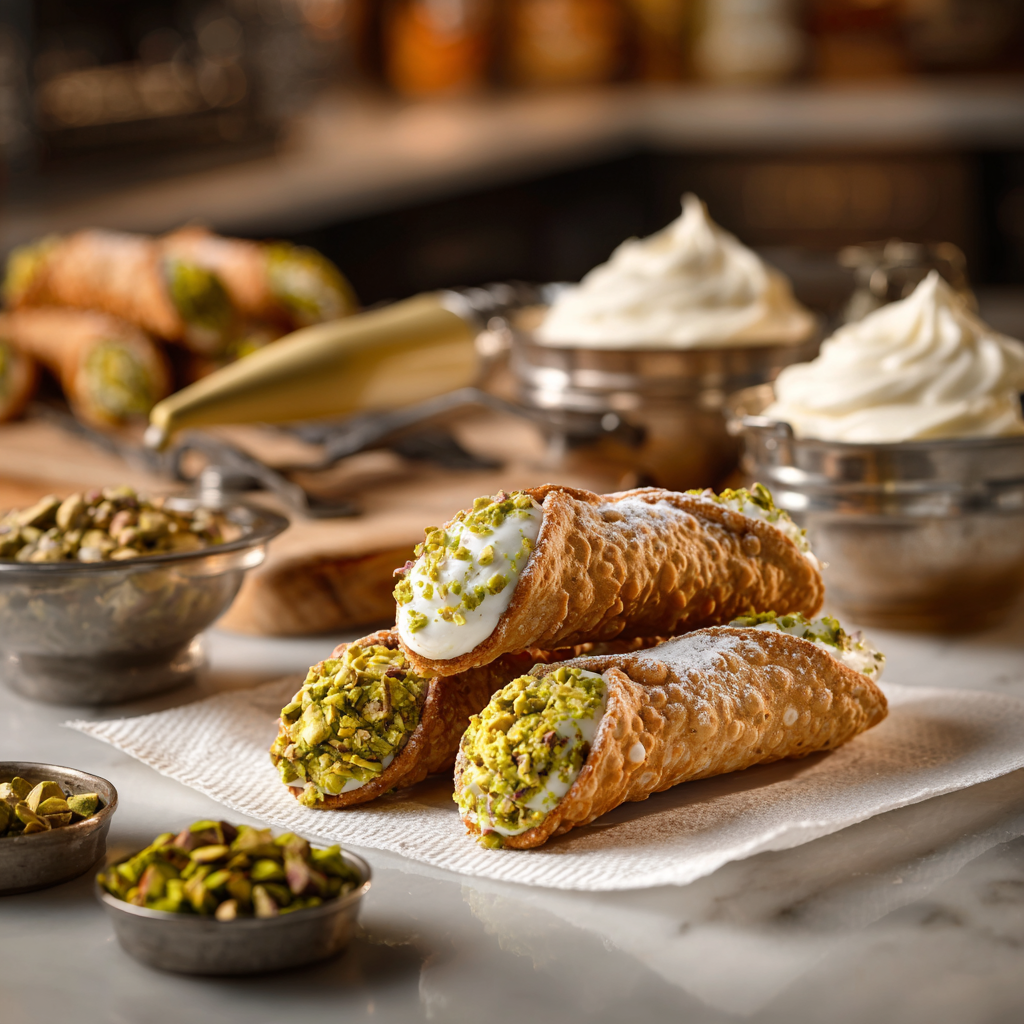
Our love for these delectable treats stems from their unique ability. They transport us directly to the sun-drenched streets of Palermo.
The magic of pistachio cannoli lies in their remarkable ingredients and intricate preparation. Sicily’s volcanic soil produces some of the world’s most exceptional pistachios. This gives these cannoli an unparalleled depth of flavor.
Crafting authentic Italian desserts means you’re not just baking. You’re preserving a culinary legacy.
- Rich cultural significance in Sicilian cuisine
- Unique flavor profile from premium pistachios
- Connection to generational family recipes
- Artisanal preparation techniques
Pistachio cannoli blend tradition with innovation beautifully. The crisp shell provides a perfect contrast to the creamy pistachio-ricotta filling. Each bite tells a story of craftsmanship and passion.
Making pistachio cannoli at home connects you to something special. You’re participating in a timeless culinary tradition. This experience links you to the heart of Sicily’s gastronomic culture.
Pistachio Cannoli Recipe: Creating the Perfect Shells and Creamy Filling
Crafting authentic pistachio cannoli combines precise techniques with rich Italian culinary traditions. Our family recipe transforms simple ingredients into a delectable dessert. These treats transport you straight to Sicily.
Crafting Authentic Cannoli Shells from Scratch
Creating the perfect cannoli shell requires patience and skill. Start by mixing flour, cocoa powder, and Marsala wine to develop a rich dough.
Here’s the step-by-step process:
- Combine dry ingredients in a large mixing bowl
- Add butter and vinegar to create a smooth dough
- Knead the dough until it becomes elastic
- Refrigerate for 1 hour to rest
- Roll dough to 1/16-inch thickness using a pasta machine
- Cut into 4-inch circles
The frying technique is crucial. Wrap the dough around greased cannoli tubes and seal with egg white. Fry at 350°F for 30 seconds, remove tubes, and continue frying another minute.
Preparing the Luxurious Pistachio-Ricotta Cream Filling
The heart of our cannoli is its decadent filling. Start with high-quality ricotta that’s been strained for several hours. This ensures a smooth, creamy texture.
- Strain 3 cups of ricotta in a cheesecloth-lined strainer
- Whip ricotta with 1 cup pistachio paste
- Sift 1½-2 cups powdered sugar
- Add 2 teaspoons of vanilla
- Beat until light and fluffy
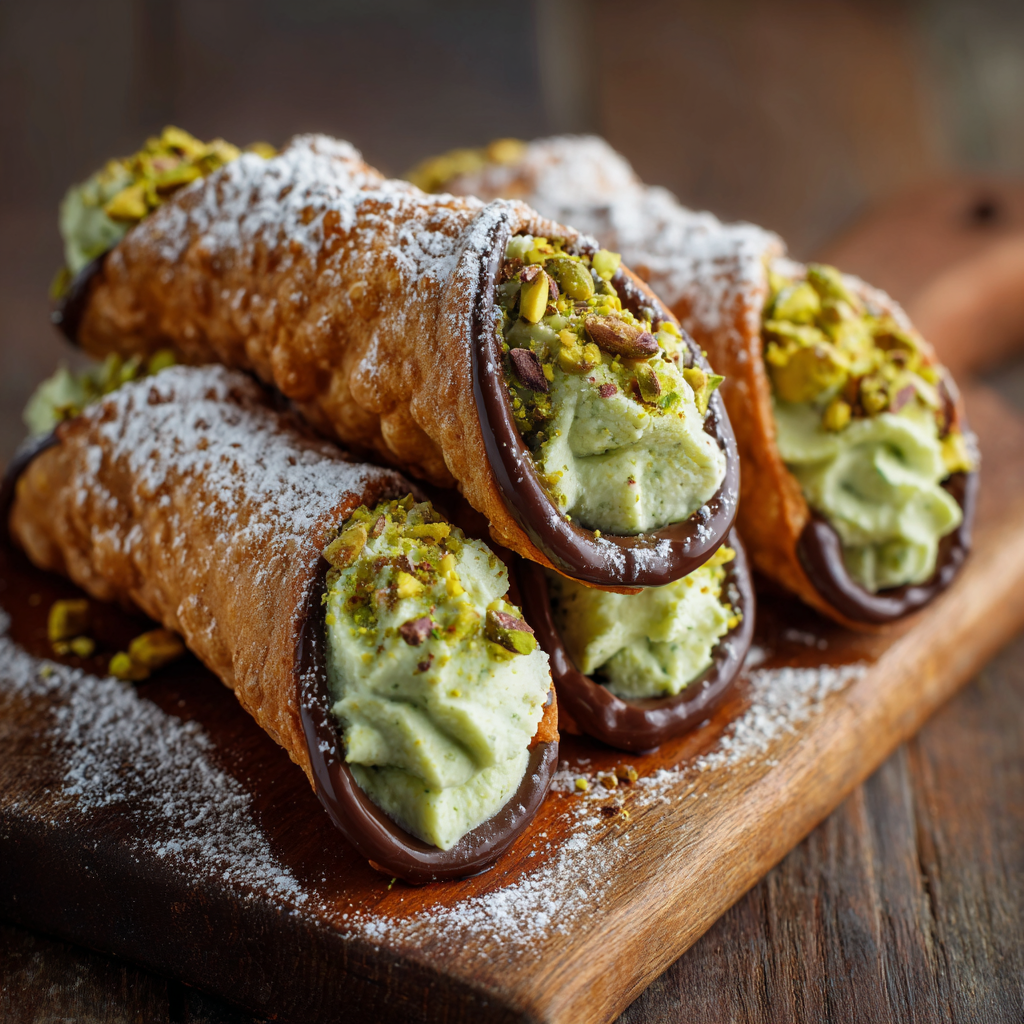
Fill the shells only when ready to serve to maintain their perfect crispness. For extra elegance, dip the shells in melted chocolate. Coat with chopped pistachios for a stunning finish.
Essential Tools and Ingredients for Homemade Pistachio Cannoli
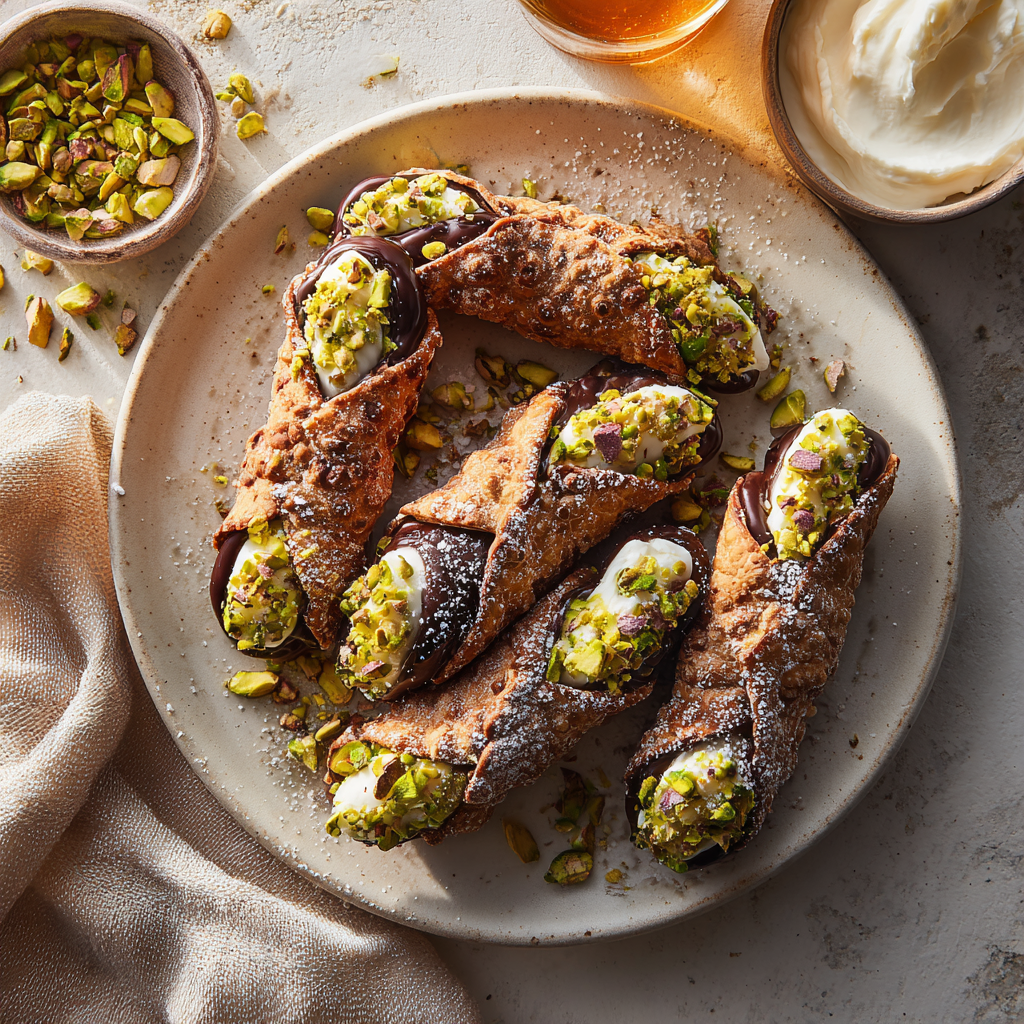
Creating authentic pistachio cannoli requires specialized equipment and carefully selected ingredients. These essential tools and components will transform your kitchen into a Sicilian pastry workshop.
Must-Have Cannoli-Making Tools
A tapered rolling pin helps you achieve perfectly thin dough. A pasta machine can provide consistent thickness. For precise shell cutting, a 4-inch round cutter is your best friend.
- Stainless steel cannoli tubes (4-5 inches long with overlapping seam)
- Tapered rolling pin for precise dough rolling
- Pasta machine for uniform dough thickness
- 4-inch round cutter for perfect shell shapes
- Deep frying thermometer
- Pastry bag with star tip for filling
Selecting Quality Ingredients
The magic of pistachio cannoli lies in its ingredients. Opt for fresh ricotta that has been thoroughly strained. Pistachio cream, or Fior di Pistacchio, adds an authentic nutty sweetness similar to pistachio Nutella.
| Ingredient Category | Recommended Options |
|---|---|
| Cream Base | Fresh strained ricotta, homemade or high-quality store-bought |
| Pistachio Element | Homemade pistachio cream or premium store-bought Fior di Pistacchio |
| Shell Ingredients | Flour, butter, sugar, cocoa powder, Marsala wine, vinegar, egg |
| Finishing Touches | White chocolate, chopped pistachios, powdered sugar |
A set of 4 stainless steel cannoli tubes typically costs less than $10. Metal tubes are recommended for safety and consistent results during high-heat frying.
Frying Essentials
High-quality vegetable oil is crucial for frying. The right oil temperature ensures crispy, golden shells that crackle with authenticity. Invest in a good thermometer to monitor oil temperature precisely.
Expert Tips for Assembling and Storing Your Pistachio Cannoli
Making perfect pistachio cannoli needs careful assembly and smart storage. Our family recipe shows that timing matters most. You can fry shells one day early and store them loosely covered at room temperature.
Pipe the creamy pistachio-ricotta filling from center to edges to avoid air pockets. Dip shell ends in melted chocolate for extra elegance and let them dry before filling. Sprinkle powdered sugar over filled cannoli for a beautiful look that honors Italian dessert traditions.
Prepare filling up to two days ahead and store it covered in the fridge. Never fill shells too early because moisture makes crisp shells turn soggy. Assemble cannoli right before serving for the best texture and flavor.
Fully assembled cannoli last 1-2 days in the fridge, but shells may soften from moisture. We recommend enjoying these treats the same day you make them. Share them with loved ones over warm espresso, celebrating Italy’s rich food traditions.
Authentic Sicilian Pistachio Cannoli
Ingredients
Method
- In a bowl, mix flour, sugar, and cocoa powder.
- Add cold butter and rub it into the dry ingredients until crumbly.
- Pour in the Marsala wine and vinegar.
- Mix until a dough forms, then knead until smooth and elastic (about 5 minutes).
- Wrap and refrigerate for 1 hour.
- Roll the dough very thin—about 1/16 inch. A pasta machine works best.
- Cut 4-inch circles using a round cutter.
- Lightly grease the cannoli tubes.
- Wrap each dough circle around the tube and seal the edge with egg white.
- Heat oil to 350°F (175°C).
- Fry each wrapped tube for about 30 seconds, gently remove the tube, then fry the shell another 1 minute until crisp and golden.
- Set shells on paper towels to cool completely.
- Place the strained ricotta in a bowl.
- Add pistachio paste, powdered sugar, and vanilla.
- Beat until smooth, creamy, and fluffy.
- Dip the ends of each shell in melted chocolate (optional) and coat with chopped pistachios. Let set.
- Fill a pastry bag with the pistachio-ricotta cream.
- Pipe from the center of each shell outward to avoid air pockets.
- Dust with powdered sugar before serving.
Notes
- Straining the ricotta is the secret to smooth, stable filling. Wet ricotta will make the shells soggy.
- Always fill the cannoli right before serving. This keeps the shells crisp.
- You can fry the shells a day ahead—just leave them uncovered at room temperature.
- Good-quality pistachio cream gives the dessert its signature Sicilian flavor.