
Jump to Recipe
Pesto alla Trapanese is a raw Sicilian sauce from Trapani, made by pounding ripe tomatoes, almonds, basil and garlic into a rough paste, then loosening it with olive oil and pecorino. No stove, no simmering, just a food processor and ten minutes.
I first had it on the west coast of Sicily, alongside classics like sarde a beccafico, where cooks toss it with busiate, a corkscrew-shaped pasta that traps every bit of sauce in its curls. Spaghetti works fine at home.
The almonds are what separate this from Ligurian basil pesto. They add body and a faint sweetness that plays against the acidity of the tomatoes, so the sauce stays bright instead of heavy.
One thing that trips people up: over-blending. Push it too far in the processor and you lose the coarse, rustic texture that makes this pesto distinct, ending up with something closer to a smooth puree.
Why You’ll Love This Recipe
- Ready in 10 minutes with zero cooking involved
- Almonds add body without any dairy-heavy cream
- Bright, fresh flavor from raw ripe tomatoes
- Naturally vegetarian and simple to make dairy-free
Ingredient Notes
- Ripe tomatoes: Use the ripest tomatoes you can find. Underripe ones make the pesto watery and pale instead of vivid red.
- Blanched almonds: Skinless almonds blend smoother. Swap in walnuts or pine nuts if that’s what’s on hand.
- Fresh basil: Use young, tender leaves. Older basil turns bitter once bruised in the processor.
- Garlic: One clove gives a mild bite, two gives more punch. Adjust to taste since it’s raw.
- Pecorino cheese: Adds salt and sharpness. Parmigiano works too, though it’s less tangy.
- Extra virgin olive oil: Use a fruity, decent-quality oil since it’s uncooked and carries most of the finishing flavor.
- Busiate or spaghetti: Busiate is traditional and holds the chunky sauce in its curls. Spaghetti or trofie work as substitutes.
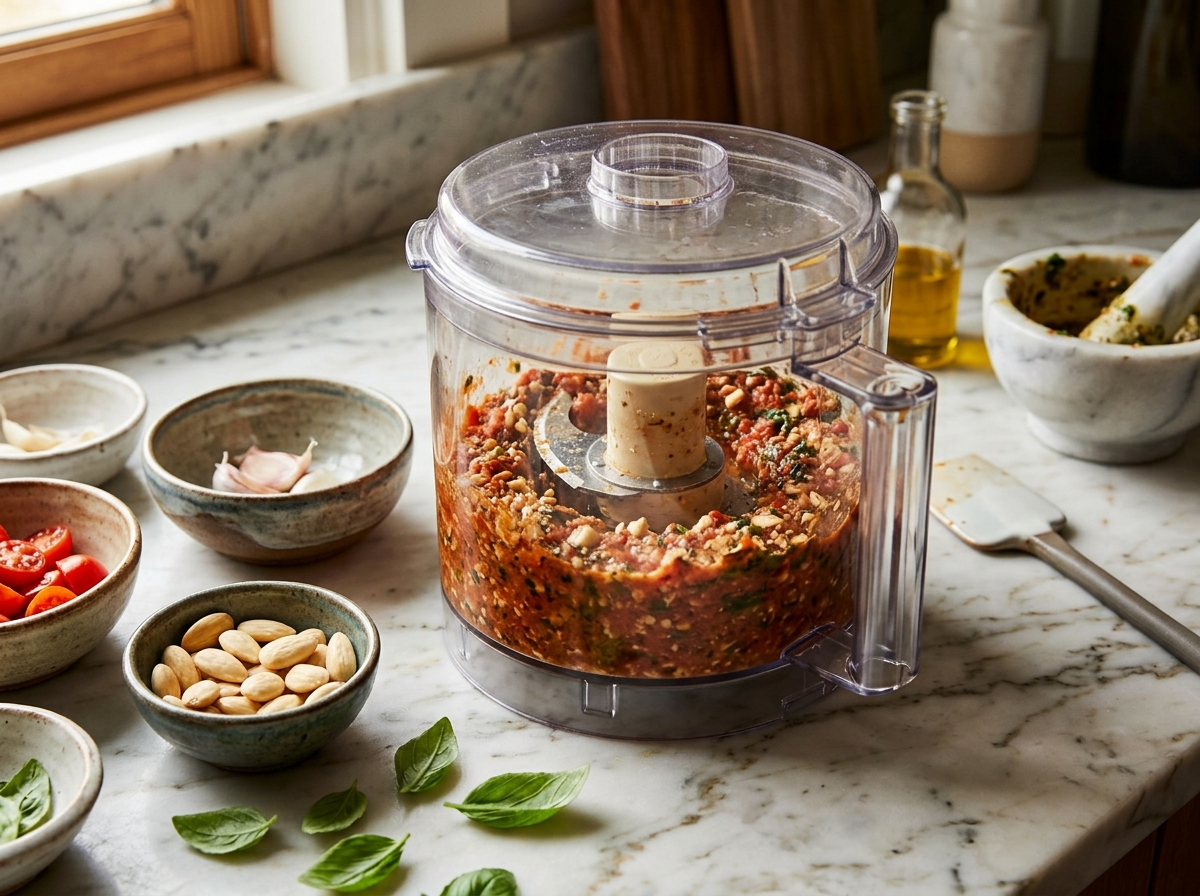
Sicilian Pesto alla Trapanese with Tomatoes & Almonds
Ingredients
Method
- Chop the tomatoes, salt them lightly, and let sit in a colander for 10 minutes to drain excess liquid.
- Toast the almonds in a dry skillet over medium heat for 3 minutes until fragrant, then let cool.
- In a food processor, pulse the garlic and cooled almonds until they form coarse crumbs.
- Add the drained tomatoes, basil and salt. Pulse in short bursts until chunky, not smooth.
- Transfer the mixture to a bowl and stir in the olive oil and pecorino until just combined.
- Bring a large pot of salted water to a boil at 100 C / 212 F and cook the pasta until al dente, 9 to 11 minutes.
- Reserve 1/2 cup of pasta water, then drain the pasta.
- Toss the hot pasta with the pesto, adding a splash of reserved pasta water to loosen the sauce if needed.
- Serve immediately with extra grated pecorino and a pinch of chili flake.
Notes
- Drain salted tomatoes 10 minutes before blending to avoid excess liquid.
- Pulse, don't puree, to keep the pesto's rustic texture.
- Stir in pecorino off heat since raw sauce never touches a stove.
- Toss pesto with drained pasta immediately for the best cling.
Tips for Success
- Use very ripe, in-season tomatoes since underripe ones turn the pesto watery and pale instead of vivid red.
- Toast the almonds lightly in a dry pan for 3 minutes to deepen their flavor before blending.
- Pulse the food processor in short bursts so the pesto stays coarse, not silky smooth.
- Reserve a cup of pasta water before draining to loosen the sauce when tossing it together.
- Salt the chopped tomatoes and let them drain in a colander for 10 minutes before blending.
Variations
- Swap almonds for pine nuts or walnuts for a milder, slightly different Sicilian-style pesto texture.
- Add a pinch of dried chili flake for the peperoncino kick found in Trapani versions.
- Use cherry tomatoes instead of beefsteak for a sweeter, less watery pesto base.
Storage and Reheating
Pesto alla Trapanese keeps in an airtight container in the fridge for up to 3 days. Press a layer of plastic wrap or a thin film of olive oil directly onto the surface to keep it from browning.
I don’t recommend freezing it mixed with tomatoes since they turn watery and separate once thawed. For a make-ahead option, freeze just the almond, basil and garlic base for up to 2 months, then stir in fresh tomatoes when you’re ready to serve.
Serve the pesto cold or at room temperature tossed with warm pasta, no reheating of the sauce needed. Reheat leftover pasta gently in a skillet with a splash of water over low heat for 2 minutes.
Serving Suggestions
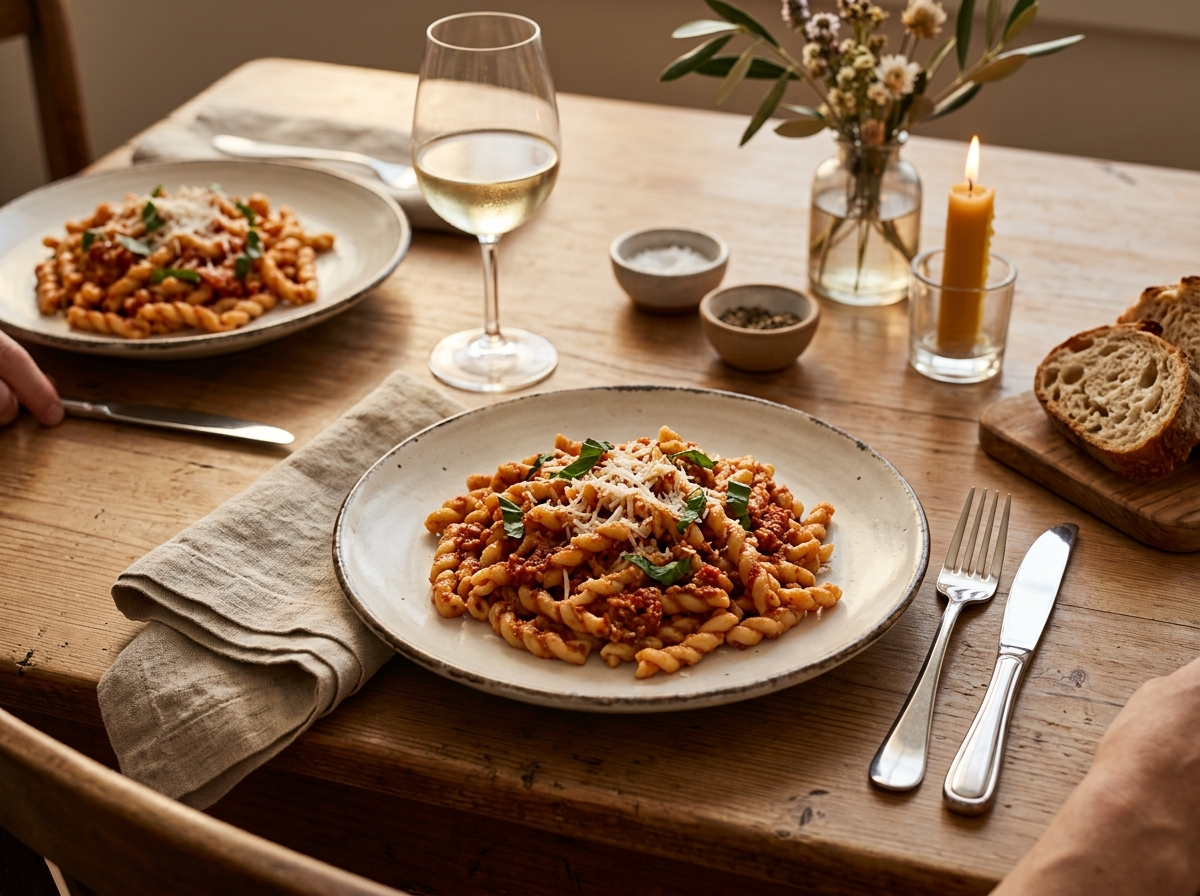
Pesto alla Trapanese is classically tossed with busiate, the twisted Sicilian pasta shape, though spaghetti or trofie work well too. Toss the warm, drained pasta directly into the pesto off the heat so the sauce stays raw and bright.
Serve it alongside a Sicilian potato salad like insalata pantesca and crusty bread to soak up extra sauce. A chilled glass of Sicilian white wine, like Grillo or Catarratto, pairs well with the tomato and basil.
Leftover pesto also makes a good spread on grilled bread or a topping for sliced tomatoes and fresh mozzarella.
FAQ
Why is my Pesto alla Trapanese watery instead of thick?
Watery pesto usually comes from tomatoes that weren’t drained first. Salt the chopped tomatoes and let them sit in a colander for 10 minutes before blending to pull out excess liquid. Using underripe or very juicy tomatoes without draining is the main cause, so always drain, then blend with the almonds and basil for a coarser, thicker paste.
Can I use walnuts instead of almonds in Pesto alla Trapanese?
Yes, walnuts work as a substitute, though they give a slightly bitter, earthier flavor than the classic almonds. Pine nuts are another option and taste closer to a Ligurian pesto. Whichever nut you choose, toast it lightly first to bring out more flavor before blending it into the sauce.
Can I freeze Pesto alla Trapanese or does it separate?
Freezing isn’t recommended once the tomatoes are mixed in, since they turn watery and the sauce separates after thawing. Instead, freeze just the almond, basil and garlic base for up to 2 months, then stir in fresh tomatoes and olive oil right before serving. This keeps the texture close to fresh.
What pasta shape goes best with Pesto alla Trapanese?
Busiate, a corkscrew-shaped pasta from Sicily, is the traditional match because its curls trap the chunky sauce well. Spaghetti and trofie are good stand-ins if you can’t find busiate locally. Avoid very thin pasta like angel hair, since the coarse almond-tomato texture slides right off instead of clinging.
Is Pesto alla Trapanese gluten free?
The pesto sauce itself is gluten free, made only from tomatoes, almonds, basil, garlic, olive oil and pecorino. The dish becomes gluten free overall only if you serve it over a gluten-free pasta, since traditional busiate or spaghetti contain wheat. Check your pasta’s label if you’re cooking for someone with celiac disease.
What’s the difference between Pesto alla Trapanese and Genovese pesto?
Pesto alla Trapanese swaps pine nuts for almonds and adds raw tomatoes, giving it a chunkier texture and a sweeter, more acidic flavor than Genovese pesto. Genovese pesto from Liguria skips tomatoes entirely and leans on basil, pine nuts and Parmigiano for a smoother, greener paste. Both use garlic, olive oil and cheese as a base.
If you enjoyed this, try
- Trippa alla Fiorentina (Florentine Tripe in Tomato Sauce) recipe
- this Carne alla Pizzaiola (Italian Beef in Tomato and Oregano Sauce)