Jump to Recipe
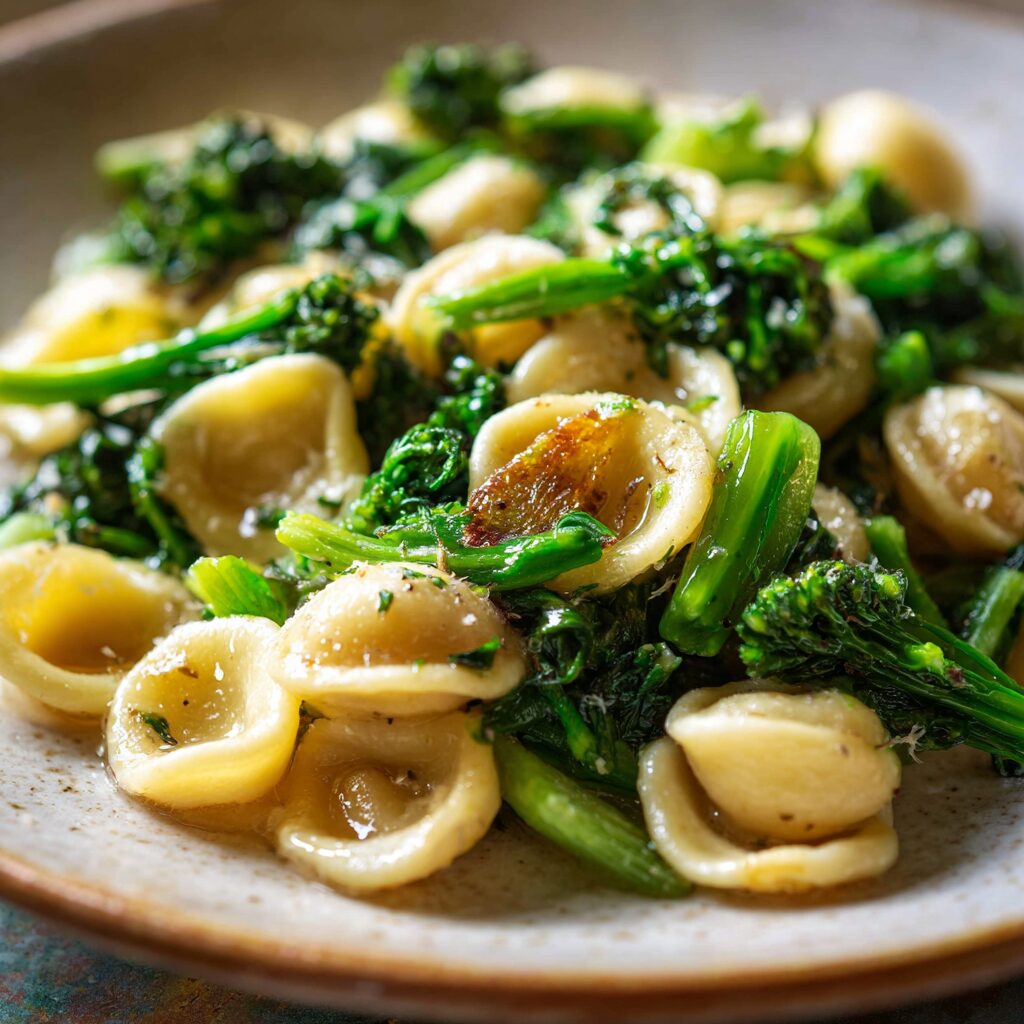
I still remember the first time I tasted orecchiette con cime di rapa light at my table — it smelled of warm garlic and salty anchovy, and that bright olive finish made me close my eyes. That single bite taught me how a humble bowl can feel both simple and deeply layered.
This pasta recipe grew from stories passed down at the market and from Nonna’s small wooden board. I learned to cook the greens first, then boil the pasta in the same water so each bite carries a gentle bitterness and green color. Use a low heat anchovy and garlic base with good olive oil so the sauce stays silky and never greasy.
Over the years I tested timing until texture was right: slightly chewy little ears that hold sauce, tender florets, and a final drizzle of quality oil. The result is a family dish that photographs well and tastes like the best kind of memory.
Key Takeaways
- Cook the greens before the pasta and use that water for deeper flavor.
- Build the sauce slowly with anchovy, garlic, and extra virgin olive oil.
- Trim thick stems and save tender leaves for a smooth texture.
- A short final drizzle of olive brightens aroma without weighing the dish down.
- This recipe is weeknight-friendly and rewards small, careful steps.
Why this humble Pugliese classic shines when made “light” at home
What makes this Puglian classic sing at my table is how clean flavors meet old-school technique. I want the dish to feel true to its roots while fitting a busy evening. That means focusing on greens, anchovies, and careful heat so nothing overwhelms the plate.
I honor the original pairing from Puglia by softening the greens until they almost melt around the pasta. Cooking the pasta in the same water gives the whole bowl a faint bitter edge and a subtle green sheen. A small drizzle of extra virgin olive finishes the plate without making it heavy.
A family dish with roots in Puglia and a place at my American table
At the market I look for tight, perky greens; fresher bunches need less time and taste sweeter. I prefer a slightly chewier ear-shaped pasta so each forkful holds the sauce and the savory bite of anchovies and garlic.
What “light” really means here: clean oil, greens-forward, and balanced flavor
- Melt anchovies into extra virgin olive over low heat so the oil perfumes without burning.
- Let greens carry the sauce rather than adding cream or meat.
- Finish with a modest splash of virgin olive oil to add body without greasiness.
| Technique | What it does | Benefit at home |
|---|---|---|
| Cook greens first | Softens and flavors cooking water | Layered taste; green hue on pasta |
| Melt anchovies on low heat | Infuses oil with umami | Deep flavor without heavy sauce |
| Use pasta water | Binds sauce and adjusts salt | Balanced texture; no extra fat |
orecchiette con cime di rapa light: ingredients, smart swaps, and what to buy
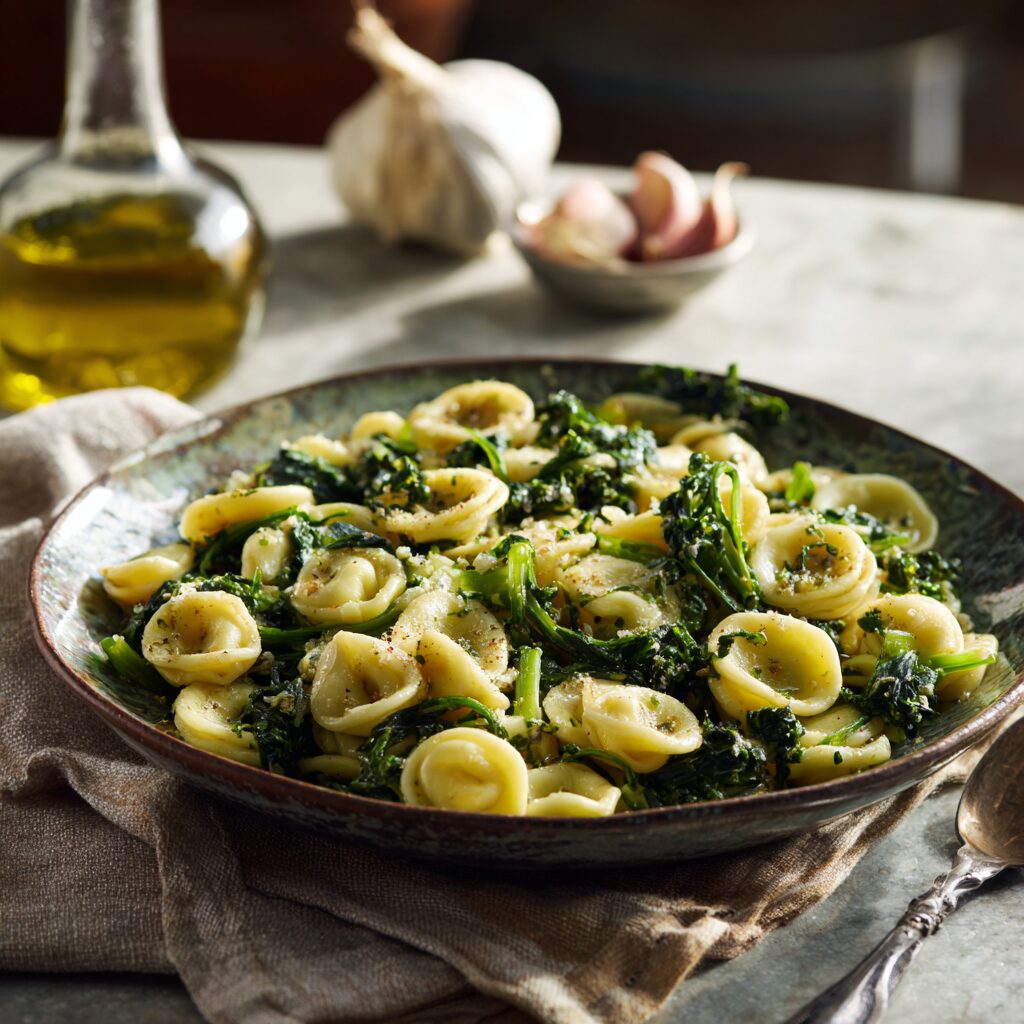
A good shopping list makes the cooking easier. Start with the core ingredients: a sturdy pasta, bright greens, garlic, anchovies, and a quality olive oil. Each piece plays a clear role in texture and flavor.
The essentials
Look for small cup-shaped orecchiette with a rough surface and a slightly thick rim; they cling to sauce and stay pleasantly chewy. Pick greens that are perky and firm. Choose oil-packed anchovies for speed, or salt-packed if you prefer to soak and rinse for a rounder taste.
When the market is out
If true cime rapa isn’t available, reach first for broccoli rabe, then broccolini, or even broccoli with leaves. The leafy florets and tender stems will behave similarly when wilted and tossed with pasta.
Lighten without losing flavor
- Measure your oil. Use pasta cooking water to emulsify a glossy, not greasy, sauce.
- Trim thick stems and keep tender leaves so everything softens evenly.
- Salt the water so the pasta and sauce taste balanced; add a ladle or cup of that water to finish the pan.
| Item | What to look for | Why it matters |
|---|---|---|
| orecchiette | Rough surface, thicker rim | Clings to sauce; chewy bite |
| greens | Firm stems, bright leaves | Softens without turning mushy |
| tools | Tall pot, wide pan, spider, wooden spoon | Makes transfer and tossing simple |
From pot to pan: the streamlined method that keeps it fresh, green, and satisfying
I walk you through each step so the greens stay bright and the pasta keeps a chewy bite. Prep first: trim florets and tender inner leaves and discard the thick stems. This makes every piece soften in the same time and takes only a few minutes at the sink.
Prep your greens like a nonna
Wash the bunch and separate small pieces. Cut larger stems into thin slices so they finish with the leaves. Make sure the pieces are similar in size.
Store-bought vs homemade pasta: getting that chewy bite right
Choose a sturdy, cup-shaped pasta if you can. It holds sauce and keeps a resilient bite after cooking. Cook pasta in the same salted water you used for the greens so it picks up color and flavor.
Build the flavor base and finish smartly
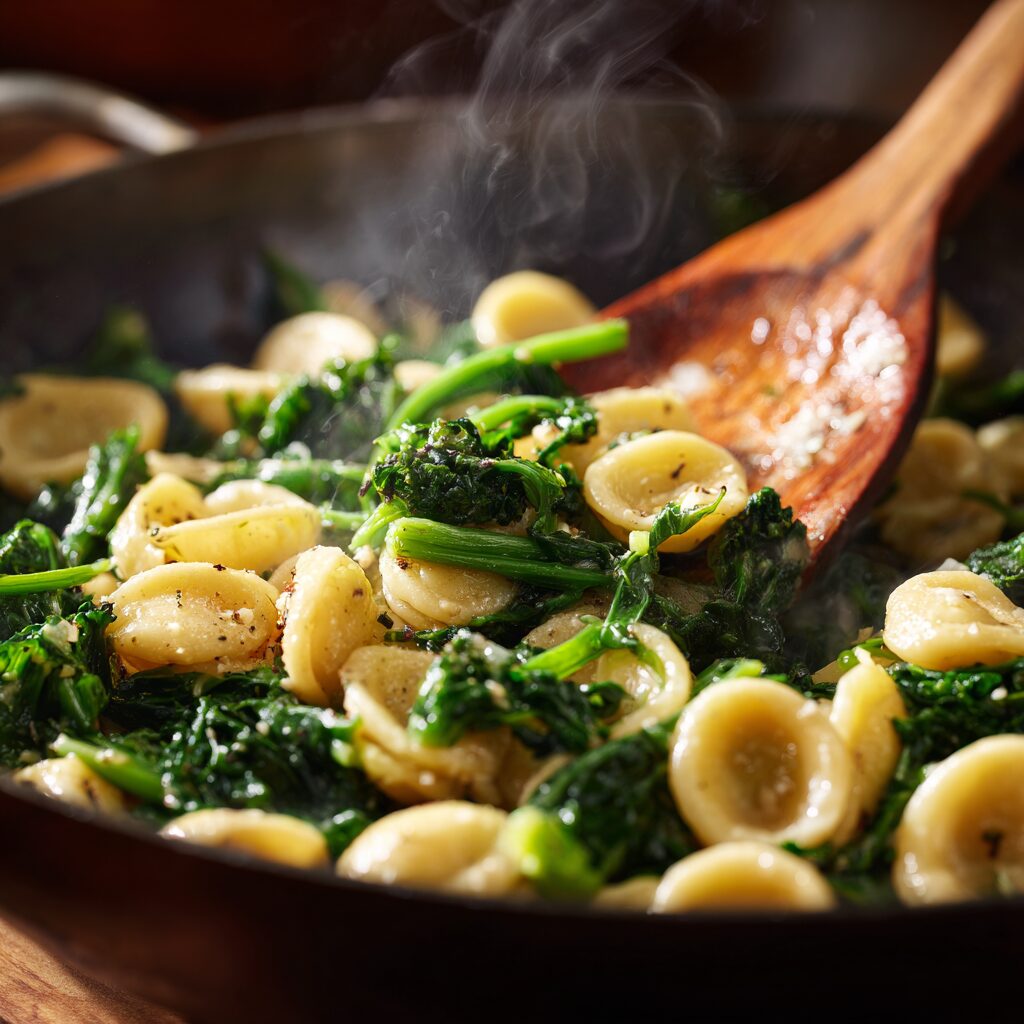
Warm oil in a wide pan and add anchovies, using a wooden spoon to melt them gently. Turn heat down and add garlic on low heat so it perfumes without browning. Lift greens from the pot into the pan, letting a little cooking water cling to loosen the base.
- Boil greens 5–15 minutes depending on toughness; start tasting at 5 minutes.
- Cook pasta in that pot; taste for al dente so the bite stays.
- Ladle pasta water spoon by spoon into the pan to emulsify sauce.
Toss pasta and greens over gentle heat for a couple of minutes, adding a bit more water if the sauce seems tight. Turn heat off, finish with a small drizzle of extra virgin, then taste and adjust salt only if needed.
| Action | Timing | Tactile cue |
|---|---|---|
| Trim and wash greens | 3–7 minutes | Pieces feel tender and similar size |
| Boil greens in salted water | 5–15 minutes | Leaves wilt; stems yield to a fork |
| Melt anchovies and add garlic | 2–4 minutes | Anchovies dissolve; garlic softens without color |
| Toss with pasta and pasta water | 2–3 minutes | Sauce becomes glossy and coats each piece |
Conclusion
A proper finish takes minutes: toss gently, add a tad of oil, and serve warm from your hands.
This recipe stays true to Pugliese roots because greens carry the sauce, measured olive and anchovy provide the savory lift, and timing keeps the texture right. Make sure you keep a cup of cooking water and some pasta water nearby to loosen the pan and build a glossy sauce.
If cime rapa isn’t available, broccoli rabe, broccolini, or even broccoli trimmed into small pieces will work. Salt the water, watch the pieces for tenderness, and prefer chewy orecchiette that holds the bite.
After years of testing recipes, I still trust touch over time. Serve immediately, snap a photo if you like, and enjoy the simple thing this dish does best: taste like home.
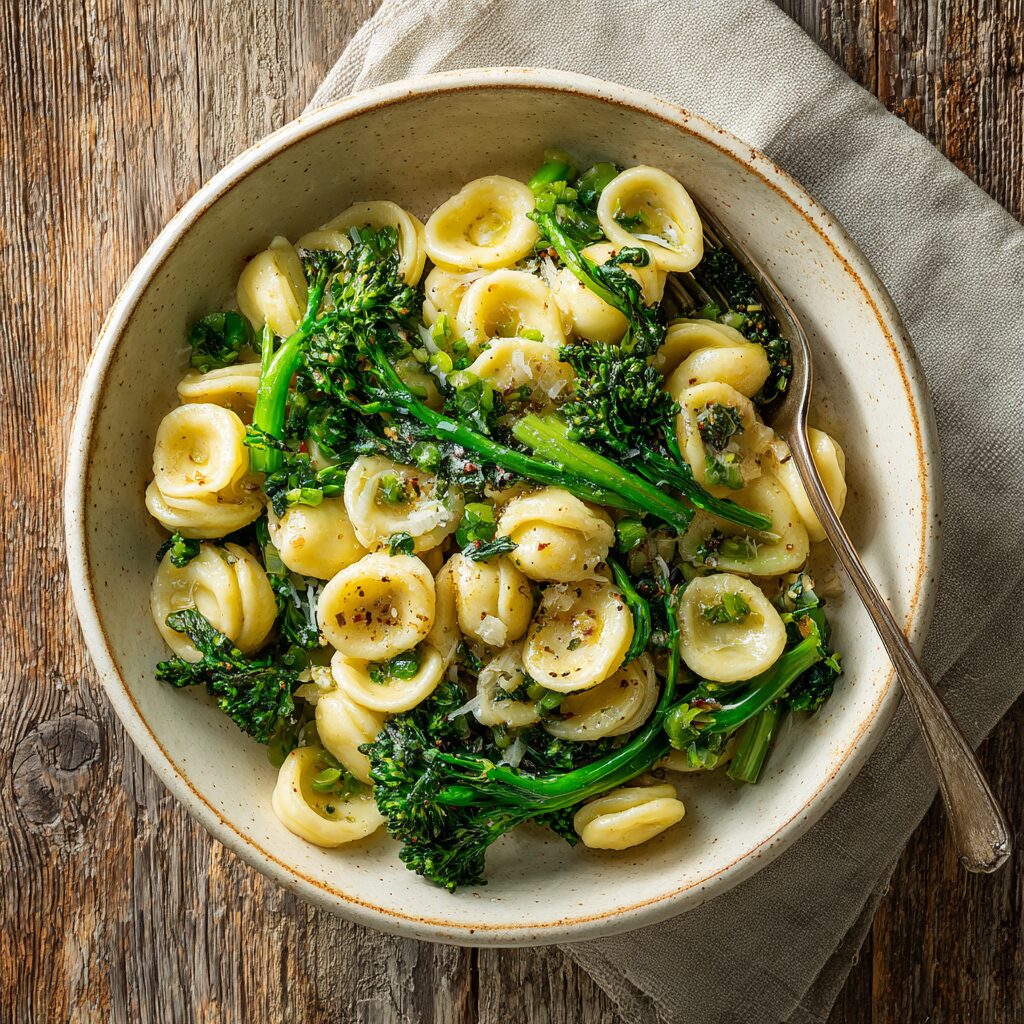
Orecchiette con Cime di Rapa (Light Version)
Ingredients
Method
- Trim and wash the cime di rapa. Remove thick stems and cut larger pieces so everything cooks evenly. Set aside.
- Bring a large pot of salted water to a boil. Add the greens and cook 5–10 minutes, until tender but still bright green. Use a spider or tongs to lift them out, keeping the water in the pot.
- In the same pot and water used for the greens, add orecchiette. Boil until al dente (about 9–11 minutes). Save about 1 cup of the starchy pasta water before draining.
- While pasta cooks, warm 2–3 tablespoons of olive oil in a wide skillet over low heat. Add anchovies and let them melt gently using a wooden spoon. Add garlic and cook slowly until soft and fragrant (don’t let it brown).
- Add the boiled greens directly into the skillet with anchovy and garlic oil. Stir to coat. Add the drained pasta and a small splash of pasta water.
- Toss everything gently over low heat, adding more pasta water spoon by spoon until the sauce turns silky and glossy. Taste and adjust salt if needed.
- Turn off the heat, drizzle with a bit of extra virgin olive oil, and serve immediately. Add a pinch of chili flakes or lemon zest if you like a light kick or extra freshness.
Notes
- If you can’t find cime di rapa, use broccoli rabe, broccolini, or young broccoli leaves.
- Melt anchovies slowly to avoid a strong fishy flavor — they should dissolve into the oil completely.
- Always cook pasta in the same water used for the greens for that authentic green hue and slightly bitter edge.
- A final drizzle of olive oil adds aroma — use your best bottle.
- This dish is best served right away, but leftovers reheat well with a splash of water or olive oil in a pan.