
Jump to Recipe
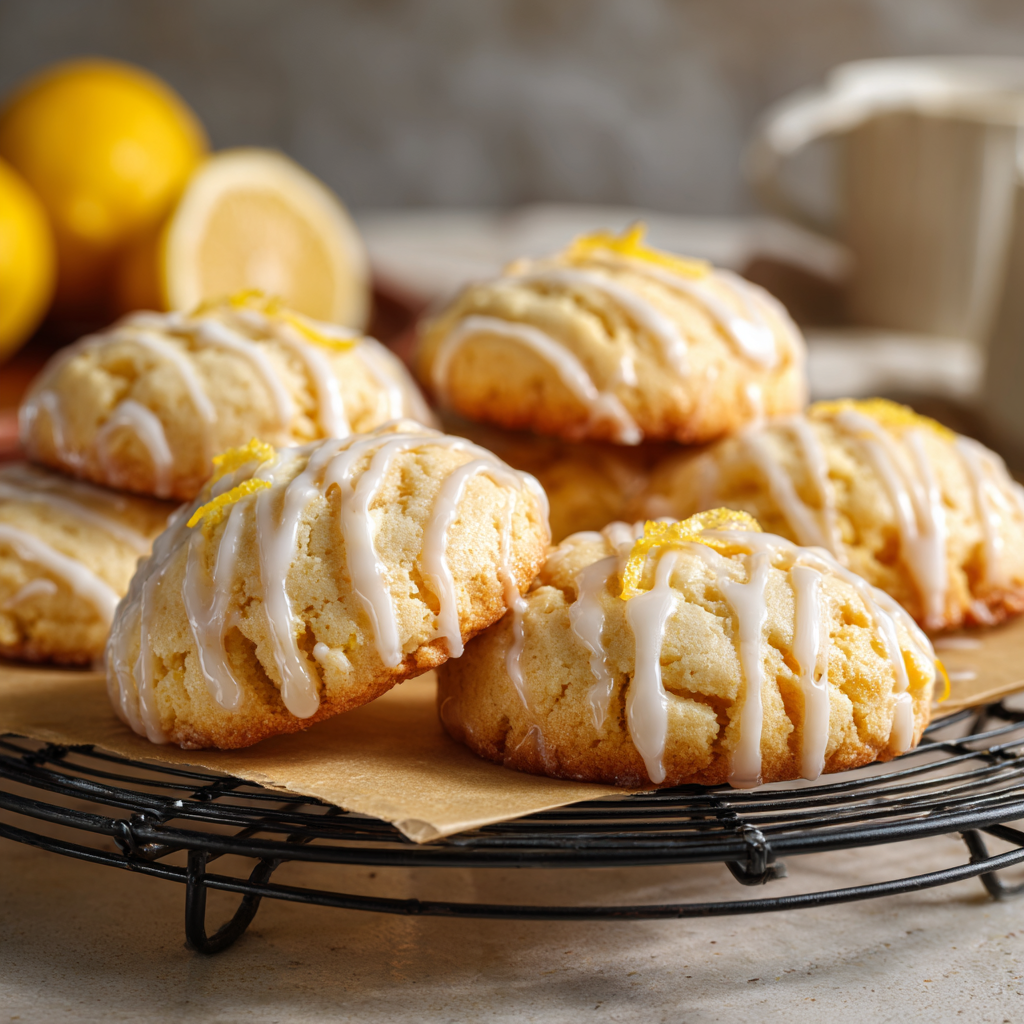
I make these soft sweets every spring, and the gentle citrus and creamy cheese always bring everyone to the counter. The dough starts in a bowl with butter, sugar, eggs, and a 15-ounce container of whole milk ricotta cheese for steady moisture.
Chill the dough overnight so each mound keeps its dome in the oven; bake at 375°F for about 12–15 minutes until pale on top with set edges. While they cool, whisk confectioners’ sugar, three tablespoons of fresh juice and a little zest into a glossy lemon glaze that sets in about two hours.
You’ll get clear, tactile cues here—how the dough should feel, what “pale and fluffy” looks like in minutes, and simple fixes if your batch spreads. This is family-tested and easy to repeat for holidays or slow Sundays.
Key Takeaways
- Use whole milk ricotta cheese for moist, tender results.
- Chill dough overnight to prevent spreading and build domes.
- Bake 12–15 minutes at 375°F until edges are set and tops stay pale.
- Make a simple lemon glaze of confectioners’ sugar, juice, and zest; allow ~2 hours to set.
- Watch texture in the bowl and trust visual cues for consistent cookies.
Why these lemon ricotta cookies win every time
These soft rounds always vanish first at our table; the creamy cheese and bright citrus make them unforgettable.
In baking the cheese acts like cream cheese or sour cream. It adds fat, moisture, and tenderness so each bite feels cake-like and stays soft for days.
Fresh zest carries essential oils that deliver true citrus character. Fresh juice sharpens the finish without bitterness. I prefer fresh over bottled every time.
- Bring eggs, butter, and cheese to room temperature so the batter emulsifies in the mixer and bakes evenly.
- Creaming butter and sugar introduces air; baking powder then gives a light crumb instead of a dense one.
- The method is forgiving and beginner-friendly — a sturdy mixer and a couple of bowls are all you need.
| Cue | What to look for | Why it matters |
|---|---|---|
| Pale tops | Tops stay light, edges set | Prevents overbake and keeps center tender |
| Chill time | Overnight or frozen scoops | Builds domes and controls spread |
| Glaze | Fresh zest and sugar mix | Bright finish that balances sweetness |
Gather your ingredients with purpose
Before you turn on the mixer, lay out every ingredient so the bake goes smoothly and the flavors shine. Measured components reduce mistakes and help the dough behave in the oven.
Dry team: structure and lift
Use 2½ cups all-purpose flour, 1 teaspoon baking powder, and 1 teaspoon salt. Whisk them in a bowl so the baking powder spreads evenly and the structure stays light.
Wet team: fat, sweet, and silk
One stick unsalted butter, 2 cups sugar, and 2 eggs give browning and tenderness. Add one 15-ounce container whole milk ricotta cheese and keep eggs and cheese at room temperature for smooth blending.
Bright notes and glaze options
Zest one fruit first, then squeeze about 3 tablespoons of juice. For a classic finish, mix powdered sugar with juice. For a bakery-style sheen, whisk in melted butter.
- Spooned-and-leveled flour or a scale prevents a tight crumb.
- Keep a couple tablespoons extra confectioners’ sugar and juice to adjust glaze thickness.
- Line sheet pans and parchment now so you can move from mixing to chilling without pause.
| Ingredient | Typical Amount | Why it matters |
|---|---|---|
| Flour | 2½ cups | Gives structure and keeps domes |
| Whole milk ricotta | 15-ounce container | Moisture and tender crumb |
| Baking powder | 1 teaspoon | Provides gentle lift |
lemon ricotta cookies recipe: step-by-step you can trust
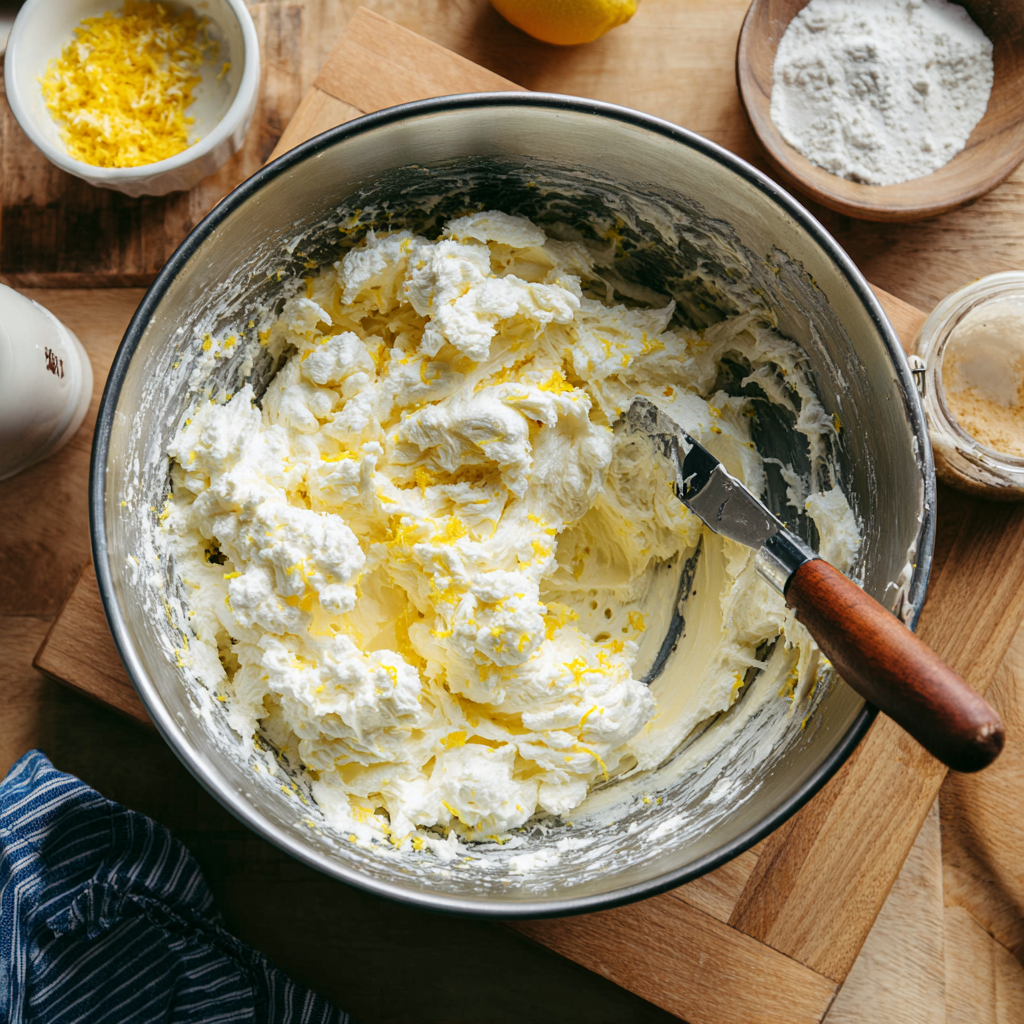
Begin in a large bowl with a mixer. Cream butter sugar on medium speed until the mix looks pale and billowy, about 3–5 minutes. This builds lightness for a tender crumb.
Cream, add, and blend
Beat in eggs one at a time so the batter stays smooth. Then add ricotta, lemon juice, and zest until the mixture looks unified and creamy. The batter should feel soft but not soupy.
Fold, chill, and shape
Whisk flour, baking powder, and salt, then fold them in gently. Stop as soon as the dry disappears to avoid developing gluten.
Cover and chill the dough for hours or overnight. Or scoop and freeze for bakery-style domes that hold shape in the oven.
Bake and cool
- Preheat oven to 375°F and line baking sheets with parchment.
- Portion even mounds; bake 12–15 minutes until tops stay pale and edges set.
- Alternate: bake frozen scoops at 325°F for ~20 minutes for consistent domes.
- Let rest on the hot baking sheet for about 15 minutes, then move to a rack to finish cooling before glazing.
| Stage | Sign to look for | Time / Temp |
|---|---|---|
| Creaming | Pale, billowy texture | 3–5 minutes / mixer medium |
| Bake | Pale tops, set edges | 12–15 minutes at 375°F |
| Alternate bake | Firm domes from frozen dough | ~20 minutes at 325°F |
| Cooling | Bottoms set before transfer | Rest 15 minutes on sheet |
Make the lemon glaze and finish like a pro
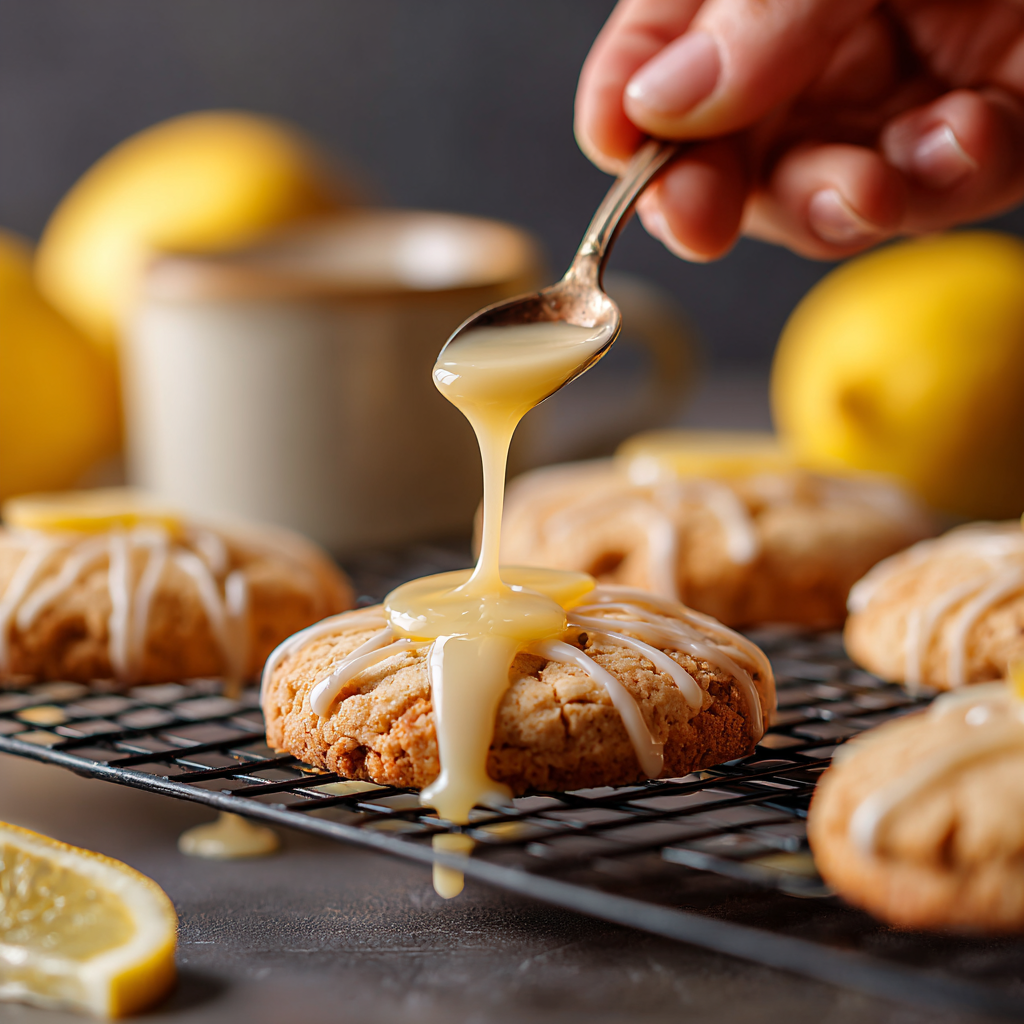
A slick, shiny glaze is the final step that brightens every bite and brings people together. I keep two go-to glazes on hand: the classic citrus gloss and a richer, buttery version for a bakery sheen.
The classic glaze
Whisk 1-1/2 cups confectioners’ sugar with 3 tablespoons fresh lemon juice and a pinch of lemon zest until smooth and pourable. The right texture will leave slow ribbons that vanish in a few seconds.
The buttery glaze
Melt 2 tablespoons unsalted butter and whisk it into 1-1/2 cups sifted powdered sugar and 2 tablespoons lemon juice. Add more sugar if it runs, or a few drops of juice if it’s too stiff.
Glazing technique and finish
- Spoon about 1/2 teaspoon onto each cookie and nudge to the edges for a pretty top that catches light.
- Use a piping bag for neat lines or the back of a spoon for rustic swirls. Rest on parchment-lined baking sheets.
- Let glazed pieces set undisturbed for about two hours; the surface should dry while centers stay soft.
| Glaze | Key ratio | Finish cue |
|---|---|---|
| Classic | 1-1/2 cups sugar : 3 tbsp juice | Pourable, ribboning texture |
| Buttery | Melted butter + 1-1/2 cups sugar | Glossy, slightly richer shine |
| Technique | 1/2 tsp per top | Set ~2 hours on parchment |
Pro tips, swaps, and flavor upgrades
Small adjustments in technique turn a good batch into a great one—here are the pro tips I use every time.
I use whole milk ricotta at room temperature so it blends smoothly and keeps the crumb plush. Let the cheese sit out while you dry-measure and prep a large bowl for mixing.
Zest directly over the bowl to catch oils; a fine rasp gives more aroma from less peel. For extra bright flavor, add additional zest or a drop of lemon extract, and a touch of vanilla to round the edges.
- Portion size affects bake minutes: small scoops 12–15 minutes at 375°F; larger scoops need lower temp or more time.
- If your kitchen is warm, freeze scooped cookie dough to hold shape and yield consistent domes.
- Store baked treats in airtight containers; glaze stays intact and centers remain soft for days.
| Swap | Why try it | Result |
|---|---|---|
| Whole milk ricotta at room temperature | Smoother mixing | Plush, tender crumb |
| Fine rasp for zest | More citrus oil released | Brighter aroma with less peel |
| Freeze scooped dough | Controls spread | Bakery-style domes |
| Lower temp for large scoops | Prevents overbrowning | Even bake through the center |
Baking temps, timing, and doneness cues
I rely on two straightforward temperature paths to get consistent domes and soft centers. Follow one and watch for the cues below rather than the clock alone.
Two reliable paths
For fresh dough, bake at 375°F for 12–15 minutes. This gives pale tops and set edges while the center stays tender.
For frozen scoops, lower the oven to 325°F and bake for about 20 minutes. The slower heat helps the center cook through without darkening the top.
What to watch for
- Doneness looks like set edges and a pale top that still springs back slightly when tapped.
- Use a light-colored baking sheet lined with parchment; dark pans brown faster and may shave a minute off the time.
- If your oven runs hot, check two minutes early. If it runs cool, add minutes in small increments.
- Bake one test piece first to calibrate minutes and texture for your oven and flour variations.
- Rest on the baking sheet briefly, then transfer to a rack to finish cooling. Keep tops pale if you plan to add lemon glaze.
- Rotate the pan halfway and use an oven thermometer so bake minutes track true. When unsure, err on the side of underbake for a soft, cake-like center.
| Temperature | Time | Doneness cue |
|---|---|---|
| 375°F | 12–15 minutes | Pale top, set edges, center springs back |
| 325°F | ~20 minutes (frozen) | Evenly risen domes, no deep browning |
| Pan tip | Light baking sheet | Prevents overbrowning, steadier bake minutes |
Troubleshooting soft dough, spreading, and dense cookies
When the dough acts loose or the rounds spread, a few calm fixes get the batch back on track. Below I list causes and clear actions so you can adjust quickly and bake with confidence.
If the dough feels loose
Chill the dough for a few hours or scoop and freeze mounds on a small tray. Cold dough holds shape and bakes into neat domes instead of puddles.
Avoid dense, heavy bites
Too much flour or overmixing after the dry ingredients go in makes a tight crumb. Measure flour lightly and fold until just combined to keep centers tender.
- Spreading often comes from warm dough or over-creamed butter sugar; a short chill tightens structure.
- If bottoms brown too fast, switch to light baking sheets and add a second sheet of parchment.
- When batter looks curdled after adding ricotta, a few seconds on low with the mixer brings it back—don’t whip.
- If glaze soaks in, cool fully on a rack for hours before glazing so the top sets.
- For uneven shape, scoop consistently and bake in the center of a fully preheated oven rack.
- A pinch more baking powder will help lift if your can is old; always check dates.
| Problem | Likely cause | Quick fix |
|---|---|---|
| Loose dough | Warm room temperature ingredients | Chill dough 2–8 hours or freeze scoops |
| Dense centers | Too much flour / overmixing | Measure by spooning flour; fold gently |
| Fast browning | Dark pans or hot oven | Use light baking sheets; lower rack |
Ready to bake a batch that tastes like sunshine
A few clear steps and a 15‑ounce container from the store yield bakery-style results at home. Grab zest, measure cups and tablespoons, and set aside a short chill time so the dough holds tall domes.
Choose the classic glaze or the buttery gloss and let it set about two hours while the kitchen fills with bright aroma. Cool on a rack for a clean surface, then transfer to a platter lined with parchment for serving.
This method scales well. Freeze extra scoops on a baking sheet and bake straight from frozen when you want fresh treats. Note your oven position and minutes today so the next bake is automatic.
The warm, tangy flavor and gentle richness make these ricotta cookies a repeat request at our table. Share a plate and save a little glaze for morning coffee.

Lemon Ricotta Cookies
Ingredients
Method
- In a bowl, whisk together flour, baking powder, and salt; set aside.
- In a large mixing bowl, cream butter and sugar on medium speed for 3–5 minutes until pale and fluffy.
- Beat in eggs one at a time until smooth.
- Add ricotta cheese, lemon zest, and lemon juice; mix until creamy and well blended.
- Gradually fold in the dry ingredients just until no flour streaks remain.
- Cover the bowl and chill dough for at least 4 hours or overnight. (You can also scoop dough onto a tray and freeze for later use.)
- Preheat oven to 375°F (190°C). Line baking sheets with parchment paper.
- Scoop even mounds (about 1½ tablespoons each) onto prepared sheets, spacing them 2 inches apart.
- Bake 12–15 minutes, until edges are set but tops stay pale.
- Let cookies rest on the hot sheet for 15 minutes, then transfer to a rack to cool completely.
- Whisk glaze ingredients until smooth and pourable.
- Spoon about ½ teaspoon glaze on each cookie, nudging to the edges.
- Let set at room temperature for about 2 hours, until the tops are glossy and dry to the touch.
Notes
- Use whole milk ricotta for the softest texture; part-skim can make the cookies dry.
- Always chill the dough—it’s key for those cute domed tops.
- For extra lemon punch, zest directly over the bowl to catch aromatic oils.
- You can freeze unbaked scoops and bake them straight from frozen at 325°F for about 20 minutes.
- Let glazed cookies rest uncovered for a few hours so the finish stays smooth and shiny.