Jump to Recipe
I still remember the hiss when our flat came off the hot plate — that simple torta al testo umbra bread recipe smelled of warm flour and olive oil and called everyone to the table.
Growing up in this landlocked region, I learned that the best cuisine uses few ingredients and lots of care. The name itself tells a story of a cooking surface, and the hands that shaped each round. I’ll share practical timing cues and ingredient notes so you can read the dough with your fingers and cook with confidence.
This method respects tradition while fitting modern kitchens — cast iron or a pizza stone work fine. Expect un-fussy steps, clear outcomes, and tips that turn modest food into something soulful and honest.
Key Takeaways
- This mentor-style guide makes the classic flatbread approachable for weeknight cooking.
- Two authentic approaches—unleavened and yeasted—let you choose texture and time.
- Simple ingredients and heat management create a tender interior and spotted crust.
- Hands-on cues help you know what to do next, not just follow steps.
- Use a modern cast iron or stone and learn fillings that honor Umbrian flavor.
- For background on regional pasta traditions, see a related guide on Strangozzi from Umbria.
From Testo to Cast Iron: The Umbrian Flatbread That Tells a Story
The flat, iron-cooked rounds my family served at markets carried history in their browned spots and simple shapes. They trace back to the Roman testum — a heavy cast disc heated over embers — and that practical past still guides how we cook today.
What makes this flat unique is texture and purpose. Unlike focaccia, it’s often unsalted and unleavened, so it stays firm enough to slice and fill. It cooks in mere minutes on a hot pan and becomes a warm pocket for pecorino, cured meats, or wild greens.
- The original testum was a thick disc; modern cooks use a preheated cast iron pan or a pizza stone.
- Dry cooking, not frying, gives the exterior toasted spots and a tender crumb inside.
- In the heart of the region, you’ll find it at festivals and market stalls, cut and filled right off the heat.
Keep the pan very hot, limit oil on the surface, and watch for brown spots. A few minutes per side is usually enough. The name hints at its round shape rather than sweetness, and that simple heritage is what makes it beloved.
Torta al testo umbra bread recipe: ingredients, tools, and step‑by‑step
A single hot iron pan can turn a handful of pantry staples into a tender, sliceable round in under an hour. Below are precise cues and tactile benchmarks so you can feel each step, not guess it.
Pantry and tools checklist
- 00 or all-purpose flour (flour), fine salt (salt), baking soda or active yeast (baking soda / yeast)
- Olive oil (olive / oil), room-temp or sparkling water (water)
- Heavy dry pan or pizza stone, cast iron pan or iron pan, rolling pin (rolling pin / pin)
- Fork (fork), lightly floured work surface (work surface / surface)
Step-by-step: mixing and kneading
For the unleavened path, mound the flour and make a volcano. Add water and oil to the center, sprinkle salt, then draw flour in with a fork until shaggy.
Knead on the work surface 5–10 minutes until the dough feels elastic and slightly warm. If you use yeast, dissolve it in water first, add to flour with oil, and knead by hand or with a mixer until smooth.
Resting, shaping, and cooking
Cover and rest for about 30 minutes (unleavened) or prove roughly 1 hour (yeasted) until doubled. Divide into equal piece portions and roll each disc to 1–2 cm thickness.
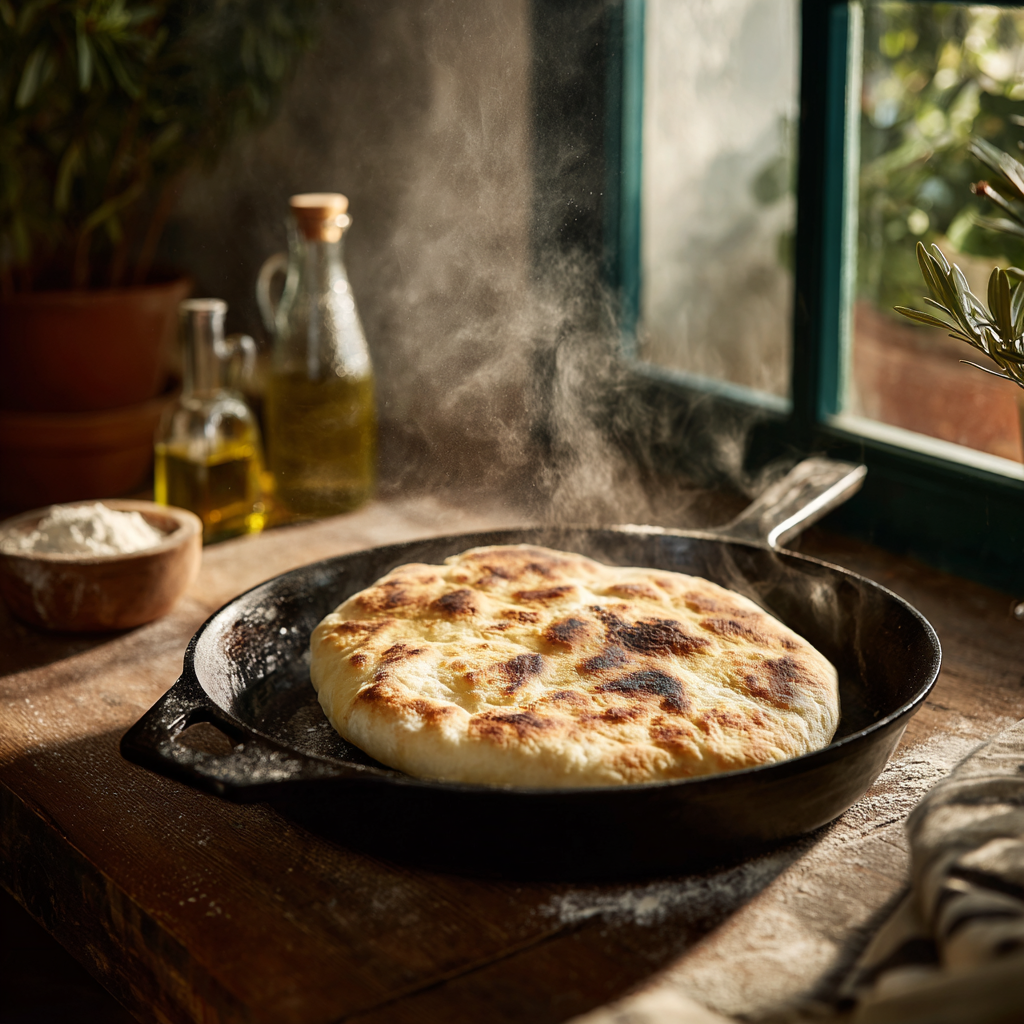
Heat a dry cast iron pan until a flick of water sizzles. Prick each round with a fork to control bubbles. Cook a few minutes per side, flipping when brown spots appear. A faint hollow sound signals doneness.
| Method | Key timing | Texture cue |
|---|---|---|
| Unleavened (baking soda) | Rest 30 minutes; cook ~5 minutes/side | Firm, sliceable disc |
| Yeasted (yeast) | Prove ~1 hour; cook minutes/side until spots | Airier, softer piece |
| Common tip | Hot pan only; no extra oil | Even browning, fewer pale spots |
Fillings, pairings, and serving ideas that taste like Umbria
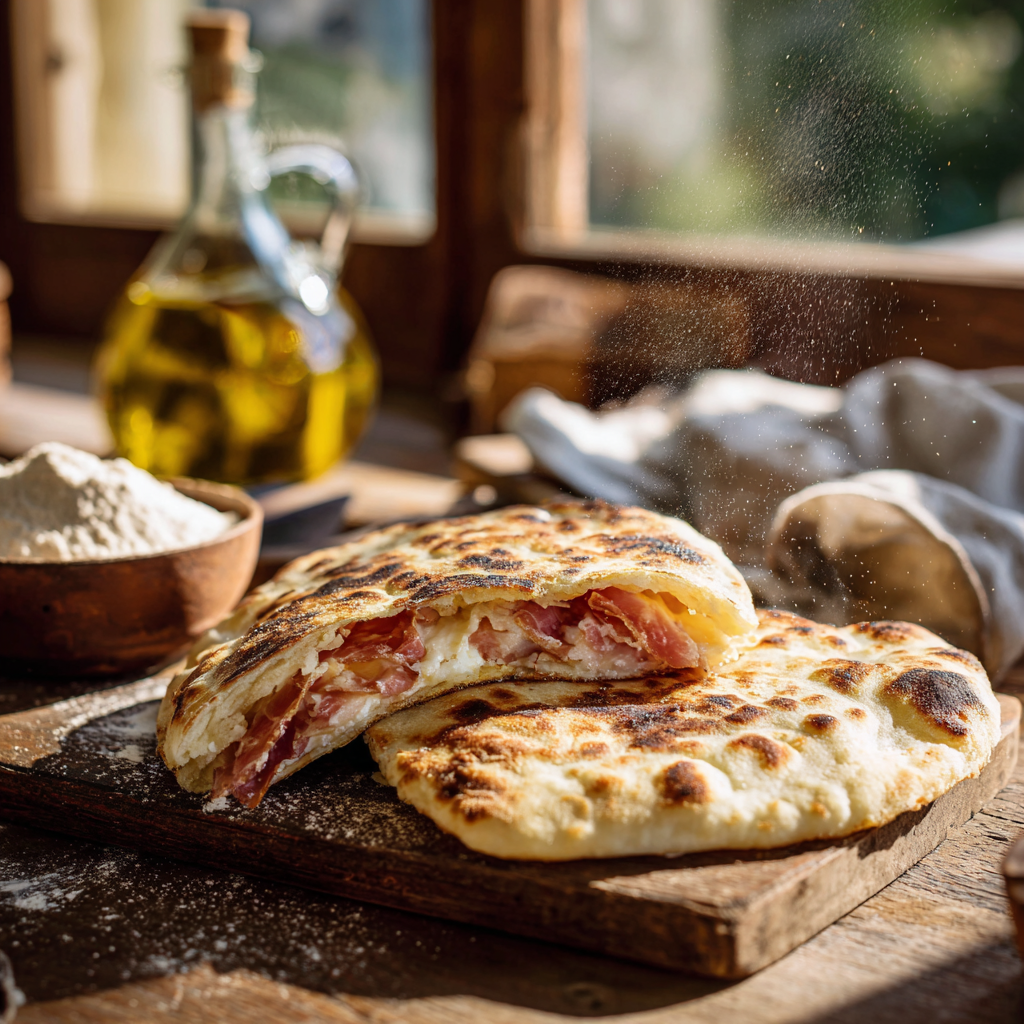
Hot from the pan, a split round becomes a blank canvas for vivid, local flavors. I like to slice each disc in half while it’s still warm so the steam softens the crumb and makes filling easy.
Classic Umbrian combinations
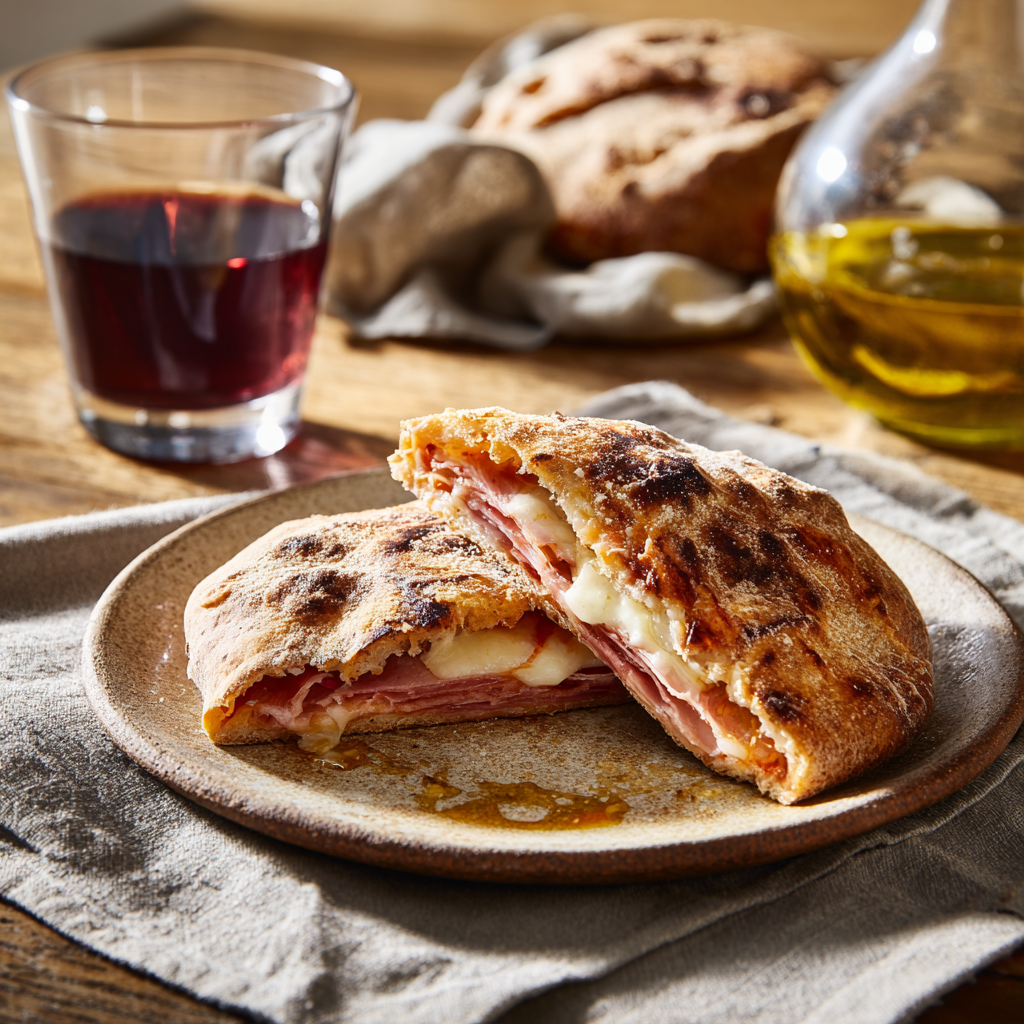
For a faithful bite, layer pecorino with prosciutto. The salt and fat soften against the warm interior and feel like home.
Sausage with wild greens makes a rustic plate. Blanch greens in salted water for a minute, then sauté with olive oil and garlic before piling in.
From market snack to meal
Soft cheeses such as stracchino or taleggio melt slightly from residual heat. Add fresh tomatoes, mozzarella, and basil for a light, summer meal.
Grilled eggplant or seasonal vegetables keep it vegetarian. Tuna with sun-dried tomatoes adds pantry-friendly umami when you need a faster option.
How to slice, serve, store, and reheat
- Slice each disc in half while warm; fill and serve right away for best texture.
- Serve straight from the pan; let rest 1–2 minutes to cool slightly before handling.
- Store cooled rounds wrapped at room temperature for a day or refrigerate up to two days.
- Reheat on a dry pan for a few minutes per side to crisp the surface and refresh the crumb.
| Pairing | Prep | Serving note |
|---|---|---|
| Pecorino + Prosciutto | No cook; slice cheese thin | Best served warm; salt and fat balance softness |
| Sausage + Wild greens | Blanch greens in water, sauté with olive oil | Hearty; cut in half for easier sharing |
| Stracchino + Grilled veg | Grill vegetables; slice soft cheese | Melts slightly from residual heat; good as a meal |
| Tuna + Sun-dried tomatoes | Mix tuna with oil-packed tomatoes | Pan-friendly, quick pantry option |
Conclusion
A steady rolling pin and a hot cast iron pan are all you need to begin. Choose the unleavened path for speed or let yeast give you a softer crumb. Trust the feel of the dough, a light dusting of flour on the work surface, and brown spots that appear in minutes on a hot pan.
Keep the next piece covered while you cook one at a time. Slice each round in half while warm, fill with cured meats, pecorino, or greens, and serve at once. Reheat dry and hot for a few minutes to revive the surface. From ancient testo to your modern cast setup, this torta testo keeps a small region’s cuisine alive in every bite.
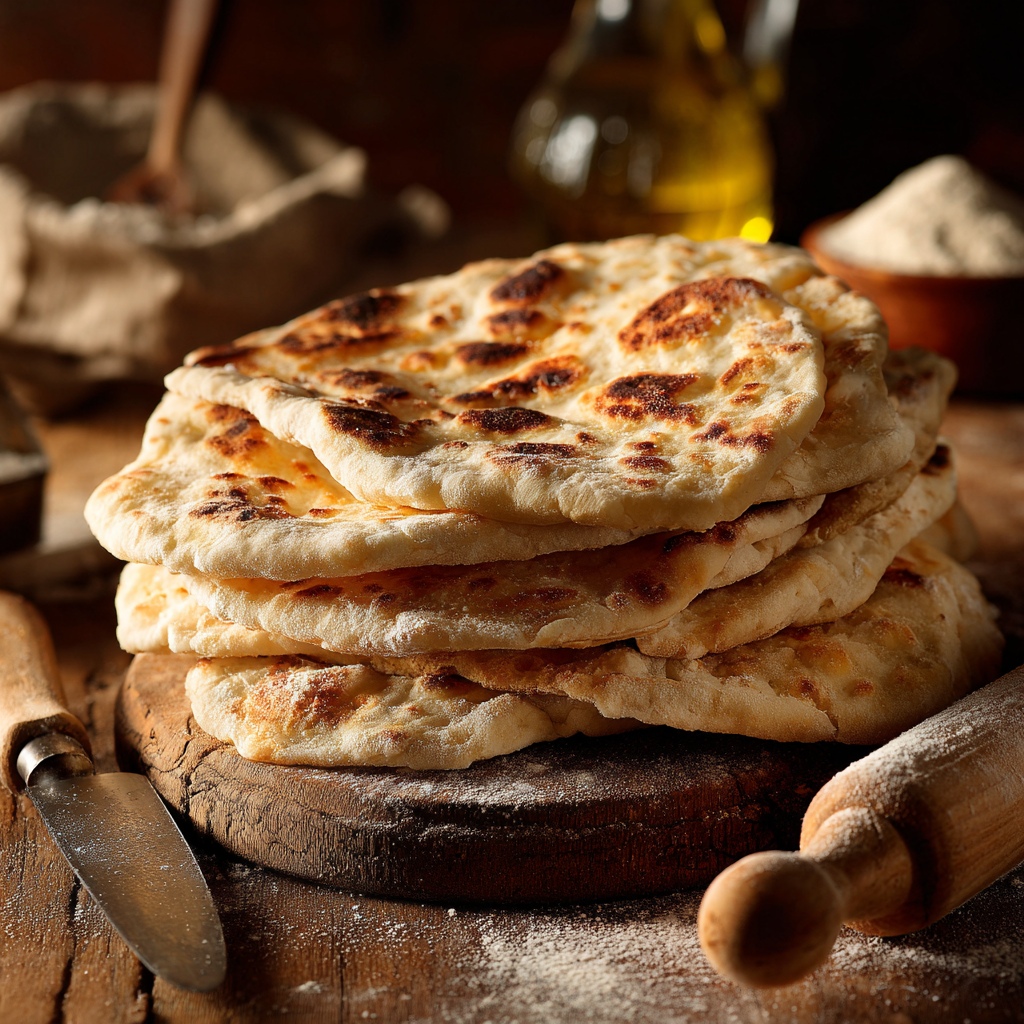
Torta al Testo Umbra (Umbrian Flatbread)
Ingredients
Method
- In a bowl, combine flour, salt, and baking soda (or yeast if using).
- Add olive oil and water gradually, stirring with a fork until a shaggy dough forms.
- Knead on a floured surface for about 5–10 minutes until smooth and elastic.
- Unleavened: Cover and rest 30 minutes.
- Yeasted: Cover and let rise about 1 hour, or until doubled in size.
- Divide the dough into 2–3 balls (depending on skillet size).
- Roll each one into a 1–2 cm thick disc on a lightly floured surface.
- Prick the surface with a fork to prevent large bubbles.
- Preheat a dry cast iron skillet or pizza stone over medium-high heat until a drop of water sizzles immediately.
- Place one disc in the hot pan (no oil needed).
- Cook 3–5 minutes per side, or until golden spots form and the bread sounds slightly hollow when tapped.
- Keep cooked rounds covered with a towel while finishing the rest.
- Slice each bread in half while still warm.
- Fill with your favorite combinations: prosciutto and pecorino, sausage and greens, or cheese and vegetables.
- Serve immediately while soft and aromatic.
Notes
- You don’t need a traditional testo pan — a cast iron skillet or pizza stone works perfectly.
- Avoid over-kneading; the dough should feel soft and pliable, not stiff.
- Always preheat your pan properly — it’s key to getting those classic browned spots.
- For storage, wrap cooled bread in a towel and reheat dry on a hot pan for a few minutes before serving again.