
Jump to Recipe
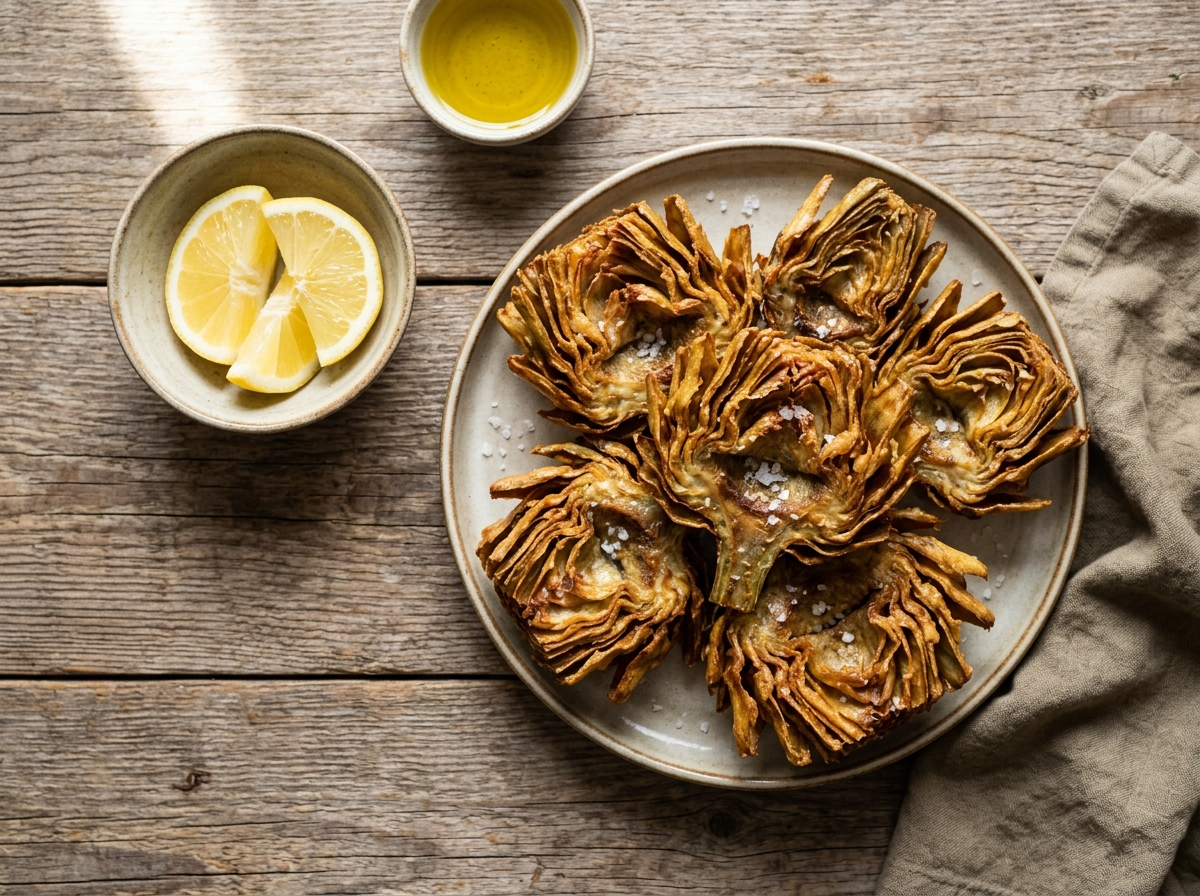
Carciofi alla giudia is a Roman-Jewish dish of whole artichokes deep-fried twice, once to soften the heart and once to crisp the outer leaves until they shatter like potato chips. The name means ‘Jewish-style artichokes,’ and the dish comes straight out of Rome’s old Jewish Ghetto, where it’s still served in a handful of trattorias near the Portico d’Ottavia.
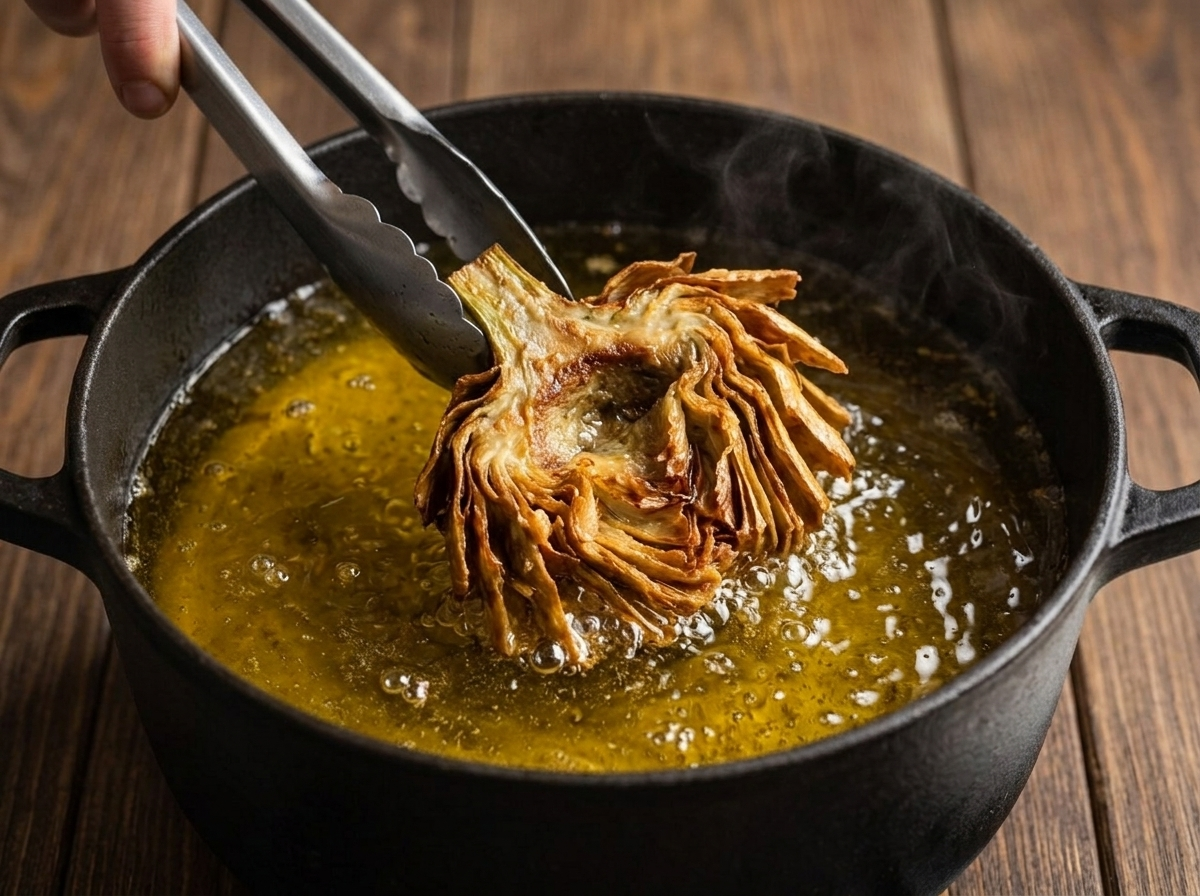
The technique matters more than the ingredient list. You fry once at a lower temperature, 150 C / 300 F, until a skewer slides into the base with no resistance. Then you cool, flatten the leaves open like a flower, and fry again at 185 C / 365 F until deep gold.
Skip the second, hotter fry or rush the cooling step in between, and the leaves stay soft and greasy instead of crackling. That’s the one place this recipe goes wrong most often.
Romanesco artichokes work best since they have no fuzzy choke to dig out, but regular globe artichokes get you most of the way there.
Why You’ll Love This Recipe
- Two-step frying gives crackly leaves and a soft heart
- Naturally gluten free and vegan with no batter needed
- Works with Romanesco or regular globe artichokes
- Ready to eat in under an hour start to finish
Ingredient Notes
- Artichokes: Romanesco (mammole) artichokes have no fuzzy choke and are the traditional choice. Regular globe artichokes work too, just scoop out the hairy choke after trimming.
- Olive oil: Use a mid-range extra virgin olive oil rather than your best bottle, since you need a full pot and the flavor mellows with frying. Sunflower oil is a cheaper substitute with a milder taste.
- Lemon: Keeps trimmed artichokes from browning while you work. Squeeze it into the soaking water and toss the spent halves in too.
- Sea salt: Fine sea salt clings better to the hot, oily leaves than coarse flakes. Season right after the second fry, not before.
Crispy Carciofi alla Giudia (Roman Fried Artichokes)
Ingredients
Method
- Fill a large bowl with cold water, the juice of the lemon, and the squeezed lemon halves.
- Snap off the tough outer leaves of each artichoke until you reach the pale, tender inner leaves, about 3-4 layers deep.
- Trim the stem to about 5 cm (2 in), peel its fibrous outer layer, and cut the top third off the artichoke to remove the thorny tips.
- Drop trimmed artichokes into the lemon water right away, they brown fast once exposed to air.
- Pour olive oil into a deep pot to a depth of at least 8 cm (3 in) and heat to 150 C / 300 F.
- Drain the artichokes and pat dry. Lower them stem-up into the warm oil, pressing gently to submerge.
- Fry for 15-18 minutes, turning once, until a skewer slides into the base with no resistance and the outer leaves have darkened slightly.
- Lift the artichokes out with tongs, drain briefly, and let them rest stem-up on a tray for 10 minutes to cool.
- Once cool enough to handle, turn each artichoke upside down and press the top gently against a cutting board to spread the leaves open like a flower.
- Raise the oil temperature to 185 C / 365 F.
- Lower the artichokes back into the hot oil, leaves-down this time, and fry for 2-3 minutes until deep golden and crisp.
- Lift out and, while still dripping, flick a few drops of cold water over the leaves, they'll crackle and crisp further.
- Drain on paper towels, season immediately with fine sea salt, and serve hot.
Notes
- Use a deep, heavy pot so the oil temperature stays stable during both fries.
- Romanesco artichokes have no choke, saving prep time versus globe varieties.
- Don't skip the resting time between fries, the flattening step needs cooled leaves.
- Salt only after the second fry, salting too early draws out moisture.
Tips for Success
- Choose artichokes with tightly closed, unblemished leaves and a firm stem, no soft spots near the base.
- Trim ruthlessly, cutting away every tough dark green leaf until you hit the pale yellow-green heart underneath.
- Keep trimmed artichokes in lemon water until frying, they turn brown within minutes of air exposure.
- Check first-fry doneness by piercing the base with a skewer, it should slide in with almost no resistance.
- Flick a few drops of cold water over the leaves right after the second fry, the shock against hot oil makes them crisp further.
Variations
- Swap in baby globe artichokes if Romanesco isn’t sold near you, just scoop out the fuzzy choke before the first fry.
- Dust the hot artichokes with grated pecorino right before serving for a non-traditional but tasty finish.
- Fry in sunflower or peanut oil instead of olive oil to cut cost without losing much of the flavor.
Storage and Reheating
Carciofi alla giudia is best eaten within minutes of the second fry, while the leaves are still crackling. Once they sit, the crisp outer layer softens fast, especially if covered.
If you have leftovers, store them uncovered in the fridge for up to 2 days, an airtight container traps steam and turns them soggy. Reheat in a 200 C / 390 F oven for 6-8 minutes, uncovered, on a wire rack so the leaves stay crisp instead of steaming.
Skip the microwave. It leaves the artichokes limp and a little rubbery, which defeats the whole point of frying them twice.
Serving Suggestions
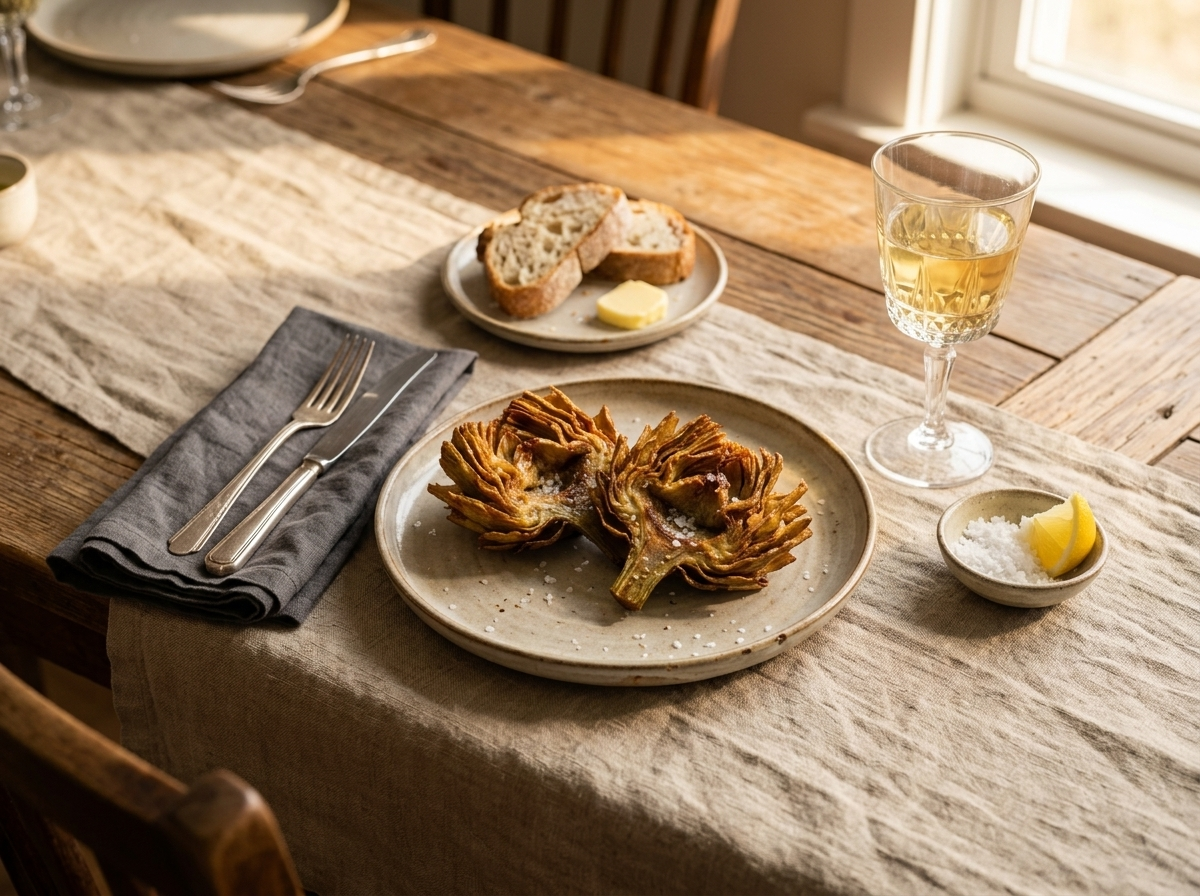
Carciofi alla giudia works as a starter on its own, with just a wedge of lemon and a small dish of flaky salt on the side. In Rome it often shows up alongside other fried Ghetto specialties, like battered salt cod or fried zucchini flowers.
For a full Roman-Jewish meal, follow it with a simple pasta like cacio e pepe or a light braise, since both dishes share the same plain, ingredient-forward style. A crisp white wine, Frascati or a dry Vermentino, cuts through the fried richness well.
Serve them hot, straight from the pot. They lose their crackle fast once plated and left to sit.
FAQ
Why won’t my carciofi alla giudia open up into a flower shape?
The leaves stay closed if you skip or rush the pressing step between fries, or if the first fry didn’t soften the heart enough. After the first fry, let the artichoke cool for about 10 minutes, then press the top firmly against a flat surface to fan the leaves out before the second, crisping fry. If the heart is still hard, no amount of pressing will flatten it.
Can I use regular globe artichokes instead of Romanesco for carciofi alla giudia?
Yes, globe artichokes work fine, though Romanesco is the classic choice because it has no fuzzy choke to remove. With globe artichokes, scoop out the hairy choke with a spoon right after trimming, before the first fry, so you don’t bite into it later. The final texture and flavor stay close to the traditional Roman version.
Can I do the first fry of carciofi alla giudia ahead of time and finish later?
Yes, the first fry holds up well for a few hours at room temperature, or refrigerated overnight, before the second fry. Cool the artichokes fully, cover loosely, and let them come back toward room temperature before the hot second fry so the oil temperature doesn’t drop too much. Don’t skip the pressing step once they’ve cooled.
What goes well with carciofi alla giudia?
Carciofi alla giudia pairs well with other Roman-Jewish fried dishes, like fried salt cod or zucchini flowers, plus a crisp white wine such as Frascati. Serve it as a starter before a plain pasta like cacio e pepe, since both dishes share the same unfussy, ingredient-forward style. A wedge of lemon on the side is enough garnish.
Is carciofi alla giudia gluten free and vegan?
Yes, carciofi alla giudia is naturally gluten free and vegan, since it’s just artichokes, olive oil, lemon, and salt, with no batter or dairy involved. Double check the oil hasn’t been used to fry anything with gluten or animal products if you’re cooking for someone with an allergy. Otherwise it fits both diets with no changes needed.
What’s the difference between carciofi alla giudia and carciofi alla romana?
The difference is the cooking method. Carciofi alla giudia is deep-fried twice until crisp and golden, while carciofi alla romana is braised whole in olive oil, garlic, and mint until soft all the way through. Giudia comes from Rome’s Jewish community, romana is a separate braised dish. Both start with whole artichokes but end up completely different in texture.