
Jump to Recipe
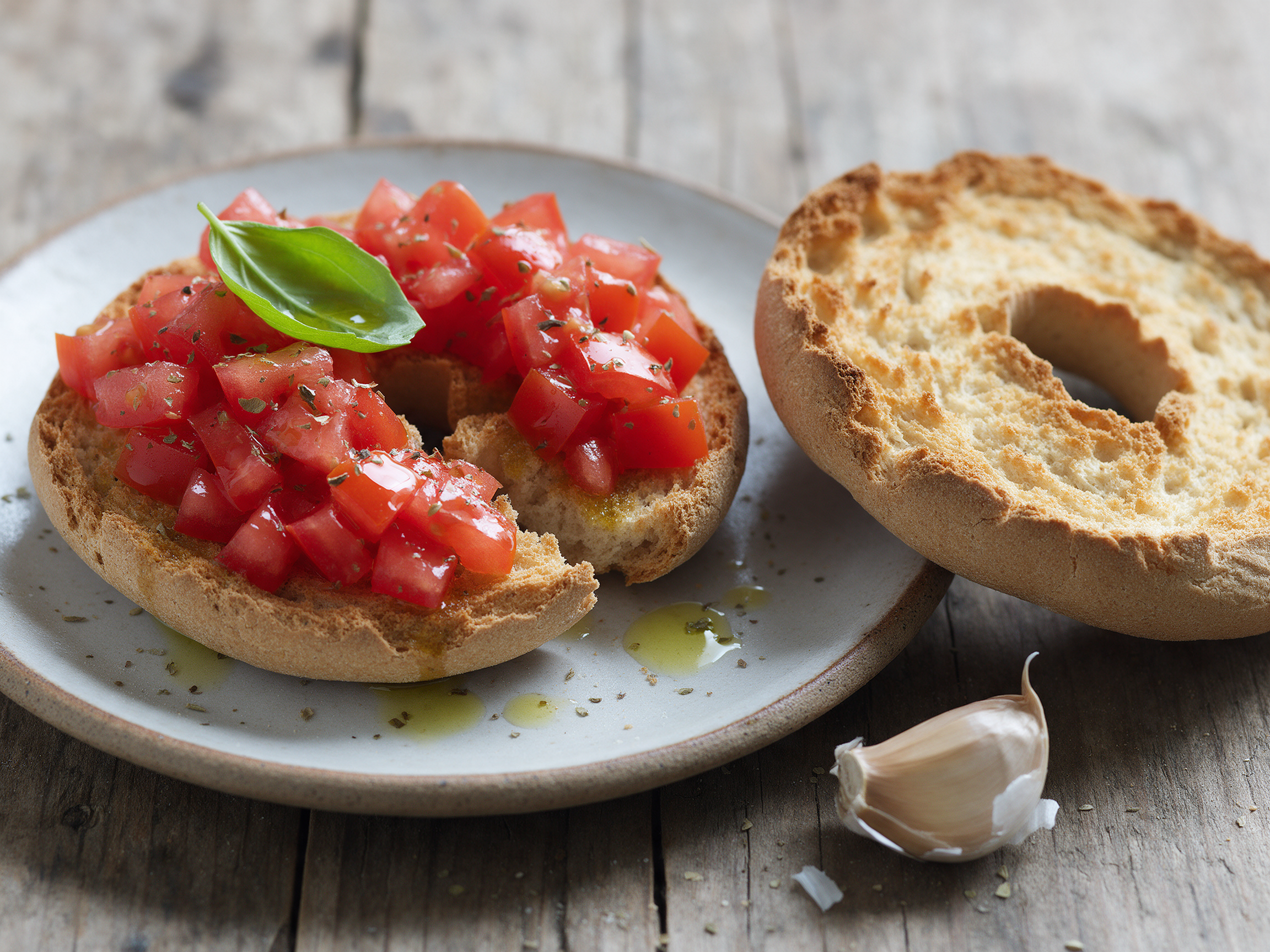
Friselle pugliesi are twice-baked bread rings from Puglia, made with re-milled durum flour and bread flour. You bake the rings once, split them through the middle, and bake them again at low heat until dry and crisp.
You don’t eat them dry. A 10-second dip in cold water softens the surface while the center stays firm, then they take ripe tomatoes, olive oil, oregano, and salt. The texture, not the topping, defines the result.
Practical pantry note: once fully dried, they keep in a tin for 2 to 3 weeks, so you can bake on a cool morning and serve them through the next few weeks of tomato season.
The one thing to watch is the second bake. Friselle that feel dry outside but hold moisture in the center go soft in the tin within days, so break one open before you pull the pans.
Why You’ll Love This Recipe
- Shelf-stable for 2 to 3 weeks once fully dried
- Dough needs only flour, water, yeast, and salt
- A 10-second dip gives a chewy bite with a firm center
- The tomato topping takes 10 minutes and needs no cooking
Ingredient Notes
- semola rimacinata: Look for ‘semola rimacinata di grano duro’ on the label, sold at Italian grocers and online. It’s finely re-milled durum flour, and coarse semolina won’t make a smooth dough.
- bread flour: Adds gluten for a dough that rolls and splits cleanly. All-purpose flour works too, and whole wheat is a common Puglian swap.
- instant dry yeast: 5 g is about 1 1/2 tsp. If you only have active dry yeast, use 6 g and stir it into the lukewarm water for 5 minutes first.
- ripe tomatoes: Cherry or vine tomatoes at the peak of summer are best. Out of season, drained canned whole tomatoes taste better than pale fresh ones.
- extra-virgin olive oil: It goes on raw here, so use the best bottle you own. A peppery Puglian oil suits the tomatoes.
Homemade Friselle Pugliesi: Twice-Baked Bread Rings
Ingredients
Method
- Whisk the semola, bread flour, yeast, and fine sea salt together in a 28 cm / 11-inch mixing bowl. Pour in the 300 ml lukewarm water and stir until no dry flour remains.
- Knead on an unfloured counter for 8 to 10 minutes, or 6 minutes in a stand mixer with the dough hook on medium-low, until the dough is smooth and firm. It should feel slightly tacky but not stick to the counter. Cover the bowl and let it rise for 60 minutes, until puffed by about half.
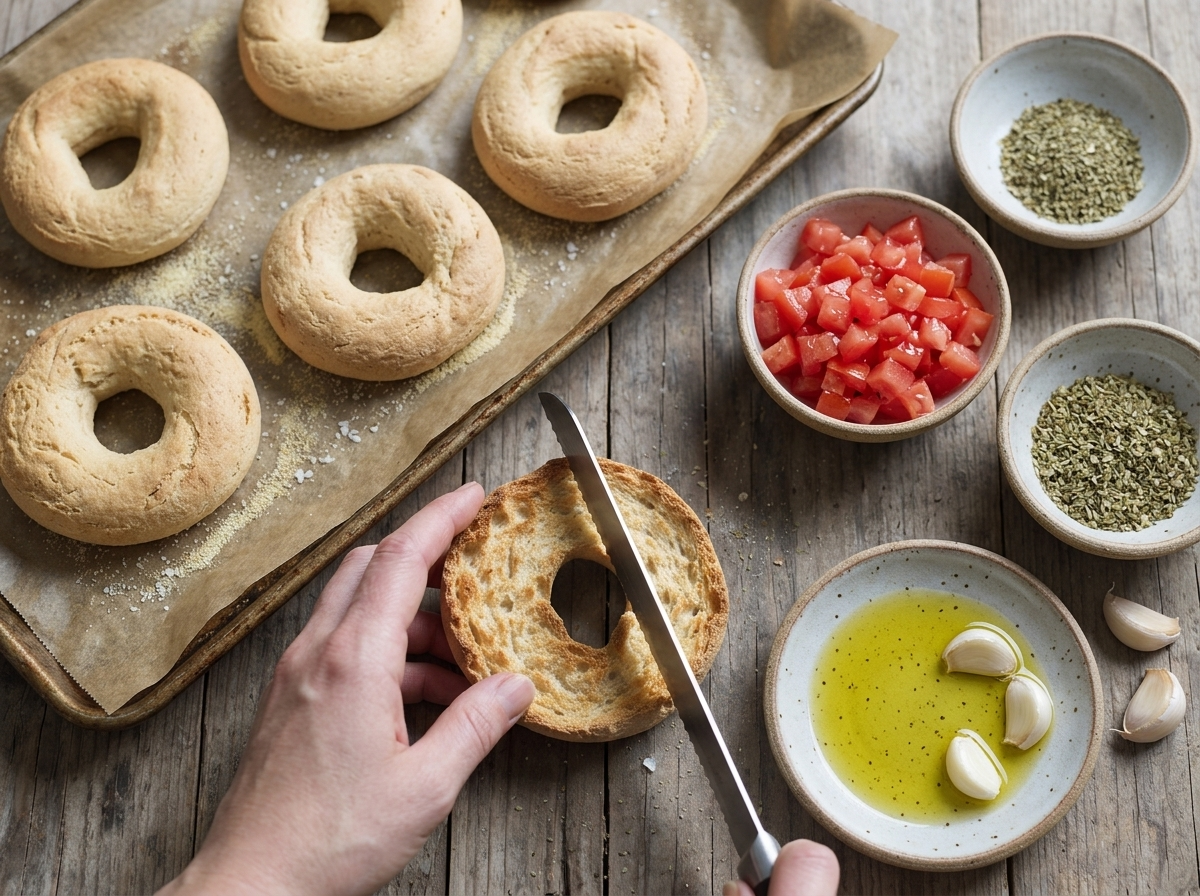
- Divide the dough into 8 pieces of about 100 g each. Roll each into a rope about 25 cm / 10 inches long, overlap the ends by 2 cm, and press hard to seal into a ring. Set 4 rings on each of two parchment-lined 33 x 46 cm / 13 x 18-inch sheet pans, cover loosely, and rest for 30 minutes while the oven heats to 200 C / 400 F.
- Bake both pans for 20 minutes, swapping their positions halfway, until the rings are pale gold and sound hollow when tapped underneath. Cool on a wire rack for 15 minutes, then lower the oven to 150 C / 300 F.
- Split each ring horizontally into two thinner rings with a serrated knife, using a gentle sawing motion and keeping your other hand flat on top. Set the halves cut side up on the two pans.
- Bake for 40 minutes, swapping the pans halfway, until the cut sides are pale gold and each frisella is dry through. Cool one half for a few minutes and break it open. It should snap with no soft spot in the center, and if it bends, bake the batch 10 minutes more. Cool completely on the racks, about 20 minutes, before storing.
- While the friselle cool, toss the chopped tomatoes with the flaky sea salt, oregano, and 3 tbsp of the olive oil. Let the mixture stand for about 10 minutes, until the juices pool in the bowl.
- To serve, dip each frisella in the 500 ml cold water for about 10 seconds, turning once, and shake off the excess. The surface should give slightly while the center stays firm. Set 2 on each plate, spoon over the tomatoes and their juices, and drizzle with the remaining 3 tbsp olive oil. Serve within 15 minutes.
Notes
- Use semola rimacinata, not coarse semolina, for a smooth and workable dough.
- Keep the second bake at 150 C / 300 F so the friselle dry instead of browning.
- Swap pan positions halfway through both bakes for even color.
- Top dipped friselle just before serving and eat within 15 minutes.
Tips for Success
- Weigh the flour and water on a scale, because semolina packs unevenly in cups and the dough should feel firm and slightly tacky.
- Press the overlapped ends of each rope together hard so the seam doesn’t open during the first bake.
- Cool the baked rings for 15 minutes before splitting, then use a serrated knife and a gentle sawing motion to keep the cut even.
- Cool one half for a few minutes and break it open before ending the second bake, and keep baking if the center bends.
- Dip each frisella in cold water for about 10 seconds, turning once, then shake off the excess and serve within 15 minutes of topping.
Variations
- Swap the 200 g of bread flour for whole wheat flour and add 1 to 2 tbsp more water for a nuttier, more rustic frisella.
- Knead 1 tsp toasted fennel seeds into the dough for a faint anise note that suits tomato and anchovy toppings.
- Replace 150 g of the bread flour with barley flour, a Salento tradition, for denser friselle with an earthier crumb.
Storage and Reheating
Dried friselle keep in an airtight tin or jar at room temperature for 2 to 3 weeks. Cool them completely before closing the lid, since trapped warmth turns into moisture.
If humid weather softens them, re-dry the friselle on a sheet pan in a 120 C / 250 F oven for 10 minutes and cool them before storing again. Freezing isn’t needed for a bread that’s already shelf-stable.
Topped friselle are best fresh because the tomato juice keeps softening the bread, so eat them within 15 minutes. For a make-ahead plan, keep the dried friselle and the tomato mixture separate. Refrigerate the tomatoes, covered, for up to 2 days, then dip and top at serving time.
Serving Suggestions
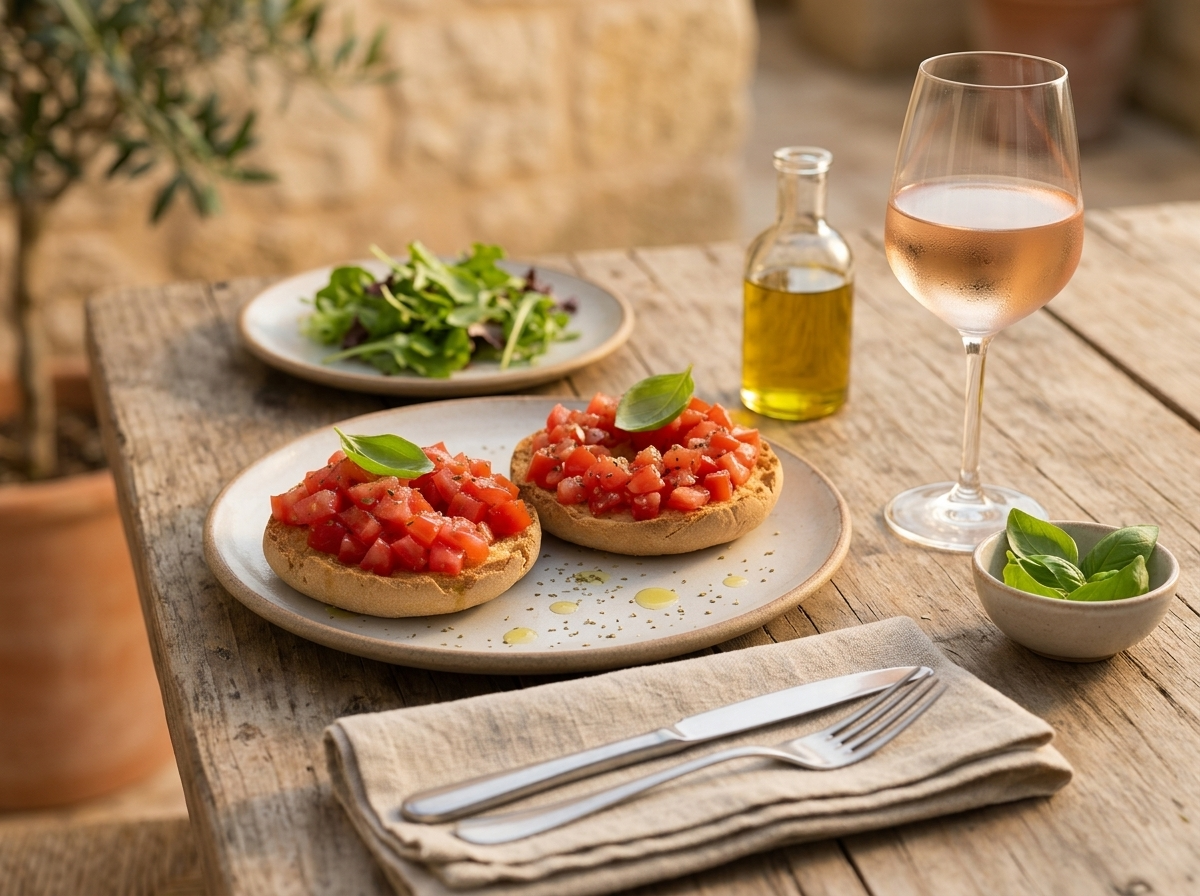
Friselle pugliesi are served as a summer antipasto or light lunch, 2 per person, topped with chopped ripe tomatoes, olive oil, oregano, and a pinch of flaky salt. Spoon the tomato juices over the bread so they finish softening the center.
For variety, try oil-packed tuna with capers, anchovies with black olives, or burrata with arugula. A chilled rosato from Salento goes well alongside.
Put a bowl of cold water on the table and let guests dip their own. The bread stays firm until the last moment, which keeps every plate inside the 15-minute window.
FAQ
How do I know friselle are dry enough after the second bake?
A finished frisella snaps cleanly when you break it and shows no soft or damp spot in the middle of the crumb. Cool one half for a few minutes first, because warm bread always feels softer than it is. If it bends before it breaks, return the whole batch to the 150 C / 300 F oven for 10 more minutes.
Can I make friselle without semola rimacinata?
Yes, use 500 g of bread flour in total, or swap the 200 g of bread flour for whole wheat flour, which is common in Puglia. The crumb will be a little less sturdy, so dip each frisella for 5 seconds instead of 10. Coarse semolina isn’t a substitute, because its grind is too rough for a smooth dough.
How far ahead can I bake friselle for a party?
Bake them 2 to 3 weeks ahead if you like. Fully dried friselle keep in an airtight tin or jar at room temperature for that long, which is the purpose of the second bake. Skip the freezer, since a bread this dry doesn’t need it, and dip and top them only at serving time.
What can I put on friselle besides tomatoes?
Oil-packed tuna with capers, anchovies with olives, burrata with arugula, and sliced cucumber all work. Keep the toppings juicy enough to finish softening the bread, since the dip leaves a firm center. Add toppings right after the dip and serve within 15 minutes.
Are friselle pugliesi vegan?
Yes, the dough is only flour, water, yeast, and salt, and the classic tomato, olive oil, and oregano topping is vegan too. They are not gluten free, since both semola and bread flour are wheat. Dairy toppings like burrata make the plate non-vegan, so choose accordingly.
What is the difference between friselle and bruschetta?
Friselle are baked twice until fully dry, then dipped in water before topping. Bruschetta is fresh bread that’s sliced, toasted or grilled, and rubbed with garlic. That’s why friselle keep for weeks, while bruschetta has to be made while the bread is fresh. The water dip also gives friselle a chewier, more bread-like bite.