
Jump to Recipe
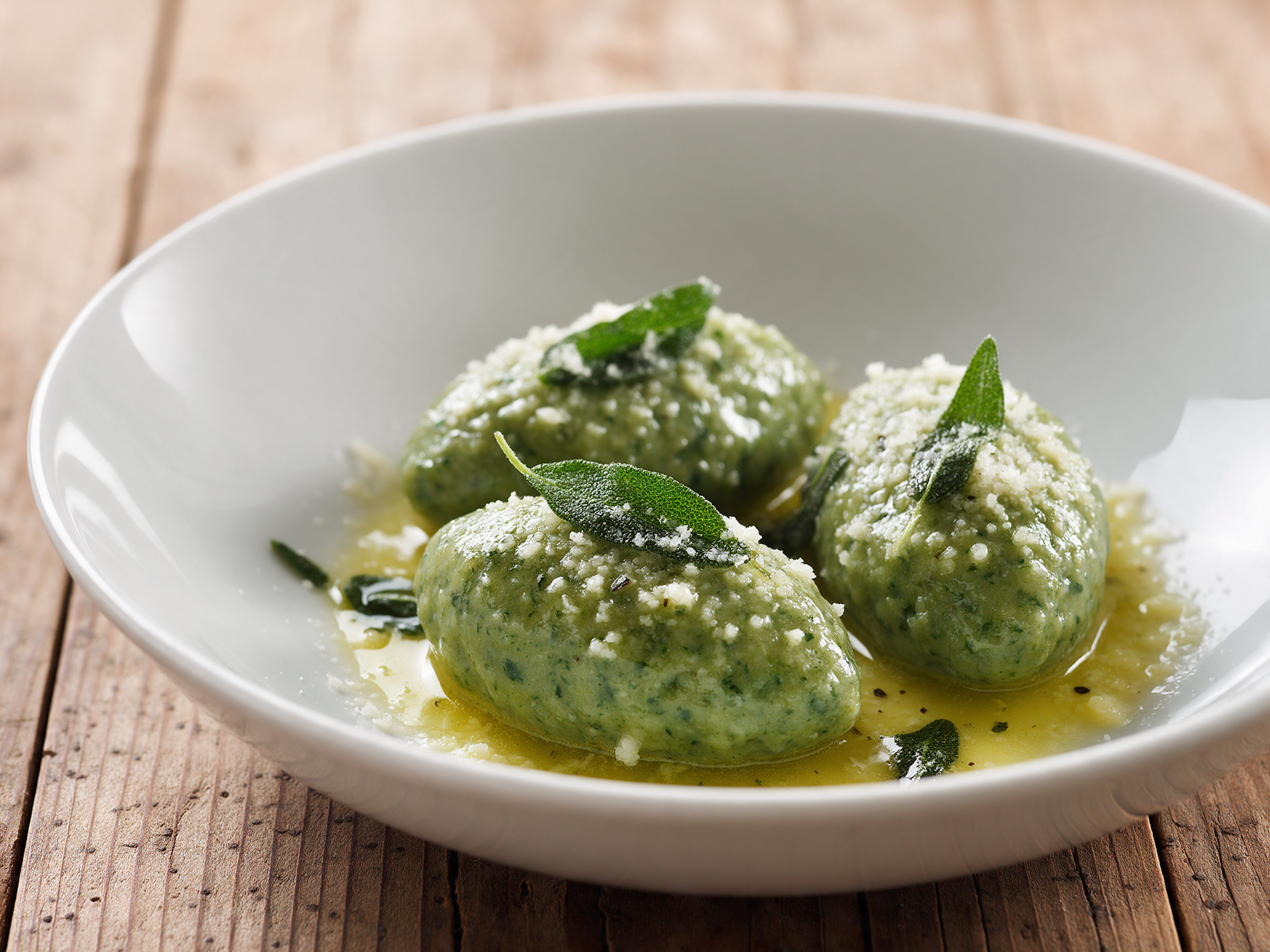
Strangolapreti trentini are spinach bread dumplings from Trentino, made with stale bread soaked in milk, wilted spinach, eggs, and grated Trentingrana. You simmer them for 9 minutes and finish them in sage butter.
The name means “priest stranglers,” and the folk story says greedy priests ate them too fast. The real origin is humbler. This is cucina povera, a way to use up old bread and garden greens.
The texture comes down to the spinach. Wring it in a towel until nothing drips, because wet spinach loosens the mix and the dumplings fall apart in the water. I’ve lost a whole batch to it.
Total time is about 65 minutes, and the shaped dumplings keep in the fridge for up to 24 hours. That makes them workable on a weeknight.
Why You’ll Love This Recipe
- Turns stale bread and a bag of spinach into dinner
- Shaped dumplings refrigerate for 24 hours or freeze raw
- Sage butter comes together in under 5 minutes
- A quick squeeze test tells you if the dough will hold
Ingredient Notes
- Stale bread: Use plain white country bread at least a day old, crusts trimmed. If your bread is fresh, dry the cubes in a 120 C / 250 F oven for 15 minutes first.
- Trentingrana: This is the local Grana from Trentino. Grana Padano is the closest swap, and Parmigiano Reggiano works too. Grate it yourself, since pre-grated cheese is drier.
- Spinach: Fresh gives the cleanest taste. For frozen, thaw 300 g fully and squeeze it until you have about 200 g.
- Nutmeg: Grate it fresh. A quarter teaspoon reads as warmth in the background, and more starts to taste like a dessert.
- Unsalted butter: Unsalted lets you control the seasoning, since the bread and cheese already carry salt.
Strangolapreti Trentini: Soft Spinach Bread Dumplings
Ingredients
Method
- Put the bread cubes in a large mixing bowl and pour over the warm milk. Toss and soak for 10 minutes, stirring once, until the cubes are soft with no dry center.
- Rinse the spinach and put it, with the water still clinging to the leaves, in a 28 cm / 6-quart pot. Cover and cook over medium-high heat for 3 to 4 minutes, stirring once, until fully wilted. Tip it into a colander and cool for 5 minutes. Wrap it in a clean kitchen towel and wring hard until no liquid drips and you have roughly 200 g, then chop it finely.
- Melt 1 tablespoon butter in a 30 cm / 12-inch skillet over medium heat. Cook the onion for 4 to 5 minutes, stirring, until soft and translucent but not browned. Let it cool for 2 minutes.
- Add the spinach, onion, eggs, 60 g Trentingrana, 60 g flour, 1 tsp fine salt, nutmeg, and pepper to the soaked bread. Mix with your hands for about 2 minutes, mashing the bread as you go. Squeeze a handful: it should hold a tight, slightly tacky ball. Add 1 tablespoon flour if it sticks wetly to your palm, or 1 tablespoon milk if it crumbles. Cover and refrigerate for 15 minutes.
- While the mixture rests, rinse the pot, fill it with about 3 liters of water, and add 1 tablespoon coarse salt. Bring to a boil, then reduce to a gentle simmer. Flour your hands and shape the mixture into 12 oval dumplings of about 80 g each, pressing firmly so each one is compact.
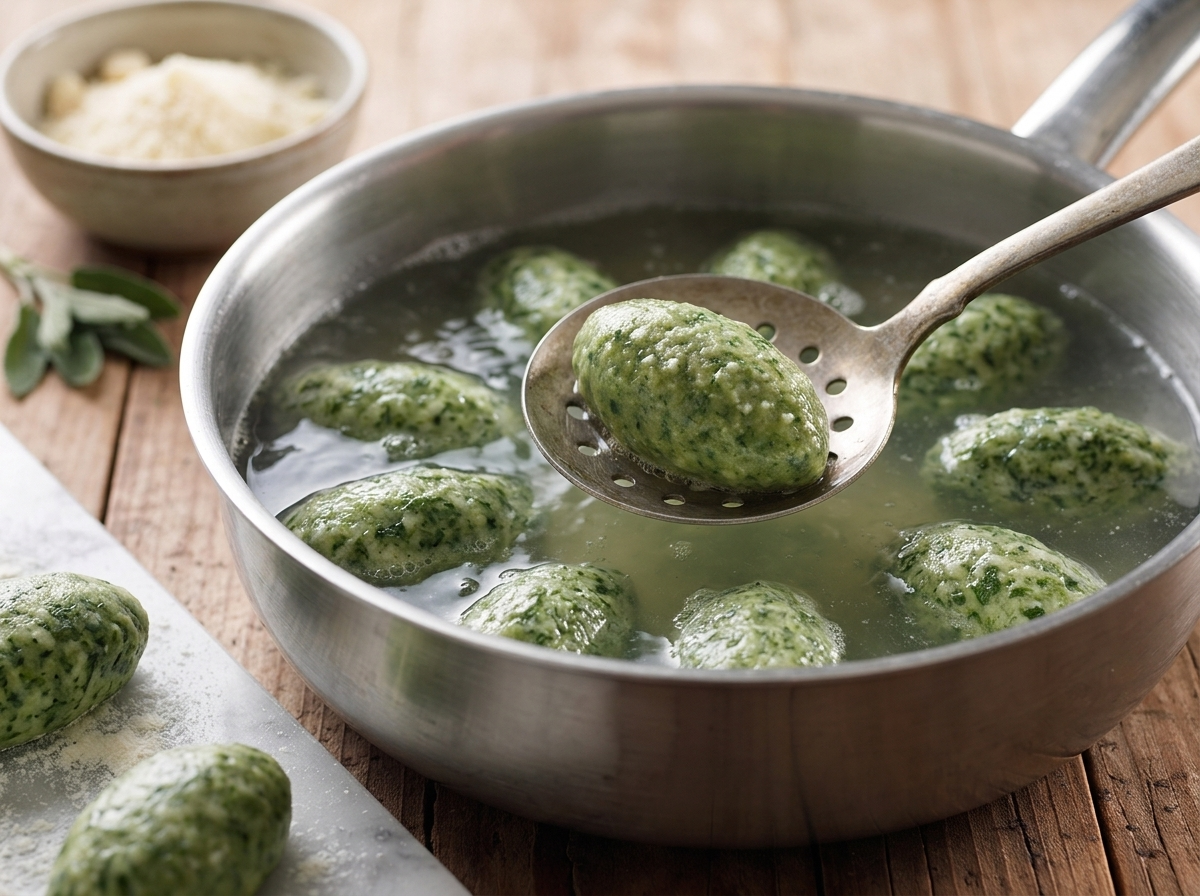
- Lower one dumpling in first and watch it for 1 minute: the edges should stay intact. If it sheds, work 1 tablespoon flour into the remaining mixture. Add 5 more dumplings and simmer the batch for 9 minutes, until they float and feel firm when pressed. Lift them out with a slotted spoon onto a warm plate and cover with foil. Repeat with the remaining 6.
- When the second batch has about 3 minutes left, wipe the skillet clean and melt 60 g butter in it over medium heat. Add the sage and cook for about 2 minutes, until the butter foams and smells nutty and the sage turns crisp. Add all 12 dumplings and roll them gently for 1 minute to coat. Divide among warm bowls and top with 30 g grated Trentingrana.
Notes
- Use bread at least a day old, since fresh bread turns gluey once soaked.
- Aim for about 200 g of squeezed spinach, because more water means more flour and denser dumplings.
- Chill the mixture for 15 minutes so the flour hydrates and shaping is easier.
- Cook in two batches of six so the water stays at a gentle simmer.
Tips for Success
- Wring the cooked spinach in a clean kitchen towel until no liquid drips, since extra water is what breaks dumplings apart in the pot.
- Cut the bread into 1 cm cubes so the milk reaches the center, and soak for 10 minutes before mixing.
- Squeeze a handful of dough: it should hold a tight ball. Add 1 tablespoon flour if it sticks, or 1 tablespoon milk if it crumbles.
- Keep the water at a gentle simmer, with small bubbles breaking the surface, because a rolling boil shreds the dumplings.
- Cook the sage in the butter for about 2 minutes, just until the butter foams and smells nutty, so the sage stays crisp and nothing turns bitter.
Variations
- Swap half the spinach for chard, or use nettle tops in spring, wilted and squeezed the same way as the spinach.
- Fold 60 g finely diced speck, rendered in the skillet first, into the dough for a smoky version closer to canederli.
- Arrange the boiled dumplings in a buttered dish, scatter extra Grana over them, and bake at 200 C / 390 F for 10 minutes for a gratin crust.
Storage and Reheating
Cooked strangolapreti keep in an airtight container in the fridge for 3 to 4 days. Store them plain, without the sage butter, so the butter doesn’t set into a greasy film.
Reheat them in a 30 cm / 12-inch nonstick skillet over medium-low heat with 1 tablespoon butter and 2 tablespoons water. Cover for 3 minutes, then uncover and turn for 2 to 3 minutes until hot through and lightly golden at the edges.
For make-ahead, shape the dumplings, set them on a floured tray, cover, and refrigerate for up to 24 hours before boiling. Raw dumplings also freeze for up to 2 months. Boil them straight from frozen, adding 3 to 4 minutes to the simmer time.
Serving Suggestions
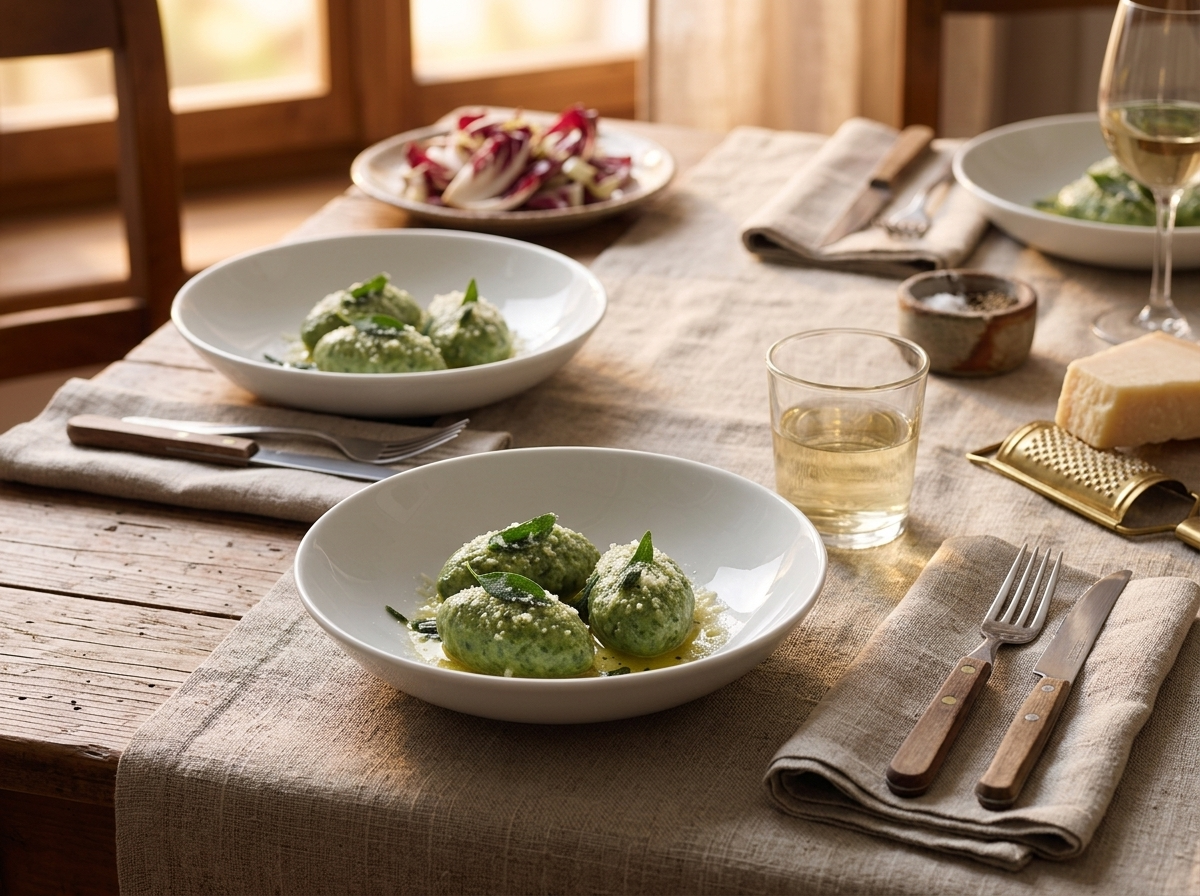
Strangolapreti trentini go to the table in warm shallow bowls, with the sage butter spooned over and a little more grated Trentingrana on top. Three dumplings per person makes a main course.
A radicchio or green salad with a sharp vinegar dressing balances the butter. For wine, a glass of Müller-Thurgau or Teroldego suits the plate.
Serve two dumplings per person if you’re running them as a primo before a roast or braise.
FAQ
Why are my strangolapreti falling apart in the water?
Strangolapreti fall apart mostly because the spinach still holds water. Wring the cooked spinach in a clean towel until nothing drips, and it should weigh roughly 200 g. A hard boil also breaks them, so keep the pot at a gentle simmer. If one still sheds crumbs, work in 1 tablespoon flour before shaping the rest.
Can I use frozen spinach instead of fresh in strangolapreti?
Yes. Use 300 g frozen spinach, thaw it fully, then squeeze it in a towel until you have about 200 g of dense spinach. Frozen holds more water than people expect, so squeeze harder than feels necessary. Fresh gives a slightly brighter green and a cleaner taste, but frozen works year-round.
Can I freeze strangolapreti before boiling them?
Yes, freeze them raw. Set the shaped dumplings on a floured tray, freeze until firm, about 2 hours, then bag them for up to 2 months. Boil straight from frozen at a gentle simmer for 12 to 13 minutes, which is 3 to 4 minutes longer than fresh. Thawing first makes them soft and prone to splitting.
What goes well with strangolapreti besides sage butter?
A radicchio or green salad with a sharp vinegar dressing balances the butter best. The sage butter and grated Trentingrana are the traditional finish, so the dumplings need no other sauce. For wine, a glass of Müller-Thurgau or Teroldego suits the plate.
What is the difference between strangolapreti and canederli?
Canederli are round bread dumplings from Trentino and Alto Adige, made with stale bread, speck, and egg, and often served in broth. Strangolapreti share the bread base but swap the speck for a lot of spinach and finish with butter and cheese. The result is greener and softer, closer to gnocchi.
Are strangolapreti vegetarian?
Yes, the dumplings contain no meat, but the cheese needs a check. Trentingrana and Grana Padano are traditionally made with animal rennet, so strict vegetarians should pick a hard cheese labeled vegetarian. They’re not vegan or dairy free, since the recipe relies on milk, eggs, butter, and cheese.