
Jump to Recipe
Involtini di vitello al sugo are thin veal slices rolled around prosciutto, sage and Parmigiano, then simmered in a tomato sauce built on soffritto. This version takes about 80 minutes, with 30 of them at the counter, and feeds four.
The veal needs to be pounded to about 3 mm / 1/8 inch. Thin meat rolls tightly and turns tender in 30 minutes of simmering, no long braise required.
Keep the simmer lazy. A hard boil tightens the rolls and dries the veal, and extra sauce won’t bring it back.
Prosciutto and Parmigiano already carry plenty of salt, so the veal gets pepper only and the sauce gets a final taste at the end. You can roll everything a day ahead, and the finished dish is better on day two.
Why You’ll Love This Recipe
- Thin veal turns tender in 30 minutes of gentle simmering
- Prosciutto and Parmigiano season the sauce from the inside
- Rolls can be assembled a day ahead and reheat well
- One pan makes both the seared rolls and the sauce
Ingredient Notes
- veal scaloppine: Ask the butcher for slices cut across the grain from the leg or top round, about 5 mm thick before pounding. Turkey or chicken breast cutlets work if veal is out of budget.
- prosciutto: Prosciutto crudo gives a deeper savory note. Prosciutto cotto is milder and a little sweeter, so use it if you prefer a gentler sauce.
- fresh sage: Use fresh leaves, since dried sage turns dusty in the sauce. If you have none, a small sprig of rosemary in the sauce is a fair stand-in.
- crushed tomatoes: Pantry note: canned crushed tomatoes or passata work year-round and give a smoother sugo than fresh tomatoes. Choose a brand without added sugar or herbs.
- dry white wine: Pick a dry, unoaked white such as Pinot Grigio. For an alcohol-free version, use 120 ml / 1/2 cup of stock with 1 tsp of lemon juice.
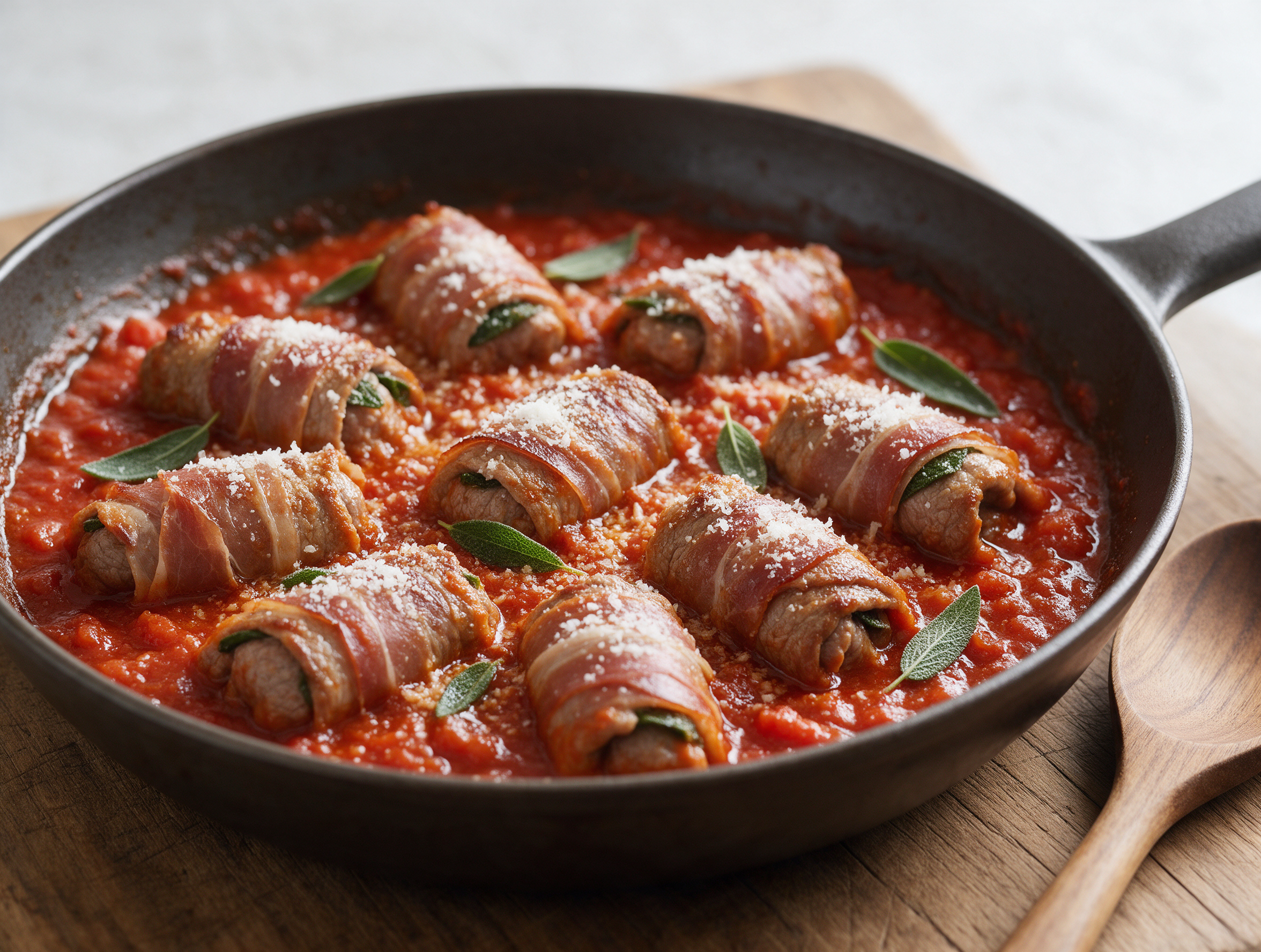
Simmered Veal Involtini with Prosciutto in Tomato Sauce
Ingredients
Method
- Pat the veal dry and pound each slice between two sheets of parchment to about 3 mm / 1/8 inch, working from the center outward. Season the slices with the pepper only. Trim any slice that is much larger than the others so the rolls come out even.
- Lay a slice of prosciutto on each piece of veal, trimming any overhang. Add 2 sage leaves and about 1 tablespoon of Parmigiano. Roll up from a short side, tuck in the edges, and secure with a toothpick or kitchen twine. You'll have 8 rolls.
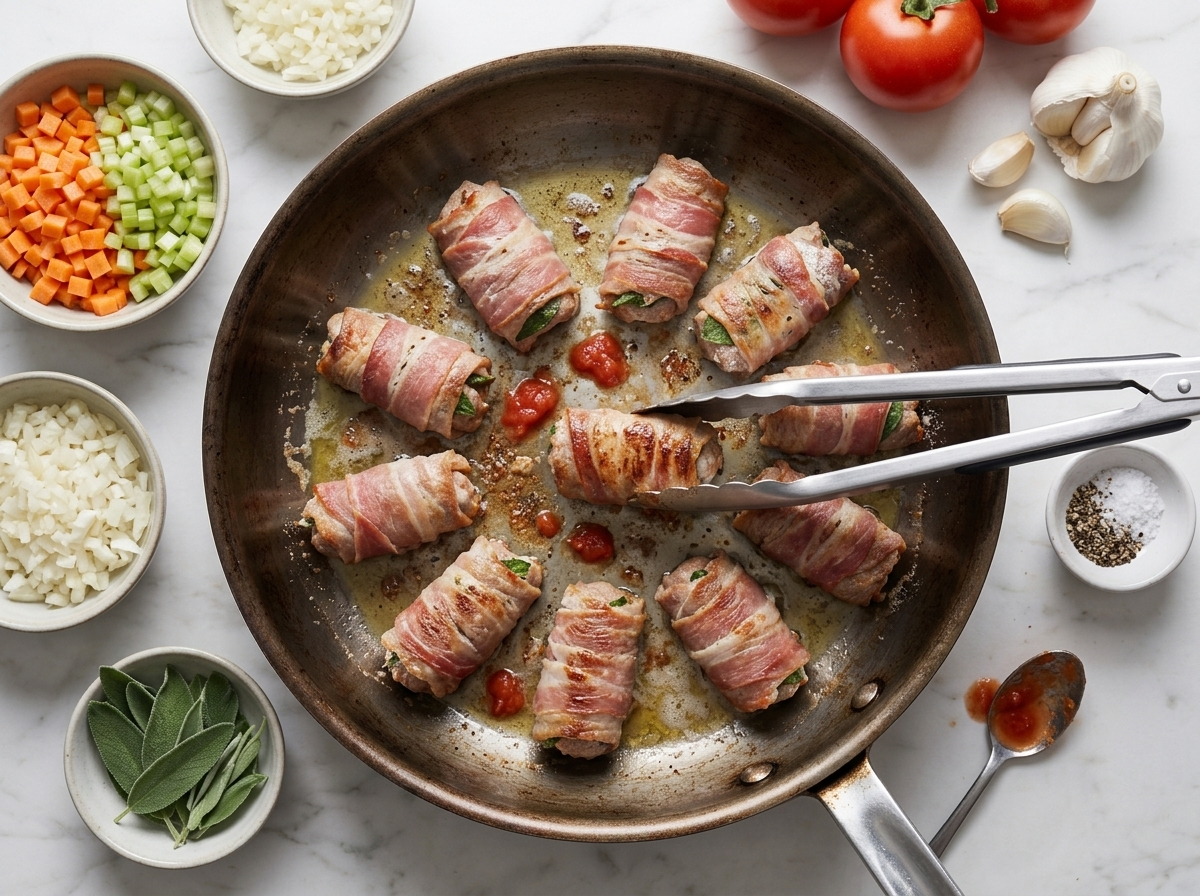
- Spread the flour on a plate and turn each roll in it, shaking off the excess. Heat the oil and butter in a 30 cm / 12-inch deep sauté pan over medium-high heat until the butter foams. Sear 4 rolls for about 4 minutes, turning, until pale gold on all sides. Move them to a plate and repeat with the remaining 4.
- Lower the heat to medium and add the onion, carrot, celery and 1/4 tsp salt. Cook, stirring, for about 6 minutes until soft and pale gold. Pour in the wine, scrape up the browned bits, and cook for about 2 minutes until the smell of alcohol fades and the liquid has reduced by about half.
- Stir in the tomatoes and water. Return the rolls and any plate juices to the pan in a single layer and bring to a gentle simmer. Cover with the lid slightly ajar and cook for 30 minutes, turning the rolls once at the 15-minute mark, until a paring knife slides in with almost no resistance. Keep the bubbles lazy.
- Taste the sauce and add salt if needed. If it looks thin and doesn't coat the back of a spoon, uncover and simmer for 3 to 5 minutes more. Remove every toothpick and serve the rolls with the sauce spooned over.
Notes
- Pat the veal dry before dredging so the flour coats evenly and the rolls brown.
- Salt the sauce only after tasting, because prosciutto and Parmigiano add sodium as it simmers.
- Sear in two batches of four in the 30 cm / 12-inch pan.
- Remove every toothpick before serving.
Tips for Success
- Pound the veal between parchment sheets to 3 mm / 1/8 inch, working from the center outward so the slices don’t tear.
- Hold back on salt until the sauce is done, since prosciutto and Parmigiano both add sodium as the rolls simmer.
- Sear in two batches of four so the rolls brown instead of steaming, and keep the pan at medium-high.
- Count your toothpicks going in and coming out, so none ends up on a guest’s plate.
- Keep the sauce at a bare simmer with the lid slightly ajar, and turn the rolls once at the 15-minute mark.
Variations
- Use chicken breast cutlets pounded to 3 mm instead of veal, and shorten the simmer to 20 minutes until cooked through.
- Replace the prosciutto with thin mortadella and add a few chopped pistachios for a filling with a Bolognese lean.
- Finish the sauce with 1 tbsp of capers and a strip of lemon zest for a sharper, saltier edge.
Storage and Reheating
Involtini di vitello al sugo keep for 3 to 4 days in the refrigerator, stored in their sauce in an airtight container. The sauce keeps the veal from drying out as it sits.
To reheat, put the rolls and sauce in a covered 24 cm / 10-inch skillet over low heat for 10 to 12 minutes, turning once and adding 2 tbsp of water if the sauce has tightened. Stop when the sauce is steaming and the rolls are hot throughout.
You can freeze the cooled rolls in their sauce for up to 2 months and thaw them overnight in the refrigerator. For make-ahead prep, assemble and tie the raw rolls, cover them, and refrigerate for up to 24 hours before searing.
Serving Suggestions
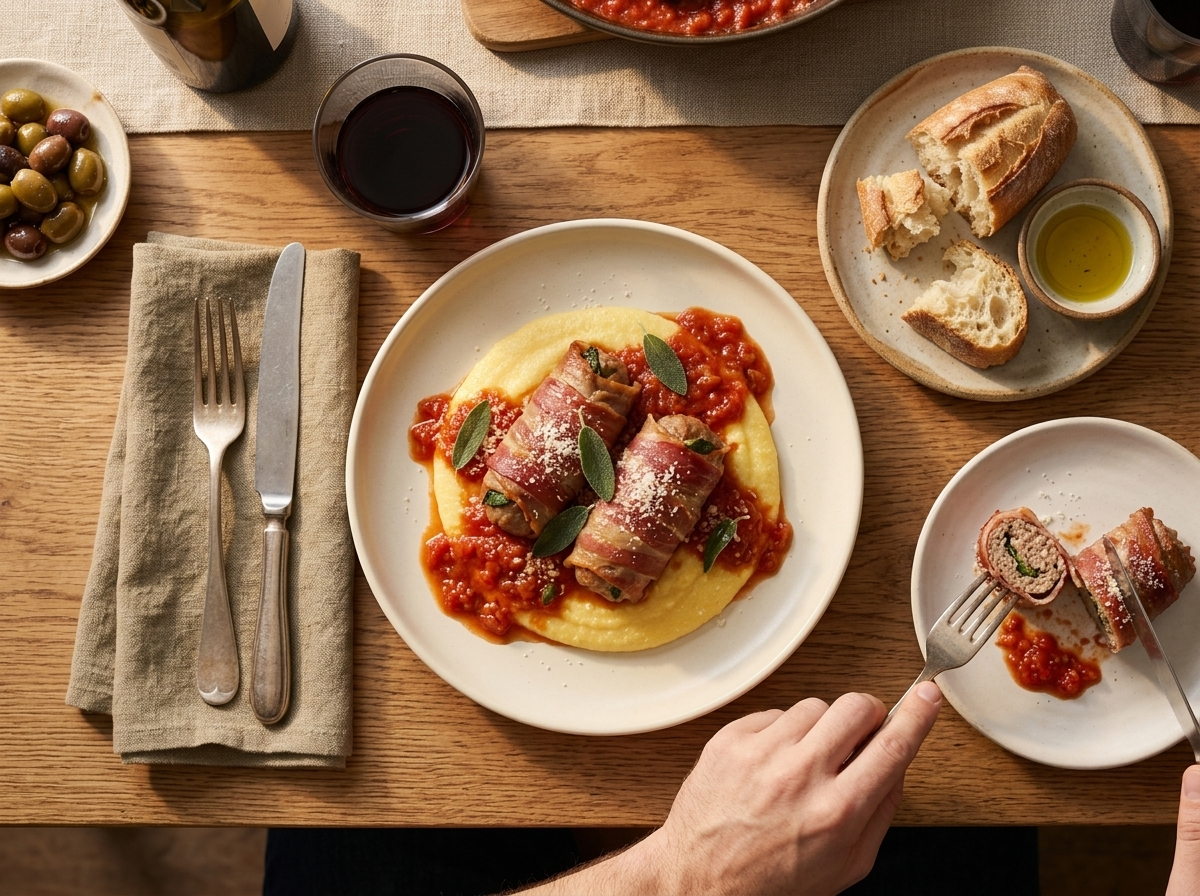
Involtini di vitello al sugo are a secondo, and they need something to catch the sauce. Soft polenta, polenta cropa with melted Casera, or mashed potatoes are the usual choice, and a loaf of crusty bread does the same job.
Add a green side to cut the richness, such as braised savoy cabbage with pancetta and tomato, sautéed spinach with garlic, or green beans dressed with lemon and olive oil.
If you’re serving a full meal, toss tagliatelle with a few spoonfuls of the sugo as a primo, then bring the rolls out after. A medium-bodied red like Montepulciano d’Abruzzo suits the tomato and prosciutto.
FAQ
Why are my veal involtini tough and dry?
The sauce was probably boiling, or the veal was cut too thick. Pound the slices to 3 mm / 1/8 inch and keep the pot at a bare simmer with the lid slightly ajar. Test at 30 minutes: a paring knife should slide into a roll with almost no resistance. If it doesn’t, give it 5 more minutes.
Can I use pork or chicken instead of veal for involtini al sugo?
Yes. Pork loin or chicken breast cutlets pounded to 3 mm work well, and both are done in about 20 minutes of simmering rather than the 30 minutes veal needs. Chicken must be cooked through with no pink, so cut into one roll to check. Veal gives the softest result.
Can I freeze veal involtini in tomato sauce?
Yes, freeze them in the sauce for up to 2 months. Cool completely, pack the rolls and sauce into an airtight container, and thaw overnight in the refrigerator. Reheat covered over low heat for 10 to 12 minutes, adding a splash of water if the sauce has tightened. The sauce keeps the veal from drying out.
What goes well with veal involtini in tomato sauce?
Soft polenta or mashed potatoes are the usual match, since both catch the sauce. Add a green side like sautéed spinach or green beans with lemon to cut the richness. If you want a primo first, toss tagliatelle with a few spoonfuls of the sauce and serve the rolls after as the secondo.
Can I make involtini di vitello al sugo gluten free?
Yes. The only gluten is the 30 g flour dredge. Use fine rice flour or skip it, and the rolls will brown a little paler while the sauce stays slightly thinner. The wine, tomatoes and Parmigiano are naturally gluten free. Check the prosciutto label for added fillers.
What’s the difference between involtini di vitello and saltimbocca?
Both use veal, prosciutto and sage, but saltimbocca is cooked flat in a hot pan for a couple of minutes and finished with butter and wine. Involtini are rolled, then simmered for about 30 minutes in tomato sauce. Saltimbocca is Roman, while involtini al sugo vary by region and household.