
Jump to Recipe
Nasello in bianco, or poached white hake, is a lean white fish fillet simmered gently in a lemon and bay broth, then dressed with olive oil and parsley. This version serves 4 and takes 32 minutes. The fish is done when it’s opaque and flakes at 145 F / 63 C.
The phrase in bianco means plain or white: no tomato, no browning, nothing to hide the fish. Italian home cooks make it when they want something clean-tasting and easy on the stomach. It works just as well as a weeknight dinner.
The texture – not the sauce – defines the result. Hake is lean and soft, so the broth stays at a bare tremble and the fish needs only 7 minutes.
I serve it with boiled potatoes and green beans, all dressed with the same lemon and olive oil.
Why You’ll Love This Recipe
- One broth and one pot of potatoes, 32 minutes total
- Poaching keeps the fish moist with no browning or frying
- Gluten-free and dairy-free at about 390 calories a plate
- Works with frozen hake once it’s thawed in the fridge
Ingredient Notes
- white hake: Nasello is European hake. In the US, look for white or silver hake fillets, or use cod, haddock, or pollock about 2 cm thick.
- dry white wine: Any dry white works, such as Pinot Grigio. To skip alcohol, leave it out and add 1 tbsp extra lemon juice to the water.
- Yukon Gold potatoes: Waxy potatoes hold their shape in boiling water. Floury russets tend to break apart and cloud the plate.
- extra-virgin olive oil: Use a fruity oil you’d happily dip bread in, since it goes on raw and carries the dish.
- capers: Optional. Rinse brined capers and chop them roughly, or leave them out for a milder plate.
- flat-leaf parsley: One small bunch covers both uses. The stems flavor the broth and the chopped leaves go into the dressing.
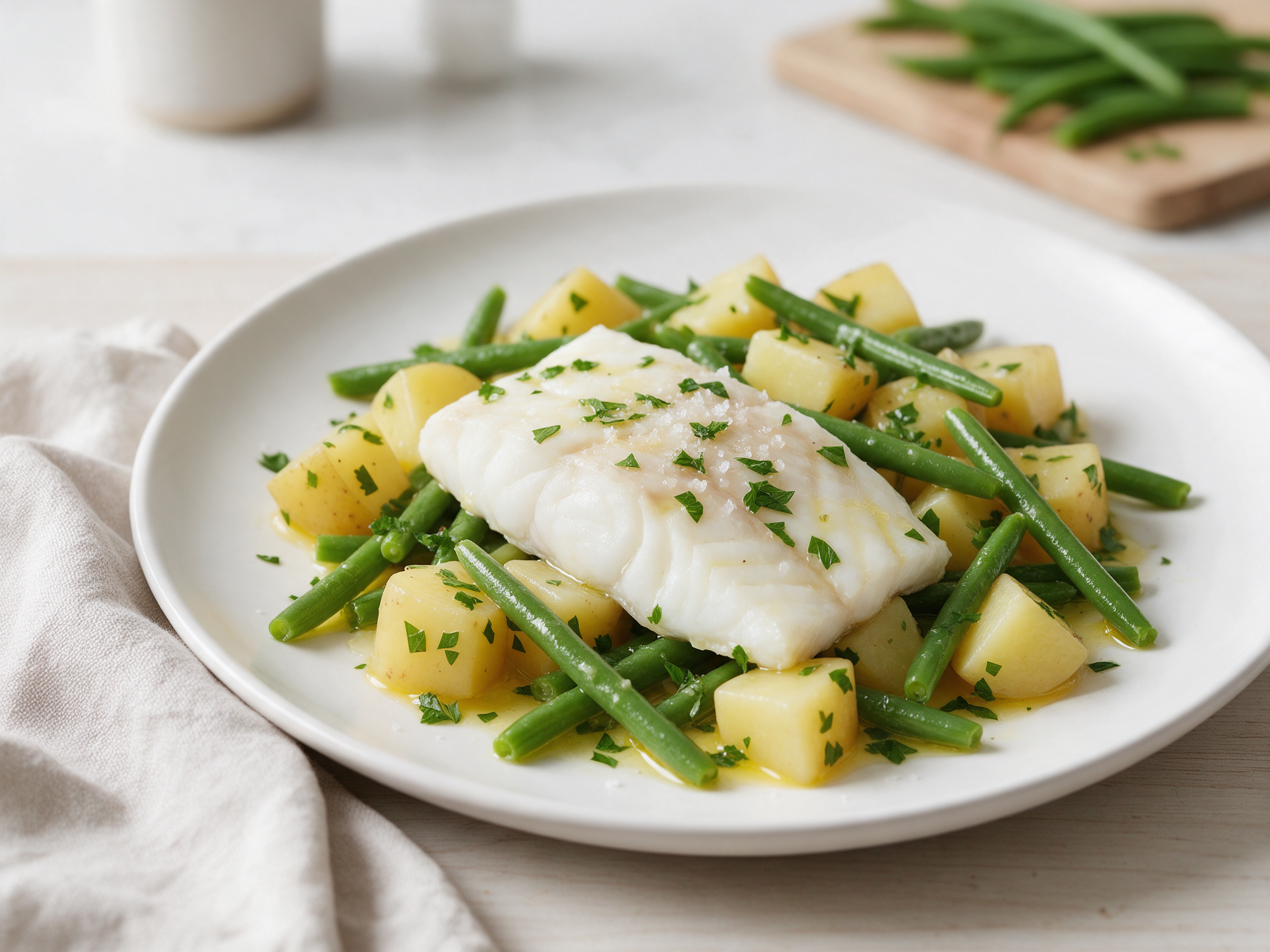
Nasello in Bianco: Poached White Hake with Lemon Oil
Ingredients
Method
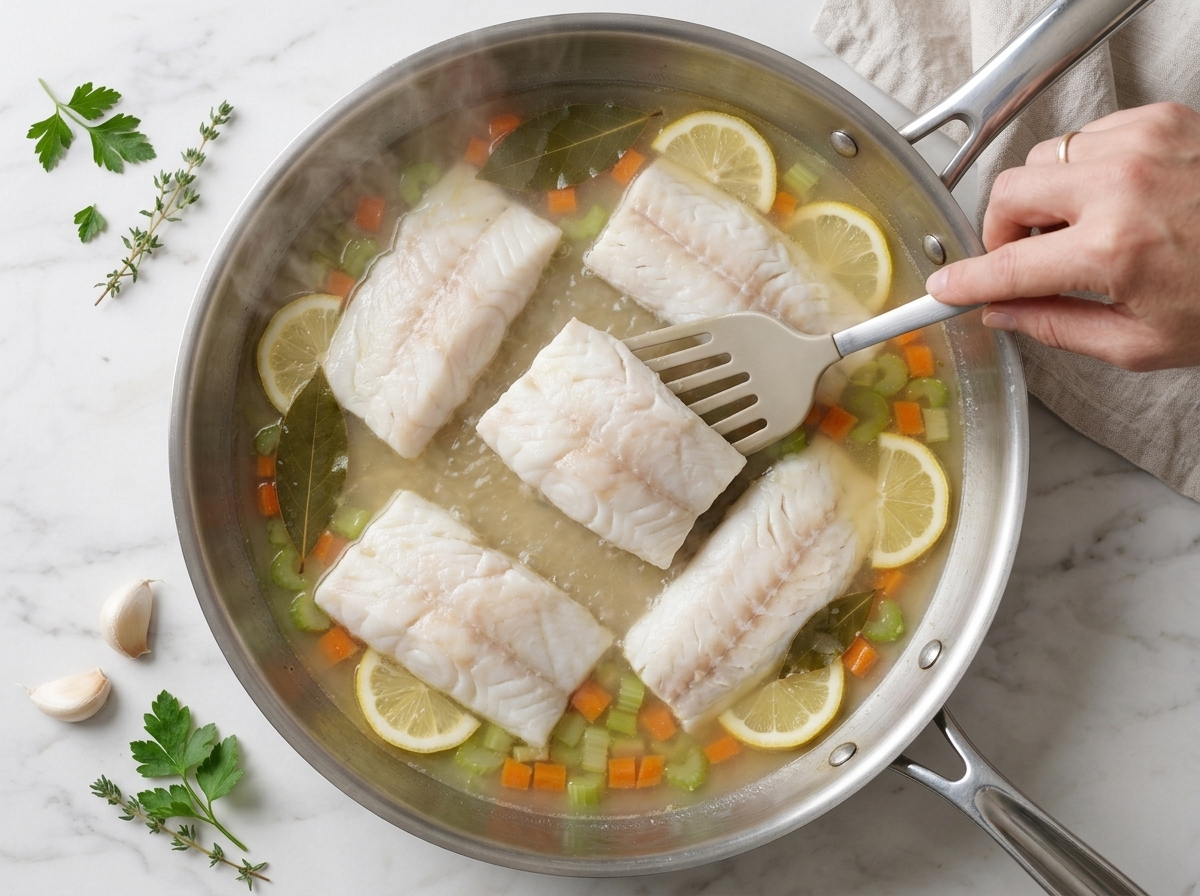
- Combine the water, wine, carrot, celery, onion, lemon slices, bay leaves, peppercorns, parsley stems, and fine sea salt in a 30 cm / 12-inch deep sauté pan. Bring to a boil, then lower the heat and simmer partly covered for 10 minutes, until the broth smells of lemon and bay.
- While the broth simmers, put the potatoes in a 3-quart / 2.8 L saucepan, cover with cold water by 3 cm, and add the coarse salt. Bring to a boil and cook 12 minutes, add the green beans, and cook 4 minutes more, until a knife slides into the potatoes and the beans are bright green. Drain.
- Pat the fillets dry and slide them into the broth in a single layer. The liquid should reach the top of the fish, so add hot water if needed. Turn the heat to its lowest setting so the surface barely trembles, about 85 C / 185 F, cover, and poach for 7 minutes. Don't let it boil: hake is lean and soft, and a rolling boil shreds it. The fish is done when it's opaque white throughout and flakes under a fork, at 145 F / 63 C. If the center looks glassy, cook 1 minute more.
- Whisk the olive oil, lemon juice, 3 tbsp warm poaching broth, parsley, capers if using, and a pinch of flaky salt in a small bowl until loose and slightly cloudy. Lift the fillets out with a fish spatula and drain on a folded towel for 10 seconds. Plate with the potatoes and beans, spoon over the dressing, and finish with flaky salt. Serve within 10 minutes.
Notes
- Thaw frozen hake fully in the fridge overnight, then pat it dry before poaching.
- Keep the broth at about 85 C / 185 F, with the surface barely moving.
- Use a fruity extra-virgin olive oil, since it's added raw and carries the dish.
- Cut potatoes into even 3 cm chunks so they finish at the same time as the green beans.
Tips for Success
- Run a fingertip along each fillet to find pin bones, then pull them out with clean tweezers before the fish goes in the broth.
- Check the thickest point of each fillet. Add 1 minute of poaching time for every extra 5 mm beyond 2 cm.
- Salt the broth until it tastes like a mild soup, about 2 tsp for 1.5 L, so the fish seasons from the outside in.
- Lift the fillets out with a wide fish spatula, not tongs, and drain them on a folded towel for 10 seconds.
- Whisk 3 tbsp of warm poaching broth into the oil and lemon so the dressing turns loose and clings to the potatoes.
Variations
- Swap the potatoes for steamed zucchini or boiled escarole for a lighter plate, and keep the same olive oil and lemon dressing.
- Add 1 tbsp chopped capers and 4 chopped green olives to the dressing for a saltier, briny version of the dish.
- Use cod, haddock, or pollock fillets of similar thickness. Poach for the same 7 minutes and check one fillet for flaking.
Storage and Reheating
Nasello in bianco is best eaten fresh, within 10 minutes of lifting the fish out of the broth. Poached hake is lean and delicate, so it dries out and turns rubbery when reheated.
Leftover fish keeps 2 days in the fridge in a covered container with a little strained broth. Eat it cold, flaked over boiled potatoes with olive oil and lemon.
To plan ahead, make the broth up to 3 days early and keep it strained in the fridge, or freeze it for up to 3 months. Poach fresh fish in it on the night. I don’t freeze the cooked fish, since it turns watery once thawed.
Serving Suggestions
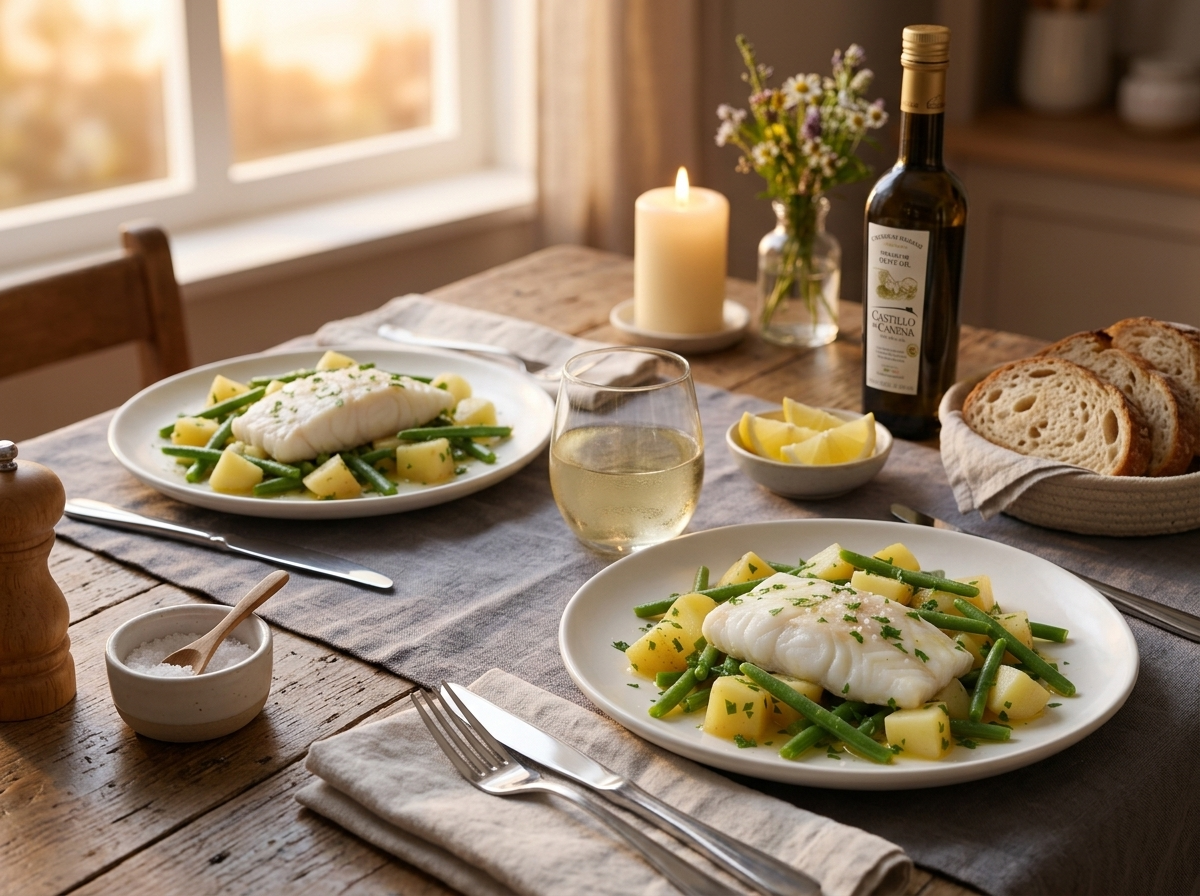
Nasello in bianco is served warm, with boiled potatoes and green beans on the same plate and the lemon dressing spooned over everything.
A chilled Vermentino or Soave suits it. A few slices of crusty bread are useful for the dressing left on the plate.
If you like a little sauce, spoon 2 tbsp of the warm poaching broth around the fish at the table.
FAQ
How do I know when nasello in bianco is done?
Nasello in bianco is done when the fillet turns opaque white all the way through and flakes under a fork, at 145 F / 63 C in the thickest part. For 2 cm thick fillets, that takes about 7 minutes in a broth held at a bare tremble. If the center still looks glassy, give it another minute.
Can I use cod or frozen hake instead of fresh nasello?
Yes. Cod, haddock, and pollock fillets of similar thickness work with the same 7-minute poach, and frozen hake is fine once it’s fully thawed overnight in the fridge. Pat thawed fillets dry before poaching, because thawed fish sheds liquid that can taste flat.
How long does poached hake keep, and can I eat it cold?
Poached hake keeps 2 days in the fridge, stored in a covered container with a little strained broth. Eat it cold, flaked over boiled potatoes with olive oil and lemon, rather than reheating it. Reheating turns lean hake dry and rubbery, so the cold route gives better texture.
What vegetables go with poached white hake?
Boiled potatoes and green beans are the usual pairing, but wilted spinach, steamed zucchini, and boiled escarole also work. Dress whichever you choose with the same lemon and olive oil. Skip heavy tomato sauces, which turn it into a different dish.
Is nasello in bianco gluten free and dairy free?
Yes, nasello in bianco as written is both gluten free and dairy free. Nothing in the fish, vegetables, broth, or dressing contains wheat or milk. Skip the wine if you avoid alcohol, and use 1 tbsp extra lemon juice in the water.
What is the difference between nasello in bianco and pesce all’acqua pazza?
Nasello in bianco is poached in a plain aromatic broth of lemon, bay, celery, and carrot, then dressed with olive oil. Pesce all’acqua pazza, from Campania, cooks the fish in a tomato, garlic, and parsley broth, often with chili. The first tastes pale and clean, the second brighter and more acidic.