Jump to Recipe
Pan-fried cordon bleu di vitello is a thin veal cutlet folded around cooked ham and fontina, breaded, and fried until the crust turns deep golden and the cheese melts into the ham. It takes about 50 minutes, and the breading can be done a day ahead.
The texture defines the result here. Pound the veal to 4 mm so it cooks in minutes, and chill the breaded cutlets for 10 minutes so the crumbs stay on.
The one thing that goes wrong is leakage. If cheese slips out of the seam, it burns in the oil and the crust scorches before the veal is done. Leave a 1 cm border, press the edges hard, and pin them with toothpicks.
This is the weeknight cousin of cotoletta alla valdostana, the Aosta Valley dish built on fontina. I use prosciutto cotto and fontina. Gruyère works if that’s what you have.
Why You’ll Love This Recipe
- Thin veal cooks through in about 7 minutes per batch
- Fill and bread the cutlets up to 24 hours ahead
- Everyday deli ham and an easy cheese swap keep costs down
- A short chill keeps the crust attached and the cheese sealed
Ingredient Notes
- veal cutlets: Ask the butcher for scaloppine cut from top round, about 1 cm thick. Pork loin cutlets are the budget swap and cook in the same time.
- prosciutto cotto: This is Italian cooked ham, mild and sweet. Any good deli ham works, but skip prosciutto crudo, which turns salty and chewy when fried.
- fontina: It melts smoothly and tastes gently nutty. Gruyère, Emmental, or provolone dolce all stand in without changing the method.
- fine dry breadcrumbs: Fine crumbs give a tight, even crust. Panko is craggier and browns faster, so watch the heat.
- sunflower oil and butter: The oil handles the heat and the butter adds flavor and color. Butter alone burns before the veal is done.
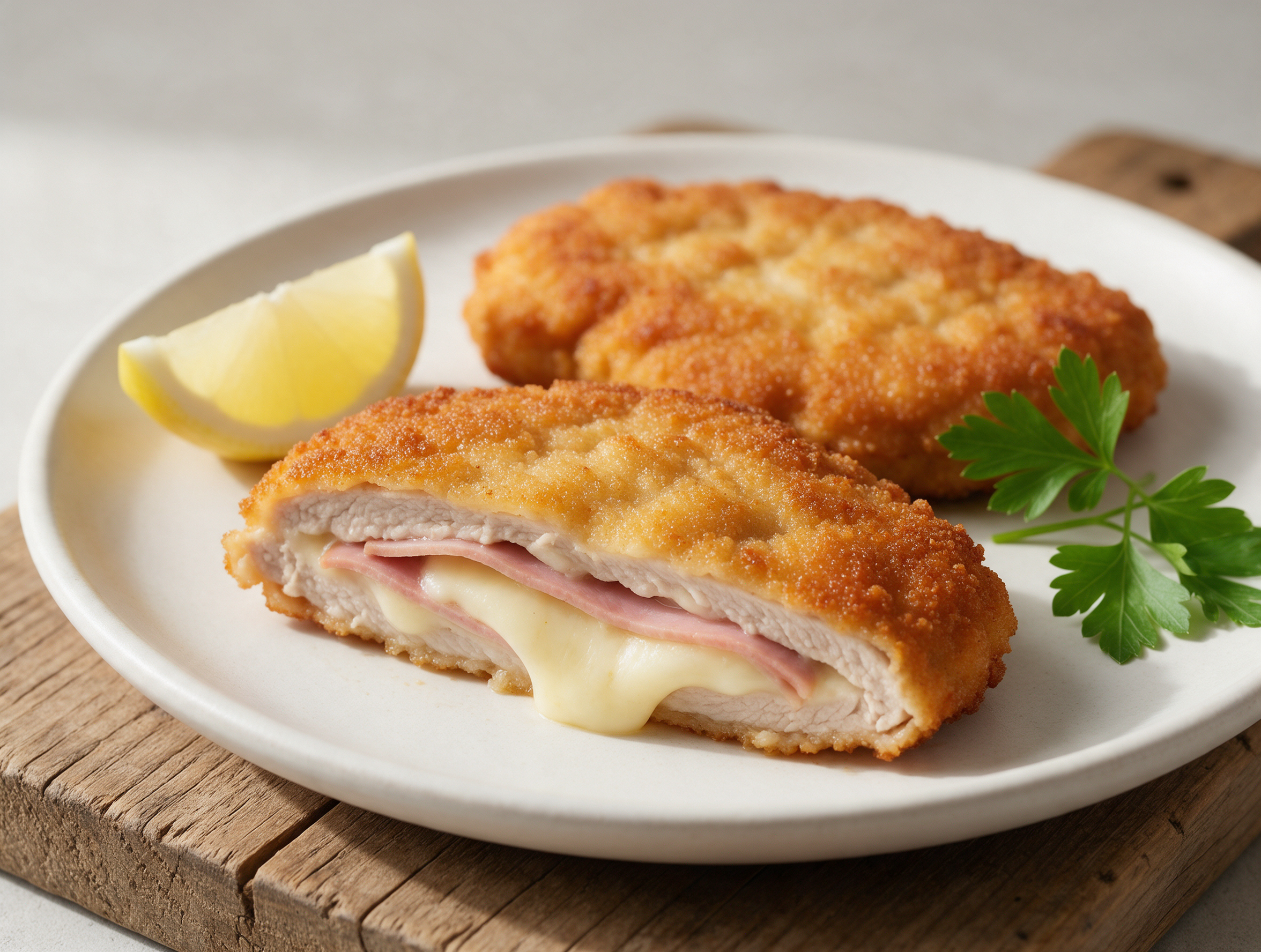
Pan-Fried Cordon Bleu di Vitello with Ham and Fontina
Ingredients
Method
- Place each cutlet between two sheets of parchment and pound from the center outward until it's an even 4 mm thick, about 15 x 20 cm. Pat dry and season both sides with the salt and pepper.
- Lay one slice of ham and one quarter of the fontina on one half of each cutlet, keeping a 1 cm border clear. Fold the empty half over, press the edges firmly, and pin each cutlet closed with 2 toothpicks.
- Set the flour, beaten eggs, and breadcrumbs in three shallow dishes. Dredge each cutlet in flour and shake off the excess, dip it in egg, then press it into the breadcrumbs on both sides and along the edges until fully coated.
- Place the cutlets on a parchment-lined plate and chill uncovered for 10 minutes. Meanwhile, heat the oven to 100 C / 212 F and set the wire rack in the sheet pan.
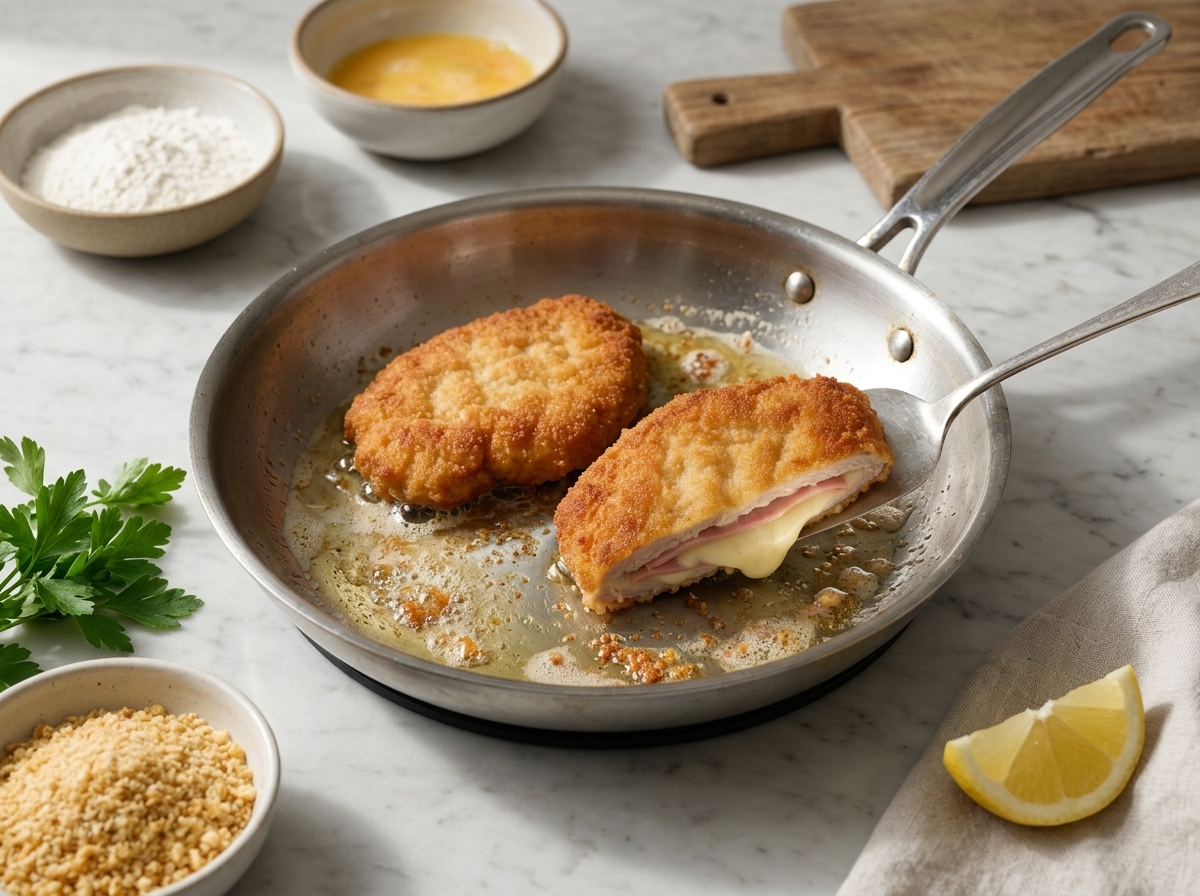
- Heat the oil and butter in the 30 cm / 12-inch skillet over medium heat for about 3 minutes, until a breadcrumb sizzles on contact (about 170 C / 340 F). Fry 2 cutlets for 3 to 4 minutes per side, until the crust is deep golden. Move them to the rack in the oven, where they can wait up to 15 minutes.
- Skim loose crumbs from the oil and fry the remaining 2 cutlets the same way. Slide a thermometer in from the edge of one cutlet, which should read 145 F / 63 C. Remove all toothpicks and serve at once with lemon wedges.
Notes
- Remove every toothpick before serving, and count them out so none end up on a plate.
- Keep the veal and filling cold so the cutlets don't warm up and tear while you fold.
- Pound the veal to an even 4 mm so each cutlet cooks at the same speed.
- Fry at medium heat, not high, so the cheese melts before the crust darkens.
Tips for Success
- Pound from the center outward with the flat side of the mallet, stopping at 4 mm so the veal doesn’t tear.
- Pat the cutlets dry before flouring, because surface moisture makes the breading slide off in the pan.
- Press the crumbs on firmly with your palm, including the edges, so the seam is fully covered.
- Fry two cutlets at a time and hold the first batch on a rack in the 100 C / 212 F oven for up to 15 minutes.
- Lower the heat if the crumbs darken before 3 minutes, so the cheese has time to melt by the 3 to 4 minute mark per side.
Variations
- Lay a small sage leaf on the ham before adding the cheese for a light herbal note.
- Use pork loin cutlets or halved chicken breast pounded to 5 mm, and cook until cooked through with a golden crust.
- Use gluten-free breadcrumbs and a rice flour dredge to make a gluten-free version with the same method.
Storage and Reheating
Cordon bleu di vitello keeps in an airtight container in the fridge for up to 3 days. Refrigerate within 2 hours of cooking and layer parchment between the cutlets so the crust doesn’t stick.
Reheat on a wire rack set in a sheet pan in a 180 C / 350 F oven for 12 to 15 minutes, until the crust crisps and the center is hot. The rack lets air reach the underside. The microwave steams the crumbs soft, so skip it.
To make ahead, bread the uncooked cutlets, cover them loosely, and refrigerate for up to 24 hours before frying. For longer storage, freeze the breaded cutlets on a tray, bag them once solid, and keep for up to 2 months. Thaw overnight in the fridge, then fry as written.
Serving Suggestions
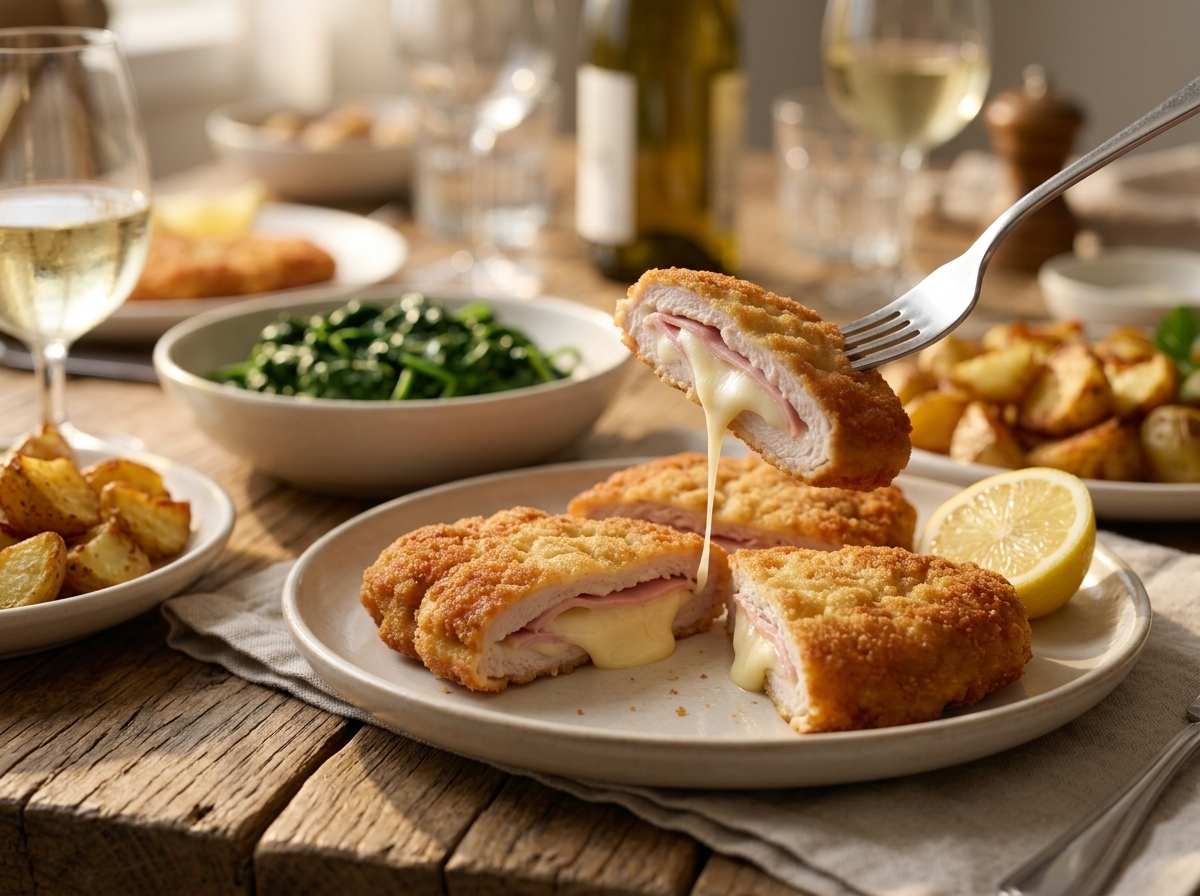
Serve cordon bleu di vitello straight from the pan with a lemon wedge. The acid cuts the richness of the melted cheese and fried crumbs.
Sautéed spinach with garlic, crisp pan-fried potatoes, or an arugula salad dressed with olive oil and lemon all fit. Mashed potatoes are the heavier option and catch any fontina that escapes.
Pour a chilled Pinot Grigio or Vermentino alongside. Count the toothpicks out before plating so none end up on a plate.
FAQ
Why does the cheese leak out of my veal cordon bleu?
Cheese leaks when the veal tears, the filling reaches the edge, or the seam isn’t pinned. Keep a 1 cm border, press the edges together, and secure each cutlet with two toothpicks. Chilling the breaded cutlets for 10 minutes also helps the crust set before it hits the hot oil.
How do I know when veal cordon bleu is done?
The crust should be deep golden after 3 to 4 minutes per side, and an instant-read thermometer slid in from the edge should read 145 F / 63 C. The veal feels firm and the cheese yields slightly when you press the side. If the crust darkens faster, lower the heat to medium.
Can I use pork or chicken instead of veal for cordon bleu?
Yes. Pork loin cutlets pounded to 4 mm use the same timing, and chicken breast sliced in half horizontally and pounded to 5 mm works too. Chicken needs a minute or two more per side and must be cooked through. Veal is milder and more tender, but either swap costs noticeably less.
Can I freeze cordon bleu di vitello before frying?
Yes, freeze the breaded, uncooked cutlets on a tray until solid, then bag them for up to 2 months. Thaw overnight in the fridge and fry as written. Frying from frozen tends to burn the crust before the cheese melts, so skip that.
What goes with veal cordon bleu besides lemon?
Sautéed spinach with garlic, braised savoy cabbage with pancetta, or an arugula salad with olive oil and lemon all suit it. Bitter greens like arugula cut through the cheese and fried crumbs. For something heavier, mashed potatoes soak up any melted fontina that escapes onto the plate.
What is the difference between cordon bleu di vitello and cotoletta alla valdostana?
Cotoletta alla valdostana is the Aosta Valley dish: a breaded veal cutlet stuffed with fontina and ham. Cordon bleu is a close relative, usually thin folded veal with ham and a Swiss-style cheese such as Gruyère. The two overlap a lot, and cotoletta alla milanese has no filling at all.