
Jump to Recipe
Lorighittas sarde are a hand-shaped ring pasta from the small Sardinian town of Morgongiori, made by rolling thin ropes of durum wheat dough and twisting them into double loops before boiling for 12 to 15 minutes. The shape is what sets this pasta apart from ordinary long pasta. The tight coil holds sauce in every twist and gives a chew you don’t get from machine-cut noodles.
I first made these on a wooden board, copying a technique I’d only seen in photos, and the dough cracked twice before I got the ratio of flour to water right. The fix was less water and more resting time, not more kneading.
Here the rings go into a saffron and tomato sugo, a pairing you’ll find across Sardinian tables since saffron grows near San Gavino Monreale. Grated pecorino sardo finishes the dish with salt and bite.
The shaping stage takes patience, but the cooking itself is straightforward stovetop work. Once you get the twist down, 400g of semola makes enough rings for four generous plates.
Why You’ll Love This Recipe
- Uses just semola, water, and pantry sauce ingredients
- The twisted shape holds sugo in every coil
- Dough and shaped rings both work well made ahead
- Saffron gives the sauce real color and a floral note
Ingredient Notes
- semola di grano duro rimacinata: Use finely milled durum wheat semola, not coarse semolina, or the dough tears when you roll it into thin ropes.
- saffron threads: A small pinch goes far. Look for whole threads rather than powder for the truest color and aroma.
- canned crushed tomatoes: San Marzano tomatoes give a cleaner, less acidic base, but any good-quality crushed tomato works.
- pecorino sardo: Swap in pecorino romano if you can’t find pecorino sardo. It’s saltier, so taste before adding more.
- dry white wine: A dry white like Vermentino deepens the sugo. Swap in pasta water if you’d rather skip the alcohol.
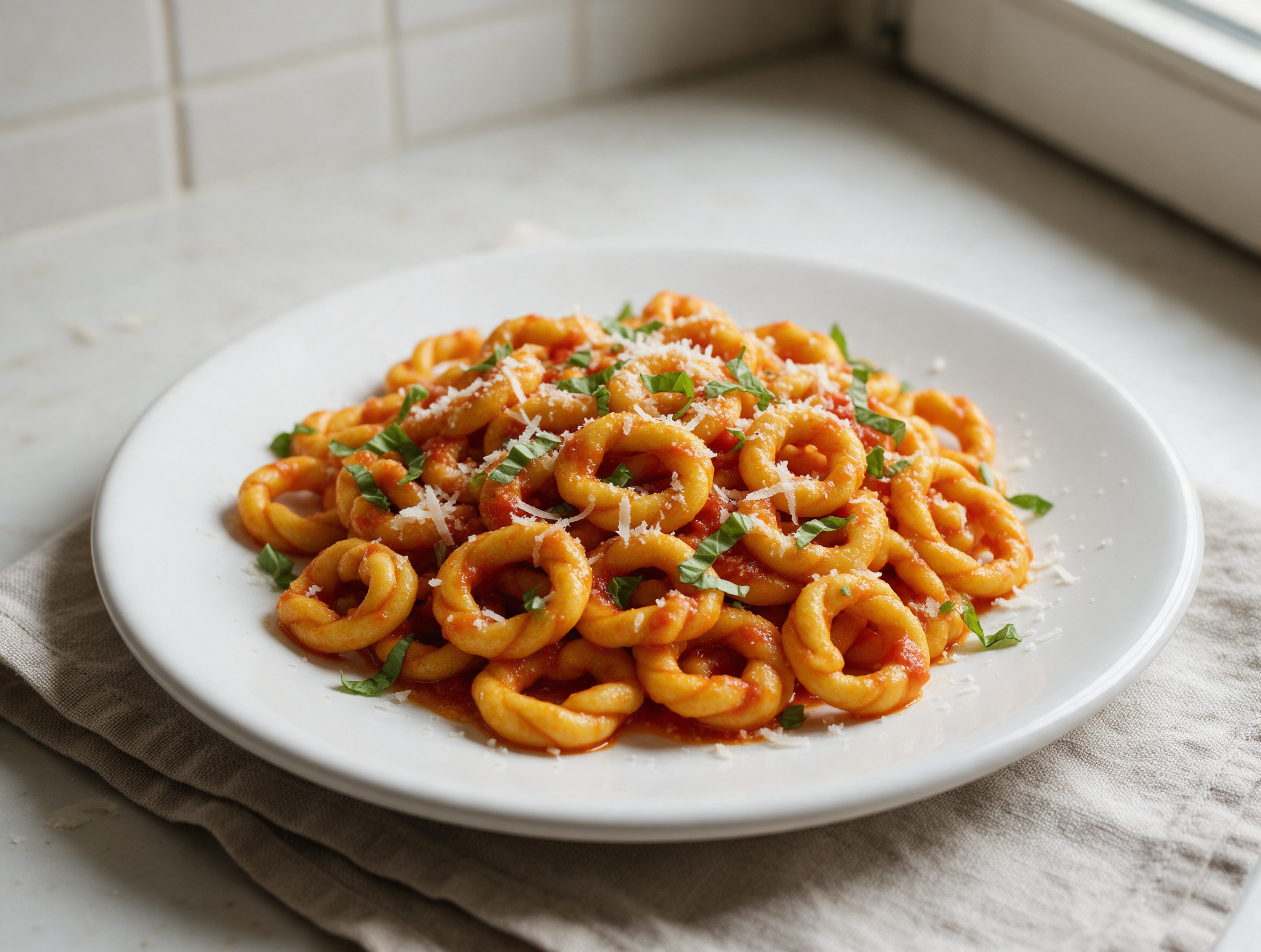
Sardinian Lorighittas Sarde with Saffron Tomato Sugo
Ingredients
Method
- In a mixing bowl, combine the semola and salt. Add the warm water gradually, mixing with a fork until a shaggy dough forms.
- Turn the dough onto a wooden board and knead for 8 to 10 minutes until smooth and firm. Wrap and rest at room temperature for 30 minutes.
- Cut off a piece of dough and roll into a rope about 3 mm / 1/8-inch thick, keeping the rest covered so it doesn't dry out.
- Cut the rope into 18 cm / 7-inch lengths. Wrap one length around two fingers to form a loop, twist the ends together once, then wrap around your fingers a second time and pinch the ends to seal into a double ring.
- Place shaped rings on a floured kitchen towel, spaced apart, and let them air-dry while you make the sauce, about 30 minutes.
- Bloom the saffron threads in the white wine for 10 minutes.
- Heat the olive oil in a 3-quart / 2.8 L saucepan over medium heat. Add the onion and cook 5 to 6 minutes until soft, then add the garlic and cook 1 minute until fragrant.
- Pour in the saffron wine and scrape up any browned bits. Add the crushed tomatoes and a pinch of salt. Simmer uncovered for 20 to 25 minutes, stirring occasionally, until the sauce thickens enough to coat the back of a spoon.
- Bring a 6-quart / 5.7 L pot of well-salted water to a rolling boil. Add the lorighittas and cook 12 to 15 minutes, until the rings are tender with a slight chew at the core, not mushy. Taste one to check. Reserve 1 cup of the pasta water before draining.
- Drain the pasta and add it to the sugo with a splash of the reserved pasta water. Toss over low heat for 1 to 2 minutes so the rings soak up the sauce.
- Remove from heat and stir in half the pecorino sardo. Check for salt. Plate and top with the remaining pecorino and torn basil leaves.
Notes
- Rest the dough a full 30 minutes, it rolls thinner without springing back.
- Pinch each ring's seam firmly, loose seams open up in boiling water.
- Simmer the sugo until it coats a spoon, thin sauce won't cling to the rings.
- Taste before adding salt, pecorino sardo is already quite salty.
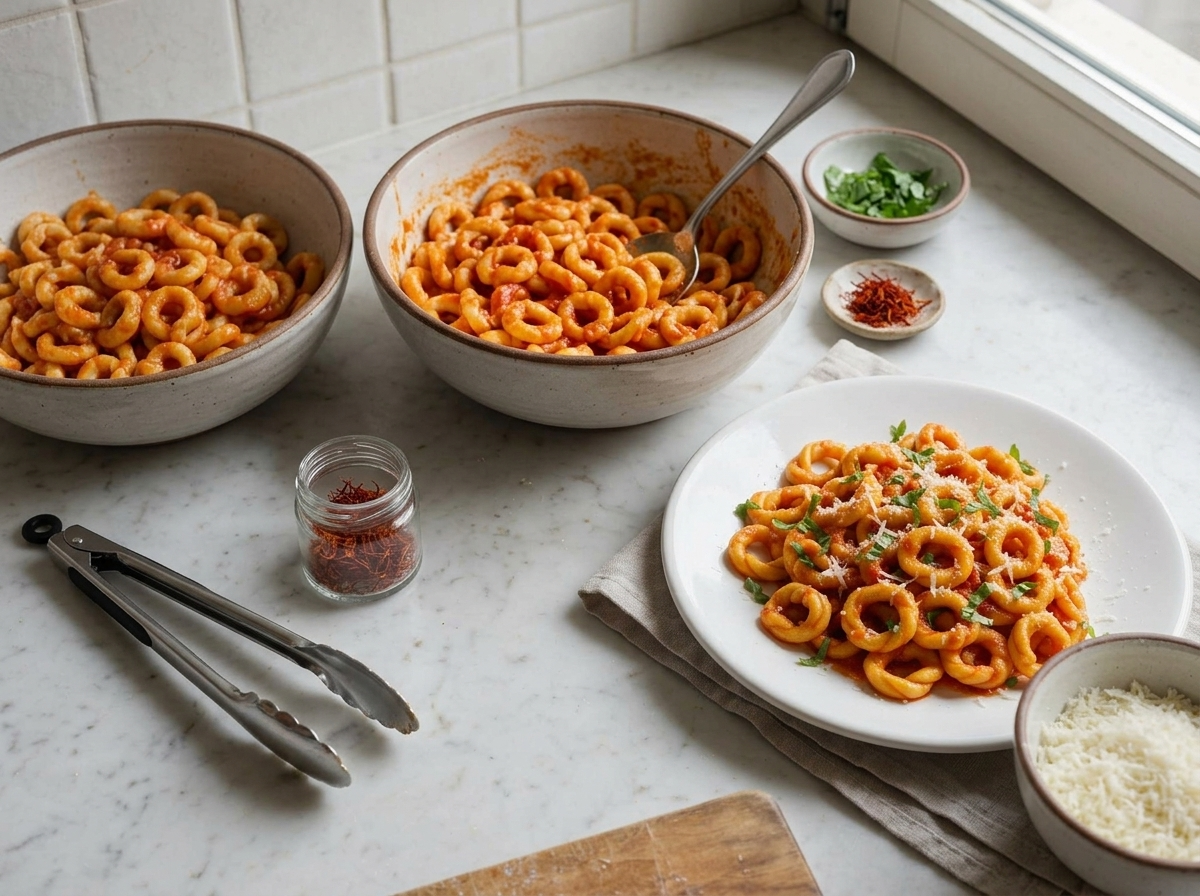
Tips for Success
- Knead the dough at least 8 minutes until it feels firm and elastic, not sticky or crumbly.
- Keep unused dough wrapped tightly while you shape rings, so it doesn’t dry out and crack.
- Twist each ring firmly and pinch the seam closed, or it unravels in the boiling water.
- Let shaped rings rest on a floured towel while the sugo simmers, so they hold their shape.
- Save a cup of pasta water before draining, it loosens the sugo without diluting the flavor.
Variations
- Swap the tomato-saffron sugo for a simple sheep’s milk ricotta and black pepper sauce, a Morgongiori favorite for feast days.
- Add crumbled Sardinian sausage to the sugo during the last 10 minutes of simmering for a heartier main course.
- Use half semola and half all-purpose flour if your dough keeps cracking, it shapes more easily though the chew softens slightly.
Storage and Reheating
Lorighittas sarde keeps well both before and after cooking. Store cooked pasta tossed in sugo in an airtight container in the fridge for 3 to 4 days.
Reheat gently in a skillet over medium-low heat with a splash of water or reserved pasta water, stirring until warmed through, about 4 to 5 minutes. A microwave in 30-second bursts works too if you’re short on time.
To make ahead, shape the raw rings and let them dry on a floured towel at room temperature for 24 to 48 hours, turning once, then store airtight for up to 2 months. Boil straight from dry, no thawing needed.
Serving Suggestions
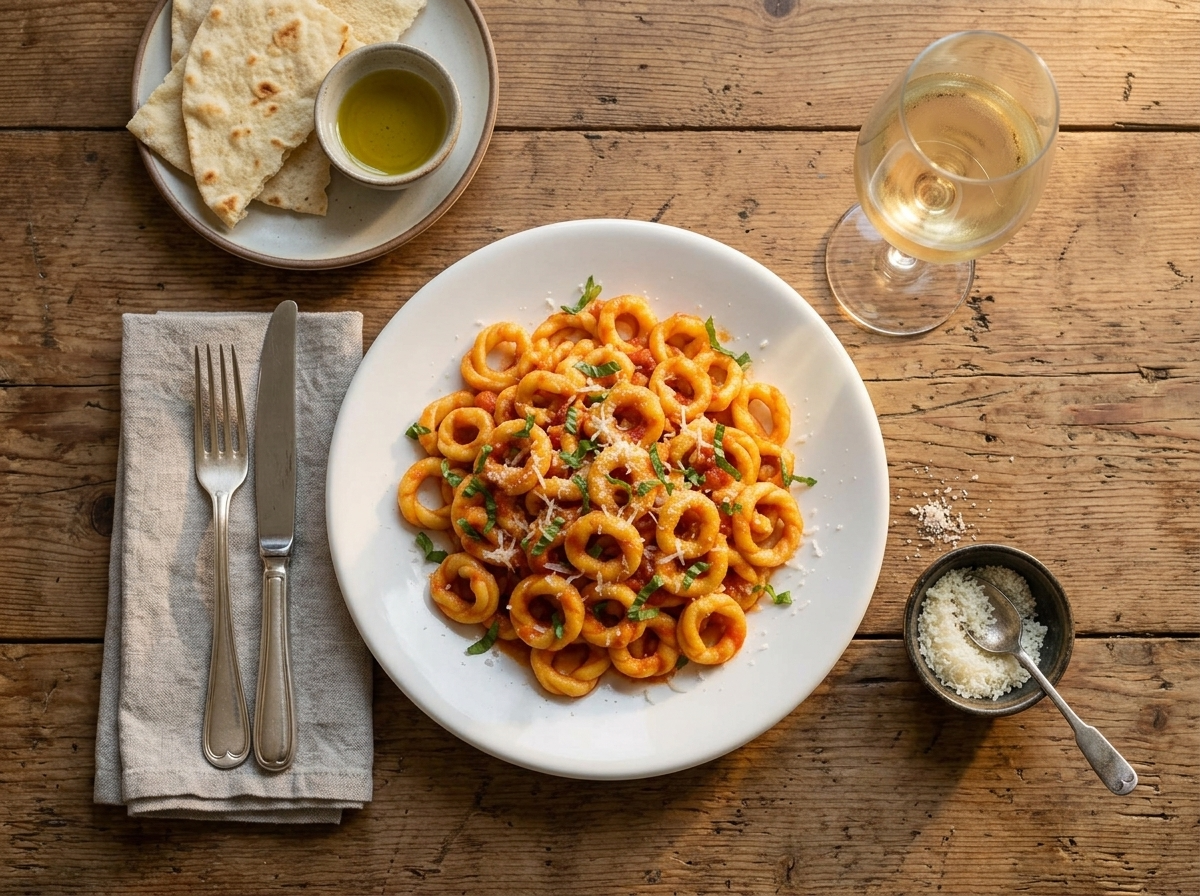
Lorighittas sarde pairs well with a chilled glass of Vermentino di Sardegna, the local white that cuts through the pecorino.
Serve it as a first course followed by grilled lamb chops or a simple arugula salad with lemon, the way it’s often plated on the island.
For a heartier one-dish dinner, add crumbled Sardinian sausage or a handful of sauteed shrimp to the sugo before tossing in the pasta.
FAQ
How do I know when lorighittas sarde are done boiling?
The rings are done at 12 to 15 minutes, when they’re tender but still have a slight chew at the core, not mushy. Bite into one to check, since the thickness varies more than machine-cut pasta. Fresher, thinner rings cook closer to 12 minutes.
Can I use store-bought lorighittas instead of shaping the rings by hand?
Yes, dried lorighittas from an Italian grocer works fine and saves the shaping time. Cook it the same way, about 12 to 15 minutes in salted boiling water, tasting for the same slight chew. The sugo and finishing steps stay identical.
Can I shape the lorighittas ahead of time and dry them before cooking?
Yes, shape the rings up to 2 days ahead. Let them dry on a floured towel at room temperature for 24 to 48 hours, turning once, then store airtight until you’re ready to boil. Dried rings go straight into boiling water, no thawing needed.
What wine goes well with lorighittas sarde and the tomato-saffron sugo?
Vermentino di Sardegna is the classic match, its acidity cuts through the pecorino and saffron. A dry rose or light Sangiovese also works if you prefer red. Avoid heavy reds, they compete with the saffron’s floral note.
Is lorighittas sarde recipe gluten-free?
No, the dough is made from durum wheat semola, so it contains gluten. There isn’t a reliable gluten-free swap that holds the twisted ring shape, since the dough needs gluten’s elasticity to stretch without breaking. Try a machine-made gluten-free pasta shape instead if you need one.
What’s the difference between lorighittas and other Sardinian pasta like malloreddus?
Lorighittas are a hand-twisted ring shape unique to Morgongiori, made from durum semola and water rolled into thin ropes. Malloreddus, by contrast, are small ridged shells shaped over a gnocchi board or fabric. Lorighittas hold sauce in tight coils rather than ridges, and take longer to shape.