
Jump to Recipe
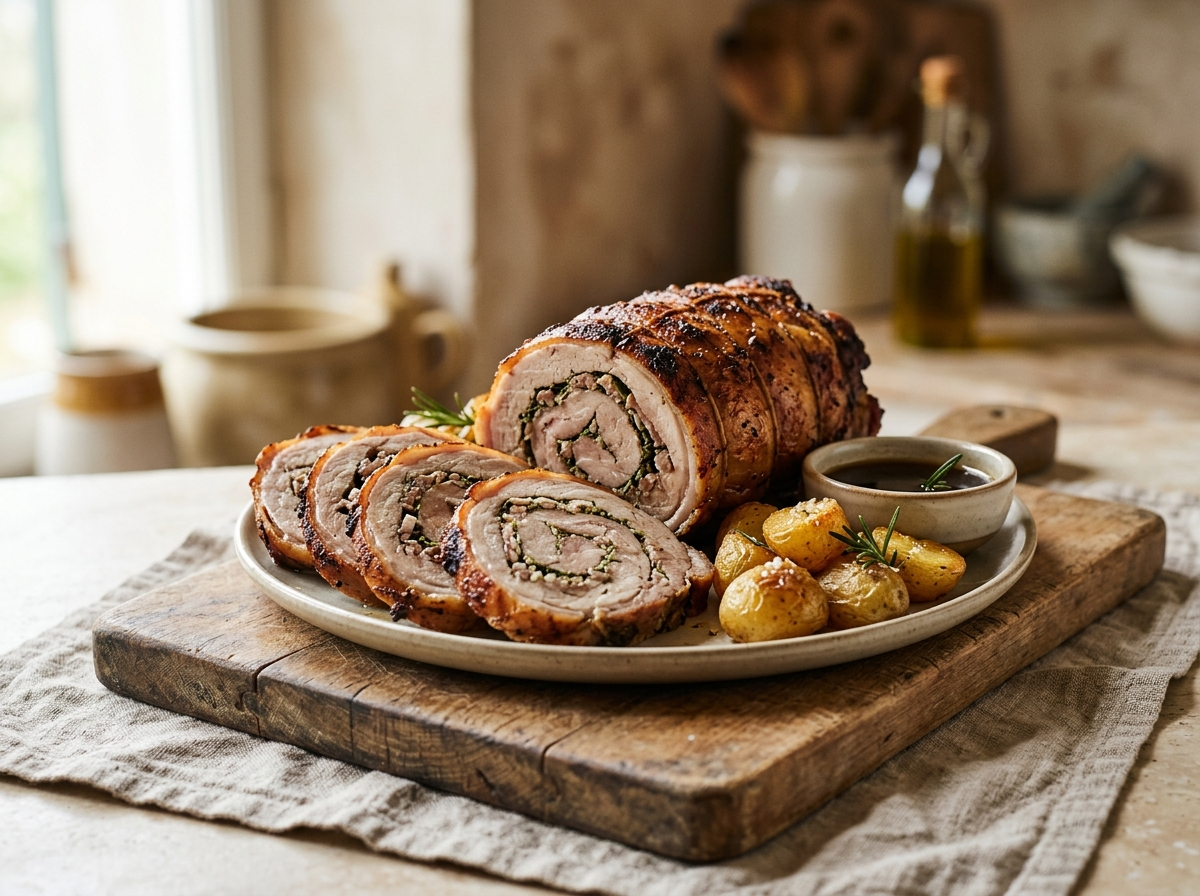
Coniglio in porchetta takes the classic Tuscan porchetta seasoning, garlic, wild fennel, rosemary, and applies it to rabbit instead of the pork belly used in arista di maiale al forno. The rabbit is boned flat, layered with pancetta and the herb mix, then rolled into a tight log and roasted until the outside crisps and the inside stays moist.
This is a farmhouse dish from central Italy, the kind of thing you’d find at a Sunday table in Umbria or the Maremma. Rabbit takes on the porchetta flavors well because the meat is lean and mild, so it needs the fat from the pancetta to keep it from drying out.
Boning the rabbit yourself takes practice, and the first time you try it the meat won’t lie perfectly flat. That’s fine. Ask your butcher to bone it for you if you’d rather skip that step, most will do it on request.
Internal temp is the thing to watch here. Pull the rabbit at 71C / 160F and let it rest before slicing, the roll will hold together better and the juices redistribute instead of running out onto the board.
Why You’ll Love This Recipe
- Lean rabbit stays juicy thanks to the pancetta layer
- One roll feeds four without carving a whole roast
- Classic porchetta flavor without cooking a full pork belly
- Leftovers slice cold for sandwiches the next day
Ingredient Notes
- Rabbit: Ask your butcher to bone it flat, farmed rabbit around 1.4 to 1.6 kg works best. Chicken thighs boned out can substitute in a pinch, though the flavor changes.
- Pancetta: Thin flat slices, not rolled pancetta, so they lie evenly over the meat. Prosciutto crudo works too if that’s what you have.
- Wild fennel fronds: Hard to find outside Italy, so toasted fennel seeds crushed with a mortar are the standard substitute.
- Garlic: Use whole peeled cloves, not paste, so you get pockets of soft roasted garlic in each slice.
- White wine: A dry white like Vermentino or pinot grigio deglazes the pan and keeps the base of the roast from drying out.
Coniglio in Porchetta: Rabbit Rolled with Fennel and Pancetta
Ingredients
Method
- Lay the boned rabbit flat, skin side down, on a cutting board and pound gently to an even thickness.
- Season the inside with salt, pepper, half the garlic, half the rosemary, half the fennel seeds and the lemon zest.
- Lay the pancetta slices over the seasoned meat in a single layer, covering it edge to edge.
- Roll the rabbit up tightly from one short end, keeping the pancetta layer intact.
- Tie the roll with kitchen twine every 3 cm to hold its shape.
- Rub the outside with olive oil and the remaining garlic, rosemary and fennel seeds, and season with a final pinch of salt.
- Heat the oven to 180C / 356F.
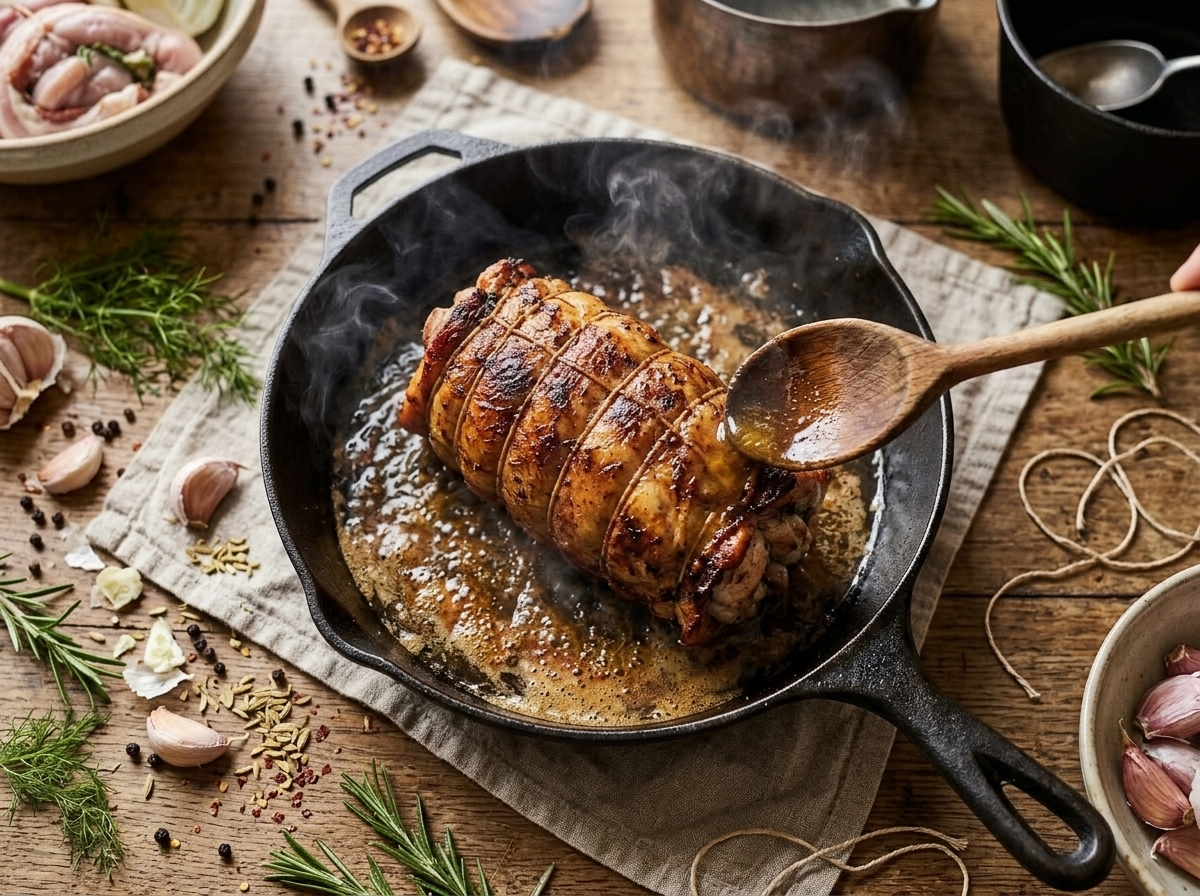
- Sear the rolled rabbit in a hot ovenproof skillet with a little oil for 2 minutes per side until golden.
- Pour the white wine into the pan and transfer to the oven.
- Roast for 60 to 70 minutes, basting with pan juices every 20 minutes, until the internal temperature reads 71C / 160F.
- Rest the roast for 10 minutes under loose foil before removing the twine and slicing into 2 cm rounds.
Notes
- Ask the butcher to bone the rabbit flat if you don't want to do it yourself.
- Salt the meat at least 1 hour ahead for better seasoning depth.
- Tie the roll snugly every 3 cm so it holds shape while roasting.
- Pull at 71C / 160F internal, not higher, to avoid dry meat.
- Rest 10 minutes minimum before slicing so the roll firms up.
Tips for Success
- Pound the boned rabbit to an even thickness before layering so it cooks through at the same rate.
- Salt the meat at least 1 hour ahead, or overnight in the fridge, for better seasoning penetration.
- Tie the roll every 3 cm with kitchen twine, the same technique used for polpettone ripieno, so it holds its shape during roasting.
- Sear the rolled rabbit in a hot pan for 2 minutes per side before it goes in the oven for a crisper skin.
- Rest the roast for 10 minutes under loose foil before slicing, it firms the roll and stops the juices from spilling out.
Variations
- Add a handful of chopped black olives and lemon zest to the stuffing for a coastal Ligurian twist.
- Swap pancetta for guanciale if you want a stronger, more peppery cured pork flavor.
- Wrap the whole roll in caul fat instead of tying with twine for extra bastng fat and a rustic look.
Storage and Reheating
Coniglio in porchetta keeps well in the fridge for up to 3 days, wrapped tightly in foil or an airtight container. Slice only what you need and keep the rest whole to stay moist.
Reheat slices gently in a covered skillet with a splash of white wine or broth over low heat for 5 to 6 minutes, or in a 150C / 300F oven until warmed through. Avoid the microwave if you can, it dries the meat out fast.
This roast also freezes well once cooked. Wrap the whole roll (or individual portions) in foil then a freezer bag, and use within 2 months. Thaw overnight in the fridge before reheating.
Serving Suggestions
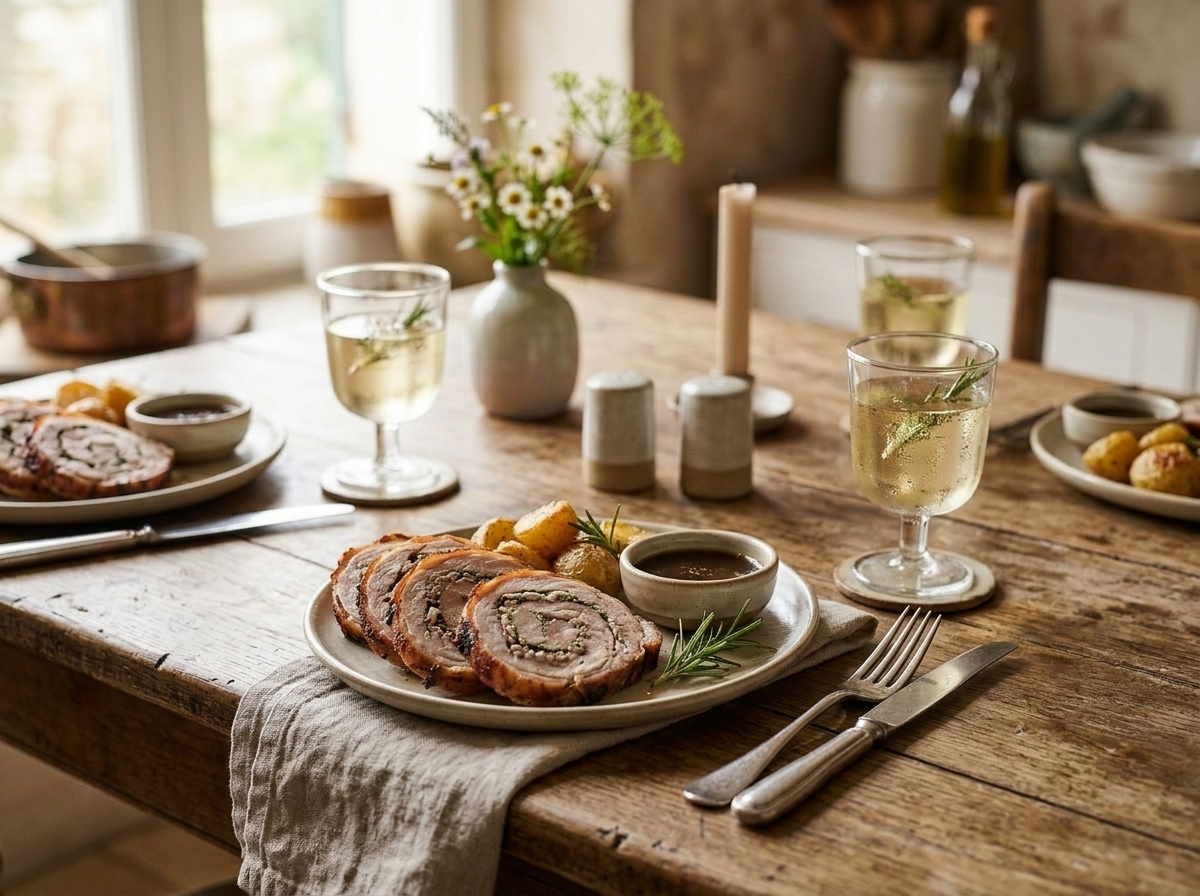
Slice coniglio in porchetta thick, about 2 cm, so each piece shows the spiral of pancetta and herbs. Serve it warm with roasted potatoes tossed in the pan drippings, or at room temperature as part of an antipasto spread.
A simple green salad with a sharp vinaigrette cuts through the richness of the pancetta. Roasted fennel wedges, braised chicory, or a side of cipolline in agrodolce also work, since the anise notes echo what’s already in the stuffing.
For wine, pour something with enough acidity to match the fat, a Sangiovese or a chilled Vermentino both work. Leftover cold slices make a good sandwich filling on crusty bread with a smear of mustard.
FAQ
Why did my coniglio in porchetta come out dry?
It’s usually overcooked past 71C / 160F, or the rabbit was too lean without enough pancetta covering it. Rabbit has almost no internal fat, so the pancetta layer isn’t optional, it’s what keeps the roll moist. Pull it from the oven right at temp and let it rest before cutting.
Can I use chicken instead of rabbit for this porchetta?
Yes, boned chicken thighs work as a substitute, though the flavor and texture won’t match rabbit exactly. Rabbit meat is denser and slightly gamey, which plays well against the fennel and garlic. Chicken cooks faster, so check for 74C / 165F instead and reduce roasting time by about 15 minutes.
How long does coniglio in porchetta keep, and can I freeze it?
It keeps 3 days in the fridge wrapped tightly in foil, and freezes well for up to 2 months. Freeze the roll whole or in portioned slices for easier reheating later. Thaw overnight in the fridge before warming it gently in a covered pan or low oven.
What goes well with coniglio in porchetta?
Roasted potatoes cooked in the pan drippings are the classic pairing, along with a sharp green salad to cut the richness. Braised chicory or roasted fennel wedges echo the anise flavor already in the stuffing. A Sangiovese or chilled Vermentino rounds out the meal.
Is coniglio in porchetta gluten free?
Yes, as written this recipe has no flour, breadcrumbs or gluten-containing ingredients, just rabbit, pancetta, garlic, herbs and wine. Double check your pancetta label though, since some cured meats add fillers. Serve it with a gluten-free side like roasted potatoes to keep the whole plate safe.
What’s the difference between porchetta and coniglio in porchetta?
Porchetta is made with a whole deboned pork belly or loin rolled with the same garlic, fennel and rosemary seasoning. Coniglio in porchetta uses that same seasoning method but applies it to rabbit instead of pork, since rabbit is common in central Italian home cooking and takes on the herb flavors just as well.