Jump to Recipe
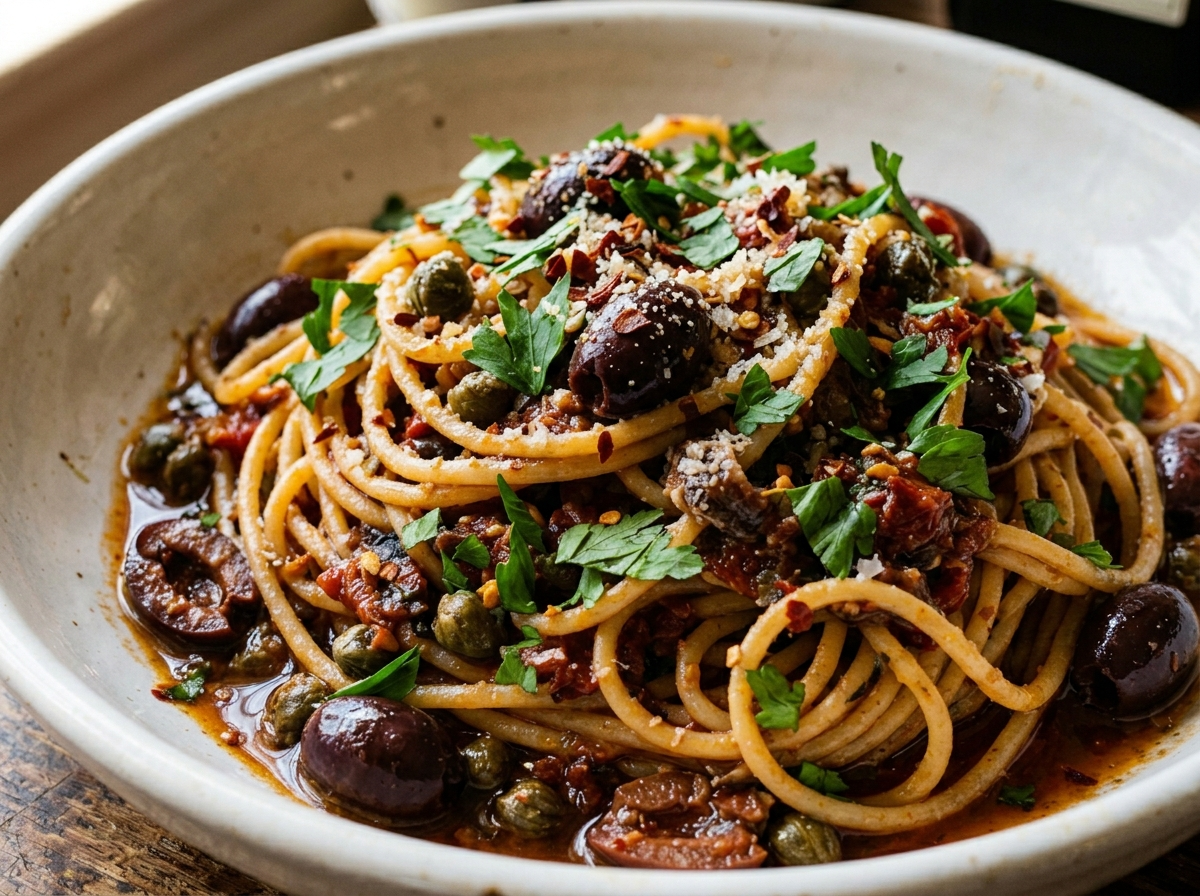
Pasta alla puttanesca is a stovetop sauce built almost entirely from shelf-stable ingredients: canned tomatoes, olives, capers, anchovies, and garlic. No fresh herbs are required, no stock, no cream. The result is a sauce that tastes layered and assertive, not simple.
The dish comes from Naples and the surrounding Campania region. There are competing origin stories, but the most plausible one is simply that it was a sauce cooks made late at night from whatever was already in the pantry.
The technique matters more than the ingredient list here. You bloom the anchovies in olive oil first until they melt completely, then build the rest of the sauce on top of that flavor base. Skip that step and the sauce tastes flat.
I use spaghetti, which is traditional, but linguine or rigatoni hold the sauce just as well. The whole thing comes together in about 40 minutes, most of that hands-off simmering time.
Why You’ll Love This Recipe
- Made entirely from pantry staples, no fresh produce required.
- Anchovies melt into the oil, zero fishy aftertaste.
- Bold, complex flavor from a genuinely short ingredient list.
- Sauce keeps 4 days in the fridge, gets better overnight.
Ingredient Notes
- Anchovies (oil-packed): These dissolve completely in hot oil and give the sauce its backbone. If you use salt-packed anchovies, rinse them first and reduce any added salt later in the recipe.
- Canned whole San Marzano tomatoes: San Marzanos are lower in acid and have thicker flesh, which gives the sauce a cleaner finish. Regular crushed tomatoes work fine but the sauce will be slightly thinner.
- Kalamata olives: Kalamatas have a firm texture and sharp brine that holds up in the sauce. You can use Gaeta or Castelvetrano olives, but avoid canned black olives, which are too soft and bland.
- Capers (salt-packed or brine-packed): Salt-packed capers have a cleaner flavor. If you use them, soak in cold water for 10 minutes before adding. Brine-packed capers can go in straight from the jar.
- Spaghetti: Traditional and practical here because the sauce clings well to the thin strands. Linguine or spaghettoni (thicker spaghetti) are solid alternatives if that’s what you have.
- Calabrian chili or dried red pepper flakes: Calabrian chili paste adds a fruity heat alongside the spice. Red pepper flakes are a straightforward substitute, starting with half a teaspoon and adjusting to taste.
Pasta alla Puttanesca
Ingredients
Method
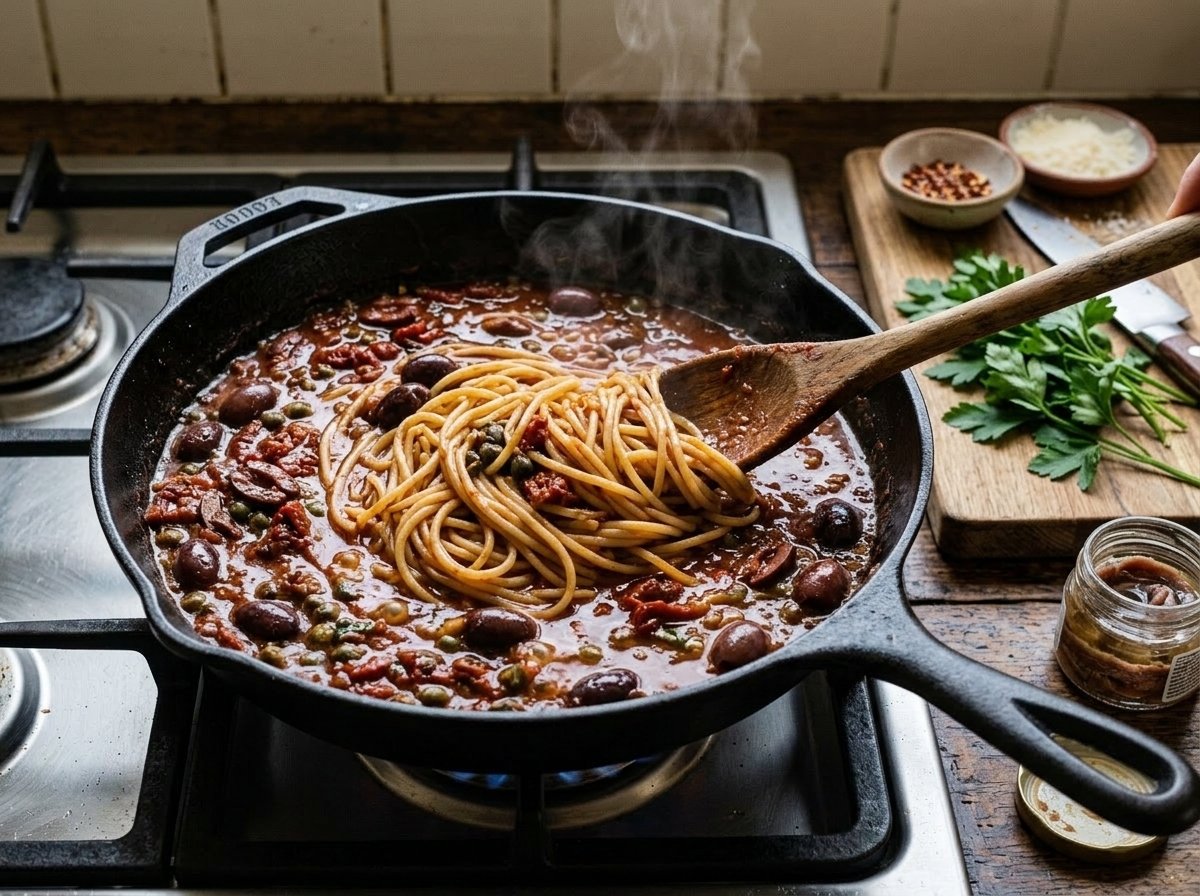
- Pour the olive oil into a large skillet and set over medium-low heat. Add the anchovy fillets and stir continuously for 2 to 3 minutes until they completely dissolve into the oil, leaving no visible pieces.
- Add the sliced garlic and red pepper flakes. Cook for 1 to 2 minutes, stirring, until the garlic is pale and fragrant but not colored.
- Add the hand-crushed tomatoes and all their juices. Stir to combine, raise heat to medium, and bring to a gentle simmer.
- Simmer uncovered for 15 minutes, stirring occasionally, until the sauce reduces slightly and the oil separates at the edges.
- Add the olives and capers. Stir, reduce heat to medium-low, and simmer for a further 8 to 10 minutes until the sauce is thick and the tomatoes have broken down fully.
- Bring a large pot of water to a rolling boil. Add 40 g of salt, then the spaghetti. Cook according to package instructions until al dente, usually 8 to 9 minutes.
- Reserve 120 ml of pasta cooking water before draining. Drain the spaghetti through a colander.
- Transfer the drained spaghetti directly into the sauce pan. Toss over medium heat for 60 to 90 seconds, adding a splash of pasta water if needed to loosen the sauce and help it cling.
- Plate immediately. Drizzle with a little raw olive oil and scatter chopped parsley over the top if using. Serve without cheese.
Notes
Tips for Success
- Melt anchovies in warm oil over medium-low heat before adding garlic, stirring until they fully dissolve into the oil.
- Crush whole canned tomatoes by hand directly into the pan to control chunk size and avoid watery liquid pockets.
- Salt the pasta water generously, at least 10 g per liter, before the sauce goes in so timing stays tight.
- Reserve 120 ml of pasta cooking water before draining and stir it in gradually if the sauce thickens too fast.
- Finish pasta directly in the sauce pan for 60 to 90 seconds over medium heat so the spaghetti absorbs the flavor.
Variations
- Add 200 g canned tuna in oil with the tomatoes for a heartier Sicilian-style version.
- Use penne rigate instead of spaghetti and bake with breadcrumbs for a pasta al forno twist.
- Omit anchovies and double capers for a pescatarian-friendly version that stays punchy.
Storage and Reheating
Store leftover puttanesca sauce separately from the pasta when possible. In an airtight container in the fridge, the sauce keeps for 4 days. Cooked pasta with sauce mixed in keeps for 2 days but softens noticeably.
To reheat, add a splash of water to the pan and warm the sauce over medium-low heat for 3 to 4 minutes, stirring occasionally. Microwave reheating works in a pinch: cover loosely and heat in 60-second intervals, stirring between each.
The sauce freezes well for up to 3 months. Freeze it before combining with pasta. Thaw overnight in the fridge, then reheat as above.
Serving Suggestions
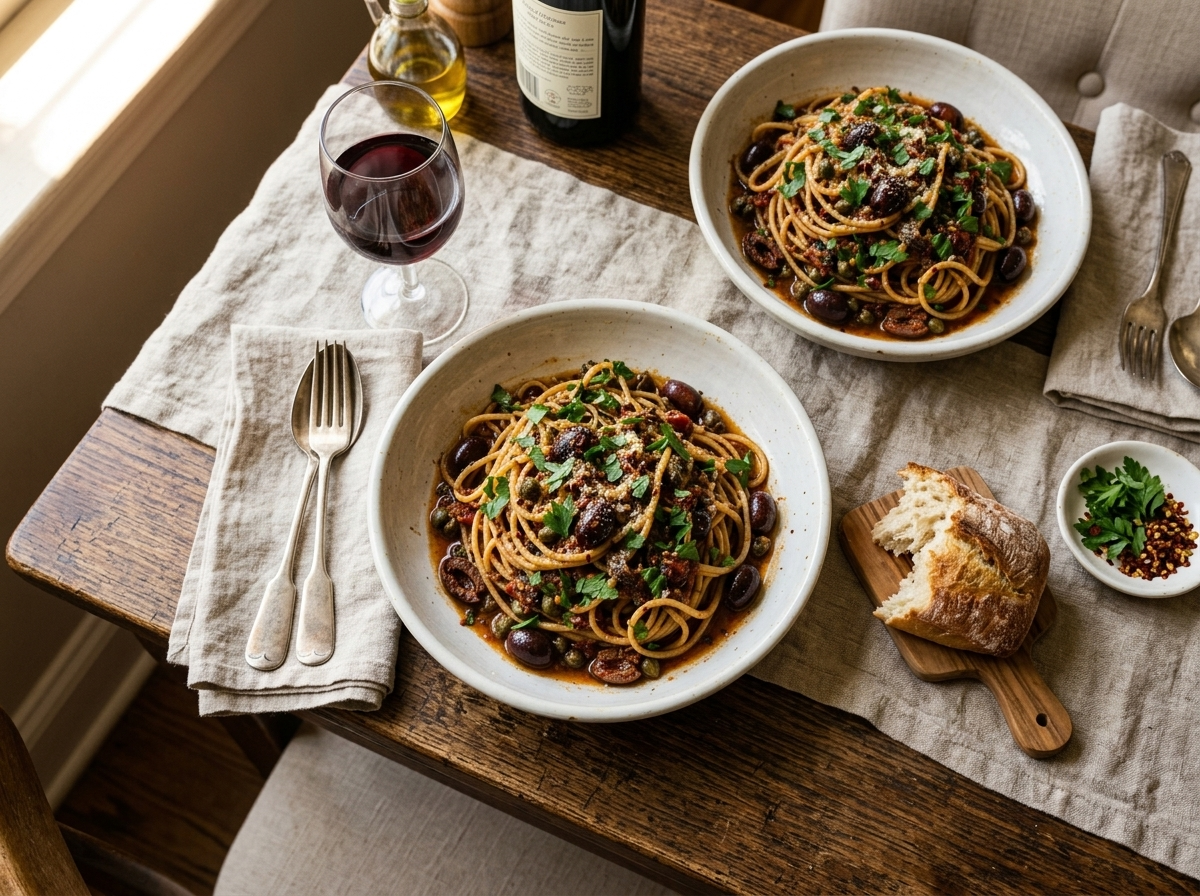
Serve puttanesca with nothing more than good bread to drag through the sauce left in the bowl. A rough-cut country loaf or ciabatta works well here.
For a fuller meal, a Sicilian salad with olives and citrus dressed with good olive oil cuts through the brininess of the sauce cleanly. Avoid anything with a creamy dressing, which will clash.
If you want wine, go with a medium-bodied southern Italian red like Aglianico or Nero d’Avola, and an Italian wine pairing guide for pasta can help you choose between them based on the specific bottle you have. Their dark fruit and slight minerality sit naturally alongside the anchovy and caper flavors.
FAQ
Why does my puttanesca sauce taste too salty?
The salt usually comes from combining full-strength anchovies, brined capers, and olives without adjusting elsewhere. Rinse capers before adding them and hold back any extra salt until the sauce has simmered and you can taste it. Do not salt the pasta water until after you’ve balanced the sauce.
Can I use fresh tomatoes instead of canned in puttanesca?
You can, but the sauce will need longer to cook down and the flavor will be less concentrated. Use 600 g of ripe Roma tomatoes, peeled and roughly chopped, and simmer for at least 20 minutes longer than the canned version.
How do I know when the anchovies are properly dissolved in the oil?
The anchovy fillets will break apart and disappear into the oil, leaving no visible pieces and a pale golden color in the pan. This takes about 2 to 3 minutes over medium-low heat with occasional stirring.
Can I make the puttanesca sauce ahead and freeze it?
Yes, the sauce freezes cleanly for up to 3 months in an airtight container. The capers and olives hold their texture well after freezing. Freeze before mixing with pasta and cook fresh pasta when you reheat it.
What is the difference between puttanesca and arrabbiata?
Arrabbiata is a simpler tomato and chili sauce without anchovies, olives, or capers. Puttanesca is briny and more complex because of those three ingredients, while arrabbiata is sharper and purely about the heat from the chili.
Is pasta alla puttanesca gluten-free?
The sauce itself is naturally gluten-free. To make the full dish gluten-free, swap regular spaghetti for a good-quality gluten-free pasta made from rice or corn flour, and check that your anchovy tin has no added wheat-based ingredients.