
Jump to Recipe
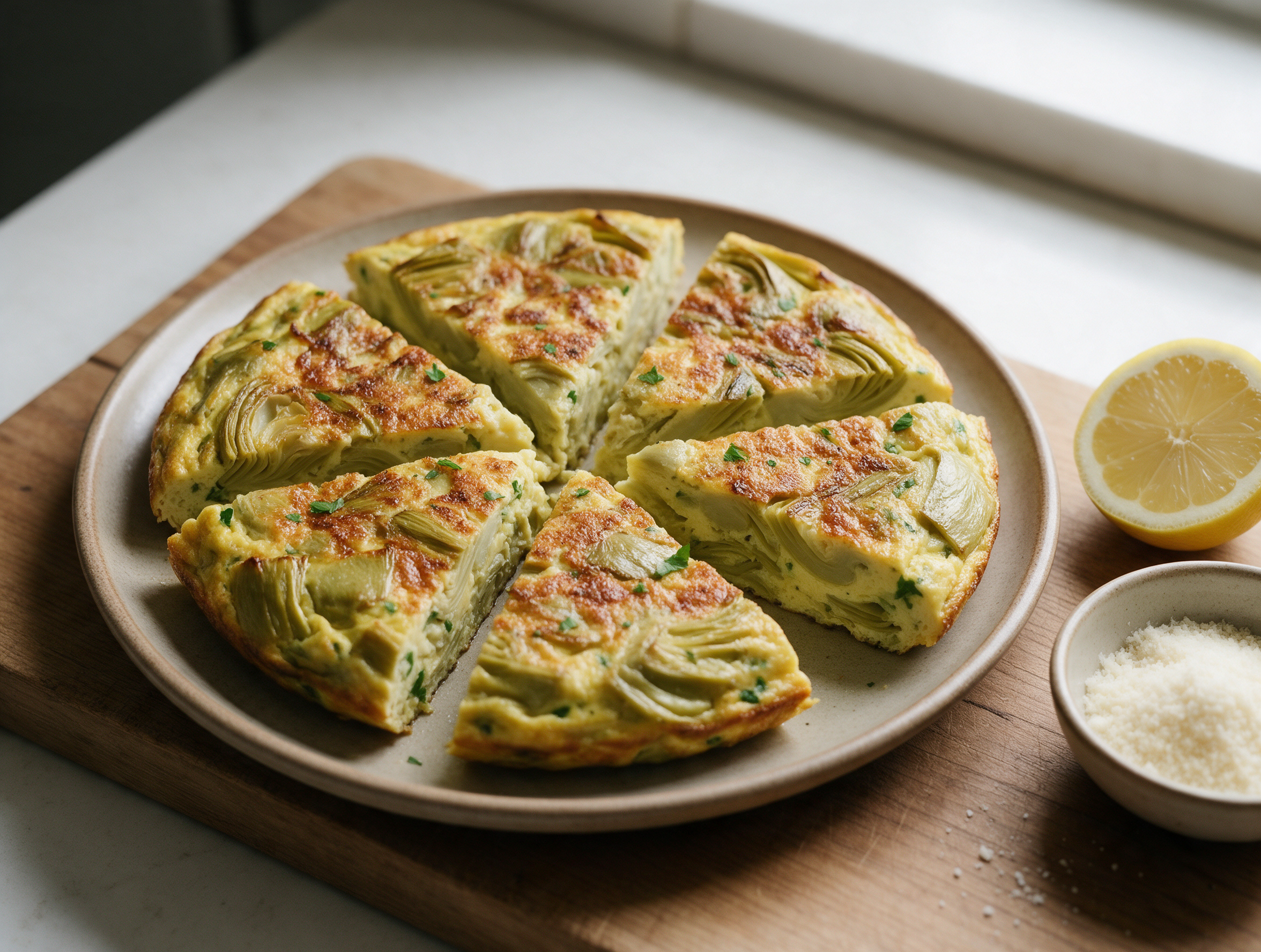
Frittata di carciofi, or artichoke frittata, is a Roman-style baked egg dish built on thinly sliced artichokes softened slowly in olive oil, then bound with eggs and Parmigiano until just set. It’s one of the easiest ways to turn a handful of artichokes into a full meal, and it holds up well at room temperature for a picnic or a Sunday lunch.
The technique matters more than any single ingredient here. A patient soffritto of onion and artichoke, a low stovetop cook, and a short pass under the broiler give you a frittata that’s tender in the center without a raw, wet layer on top.
I trim the artichokes down hard and drop them into lemon water right away. Skip that step and you’ll end up with gray-edged slices and a frittata that looks tired before it hits the table.
This one freezes poorly but keeps well in the fridge for a few days, which makes it a solid make-ahead breakfast or antipasto.
Why You’ll Love This Recipe
- One skillet, no flipping, no fuss with the top layer
- Holds up well at room temperature for picnics or buffets
- Uses frozen artichoke hearts when fresh ones are out of season
- Keeps in the fridge for a few days without losing texture
Ingredient Notes
- Artichokes: Fresh baby artichokes give the best texture, but 400 g frozen artichoke hearts, thawed and sliced, work fine when fresh ones aren’t in season.
- Lemon: The juice goes into the soaking water to keep cut artichokes from turning gray. Don’t skip it if using fresh artichokes.
- Parmigiano Reggiano: Grate it fresh if you can. Pecorino romano is a sharper, saltier swap.
- Eggs: Use large eggs at room temperature so they whisk smoothly into the artichokes without cooling the pan too much.
- Olive oil: A fruity extra virgin oil carries most of the flavor here since the dish has few other seasonings.
Frittata di Carciofi (Italian Artichoke Frittata)
Ingredients
Method
- Fill a bowl with cold water and the juice of the lemon. Trim the outer leaves off the artichokes down to the pale, tender heart, cut off the top third, halve, scoop out the fuzzy choke, and slice thin. Drop slices into the lemon water as you work.
- Drain the artichoke slices and pat them dry with a kitchen towel.
- Heat the olive oil in a 26 cm / 10-inch oven-safe nonstick skillet over medium heat. Add the onion and cook for 4 to 5 minutes until soft and translucent.
- Add the garlic and drained artichoke slices. Season with half the salt and cook for 10 to 12 minutes, stirring occasionally, until the artichokes are tender and lightly golden at the edges.
- Whisk the eggs in a bowl with the Parmigiano, parsley, remaining salt, and pepper until just combined.
- Turn the oven broiler to high and position a rack about 15 cm / 6 inches from the heat.
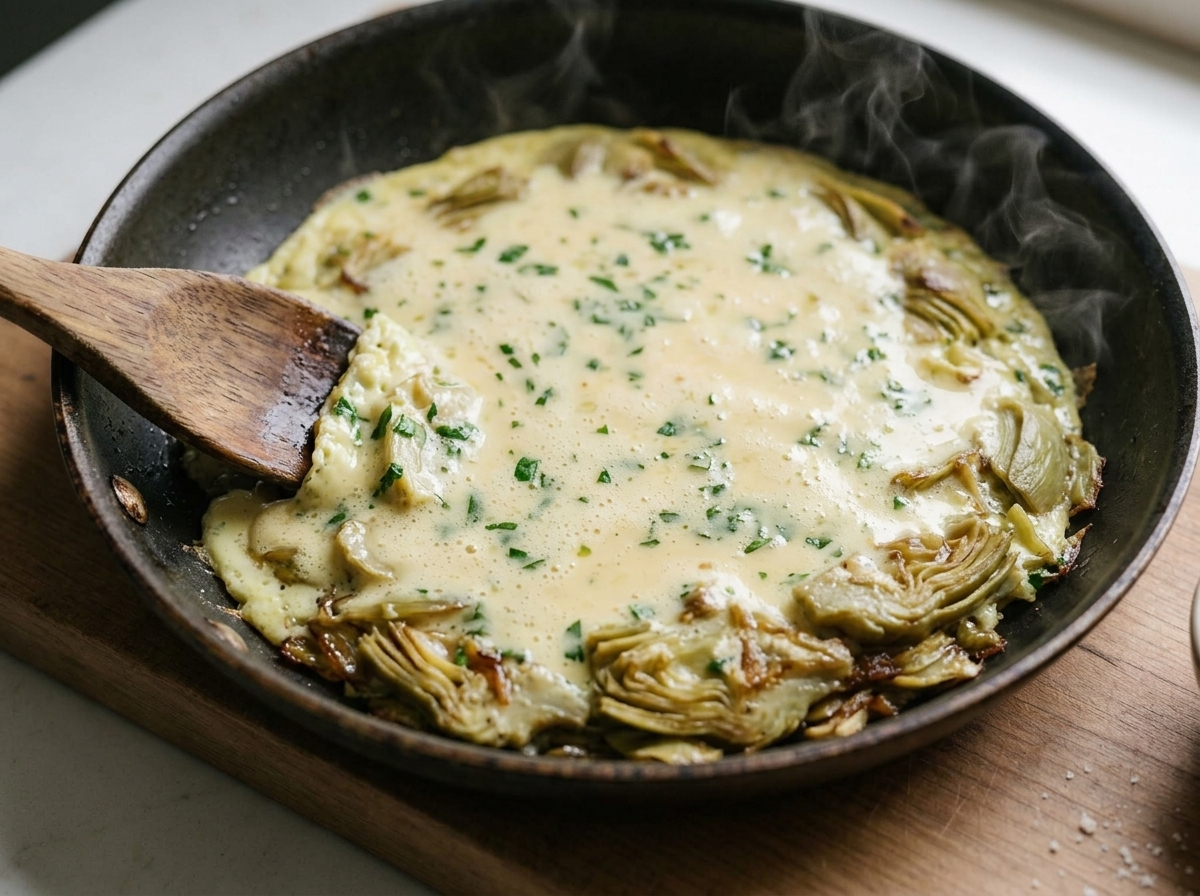
- Spread the cooked artichokes evenly in the skillet. Pour the egg mixture over the top and gently shake the pan so the eggs settle into the gaps. Reduce the heat to low.
- Cook undisturbed for 6 to 8 minutes, until the edges are set and the center is still loose, like thick custard.
- Transfer the skillet to the broiler and cook for 2 to 3 minutes, watching closely, until the top is set and just golden in spots. Internal temp should read 160 F / 71 C at the center.
- Slide the frittata onto a board, rest for 5 minutes, then cut into 6 wedges and serve warm or at room temperature.
Notes
- Trim artichokes hard and hold in lemon water so cut edges don't gray before cooking.
- Cook the eggs low and slow on the stovetop, then finish only briefly under the broiler.
- Pull the frittata as soon as the center reads 160 F / 71 C, not later.
- Rest 5 minutes before slicing for cleaner wedges.
Tips for Success
- Trim artichokes hard, discarding tough outer leaves until you reach the pale, tender heart.
- Soak sliced artichokes in lemon water immediately to stop browning before they hit the pan.
- Use frozen artichoke hearts, about 400 g thawed and sliced, if fresh ones are out of season.
- Watch the broiler constantly, it takes only 2 to 3 minutes to go from set to scorched.
- Let the frittata rest 5 minutes before slicing so the center firms up cleanly.
Variations
- Swap Parmigiano for pecorino romano for a sharper, saltier finish on the frittata.
- Add 100 g crumbled goat cheese or ricotta in dollops before broiling for a creamier bite.
- Stir in 2 tbsp chopped mint with the parsley for a brighter, more Roman-style flavor.
Storage and Reheating
Store leftover frittata di carciofi in an airtight container in the fridge for 3 to 4 days. It also travels well at room temperature for a few hours, which makes it good picnic food.
To reheat, warm wedges in a 160 C / 325 F oven for 8 to 10 minutes, or in a covered nonstick skillet over low heat for 5 minutes, until just warmed through. Skip the microwave if you can, it turns the edges rubbery.
Freezing isn’t worth it here. Artichokes turn watery and the egg texture goes spongy once thawed, so make it fresh or a day ahead instead.
Serving Suggestions
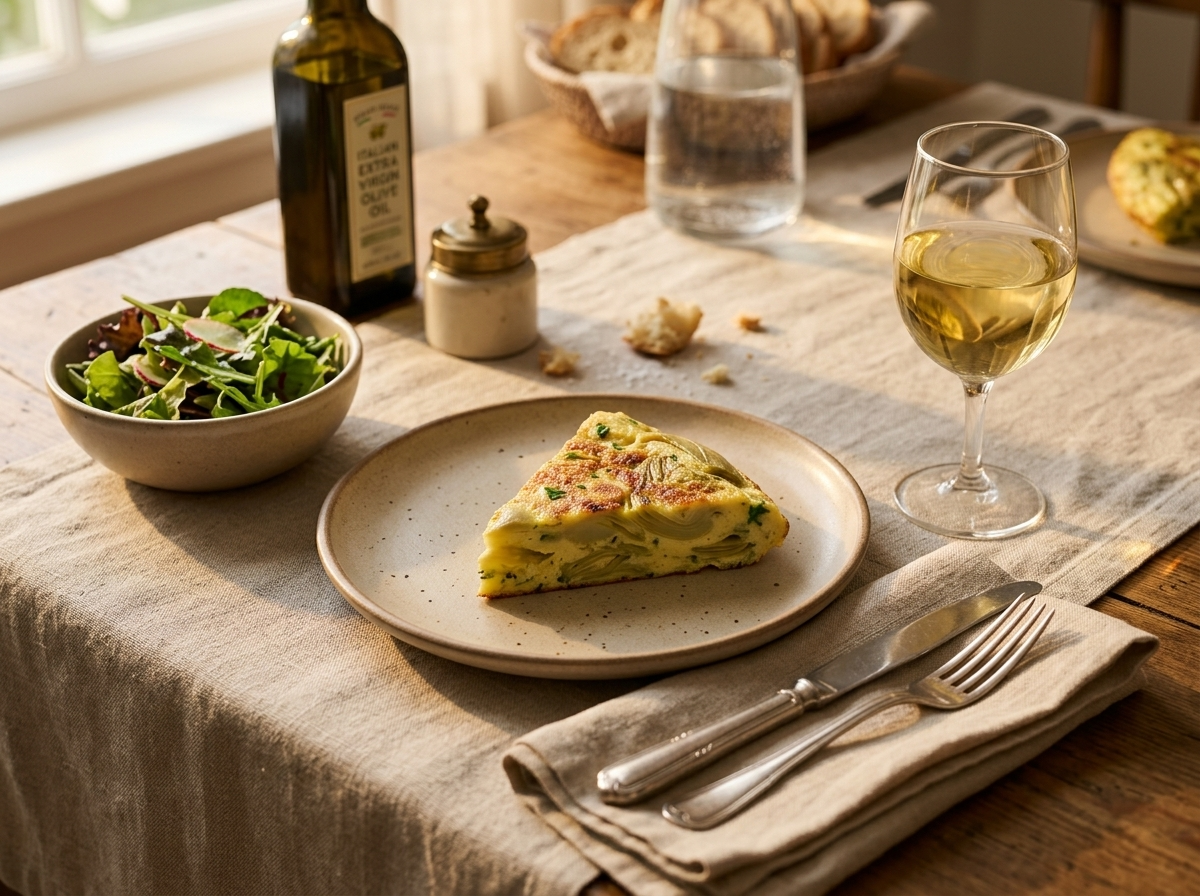
Serve frittata di carciofi warm from the pan or at room temperature, cut into wedges as an antipasto or light main course.
Pair it with a simple green salad dressed in lemon and olive oil, or crusty bread and a plate of cured meats for a bigger spread.
For breakfast or brunch, add a side of roasted tomatoes and a coffee. It’s substantial enough on its own with just a small salad alongside.
FAQ
Why is my artichoke frittata rubbery instead of tender?
Rubbery texture almost always means the eggs cooked too hot or too long. Keep the stovetop heat low so the edges set gently while the center stays loose, then broil for only 2 to 3 minutes until the top is just golden. Pulling it off heat as soon as it hits 160 F / 71 C at the center keeps it soft.
Can I use frozen artichoke hearts instead of fresh for frittata di carciofi?
Yes, about 400 g of frozen artichoke hearts, thawed and sliced, works well and saves the trimming step. Pat them dry before adding to the pan so they brown instead of steam, and you can skip the lemon-water soak entirely since they’re already peeled.
Can I make frittata di carciofi ahead of time?
Yes, it keeps in an airtight container in the fridge for 3 to 4 days. Serve it cold or at room temperature, or warm wedges gently in a 160 C / 325 F oven for 8 to 10 minutes rather than the microwave, which can toughen the eggs.
What goes well with frittata di carciofi?
A simple green salad dressed with lemon and olive oil is the classic pairing since it echoes the artichokes’ acidity. Crusty bread and a small plate of cured meats turn it into a fuller antipasto spread, and roasted tomatoes work well alongside for breakfast.
Is frittata di carciofi gluten free?
Yes, this frittata is naturally gluten free since it’s built from eggs, artichokes, Parmigiano, and olive oil with no flour or breadcrumbs added. Double check your Parmigiano’s label if you’re strict about gluten cross-contamination in shared facilities.
What’s the difference between frittata di carciofi and a Spanish tortilla?
Frittata di carciofi skips the potatoes and starch entirely, relying on artichokes and eggs for body, while a tortilla espanola is built on thinly sliced potatoes cooked in oil. The frittata also finishes under a broiler instead of being flipped whole in the pan.