Jump to Recipe
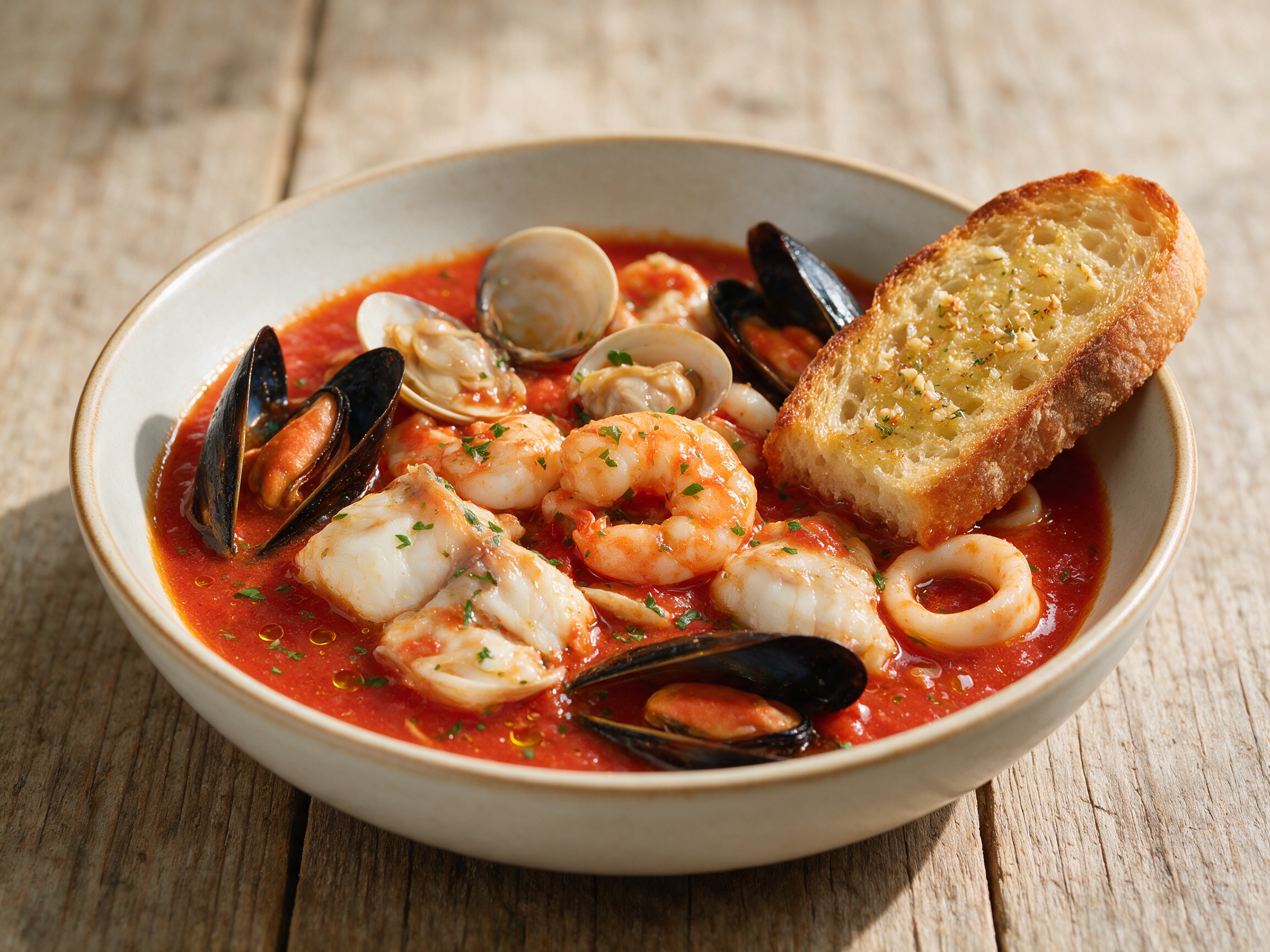
Brodetto di pesce all’anconetana is the fish stew of Ancona, on the Adriatic coast of the Marche region. What sets it apart from Italy’s dozen other brodetti is a splash of white wine vinegar instead of wine, plus diced green bell pepper worked into the soffritto.
I make mine with six kinds of seafood: monkfish, red mullet, cuttlefish, mussels, clams, and shrimp. Traditional versions in Ancona use up to thirteen types, but six gives you the same range of textures without a shopping list that takes all afternoon.
The broth stays thin and clean-tasting, not thick like a French bouillabaisse. Tomato adds color and a little sweetness, the vinegar keeps it bright, and everything simmers together just long enough for the fish to turn opaque and the shells to pop open.
Serve it in shallow bowls with garlic-rubbed toast on the side for soaking up the broth.
Why You’ll Love This Recipe
- Vinegar broth gives real Adriatic flavor, not heavy tomato sauce
- One pot, about an hour, restaurant-level seafood dinner at home
- Works with whatever mixed fish looks freshest that day
- Garlic toast turns the leftover broth into a second course
Ingredient Notes
- white wine vinegar: The defining ingredient of this style. Swap in red wine vinegar if that’s what you have, but skip balsamic, it’s too sweet for this broth.
- green bell pepper: The other marker of anconetana style. Most other regional brodetti leave it out.
- cuttlefish: Squid works as a substitute, but it cooks faster, so add it 3 to 4 minutes later than the cuttlefish.
- clams: Purge in a bowl of salted water for at least 1 hour before cooking so the broth doesn’t turn gritty with sand.
- fish stock: Homemade from fish bones is best, but a good store-bought version works fine here.
- crusty bread: Day-old bread toasts firmer and holds up better under the broth than fresh.
Brodetto di Pesce all’Anconetana with Garlic Toast
Ingredients
Method
- Heat 4 tbsp olive oil in a 30 cm / 12-inch wide shallow pan (tegame) over medium heat. Add the onion and cook for 4 to 5 minutes until soft and translucent.
- Stir in the garlic and green bell pepper and cook for 2 minutes until fragrant.
- Pour in the vinegar and let it bubble for 30 seconds to cook off the sharp edge.
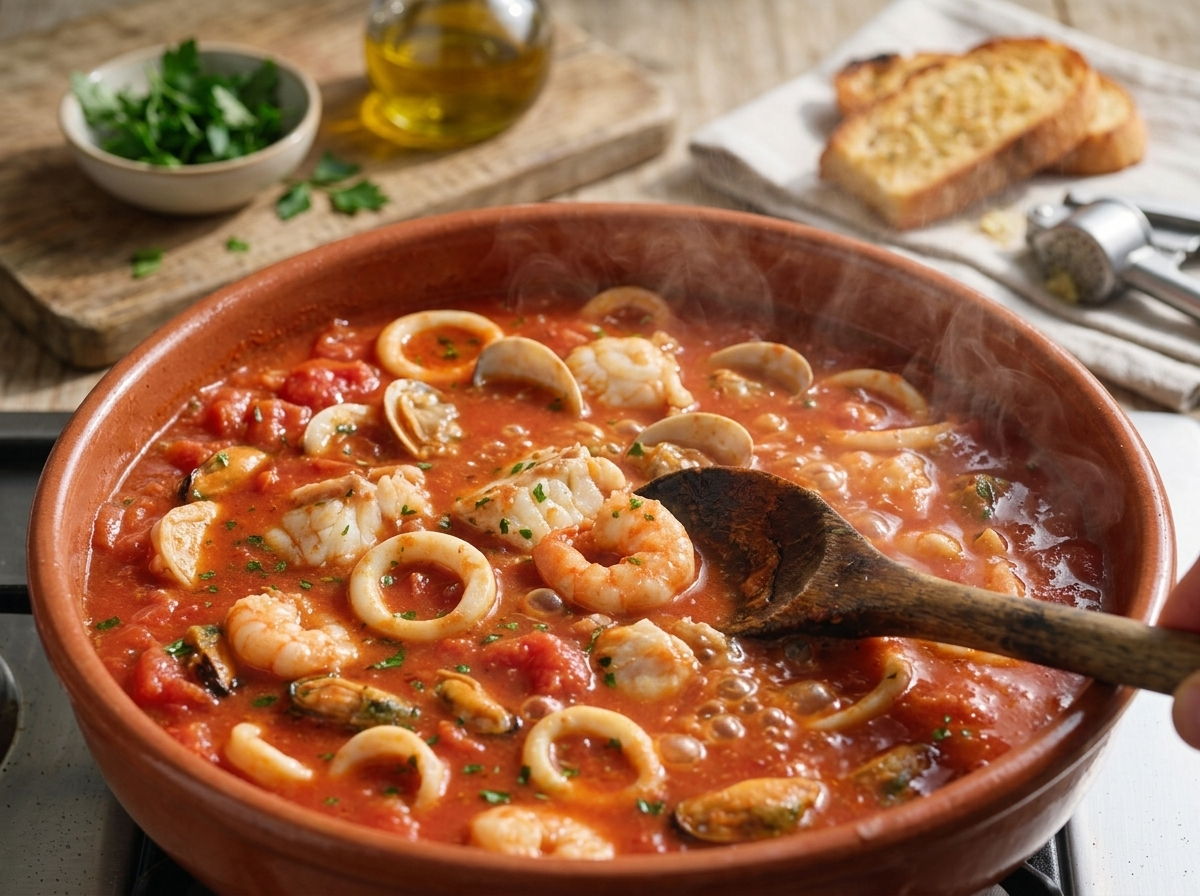
- Add the crushed tomatoes, fish stock, and water. Season with salt and pepper, bring to a gentle simmer, and cook uncovered for 10 minutes to let the flavors come together.
- Add the cuttlefish first, since it needs the longest cooking. Simmer for 8 minutes.
- Add the monkfish and red mullet fillets. Cover and simmer for 5 minutes.
- Add the mussels and clams. Cover and cook for 4 to 5 minutes until the shells open. Discard any that stay closed.
- Add the shrimp and simmer, uncovered, for 2 to 3 minutes more until the fish flakes easily and reaches 145 F / 63 C, the shrimp turn pink, and the shells are fully open.
- While the stew finishes, heat a splash of olive oil in a 10-inch / 25 cm skillet over medium heat and toast the bread slices for 1 to 2 minutes per side until golden. Rub each slice with the cut garlic clove while still warm.
- Ladle the brodetto into shallow bowls, dividing the seafood evenly, and serve with the garlic toast alongside or tucked into the broth.
Notes
- Buy seafood the same day you plan to cook, brodetto doesn't hide age well.
- Keep the broth thin, this isn't a thick chowder.
- Add shellfish last so shells don't overcook and toughen.
- Rub the toast with a raw garlic clove while it's still warm.
Tips for Success
- Purge clams in salted water for at least 1 hour so the broth doesn’t turn gritty.
- Add cuttlefish first since it needs longer cooking, then layer in quicker-cooking fish and shellfish after.
- Taste the broth before serving and adjust vinegar in small splashes, it should taste bright, not sour.
- Discard any mussels or clams that stay shut after cooking, they weren’t alive when you started.
- Toast the bread separately in a skillet with olive oil so it stays crisp under the broth.
Variations
- Swap monkfish and mullet for whatever firm white fish and small whole fish your fishmonger has that day.
- Add a pinch of dried chili or Aleppo pepper for a version closer to brodetto alla vastese.
- Skip shell-on shrimp and use peeled prawns if you want a broth that’s easier to eat with a spoon.
Storage and Reheating
Brodetto keeps in the fridge for up to 2 days in a sealed container. Reheat gently over low heat on the stovetop for 5 to 6 minutes, just until warmed through, since a hard boil turns the fish and shellfish rubbery.
Freezing isn’t ideal here. Mussels, clams, and cuttlefish turn spongy once thawed, so I only freeze leftover broth without the seafood, for up to 2 months, and add fresh fish when I reheat it.
Toast fresh bread each time you serve leftovers. Soggy pre-toasted bread ruins the point of the crostini.
Serving Suggestions
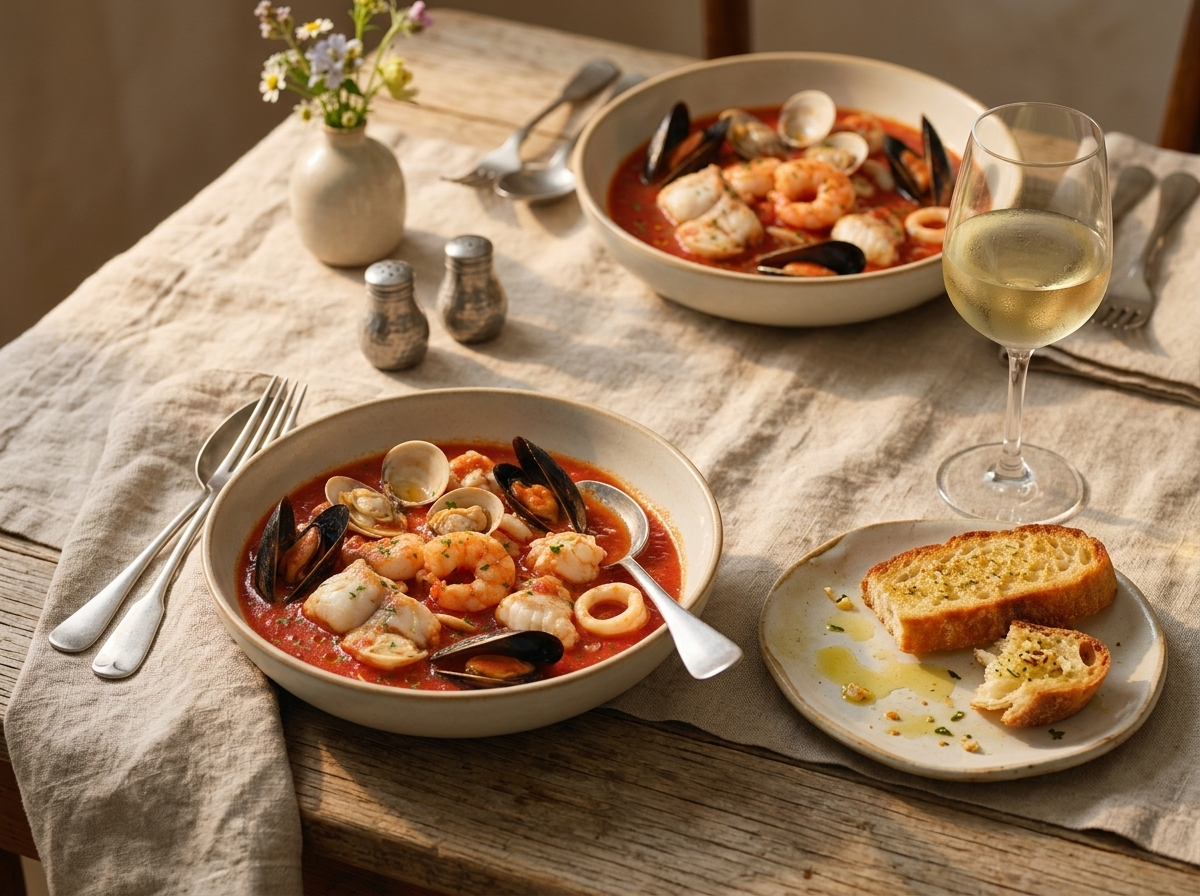
Ladle brodetto into shallow bowls and set a slice or two of garlic toast right in the broth, or on the side so it stays crisp longer.
A glass of Verdicchio dei Castelli di Jesi, the white wine grown right around Ancona, is the classic pour alongside.
For a full Marche-style meal, start with a small plate of olive all’ascolana, then this stew as the main course, finished with a simple green salad to cut the richness of the broth.
FAQ
How do I know when the fish in brodetto all’anconetana is done?
The fish is done once it turns opaque and flakes easily, reaching 145 F / 63 C in the thickest piece. Mussels and clams should have popped fully open, and shrimp turn pink and curl slightly. Toss any shellfish that stay shut after cooking, they weren’t alive going into the pot.
Can I use squid instead of cuttlefish in this brodetto?
Yes, squid works as a swap for cuttlefish. It cooks faster and turns rubbery if overdone, so add it 3 to 4 minutes later than you would cuttlefish and pull it as soon as it turns opaque and firm. The flavor is milder but the texture still holds up in the broth.
Can I make brodetto di pesce ahead of time?
You can make the tomato-vinegar base up to a day ahead and refrigerate it. Add the fish and shellfish fresh when you bring the broth back to a simmer, since seafood left sitting in the broth overnight turns mushy and loses its texture by the next day.
What wine pairs well with brodetto all’anconetana?
Verdicchio dei Castelli di Jesi is the classic match, since it’s grown right around Ancona where this stew comes from. Its dry, crisp acidity cuts through the tomato-vinegar broth without competing with the seafood. A light Vermentino works as a stand-in if you can’t find Verdicchio.
Is brodetto di pesce all’anconetana gluten free?
The stew itself is gluten free since it’s just seafood, tomato, vinegar, and stock. The garlic toast served alongside is not, so swap in a gluten-free crusty loaf if you need the whole meal to be gluten free. Check your fish stock label too, some brands add wheat-based thickeners.
What’s different between brodetto all’anconetana and other Italian fish stews?
Anconetana style uses white wine vinegar instead of white wine, plus diced green bell pepper in the soffritto, which most other regional brodetti skip. Versions from Vasto lean spicier with chili, while Venetian brodetto is thinner and often served over polenta instead of toast.